
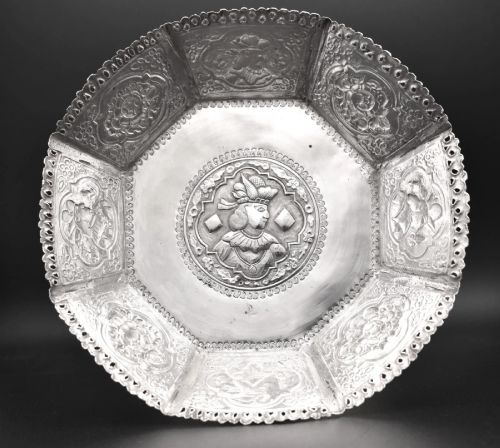


Sterling Silver Tazza
These sterling silver tazza pieces elevate fruit, sweetmeats or centrepieces upon a raised foot, bringing height and proportion to a table.
Sterling Silver Tazza
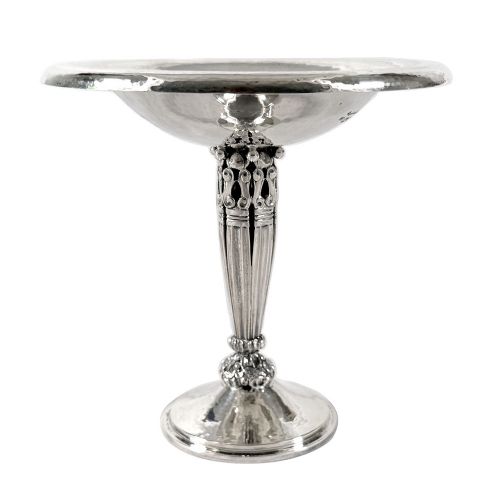
A sterling silver tazza takes the form of a shallow dish or bowl raised on a central pedestal foot, functioning historically for display or service. You will most commonly encounter Edwardian examples alongside pieces from the Arts and Crafts and Art Nouveau periods.
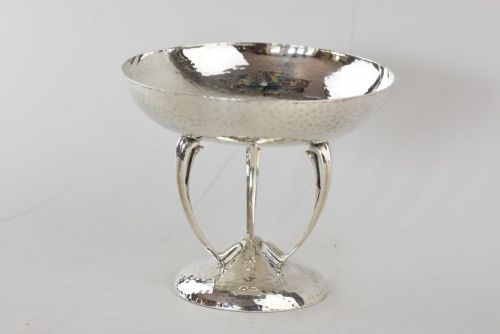
The inventory ranges from simple circular pedestals to three-legged bowls, pierced cake stands, and rectangular dishes. Forms vary from small individual comports to heavy centrepieces created by notable makers.
Originating largely from English workshops, these pedestal vessels bridge the gap between practical tableware and decorative art. The form adapts across centuries, incorporating Georgian gilt interiors and Anglo-Indian repoussé work.
Materials and Techniques
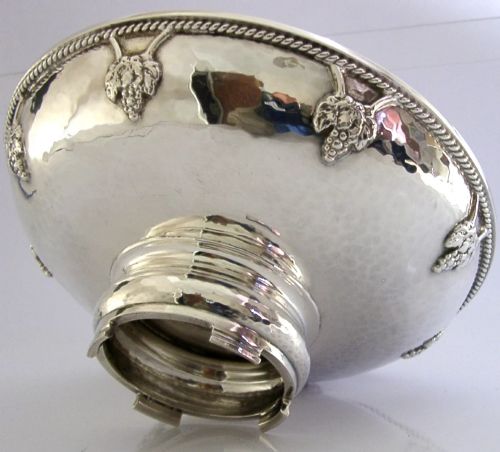
Silversmiths constructed these elevated dishes primarily from sterling silver, occasionally applying a vermeil gilt interior to the bowl. Construction methods combined traditional hammering with piercing, lattice detail, and chased engravings.
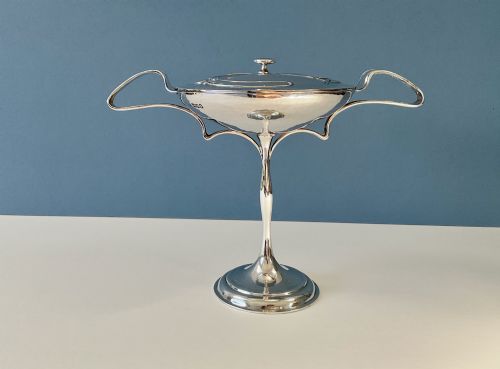
Arts and Crafts examples display visible hand-hammered surfaces that record the labour of the maker, while Art Nouveau pieces utilise fluid lines and pierced floral motifs. Heavier models rely on cast pedestal feet to support the weight of the wide upper dish.
One curious Victorian design incorporates an aquatic dolphin and fish motif directly beneath the bowl.
Judging Quality and Execution
Quality rests upon the balance between the weight of the silver and the span of the pedestal dish, ensuring stability without undue heaviness. Superior examples display crisp piercing, deliberate hand-hammering, and clean maker marks rather than mechanical uniformity.
The distinction between standard production and exceptional work lies in the depth of chased decoration and the finish of the internal gilding. Pieces bearing the mark of established makers or specialist guilds command greater attention for their refined proportions.
A E Jones·Goldsmiths and Silversmiths Company·Charles Boyton·Walker & Hall·James Dixon & Sons·Martin Hall & Co·Tiffany & Co·Woodside Sterling Co·Asprey
The Sterling Silver Tazza Glossary
- Tazza
- An Italian term for a shallow cup or bowl mounted on a stem and foot, used in British silver for pedestal dishes.
- Comport
- A large standing dish used for fruit or sweetmeats at the centre of a dining table. It serves much the same function as a tazza.
- Repoussé
- A metalworking technique where the silver is hammered from the reverse side to form a raised design in relief on the front.
- Piercing
- The practice of cutting openwork patterns through the silver sheet to create lighter decorative borders or lattice details.
- Vermeil
- Sterling silver that has been plated with a thin layer of fine gold on the interior surface of the vessel.
Sterling Silver Tazza: Frequently Asked Questions
What is a tazza used for?
These elevated vessels served primarily for presenting fruit, confectionery, or sweetmeats during formal dining. They placed delicacies at eye level to add architectural interest to the table setting.
Over time, their role shifted toward purely decorative centrepieces or display items on sideboards. Today they function effectively to hold small collections or simply to display fine silversmithing.
How do I date a silver tazza?
Dating relies heavily upon the hallmarks stamped into the silver, which indicate the assay office, the year letter, and the maker's mark. British hallmarks provide an exact year of manufacture.
Stylistic clues also help narrow the period when hallmarks are rubbed or absent. Arts and Crafts pieces show hand-hammered surfaces, whereas Art Nouveau designs feature organic, flowing motifs.
Are tazzas and comports the same thing?
The terms are often used interchangeably in antique silver descriptions to denote a raised dish on a foot. A tazza traditionally implies a flatter, wider top, while a comport can be deeper.
Both forms were manufactured across the Victorian, Edwardian, and later periods for table service. The choice of name usually depends on the maker's catalogue rather than any strict functional difference.
How should I clean sterling silver?
Cleaning requires warm water, mild soap, and a soft cloth to remove everyday dust and tarnish safely. Avoid harsh abrasive pastes or dips that can strip away the original finish and fine detail.
Regular, gentle handling prevents the heavy build-up of tarnish that necessitates aggressive polishing. Storing the silver in anti-tarnish cloth bags helps maintain the surface lustre between uses.