


Art Deco Fruit Dish
An art deco fruit dish brings geometric elegance and clean modernism to the table, uniting period utility with striking design.
Art Deco Fruit Dish
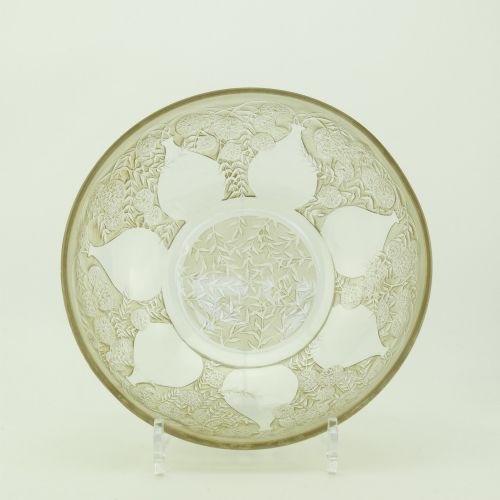
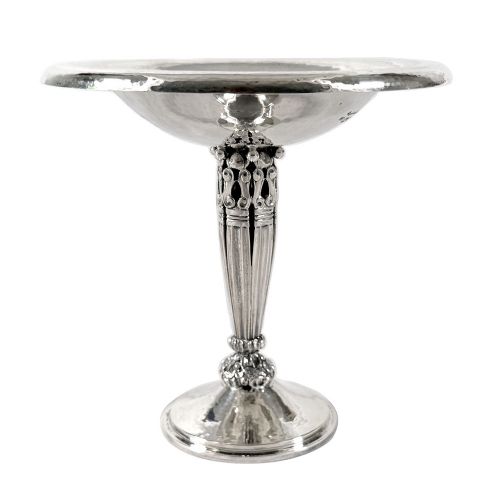
When you search for an art deco fruit dish, you encounter an array of serving vessels designed primarily during the 1920s and 1930s. These pieces function as decorative bowls, tazzas, footed comports, and serving dishes meant for display and dining.
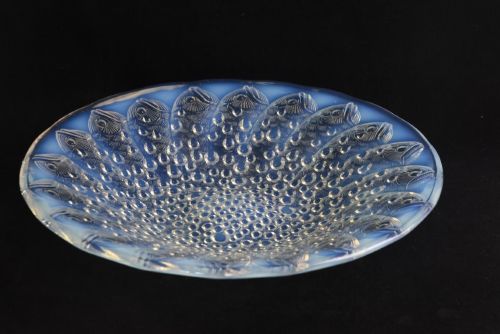
The most common versions on this page are French and British pieces rendered in moulded opalescent glass or silver plate. You also find earthenware and pottery bowls featuring vibrant patterns, alongside occasional wooden and pewter examples.
The aesthetic draws heavily on the modernist shift away from floral Victorian excess towards crisp lines and stylised motifs. Whether elevated on a pedestal base or resting low as a coupe, an art deco fruit dish anchors a dining table or sideboard with period character.
How they were made
Makers utilised press-moulding and blow-moulding techniques to achieve the characteristic depth and translucency in glass pieces, often applying acid-etching or staining to highlight raised relief designs. Opalescent glass required precise chemical control during cooling to produce the characteristic milky-blue fire.
Metal vessels relied on silver plating over base metals like pewter or white metal, shaped through spinning, hammering, or casting into geometric moulds. Earthenware and pottery bowls were shaped on wheels or cast in moulds, then finished with lustrous glazes or hand-painted patterns before kiln firing.
Listings feature pieces spanning the Edwardian era through the 1930s, executed in opalescent glass, silver plate, earthenware, and hammered pewter.
What varies in quality
Quality rests in the crispness of the moulded detail and the weight of the material, whether in the deep relief of a glass floral motif or the substantial gauge of a silver-plated footed bowl. Superior glass pieces exhibit an even opalescence and a resonant ring, while finer ceramics display clean glaze applications without pooling.
The reputation of the designer and the studio elevates certain examples, particularly where factory marks or signatures remain clear and distinct. Balance, proportion, and the harmony between material and geometric form ultimately separate standard commercial production from exceptional work.
Rene Lalique·Charles Boyton·Val St. Lambert·Maling·Etling·Charlotte Rhead·Brille Paris·Walker and Hall
The Art Deco Fruit Dish Glossary
- Tazza
- A shallow bowl or plate mounted on a stem and foot, used for serving fruit or sweets. This elevated form creates height and architectural presence on the dining table.
- Opalescent Glass
- Glass containing agents that cause it to milky-blue or fire-like appearance when viewed in transmitted light. It catches light differently depending on the angle and background.
- Silver Plate
- A thin layer of silver applied to a base metal such as copper, nickel silver, or pewter. This technique offered the luxury of solid silver at a more accessible cost during the period.
- Lustre
- A type of ceramic glaze that produces an iridescent metallic sheen through a reduction firing process. Wedgwood and other potteries utilised this for rich, reflective surfaces.
Art Deco Fruit Dish: Frequently Asked Questions
What is an art deco fruit dish used for?
These pieces served originally to present fresh fruit, bread, or desserts at the dining table, often taking a central position as a decorative comport or tazza.
Today, they function equally well as standalone decorative objects on sideboards or coffee tables, where their glass or metal surfaces catch the light.
How do I identify glass types?
Glass varieties range from clear crystal to frosted and opalescent finishes that shift in tone from amber or blue to milky white under direct illumination.
Look for signature marks on the base, such as moulded signatures or acid stamps, which indicate the producing glasshouse or designer.
Are silver plated dishes durable?
Silver plate uses a base metal core coated with a layer of pure silver, providing robust strength combined with a bright metallic finish.
Gentle washing with warm soapy water preserves the plating, avoiding abrasive cleaners that wear down the thin silver layer over time.
How do I date an art deco fruit dish?
Most examples date from the 1920s and 1930s, aligning with the height of the Art Deco movement and the interwar embrace of modern design.
Maker stamps, registration numbers, and characteristic motifs like geometric borders or stylised florals help narrow the production era.