


Hand Hammered Silver Dish
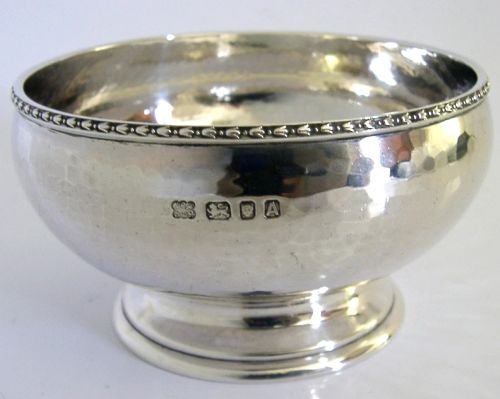
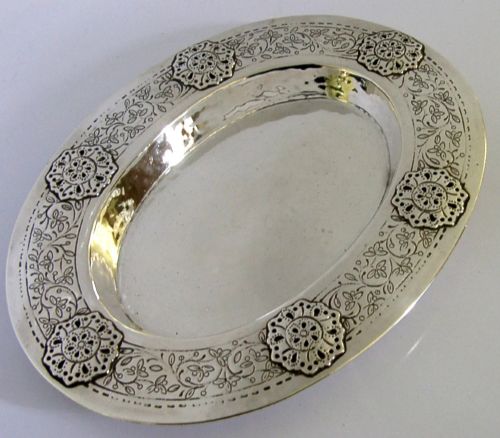
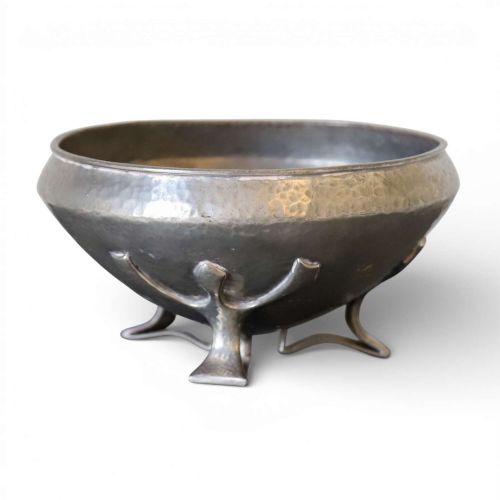
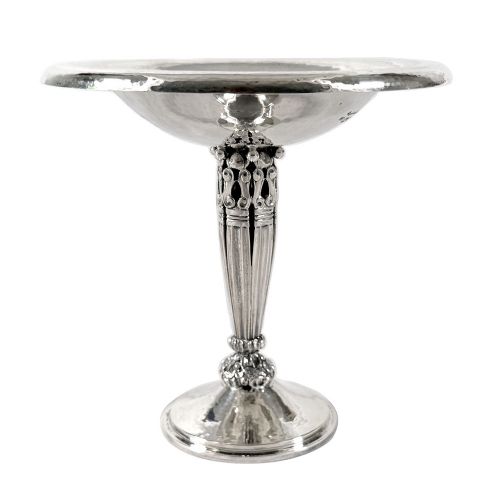
These hand hammered silver dish examples offer tactile Arts and Crafts and Art Deco form in sterling silver.
What they are
A hand hammered silver dish represents the intersection of domestic utility and decorative craft from the Edwardian era through the nineteen thirties. These pieces take various forms including bowls, decorative dishes, tazzas, and sugar bowls.
The versions most commonly met on this page span the Arts and Crafts and Art Deco styles, showing both organic hammered surfaces and geometric modernist lines. Originating from English workshops and makers, they reflect early twentieth century silversmithing traditions.
How they were made
Silversmiths constructed each hand hammered silver dish from sterling silver, shaping the metal by hand through repetitive hammer blows. This technique requires precise control to achieve even thickness while leaving deliberate surface marks.
Some specialised examples incorporate cabochons into the design, setting polished gemstones into the sterling silver framework. Makers utilised traditional joining and planishing methods to finish each bowl, tazza, and dish.
Retail Price Guide 2026
Typical UK retail prices for hand hammered silver dish, calculated from the Sellingantiques database of over a million retail prices indexed since 2003. This retail price guide relies exclusively on Sellingantiques data; no external sources or auction records are used, so the figures do not describe the wider market.
Early twentieth-century silversmiths frequently chased their own tea and sugar bowls after hours, using spare silver offcuts for secret projects.
What varies in quality
Quality in a hand hammered silver dish rests on the rhythm and consistency of the planishing marks left across the sterling silver surface. Skilled smiths controlled the weight and angle of every blow to create a balanced texture rather than random indentations.
The distinction between standard domestic items and superior examples lies in the integration of design details such as applied cabochons and balanced handles. Form and proportion separate mass workshop output from master silversmith creation.
Liberty And Co·Charles Boyton·John Barrett·A E Jones
The Hand Hammered Silver Dish Glossary
- Sterling silver
- An alloy comprising ninety-two point five percent silver and seven point five percent other metals, typically copper. This standard composition provides the durability required for functional tableware.
- Planished
- A metalworking finish achieved by hammering the surface with a small, flat-faced hammer. This process hardens the silver and creates the characteristic faceted texture seen on Arts and Crafts pieces.
- Cabochon
- A gemstone shaped and polished with a smooth, convex domed top rather than faceted edges. These stones often appear as decorative accents on period silver dishes.
- Tazza
- An elevated shallow bowl or cup mounted on a stem and foot. Silversmiths used this form to present small food items or simply as a decorative centrepiece.
Frequently Asked Questions
What is a hand hammered silver dish?
A hand hammered silver dish is a sterling silver vessel shaped by silversmiths using traditional hand-hammering techniques. These pieces date primarily from the Edwardian period through the nineteen thirties and reflect Arts and Crafts or Art Deco design principles.
Such vessels range from simple sugar bowls to decorative tazzas and handled dishes. Each item showcases the manual labour involved in early twentieth century British metalwork.
How were these silver dishes used?
Historically, these dishes served both functional and decorative roles within the home. Sugar bowls and handled dishes held commodities for the dining table, while tazzas displayed fruits or small confectioneries.
Many examples were also produced purely as decorative items to adorn sideboards and mantelpieces. Their enduring appeal lies in this blend of utility and artistic expression.
How do I care for antique silver?
Antique silver requires gentle cleaning with appropriate silver polish and a soft cloth to maintain its finish without removing the aged patina. Avoid harsh abrasive cleaners that can damage the delicate planished surface.
Store pieces in a dry environment away from direct sunlight and atmospheric pollutants. Regular, careful handling prevents the accumulation of tarnish while preserving the original hammer work.