


Silver Footed Centrepiece
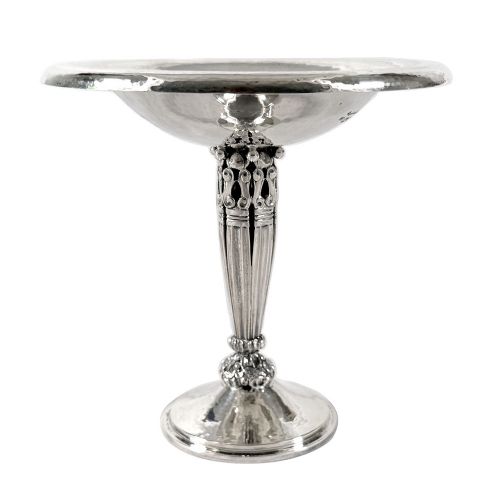
A silver footed centrepiece anchors a dining table or sideboard, bringing height and presence through shaped bowls, tazzas, and baskets raised on pedestals.
Silver Footed Centrepiece
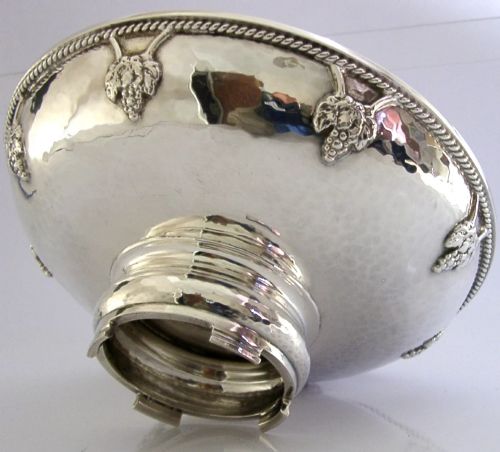
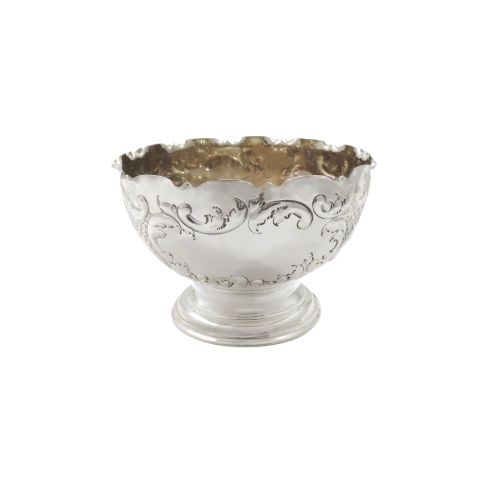
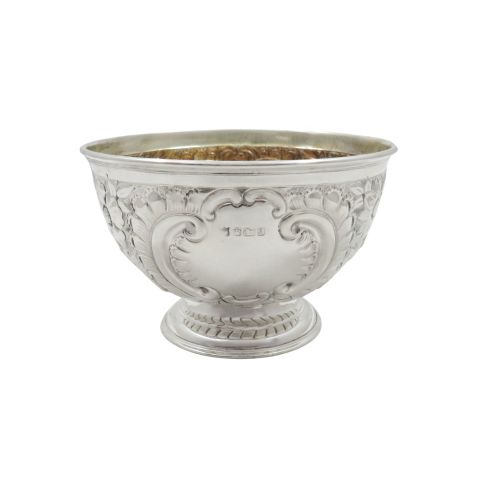
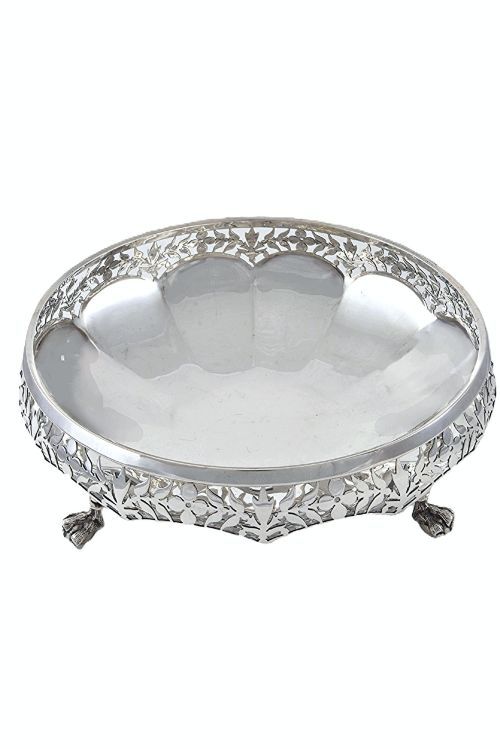
A silver footed centrepiece takes several forms across the inventory, appearing most frequently as pedestal bowls, tazzas, and pierced baskets raised on elevated bases. These pieces emerge from the Victorian, Edwardian, and Art Deco periods, alongside examples from Georgian, 1930, and 1960 eras.
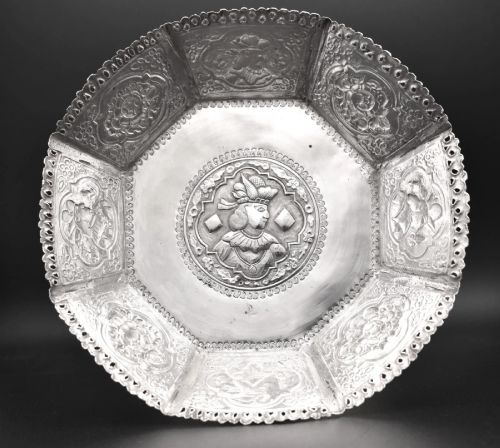
Makers and workshops across Britain, Ireland, Asia, and continental Europe shaped these items to hold fruit, flowers, or sweets. The selection ranges from plain sterling silver pedestal bowls to ornate Anglo-Indian, Chinese export, and Thai repoussé footed vessels.
The objects serve primarily as decorative focal points for large surfaces, utilising glass liners, handles, or intricate wirework structures. Scale varies from small bonbon dishes to large centrepiece bowls weighing several hundred grams.
Materials and methods of construction
Silversmiths employed sterling silver, solid silver, and silver plate over base metals or bronze, often pairing metalwork with cut glass or ruby glass liners. Workshops shaped these materials through hammering, piercing, casting, and wirework.
Decoration relied heavily on repoussé work, where artisans hammered designs from the reverse to create raised motifs, alongside detailed surface chasing and lattice cutting. Handles, pedestals, and feet were cast separately and soldered or riveted to the main bowl body.
Listings feature sterling silver, silver plate, and solid silver forms spanning the Victorian, Edwardian, and Art Deco eras.
Judging the quality of footed silver vessels
Quality rests on the weight of the metal gauge and the crispness of the hand-worked detail, whether in repoussé foliage or geometric Art Deco hammering. Heavier gauge silver and solid construction provide structural stability to elevated pedestals and tazzas.
Refinement in the assembly of cast feet, handles, and applied borders distinguishes superior pieces from standard production. The clarity of hallmarks and the precision of pierced lattice or wirework further indicate the maker's skill.
A E Jones·Charles Boyton·Fenton
The Silver Footed Centrepiece Glossary
- Tazza
- A shallow bowl or dish mounted on a stem and foot, commonly used for serving fruit or sweets.
- Repoussé
- A metalworking technique where the artisan hammers the design from the reverse side to form raised relief patterns on the front.
- Compote
- An elevated bowl or dish on a foot, traditionally used for holding fruit, nuts, or compotes.
- Pierced
- Metalwork perforated with decorative cut-out patterns, frequently seen on baskets and bowl rims.
- Pedestal foot
- A raised base that supports a bowl or vessel, lifting the main body above the surface of the table.
Silver Footed Centrepiece: Frequently Asked Questions
What is a silver footed centrepiece used for?
These vessels functioned primarily as ornamental table centrepieces to hold fruit, flowers, or sweetmeats during formal meals. Their elevated pedestal design drew the eye and created varying heights across the dining table.
Today, they serve a similar decorative purpose on sideboards and dining tables. Many collectors use them to display seasonal fruit or floral arrangements.
How do I date an antique silver bowl?
Dating relies heavily on official hallmarks stamped into the metal, which indicate the assay office, the specific year letter, and the maker's mark. Stylistic clues, such as Edwardian piercing or Art Deco geometric hammering, also narrow down the era.
Comparing the weight, form, and decorative techniques against known production periods helps confirm the age. Regional styles from Ireland, Britain, or Asia carry distinct manufacturing traits.
Are silver plated and solid silver pieces different?
Solid silver and sterling silver items consist entirely of precious silver alloy throughout the structure. Silver plated pieces feature a thin layer of silver bonded over a base metal such as bronze or white metal.
Both categories include high-quality craftsmanship, but solid silver objects carry intrinsic metal value and often display heavier gauges. Plated examples allowed Victorian and Edwardian makers to produce larger decorative items at a lower cost.
How should I clean my silver centrepiece?
Maintenance requires gentle washing with warm soapy water and a soft cloth to remove dust and oils. Proprietary silver polishes should be used sparingly and only on solid or plated metal surfaces to avoid wearing away thin layers.
Glass liners should be removed and washed separately from the metal frames. Storing the piece in a dry environment prevents rapid tarnishing.