


Bohemian Crystal Perfume Bottle
A bohemian crystal perfume bottle brings geometric lines and rich coloured glass straight to the dressing table.
Bohemian Crystal Perfume Bottle
When searching for a bohemian crystal perfume bottle, collectors encounter striking examples primarily from the Art Deco and Edwardian eras. These pieces range from sleek geometric vessels to elaborate atomisers designed for daily dressing table use.
The objects appearing here span the nineteen-tens and nineteen-thirties, originating predominantly from the Czech Republic. The most frequently encountered version is the Art Deco glass or crystal bottle produced during the nineteen-thirties.
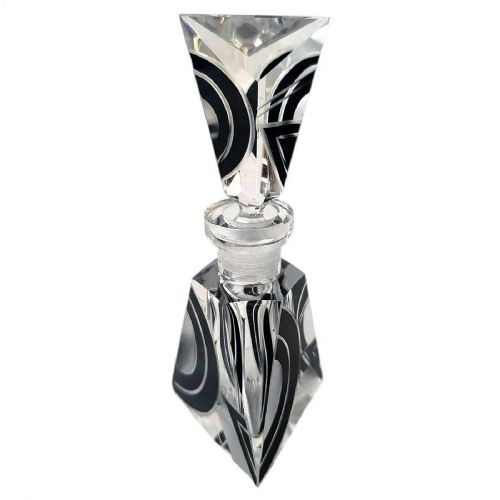
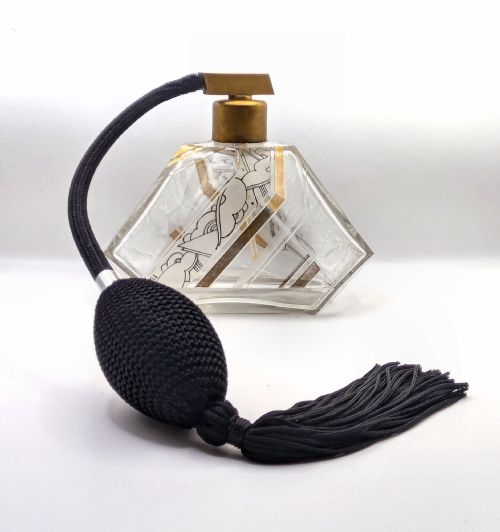
Makers such as Karl Palda dominate the selection, bringing distinctive green glass, black enamel, and cut glass forms to the market. Alongside standard bottles, buyers find atomiser configurations and matching globe sets.
How they were made
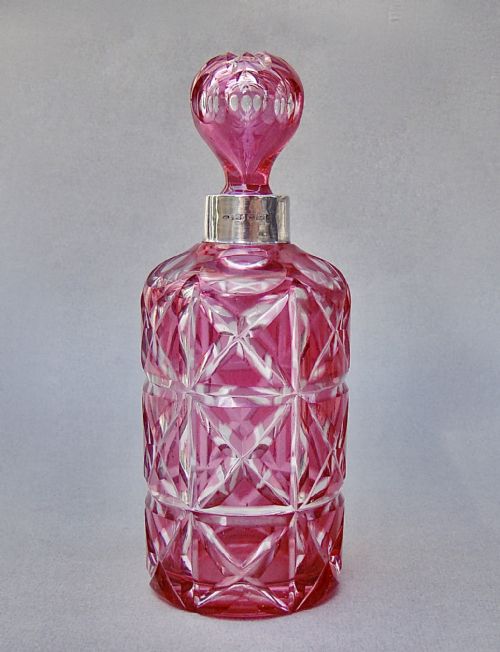
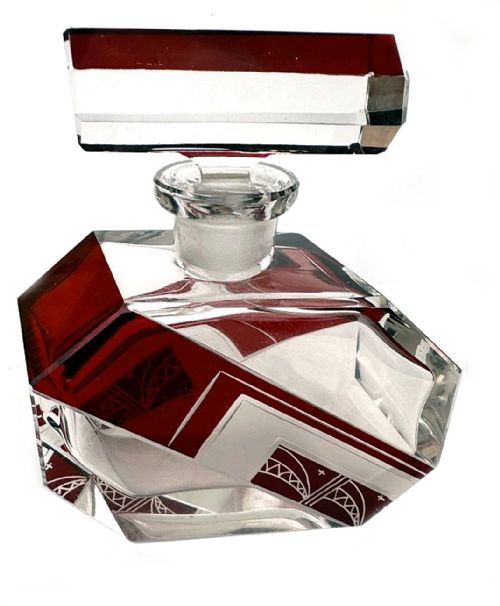
Makers utilised crystal, cut glass, and standard glass as the primary bodies for these vessels. Techniques involved precise geometric cutting to catch the light across panels and facets.
Workshops applied black enamel, gold leaf, and fabric details to enhance the surface decoration. Certain pieces incorporate silver mounts, adding metal collars and atomiser hardware to the glass bodies.
Some nineteen-thirties ladies arrived at their vanity tables armed with matching globe bottles to ensure proper symmetry.
What varies in quality
The distinction between standard examples and finer pieces lies in the crispness of the glass cutting and the complexity of the enamel work. Stronger designs display intentional geometric harmony rather than basic moulding.
The integration of silver mounts and functioning atomiser hardware elevates the standard of construction. Pieces bearing known maker attributions demonstrate superior craftsmanship in surface finishing.
Karl Palda·Harold Bushell Co
The Bohemian Crystal Perfume Bottle Glossary
- Atomiser
- A perfume bottle fitted with a spray mechanism and bulb. This hardware allows liquid fragrance to mist evenly upon pressing.
- Cut glass
- Glass decorated by cutting facets or patterns into the surface using a rotating wheel. This technique creates sharp edges that refract light.
- Enamel
- Opaque vitreous material fused to glass or metal surfaces for decoration. It provides bold areas of colour such as black or green.
- Crystal
- Clear glass containing metal oxides to increase brilliance and weight. It offers superior clarity compared to standard utility glass.
Bohemian Crystal Perfume Bottle: Frequently Asked Questions
What periods do these bottles come from?
The pieces span the Edwardian period and the nineteen-thirties. Most examples date specifically to the Art Deco era.
Designs reflect the prevailing aesthetic shifts of those decades, moving from earlier silver-mounted styles to geometric modernist forms.
How do I identify a Karl Palda piece?
Karl Palda designs typically feature distinct Art Deco geometric cutting and specific use of coloured glass. Many incorporate contrasting enamel work.
Such pieces often present as atomisers, matching globe sets, or ladies' silver and enamel perfume bottles from the nineteen-thirties.
Were these used for travel or display?
These vessels were primarily designed for permanent display on dressing tables and boudoir trays. Their decorative atomisers and globe shapes suited domestic interiors.
Sturdy glass construction and mounted metal collars allowed them to hold liquid fragrance safely during daily use.
What materials are most common?
Glass and crystal form the foundation of nearly every bottle. Cut glass and coloured glass variations appear frequently.
Additional materials include enamel, gold leaf, fabric, chrome, and silver mounts that secure the opening mechanisms.