




Green Glass Perfume Bottle
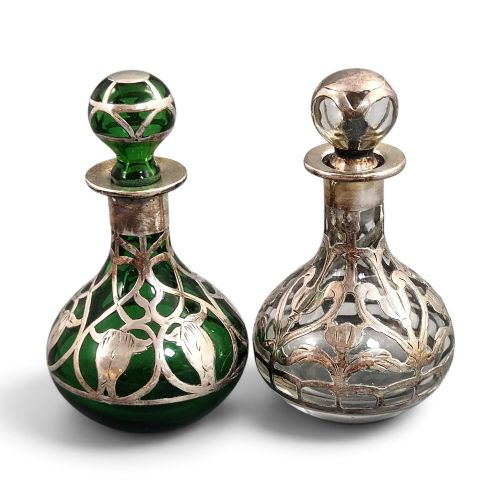
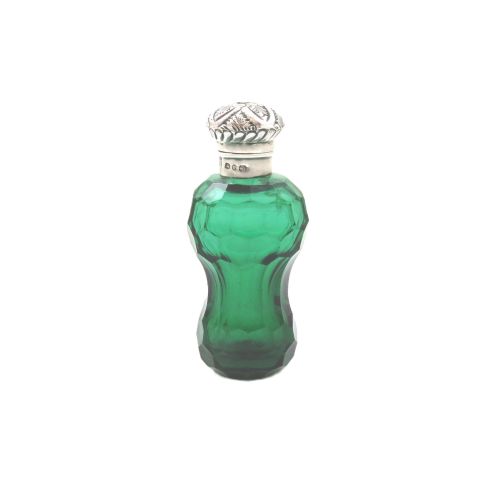
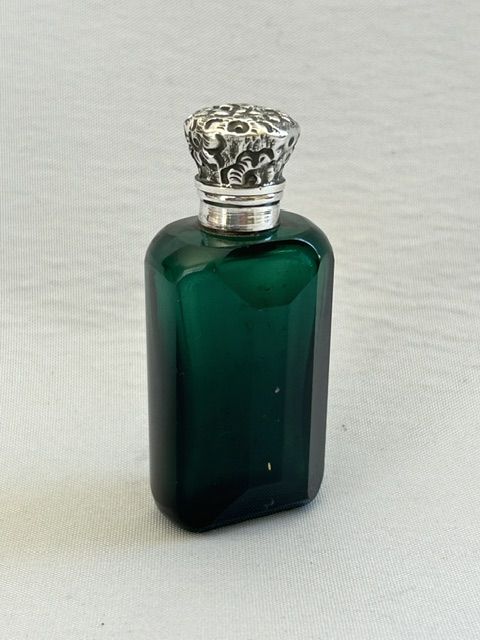
These green glass perfume bottle examples combine vibrant hues with precious metal mounts, offering both historic vanity display and tactile appeal.
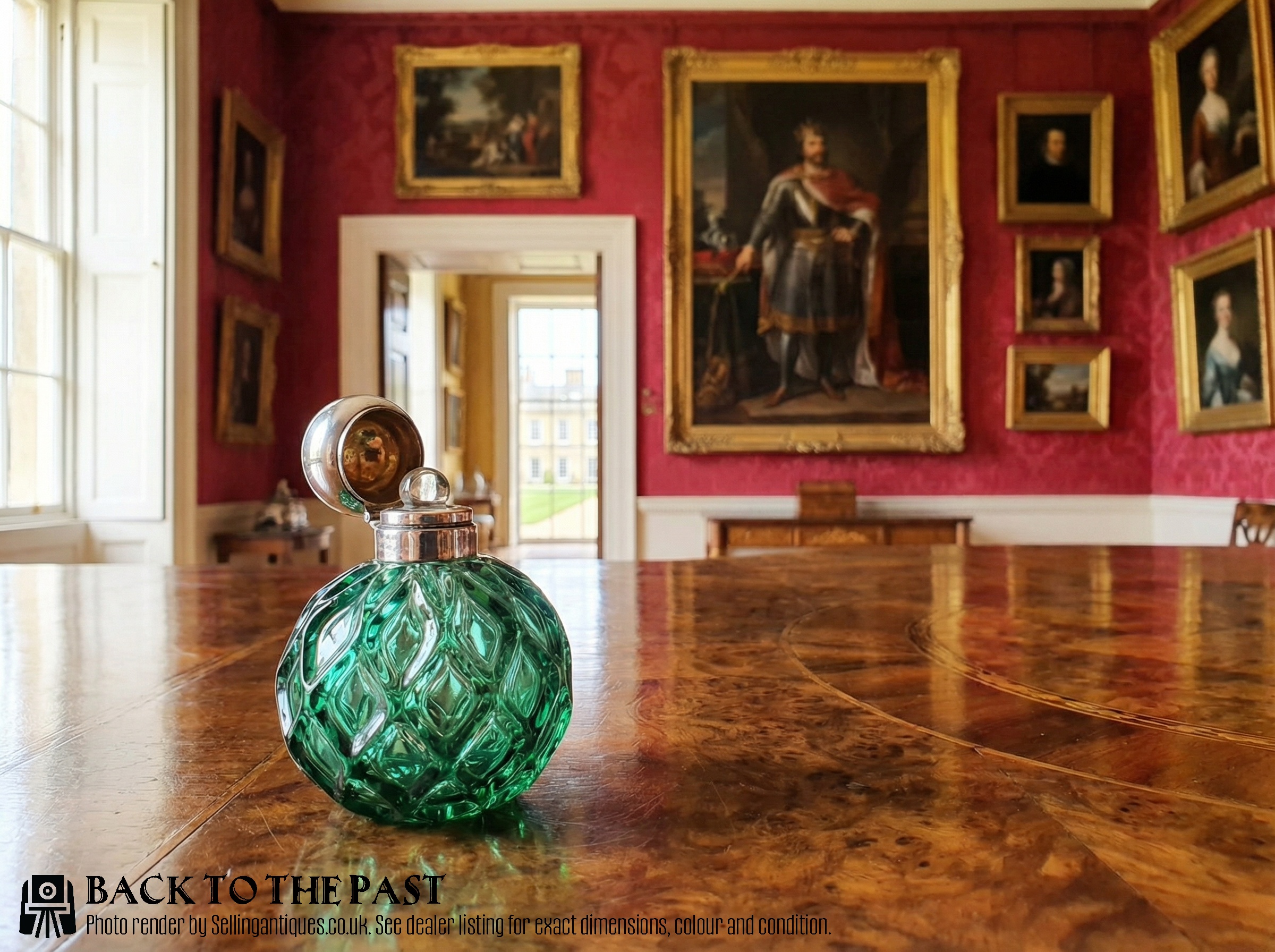
Green glass perfume bottle forms and origins
A green glass perfume bottle brings together functional vanity accessories and decorative coloured glassware spanning the Victorian, Edwardian, and Art Deco periods. The selection ranges from robust nineteenth century cut glass scent bottles with silver caps to streamlined nineteen thirties atomisers.
Victorian examples frequently pair deep green glass with sterling silver collars, hinged lids, or intricate silver overlay, whilst Edwardian pieces introduce American Art Nouveau interpretations and maker marked designs. Art Deco pieces turn towards geometric moulding, malachite glass, and integrated atomiser stands.
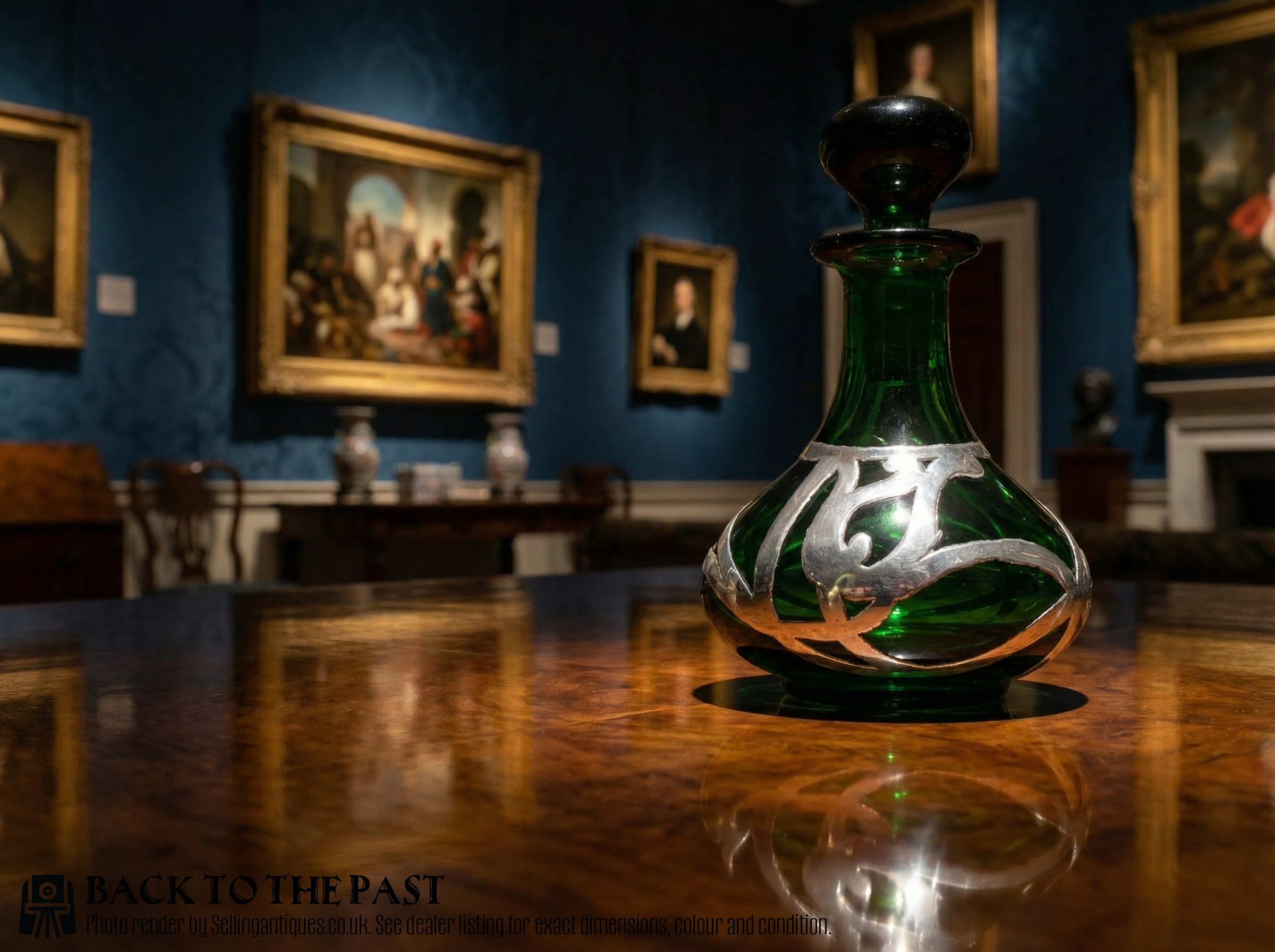
Materials and construction techniques
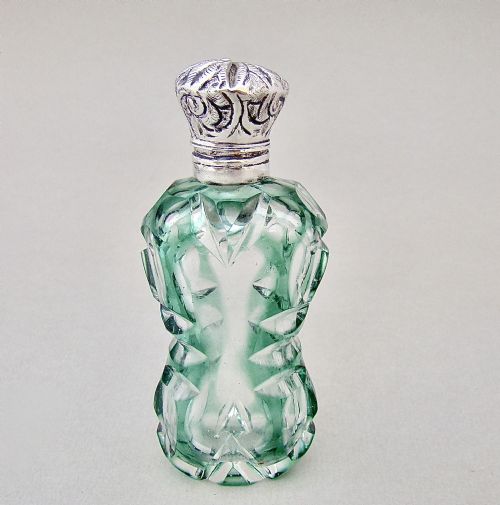
Makers utilised various glass techniques including press moulding, cased overlay where clear glass is dipped in green, and precision cutting to reveal underlying layers. Metalwork components incorporate sterling silver mounts, chrome fittings, and enamel details.
Surface ornamentation extends to gilt decoration, moulded figural motifs, and specialised fabric elements found on period atomisers.
Retail Price Guide 2026
Typical UK retail prices for green glass perfume bottle, calculated from the Sellingantiques database of over a million retail prices indexed since 2003. This retail price guide relies exclusively on Sellingantiques data; no external sources or auction records are used, so the figures do not describe the wider market.
Distinctions in craftsmanship and material execution
Superior execution shows in the depth and clarity of glass cutting, particularly on overlay pieces where precise removal creates crisp contrast against the green body. Hallmarked sterling silver mounts and maker attributions elevate individual items.
Proportion and integrity of original metal caps, atomiser hardware, and matching stands separate standard production wares from finer workshop outputs.
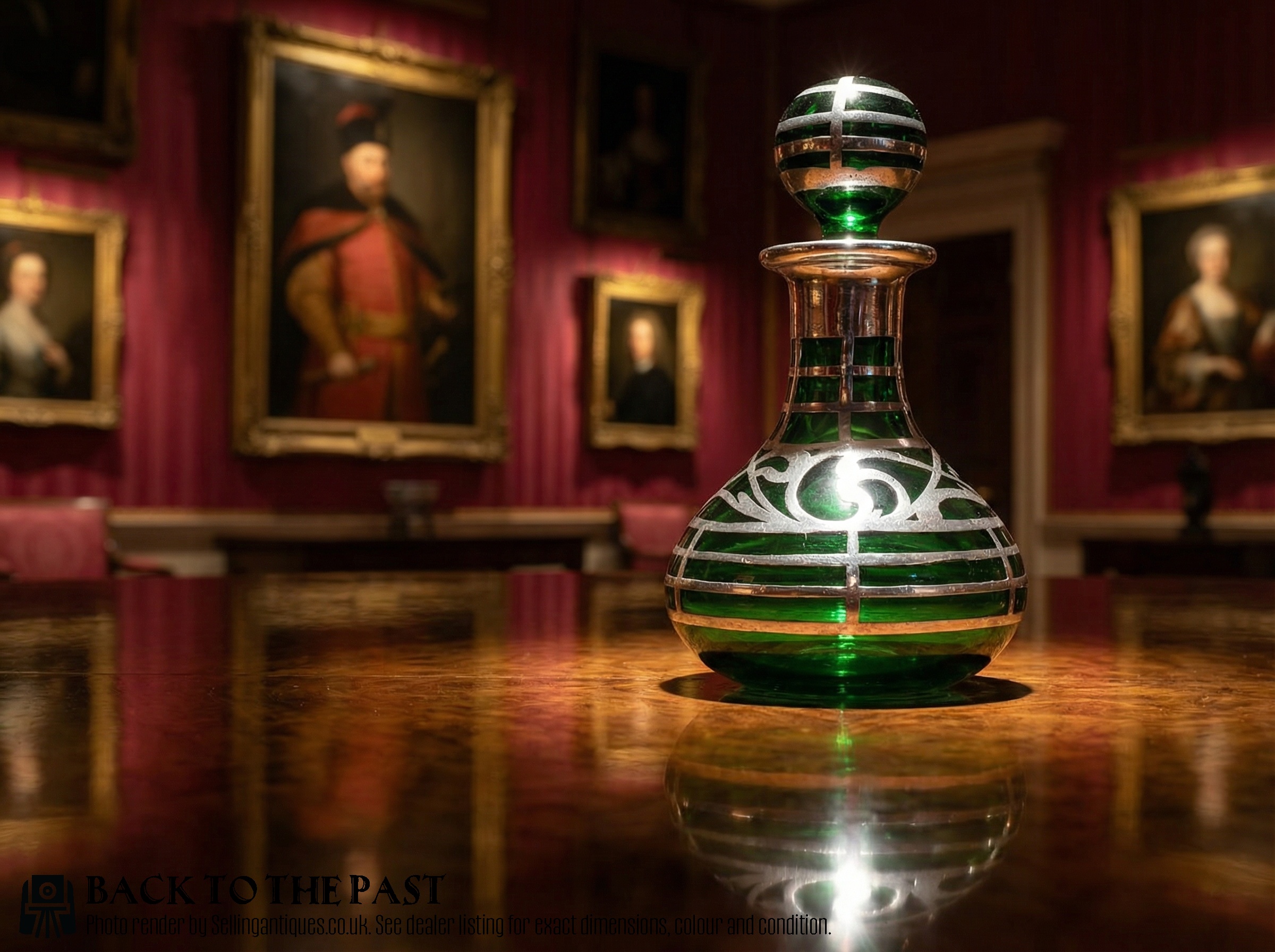
Karl Palda·Hermanova·Henry Matthews
The Green Glass Perfume Bottle Glossary
- Vaseline glass
- A type of glass containing uranium dioxide that exhibits a distinctive yellow-green fluorescence under ultraviolet light. It appears in Victorian scent bottles.
- Overlay
- A manufacturing method where a layer of green glass is fused over a clear or contrasting glass body before being cut away to create patterns. This technique defines many nineteenth century examples.
- Malachite glass
- Pressed glass designed to imitate the mineral malachite, produced in rich green tones with characteristic pooling and veining. It is heavily associated with Art Deco pieces.
- Atomiser
- A spray mechanism fitted to a perfume bottle, often mounted on a stand with a rubber bulb and mesh tube. These emerged prominently in the twentieth century.
- Sterling silver
- A silver alloy containing 92.14 percent silver by mass, widely used for the hinged caps, collars, and decorative overlays on scent bottles. Hallmarks on these mounts provide firm dating evidence.
Frequently Asked Questions
How do I date a green glass scent bottle?
Dating relies heavily on style, manufacturing technique, and any accompanying metal hallmarks. Victorian pieces often feature heavy cut glass and ornate sterling silver caps, whilst Edwardian and Art Nouveau items display flowing organic lines.
Twentieth century Art Deco examples shift decisively towards geometric moulding, pressed malachite effects, and mechanical atomiser stands. Hallmarks on silver collars provide exact assay office years for British silver mounted pieces.
What is vaseline glass?
Vaseline glass is a distinct type of translucent yellow-green glassware containing trace amounts of uranium dioxide as a colourant. Under ultraviolet light, it glows with a bright green fluorescence.
This material appears in nineteenth century scent bottles and adds a striking visual element to antique vanity displays.
Are these bottles safe for modern perfume?
Most antique and vintage scent bottles function best as decorative vanity objects rather than daily fragrance dispensers. Historic stoppers and silver collars rarely create a modern airtight seal, which can lead to evaporation.
Atomisers from the Art Deco period often feature perished rubber bulbs and internal tubing that require careful restoration before liquid use.
What is overlay glass?
Overlay glass involves fusing a layer of green glass over a clear or contrasting glass body during the blowing process. Artisans then cut through the outer green layer using a wheel to expose the glass beneath.
This subtractive technique creates sharp, contrasting patterns of green and clear glass across Victorian perfume bottles.