
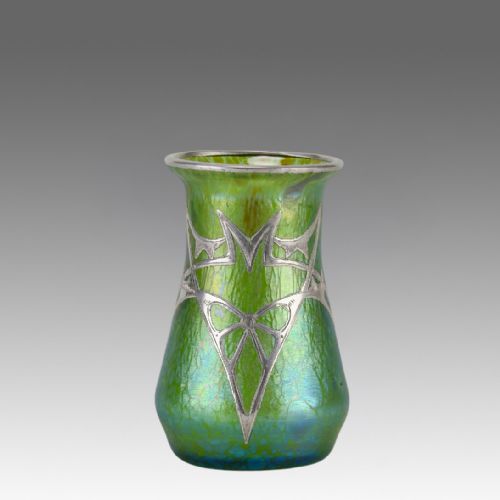
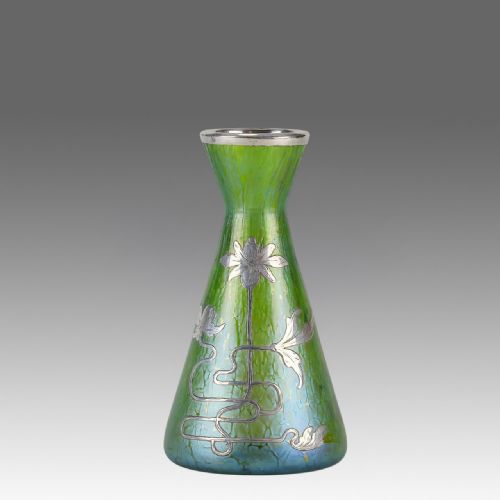


Silver Overlay Glass Vase
A silver overlay glass vase combines iridescent glass with metalwork, offering a striking contrast that defines turn-of-the-century design.
Identifying a silver overlay glass vase
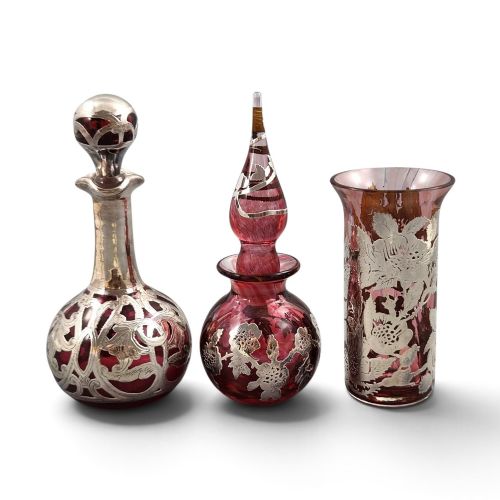
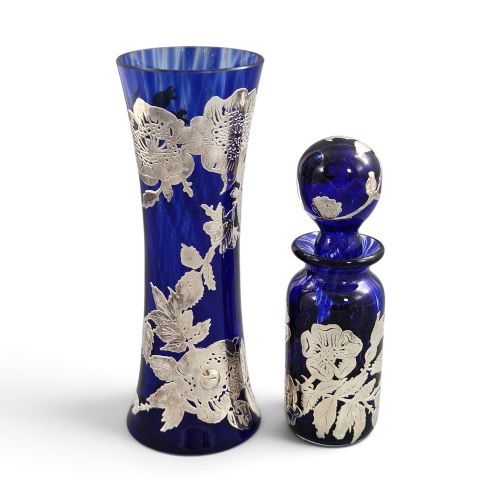
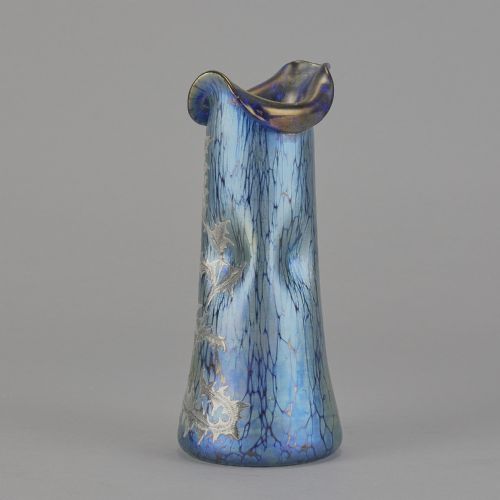
A silver overlay glass vase is an object defined by its integration of glass and sterling silver metalwork. These pieces emerge primarily from the early twentieth century, specifically around nineteen hundred, capturing the aesthetic spirit of their era. When searching for a silver overlay glass vase, collectors encounter forms ranging from conical profiles to baluster shapes and dimpled bodies.
Materials and manufacture
The creation of these objects begins with blown glass vessels, often utilising iridescent or coloured glass bodies such as the blue papillon technique. Craftsmen then apply sterling silver to the exterior surface, forming intricate decorative patterns that adhere permanently to the glass. This process demands precise control to ensure the metal bonds securely with the curved glass substrate without thermal cracking.
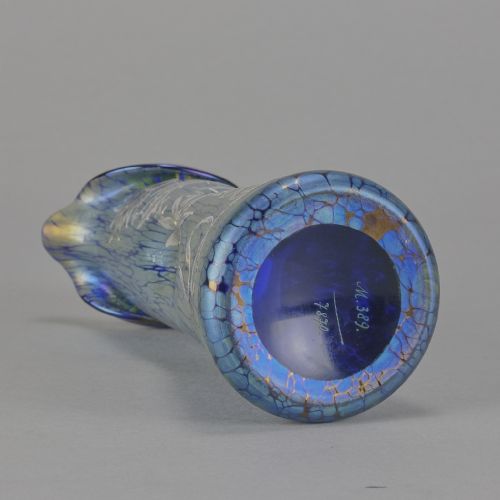
The metal component consists of solid sterling silver or silver overlay, manipulated into organic and geometric designs characteristic of the period. In some instances, maker marks and hallmarks are stamped directly into the silver mount, recording the origin and silver purity. The resulting union relies entirely on the successful thermal and chemical bonding of two fundamentally different mediums.
Current listings feature pieces exclusively from the nineteen hundred period, incorporating iridescent glass, sterling silver, and silver overlay materials.
Judging quality and execution
Quality in these pieces rests upon the harmony between the glass body and the silver decoration, where superior examples exhibit meticulous metalwork that complements the underlying contours. The depth and vibrancy of the iridescent glass also dictate the standing of a piece, with richer papillon effects and unblemished surfaces commanding greater appreciation. The complexity and thickness of the silver overlay further separate standard production from exceptional work.
Attribution plays a role in establishing the standing of an item, as documented output from notable glasshouses like Loetz carries distinct design merit. The crispness of the silver execution, free from sloppy joins or excessive adhesive residue beneath the metal, marks the difference in manufacturing standards. Ultimately, the integration of form, glass coloration, and metalwork determines the overall success of the object.
Loetz Witwe·Johann Loetz·W.D.B&S
The Silver Overlay Glass Vase Glossary
- Silver overlay
- A technique where sterling silver is applied to the exterior of a glass or ceramic vessel in decorative patterns. This method creates a tangible relief design on the surface of the object.
- Iridescent glass
- Glass treated with metallic salts to produce a shimmering, rainbow-like sheen that changes in different lighting conditions. This finish is a hallmark of turn-of-the-century art glass production.
- Art Nouveau
- An international style of art and architecture prevalent around nineteen hundred, characterised by undulating natural forms and asymmetrical lines. It heavily influenced the ornamentation found on these glass and silver pieces.
- Secessionist
- A Central European artistic movement associated with the rejection of historicism in favour of modern, geometric designs. This aesthetic appears alongside organic styles in period glassware.
- Baluster
- A vertical architectural form featuring a swelling lower portion, adapted here to describe the graceful silhouette of certain vases. This shape provides stability while offering a broad surface for silver decoration.
Frequently Asked Questions
What is a silver overlay glass vase?
A silver overlay glass vase is a decorative vessel featuring a glass body embellished with applied sterling silver ornamentation. These pieces date predominantly to the early twentieth century and merge glassblowing artistry with metal smithing.
They serve primarily as decorative objects, capturing the stylistic innovations of the Art Nouveau and Secessionist movements through contrasting textures and reflective surfaces.
How do I identify Art Nouveau glass?
Art Nouveau glass is recognised by its flowing, organic lines, asymmetrical motifs, and incorporation of natural forms such as plants and insects. Makers often employed iridescent finishes to enhance the fluid appearance of the material.
Examining the overall silhouette and the integration of the silver overlay provides further clues regarding the artistic movement and period of manufacture.
What is papillon glass?
Papillon glass refers to a specific iridescent glass finish developed by glassmakers like Loetz, characterised by a mottled, butterfly-wing appearance. The surface catches the light to reveal shifting metallic blues, greens, and purples.
When combined with silver overlay, this technique creates a high-contrast visual effect typical of fine turn-of-the-century decorative arts.
Where were these vases made?
These vases originated in various European centres of glass production, with Austrian workshops such as Loetz producing significant quantities of iridescent art glass. English silversmiths also contributed by applying silver mounts to imported or domestic glass bodies.
Tracing the origin often involves looking for maker signatures, country of origin stamps, or silver hallmarks stamped directly onto the metal overlay.