




Jugendstil Art Glass
Jugendstil art glass captures the fluid, organic impulse of the turn of the twentieth century through iridescent surfaces and natural forms.
Jugendstil Art Glass
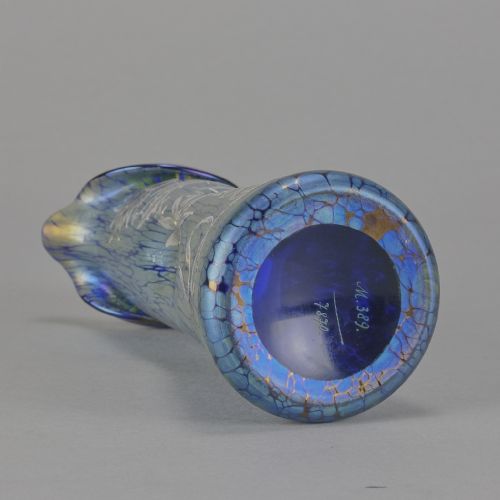
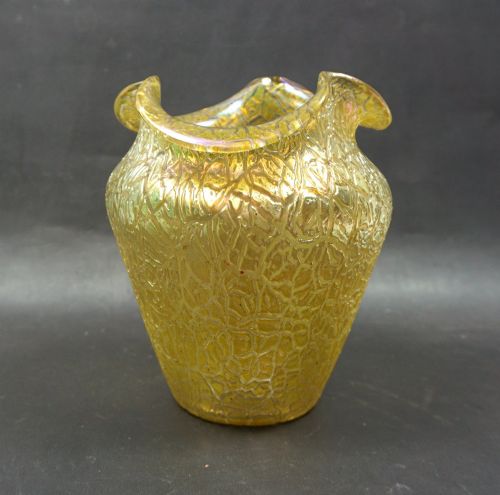
When you search for jugendstil art glass, you are looking at European decorative objects created primarily around nineteen hundred. The pieces on this page span vases, centrepieces, and drinking vessels produced in Bohemia, Germany, and Austria. Forms often mimic natural growth, reflecting the broader design movements of Art Nouveau and the Vienna Secession.
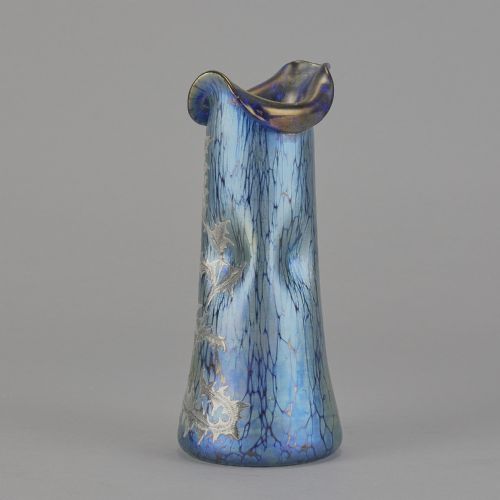
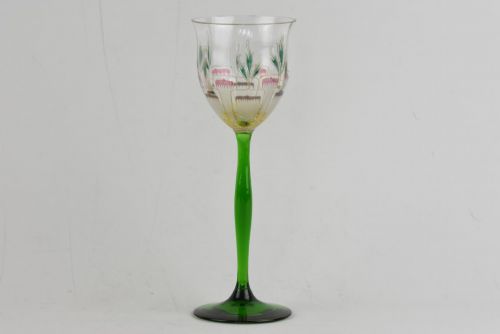
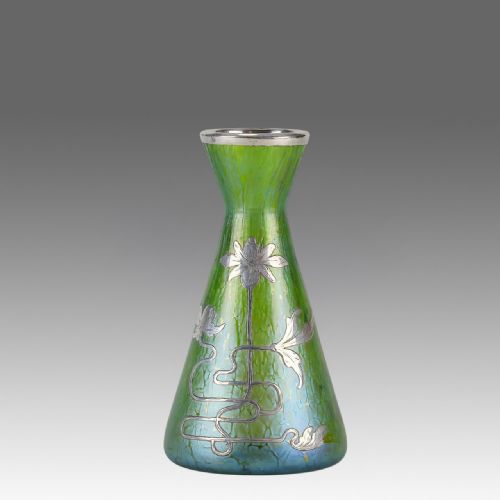
The most common versions met here are iridescent glass vases and vessels mounted in metalwork. Makers such as Loetz and Kralik dominate the glassware, while firms like WMF provide silver-plated and pewter mounts. These items range from simple wine glasses with enamel decoration to large, sculptural centrepieces integrating green vaseline glass.
How they were made
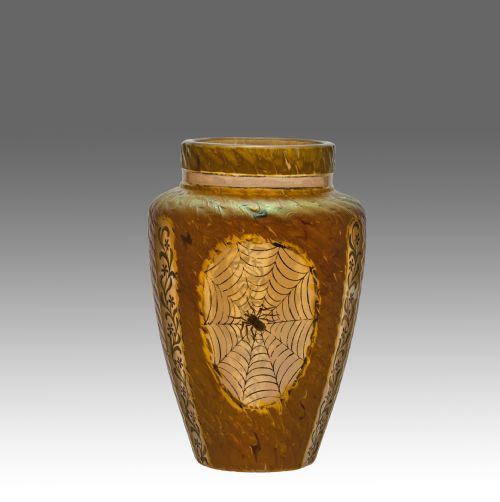
The glass itself relies on chemical treatments applied while hot to achieve metallic, iridescent sheens like the papillon or candia effects. Molten material was blown into organic shapes, sometimes manipulated while cooling to create spider webs, ripples, or tadpole textures. Enamel and gold leaf were frequently added by hand to the cooled surface before a secondary firing.
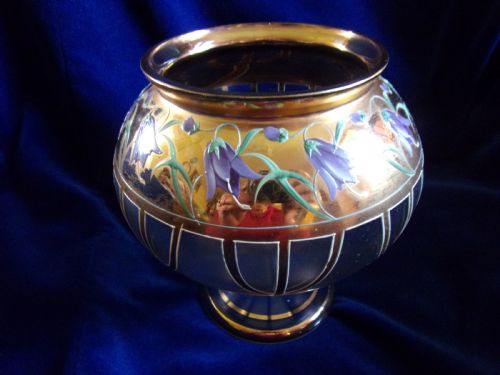
Metal components were shaped using silver plating, pewter casting, and brass fabrication. Pewter overlays and figural mounts were cast and then applied directly to the glass bodies, often secured with collars or collars of sterling silver. Enamel decoration on crystal hock glasses and wine vessels required precise brushwork by specialised decorators.
Some vessels feature tadpole and spider web glass textures that capture insects permanently frozen in iridescent motion.
What varies in quality
Quality rests on the depth of the iridescence and the ambition of the glass form. Superior pieces exhibit complex, shifting optical effects across the surface rather than flat colour. The marriage between the glass body and any metal mount also dictates the standard of the piece, with integrated designs outperforming simple later additions.
The weight and detail of the metalwork mark the tier of the object. Cast pewter or silver-plated mounts with crisp figural relief represent higher production values than plain stamped collars. Hand-enamelled glass with crisp polychrome detail sits above mass-produced transfer decoration.
Loetz Witwe·Kralik Glass·Theresienthal·Gustave Serrurier Bovy·Frits Hechert·Ferdinand von Poschinger·Adelbert Niemeyer·Orivit
The Jugendstil Art Glass Glossary
- Iridescent glass
- Glass treated with metallic salts during blowing to create a rainbow sheen. This optical effect shifts colour under changing light.
- Jugendstil
- The continental German-language variant of Art Nouveau. It takes its name from the Munich art magazine Die Jugend.
- Secessionist
- A design movement associated with artists who broke from traditional academies in Vienna and Munich. The style favours geometric restraint alongside organic curves.
- Pewter
- An alloy of tin mixed with copper and antimony used extensively for metal mounts. In this period it was frequently silvered for a brighter finish.
- Vaseline glass
- Glass containing uranium dioxide that glows under ultraviolet light. It appears in transparent yellow or green shades.
Jugendstil Art Glass: Frequently Asked Questions
What is jugendstil art glass?
It is decorative glassware produced in central Europe around nineteen hundred during the height of the Art Nouveau movement. The pieces utilise natural forms and experimental chemical treatments.
Items range from everyday wine glasses to sculptural vases and table centrepieces. Makers focused on optical effects like iridescence and organic silhouettes.
How do I identify Loetz glass?
Loetz pieces typically feature distinctive iridescent surfaces such as the papillon or candia finishes. The glass is often unsigned, relying on shape, weight, and colour characteristics for attribution.
Many examples also incorporate metal mounts or silver overlays. The factory was based in Bohemia and remains the most prominent producer of this style.
What is the difference between art nouveau and jugendstil?
Art Nouveau is the broad international term for the decorative style spanning the late nineteenth and early twentieth centuries. Jugendstil specifically describes the manifestation of this movement within German-speaking countries.
Both share a rejection of historical revivalism in favour of natural motifs. Jugendstil designs can lean slightly more towards geometric abstraction in certain Secessionist examples.
How should I display these glass pieces?
Display these items where natural light can catch the iridescent surfaces and coloured glass bodies. Placing them near a window enhances the shifting metallic sheens.
Ensure stable surfaces for tall vases or items with metal mounts. Avoid placing delicate enamelled glassware in direct, harsh sunlight for extended periods.