

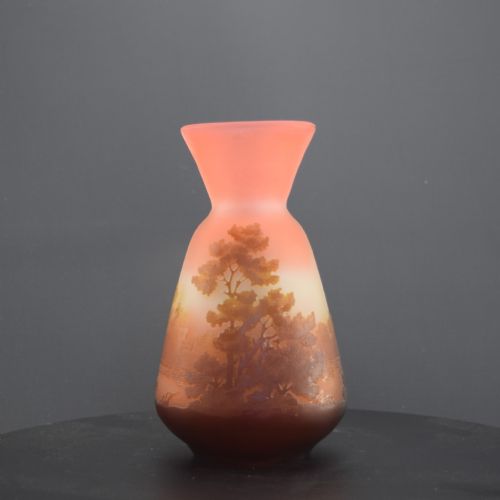
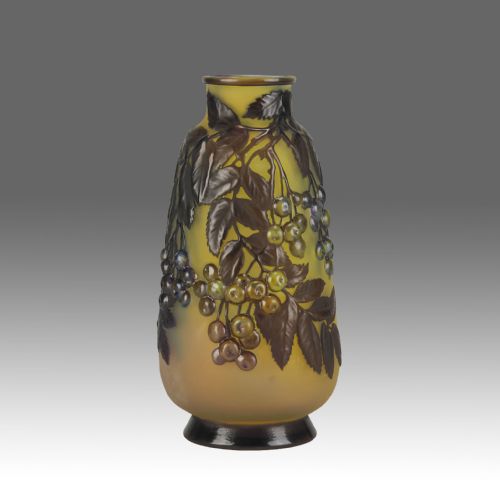


Emile Galle Cameo Vase
An emile galle cameo vase brings the rich plant forms and quiet landscapes of Art Nouveau into a room through layered glass.

Emile Galle Cameo Vase
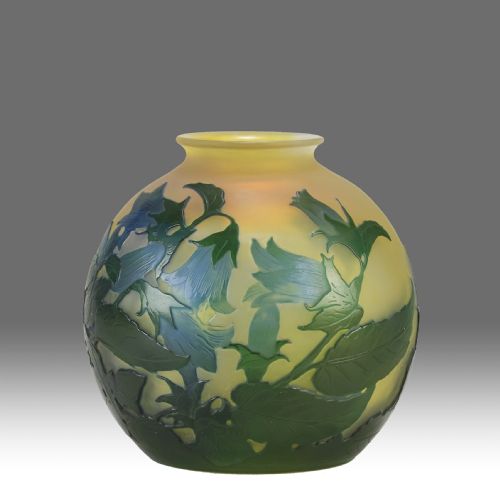
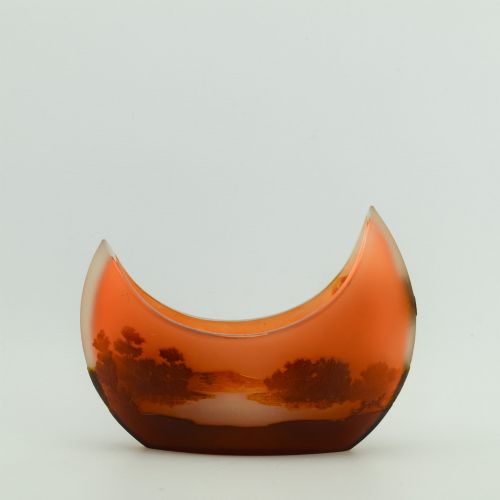
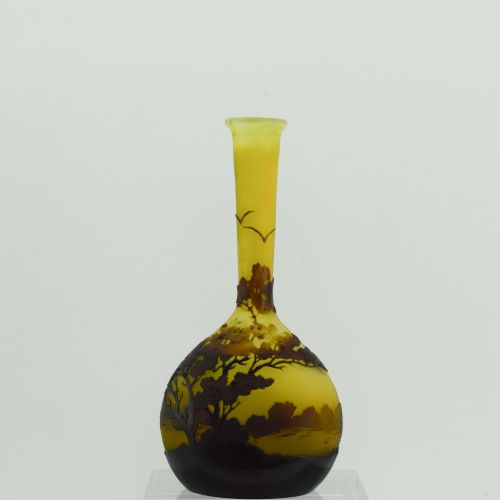
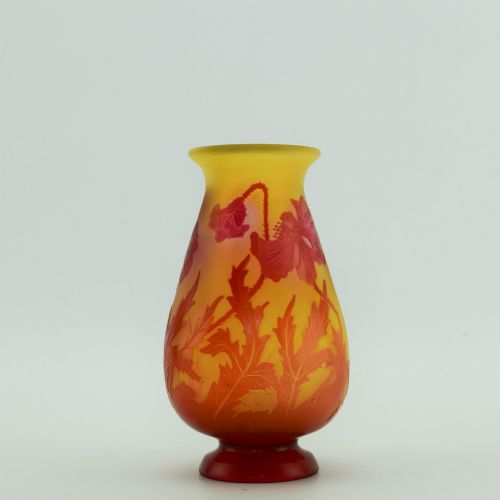
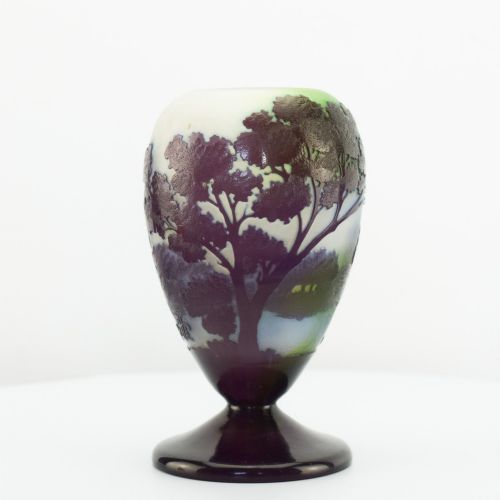
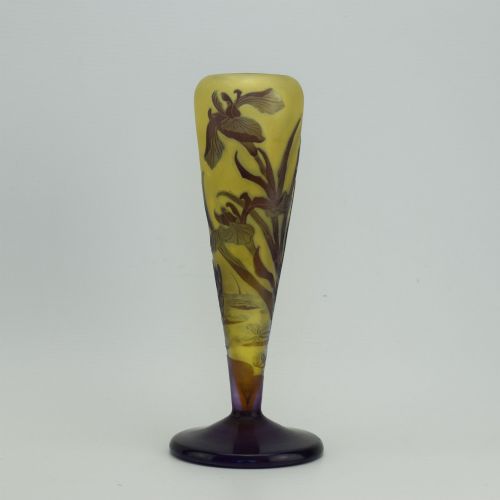
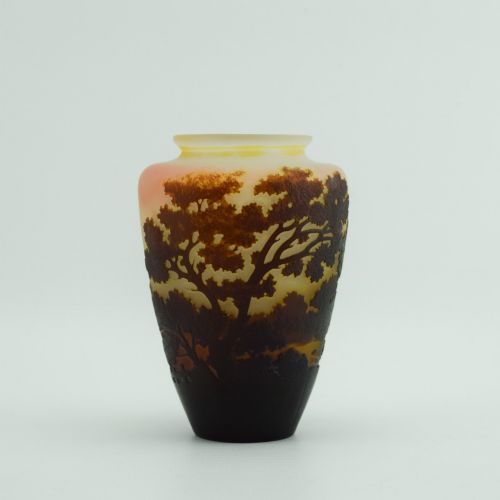
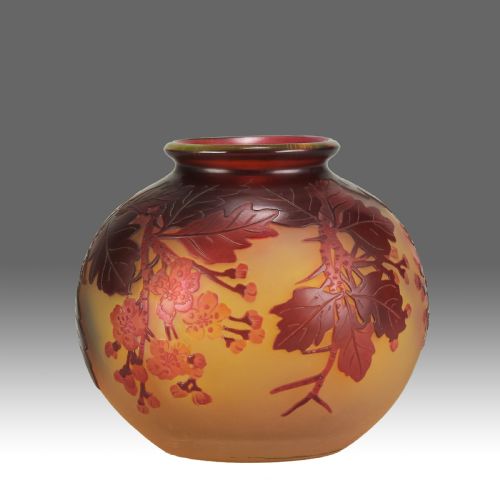
When you search for an emile galle cameo vase, you are looking at works from the early twentieth century defined by natural motifs. The pieces range from tall floral vessels to crescent shapes and banjo forms, capturing nature in coloured glass.
Botanical subjects dominate the selection, featuring campunula, poppies, cornflowers, apple blossom, honeysuckle, hydrangeas, begonias, oak leaves, clematis, fern, and sycamore. Aquatic themes and Vosges landscapes also appear frequently across the periods.
The objects belong to the Art Nouveau movement and span the decades from nineteen hundred through to nineteen thirty. Most examples you will meet date from nineteen hundred to nineteen twenty, reflecting the peak years of production.

What varies in quality
Quality rests upon the depth of the cameo carving and the complexity of the glass layering. Pieces with multiple colour strata reveal subtle tonal shifts in the brown, peach, orange, red, and yellow glass.
The strength and clarity of the botanical or landscape design separate standard production from finer examples. Balanced composition and precise acid-etching give certain vases a striking presence.
Some vases capture specific foliage like oak leaves and acorns, or even an elephant procession.
Emile Galle
The Emile Galle Cameo Vase Glossary
- Cameo Glass
- Glass formed with multiple distinct layers of differing colours where outer layers are carved or etched away to create a raised design. This technique allows for intricate, multi-toned pictorial scenes.
- Acid-Etched Glass
- Glass treated with acid to eat away the surface and reveal patterns or background textures. It creates a matte finish distinct from polished glass.
- Frosted Glass
- Glass treated to have a textured, translucent appearance rather than a clear finish. It diffuses light gently across the body of the vase.
- Art Nouveau
- A decorative style of the late nineteenth and early twentieth centuries inspired by natural forms and curved organic lines. It heavily influenced European glassmaking of the period.
- Blow-Out
- A technique where hot glass is expanded into a mould to achieve a pronounced, three-dimensional shape. It produces deep relief work within the vessel walls.
Emile Galle Cameo Vase: Frequently Asked Questions
How do I identify an emile galle cameo vase?
Look for layered glass carved with natural motifs like flowers, trees, or landscapes from the early twentieth century. The signature of the maker usually appears worked directly into the cameo design.
Examine the depth of the etching and the harmony of the coloured glass layers. Authentic pieces show careful control of acid-cutting to bring out fine botanical details.
What periods do these vases come from?
The available pieces date from the early twentieth century, spanning the decades between nineteen hundred and nineteen thirty. Most examples belong to the height of the Art Nouveau movement.
Production methods evolved slightly over these decades, moving from dense floral compositions towards varied landscape and aquatic subjects in the nineteen tens and twenties.
How should I display an emile galle cameo vase at home?
Place the vessel where natural light can pass through the translucent glass layers. This illuminates the coloured cameo design and highlights the etched details against the frosted background.
Keep the piece away from direct heat sources and busy table edges. Allowing space around the vase lets the organic form and botanical subject stand out in the room.
What subjects appear on these vases?
Botanical studies form the largest group of designs, featuring flowers and leaves such as poppies, cornflowers, hydrangeas, and sycamore. Trees and woodland scenes also feature prominently.
Water plants and aquatic themes appear alongside landscapes depicting the Vosges region. These varied subjects reflect a deep interest in the natural world during the Art Nouveau period.