




Red Cameo Glass Vase
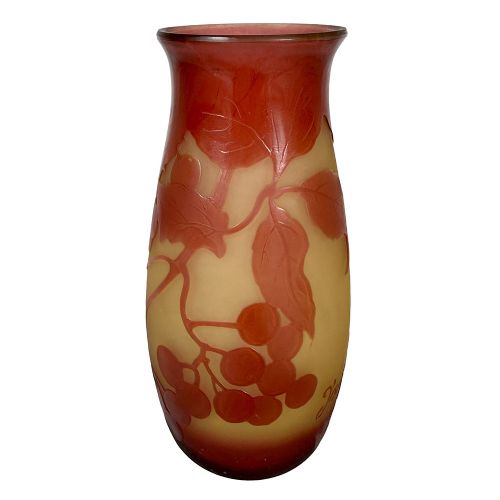
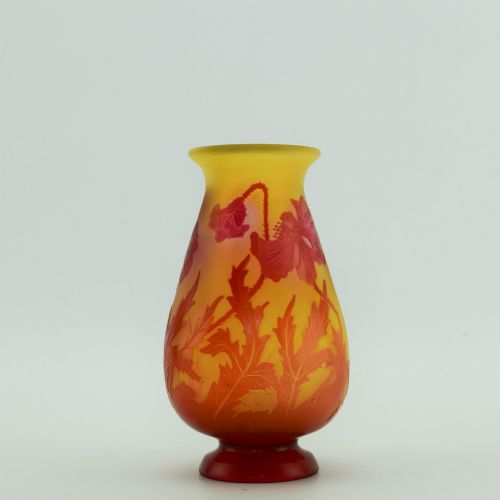
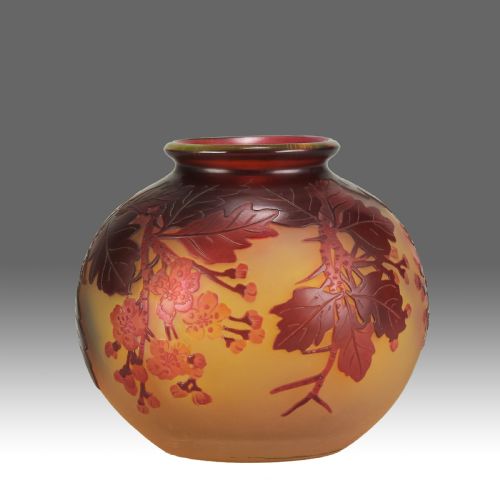
A red cameo glass vase brings rich colour and layered depth to a room, catching the light through carved botanical motifs.

Red Cameo Glass Vase
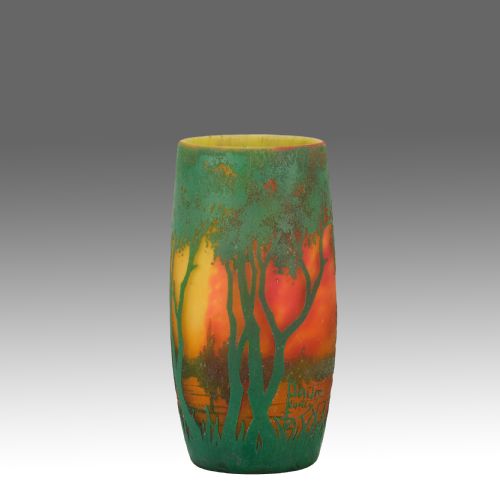
A red cameo glass vase is a striking decorative vessel formed from multiple layers of coloured glass and carved back to reveal a contrasting design. When someone searches for a red cameo glass vase, they seek these dramatic pieces of layered glasswork that showcase intense crimson or ruby tones against lighter backgrounds. The examples found here span the late Victorian era through the Art Nouveau and Art Deco periods, capturing floral and botanical subjects such as poppies, wisteria, and red currants.
The most common versions met on this page are French and English creations from the turn of the twentieth century. Makers such as Emile Gallé, Daum Frères, Thomas Webb and Sons, and Baccarat dominate the origins, working in blown glass with acid-etched and fire-polished finishes. These vases take various forms, from small cabinet pieces to large footed vessels and blow-out shapes.

Materials and technique
These vessels start as blown glass gathered in multiple layers of distinct colours, typically with a vibrant red outer casing over a frosted or yellow ground. Craftsmen then utilise acid-etching alongside wheel-carving to eat away the upper layers and leave the raised design standing proud.
Makers often incorporate gold leaf or employ special fire-polishing techniques to soften the etched surface and give the glass a luminous, glossy finish. The complexity of handling multi-layered glass requires precise timing during the cooling and cutting stages.
Red Cameo Glass Vase Retail Price Guide 2026
Typical asking prices for red cameo glass vase among the pieces listed under this phrase on Sellingantiques today, from the lower quarter to the upper quarter. They describe what is for sale here now, not the wider market.
Listings feature pieces spanning the Victorian period through the Art Nouveau and Art Deco movements, utilising blown and frosted glass.
Judging quality in cameo glass
Quality rests in the depth of the carving and the crispness of the detail where the red layer meets the background. Superior pieces display subtle undercut work that gives petals and leaves a realistic, three-dimensional separation from the body of the vase.
The harmony of the colour gradient within the glass layers also separates standard production from the finest output. Expert manipulation of light passing through multi-layered red and yellow hues creates a richness that simpler, flatly etched surfaces lack.
Emile Galle·Daum Freres·Thomas Webb and Sons·Baccarat·Paul Nicolas
The Red Cameo Glass Vase Glossary
- Cameo glass
- Glassware produced by fusing layers of different colours and carving away portions to create a relief design. This technique draws inspiration from ancient carved gemstone vessels.
- Acid-etched glass
- Glass treated with hydrofluoric acid to eat away exposed areas and form patterns. This process allowed workshops to produce intricate floral motifs efficiently before final hand-carving.
- Fire-polished
- A finishing method where the etched glass is briefly reheated to melt microscopic surface roughness. This restores a brilliant, glossy sheen to the carved portions.
- Blow-out vase
- A piece of glass blown into a heated metal mould so the molten material expands into high relief. Master craftsmen then hand-carved the resulting shape to refine the botanical details.
- Multi-layered
- Glass constructed from three or more gathers of coloured metal in the furnace. This build-up provides the contrasting depths necessary for shaded floral designs.
Red Cameo Glass Vase: Frequently Asked Questions
Where should I display a red cameo glass vase?
Place the vase near a natural light source, such as a windowsill or a lighted cabinet, to illuminate the layered red tones. Letting light pass through the glass reveals the hidden depth of the acid-etched botanical motifs.
Ensure the location is stable and away from heavy household traffic to prevent accidental knocks. Because these pieces are fragile, a secure shelf at eye level allows for the best appreciation of the carved details.
How can I tell Art Nouveau from Art Deco pieces?
Art Nouveau examples feature flowing, organic lines inspired by nature, including winding stems, clematis flowers, and naturalistic poppy seed heads. The carving tends to be asymmetrical and follows the fluid curves typical of the late nineteenth and early twentieth centuries.
Art Deco items adopt a more geometric, stylised approach with symmetrical floral arrangements and cleaner architectural silhouettes. The transition between these styles occurs gradually across the first three decades of the twentieth century.
What is the difference between signed and unsigned vases?
Signed pieces bear the etched, cameo, or enamelled mark of the maker or workshop on the body or base. These signatures provide direct attribution to houses like Gallé or Daum, which often influences how collectors evaluate the piece.
Unsigned vessels may still demonstrate exceptional craftsmanship, superior carving depth, and identical material composition to signed examples. Many smaller cabinet pieces or unsigned production runs from respected factories share the same technical mastery.