
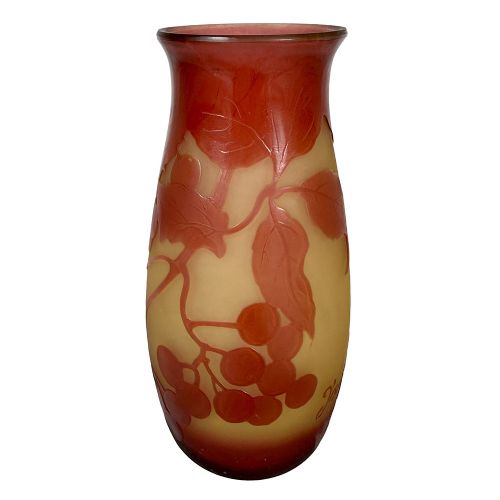
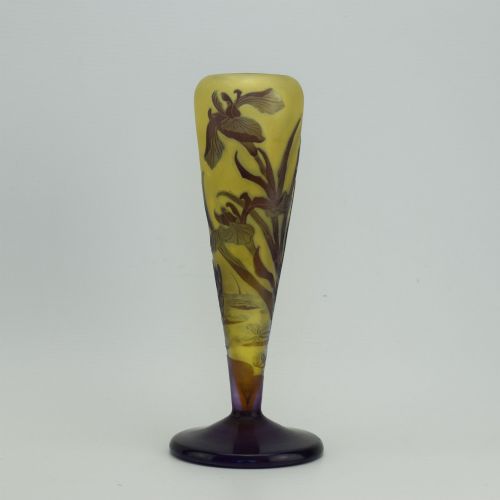


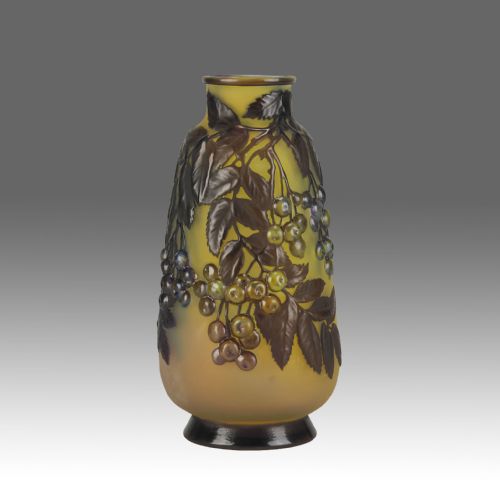


Botanical Cameo Glass Vase
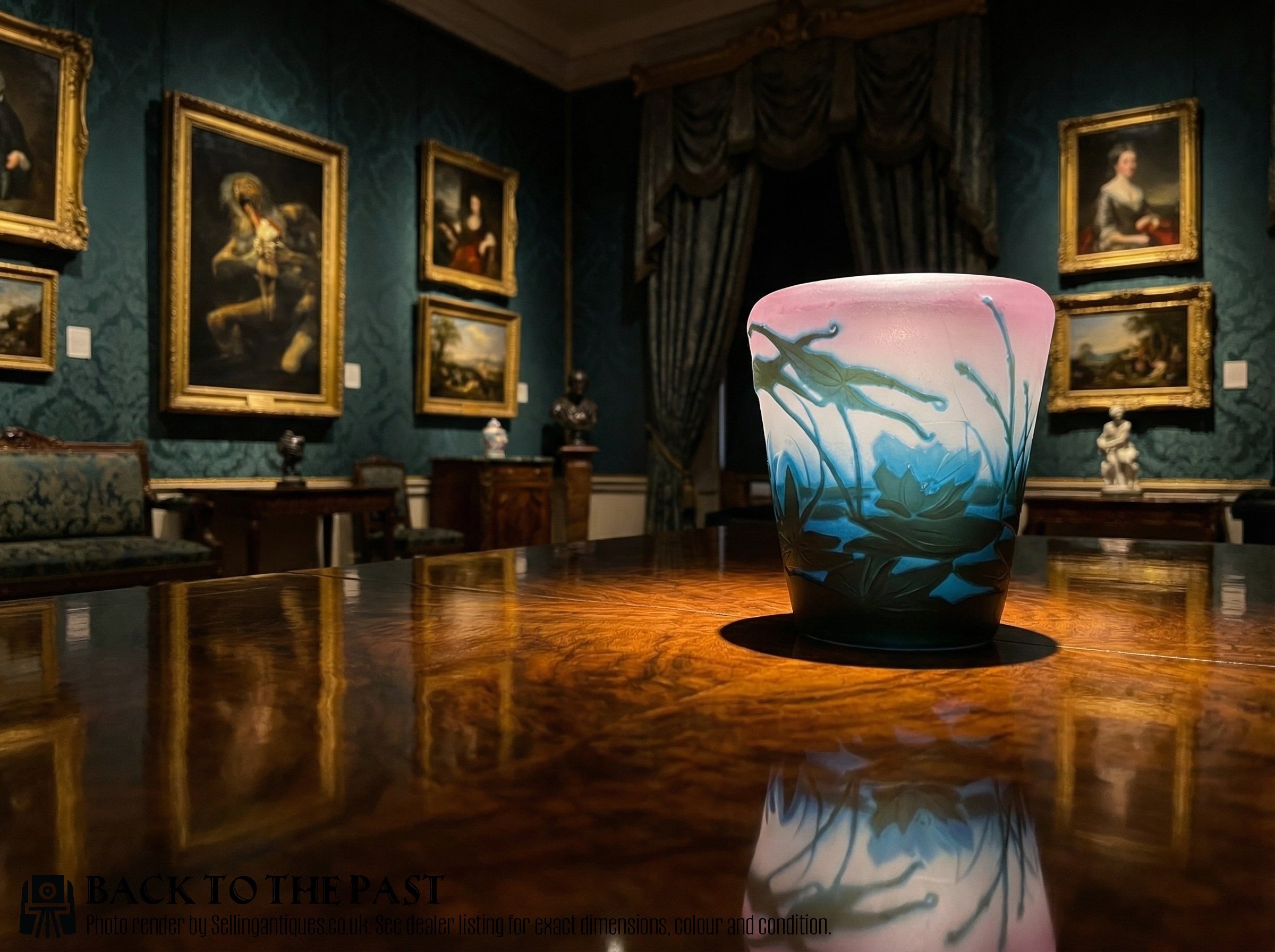
A botanical cameo glass vase brings the fluid lines and natural flora of the Art Nouveau period directly into a room.
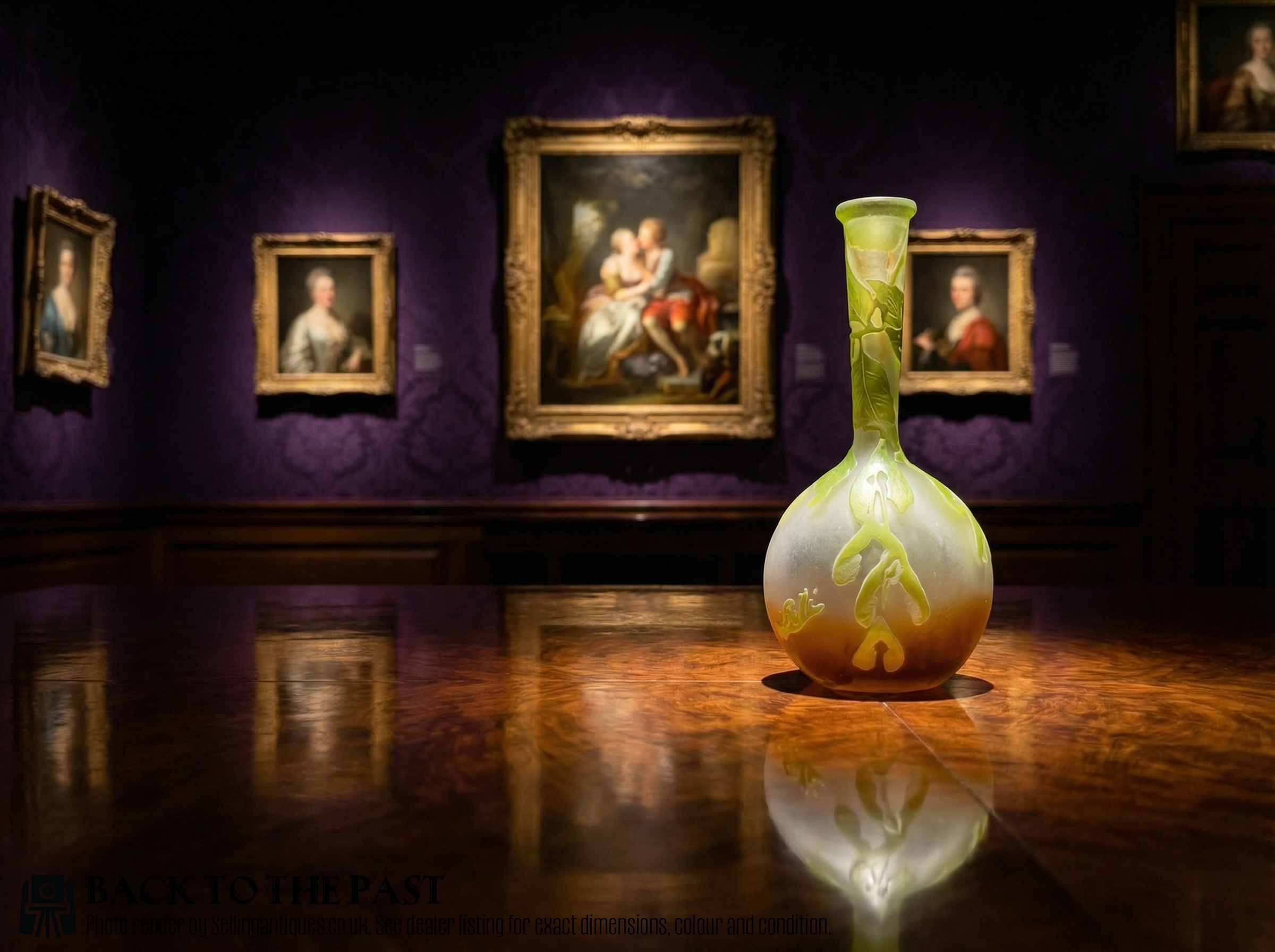
Botanical Cameo Glass Vase
When you search for a botanical cameo glass vase, you encounter works shaped around floral and aquatic motifs created during the late nineteenth and early twentieth centuries. These vessels typically emerge from the Art Nouveau movement, capturing organic forms through layered glass techniques.
The pieces on this page span from the eighteen-nineties into the nineteen-twenties, showcasing plant life such as irises, cornflowers, begonias, blackberries, and sycamore leaves. Makers rendered these botanical subjects in high relief, creating distinct visual depth on each vessel.
You are most likely to meet French output from this era, particularly vessels originating from workshops in Nancy. These objects combine sculptural relief with naturalistic subjects, defining the core aesthetic of botanical cameo glass.
How they were made
Artisans built these vessels using cameo glass techniques, layering contrasting colours of glass molten together before carving or acid-etching the surface to reveal the design. This process demanded precise thermal control and steady hand-carving to ensure the background receded while the floral motifs stood proud.
Makers occasionally enhanced the layered glass with frosted finishes, enamel details, or delicate applications of gold leaf. These secondary treatments highlighted specific botanical elements like petals and leaves against the textured ground.
Botanical Cameo Glass Vase Retail Price Guide 2026
Typical asking prices for botanical cameo glass vase among the pieces listed under this phrase on Sellingantiques today, from the lower quarter to the upper quarter. They describe what is for sale here now, not the wider market.
Materials recorded across the inventory include cameo glass, acid-etched glass, frosted glass, enamel, enamelled glass, and gold leaf.
What varies in quality
Quality in these vessels rests upon the depth of the carving and the complexity of the glass layers. Superior examples exhibit subtle gradations of tone and crisp relief work where the floral subject reads with absolute clarity.
The ambition of the botanical design also separates standard production from exceptional artistry. Pieces featuring multi-layered colourways and intricate aquatic or floral scenes demand greater technical mastery from the glasshouse.

Gallé·Emile Gallé·Daum Frères·Baccarat
The Botanical Cameo Glass Vase Glossary
- Cameo glass
- A vessel formed of two or more distinct layers of coloured glass fused together, where the outer layer is carved or etched away to create a raised design. This technique requires exceptional skill to maintain even thickness across the carved surface.
- Acid-etched glass
- A process utilising acid to eat away the surface glass, either to create the entire cameo design or to matte the background. It allows for precise control over texture and depth.
- Frosted glass
- Glass treated to achieve a cloudy or matte translucent appearance rather than a high gloss finish. It frequently serves as a contrasting background for polished botanical motifs.
- Enamel
- Opaque glass paint applied to the surface and fired to fuse permanently with the vessel. It provides fine decorative highlights on top of the cameo structure.
- Gold leaf
- Extremely thin beaten gold applied to portions of the glass decoration. It adds a luminous metallic accent to the naturalistic motifs.
Botanical Cameo Glass Vase: Frequently Asked Questions
What periods do these pieces date from?
The listings on this page originate primarily from the turn of the twentieth century, specifically between eighteen-ninety and nineteen-twenty. This timeframe captures the height of the Art Nouveau movement in France.
Production methods established during these decades relied on traditional glasshouse techniques combined with innovative chemical etching and carving processes.
Which plants appear most frequently?
Motifs drawn from nature dominate these vessels, featuring aquatic plants, irises, cornflowers, begonias, blackberries, and sycamore leaves. Designers observed botanical subjects closely to render them with naturalistic accuracy.
This focus on flora reflects the broader preoccupation with organic forms shared by artists working within the Art Nouveau style.
How do acid-etching and carving differ?
Carving involves mechanical removal of the outer glass layer using wheels and cutting tools, yielding sharp edges and varied depths. Acid-etching relies on chemical baths to dissolve the unwanted glass, sometimes combined with hand-carving.
Both methods served to isolate the botanical motif from the background layer of the vessel.
Where were these glass pieces made?
The works shown here were produced in France by prominent glasshouses and studios operating during the late nineteenth and early twentieth centuries. Nancy served as a primary centre for this specific type of decorative glass production.
Master glassmakers in these workshops refined the multi-layered cameo techniques that define the genre.