


Frosted Glass Floral Vase
These frosted glass floral vase examples bring organic plant motifs and tactile surfaces straight into a room, offering botanical charm with distinct period character.

Frosted Glass Floral Vase
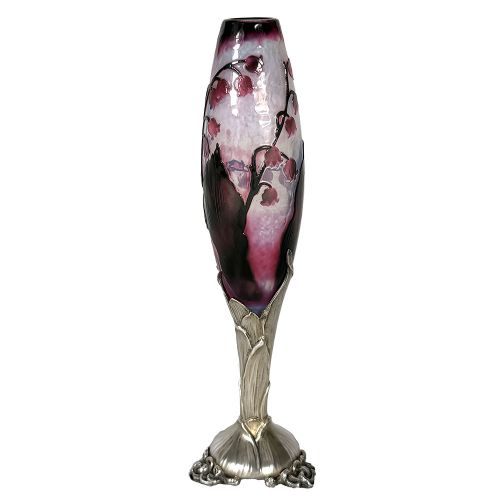
When searching for a frosted glass floral vase, collectors encounter pieces shaped by Victorian tastes and later twentieth-century movements including Art Nouveau and Art Deco. The selection centres heavily upon French glassworks, with botanical forms such as poppies, cornflowers, and sweet peas dominating the decorative subjects. These vessels display natural plant motifs rendered through specialist surface treatments upon glass.
The most common examples on this page date from the early twentieth century, specifically around nineteen hundred and nineteen twenty, representing peak periods of cameo and opalescent glass production. Vases take various forms, from standard vessels to footed pieces, banjo shapes, and large display items measuring significant heights. Each piece translates floral subjects into tactile glass bodies through techniques developed by master glassmakers.
Materials and production methods
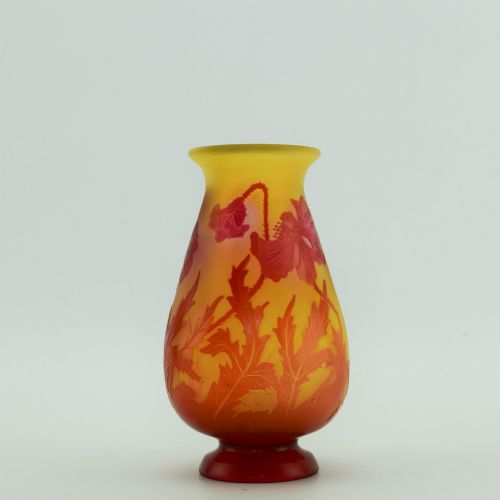
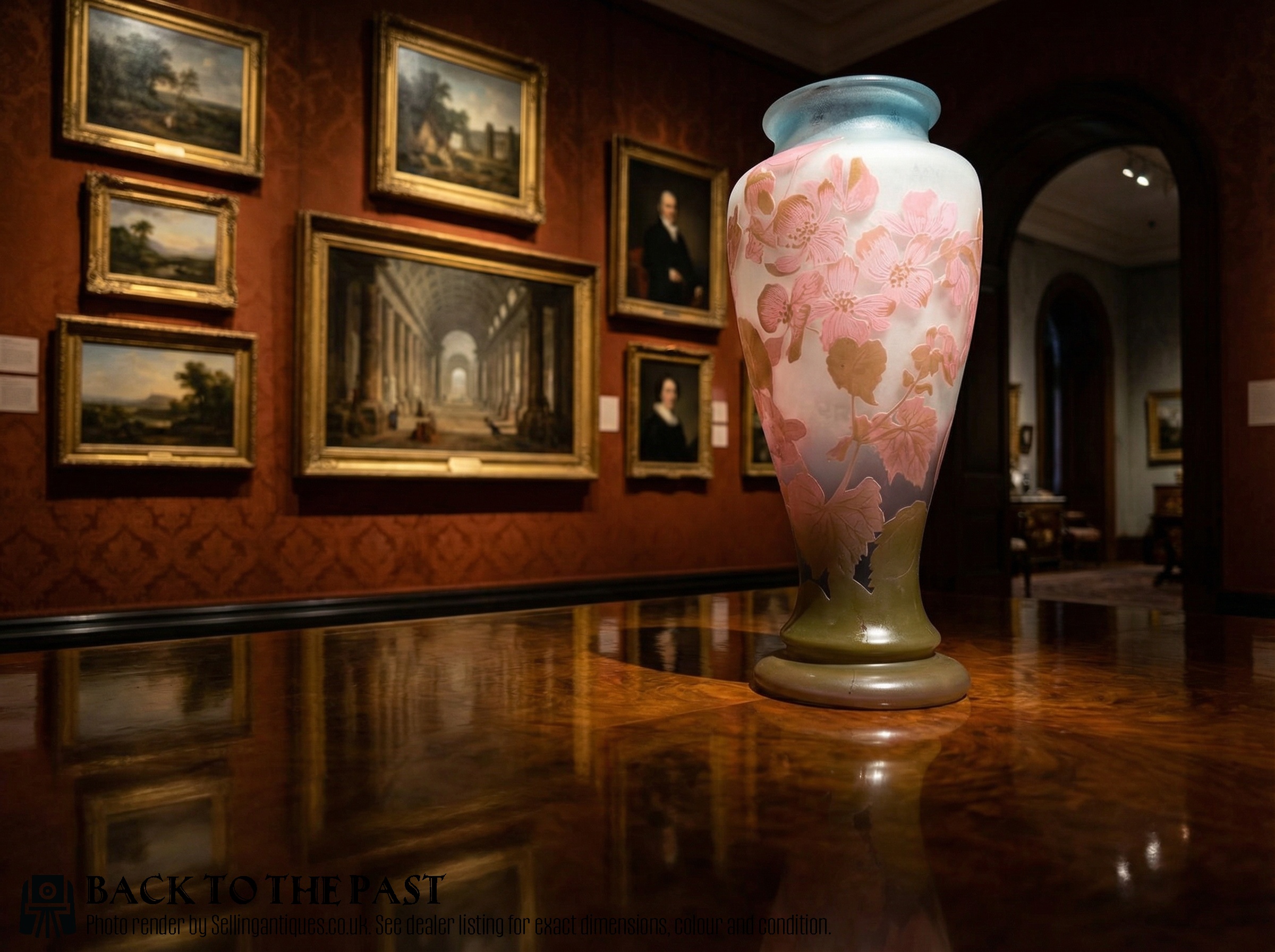
Maker workshops utilised cameo glass, frosted glass, acid-etched glass, and opalescent glass to create dimensional floral decoration. Acid-etching ate away layers of glass to reveal contrasting coloured backgrounds and foregrounds, producing high-relief botanical details such as ferns, hydrangeas, and iris flowers. Enamel and crystal additions further augmented select pieces, adding subtle colour accents to the textured surfaces.
Techniques such as souffle or blow-out methods allowed makers to push heated glass into complex moulds before applying surface finishing. This combination of moulding, chemical etching, and manual cameo carving achieved the characteristic matte texture seen across the selection. The interplay between clear and frosted areas gives these vases their distinctive depth.
Several vases are named after specific garden plants including sweet peas, cornflowers, hydrangeas, and clematis.
Assessing quality in period glass
Quality rests upon the crispness of the botanical carving and the complexity of the glass layers utilised by the maker. Superior vessels show sharp relief work where delicate stems, petals, and leaves detach cleanly from the frosted background without blurred edges. The depth of acid-etching and the precision of any manual enamel detailing elevate the execution of the piece.
The sophistication of the form and the clarity of the signature also determine distinction within this category. Pieces carrying clear maker signatures from prominent French glassworks demonstrate greater refinement in design and material formulation. The overall balance between the glass body and the naturalistic floral subject dictates the success of the finished vessel.
Emile Galle·Daum Nancy·Thomas Webb And Sons·R Lalique·Paul Nicolas
The Frosted Glass Floral Vase Glossary
- Cameo Glass
- Glass vessels created by fusing two or more layers of different coloured glass and carving away the outer layers to form raised designs. This demanding technique requires immense skill to avoid cutting through to the background layer.
- Opalescent Glass
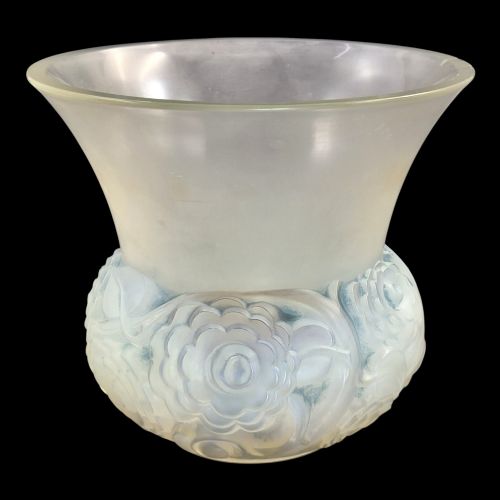
- Glass that diffuses light and displays milky or pearlescent blue and amber tones depending on the angle of illumination. It was heavily utilised during the Art Deco period to give floral motifs a luminous quality.
- Acid-Etched Glass
- Glass treated with hydrofluoric acid to eat away exposed surfaces and create matte frosted textures or low-relief patterns. It enabled workshops to produce detailed botanical designs efficiently.
- Souffle
- A technique involving glass blown into a metal cage or mould to expand the material into intricate high-relief shapes. This method produced voluminous vessels featuring prominent floral forms.
- Enamelled Glass
- Glass decorated with melted glass powders fused onto the surface to introduce permanent colour highlights. This process added painted botanical details over etched or frosted grounds.
Frosted Glass Floral Vase: Frequently Asked Questions
How do I clean frosted glass?
Wash frosted glass gently using warm water and mild liquid soap with a soft sponge, avoiding harsh chemical cleaners that might damage delicate surface textures. Rinse thoroughly and dry with a lint-free cloth to prevent water spots.
Take particular care with pieces featuring enamelled details or delicate cameo relief work. Submerging antique glass is generally discouraged; instead, wipe surfaces carefully to preserve the matte finish.
What is cameo glass?
Cameo glass is a vessel formed from multiple fused layers of coloured glass where the exterior layer is carved or acid-etched away. This reveals contrasting designs, most commonly floral and botanical motifs, standing in high relief against the background.
The process demands exceptional precision from the glass artisan to maintain uniform thickness across the carved layers. Pieces utilising this technique represent significant achievements in decorative glass history.
How are Art Nouveau and Art Deco different?
Art Nouveau design embraces fluid, asymmetrical lines inspired by natural organic growth, featuring flowing plant stems, flowers, and vines. Pieces from this movement often display intricate, naturalistic cameo carving.
Art Deco shifts toward geometric symmetry, stylised motifs, and streamlined forms while retaining botanical themes. The glass from this later era tends to rely more upon opalescent effects and mould-blown production.
Where were these vases made?
The pieces recorded here originate predominantly from France, alongside select British production from workshops such as Thomas Webb and Sons. French makers working in centres like Nancy and Paris dominated the creation of art glass during the early twentieth century.
These regional workshops developed distinct chemical formulas for coloured and opalescent glass. Their geographic concentration established France as the epicentre for innovative glass art during the period.