




Orange Art Glass Vase
An orange art glass vase brings a vibrant pulse of early twentieth-century colour and master craftsmanship into a modern interior.

Orange Art Glass Vase
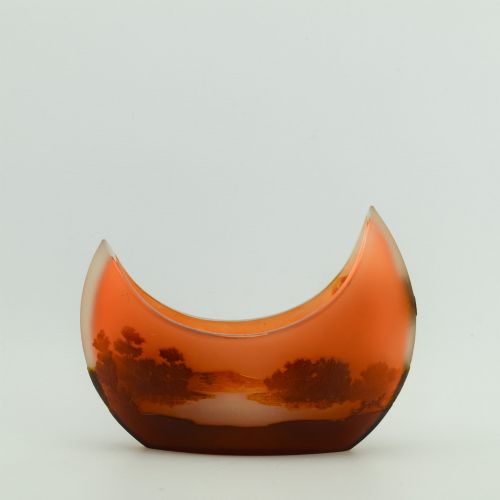
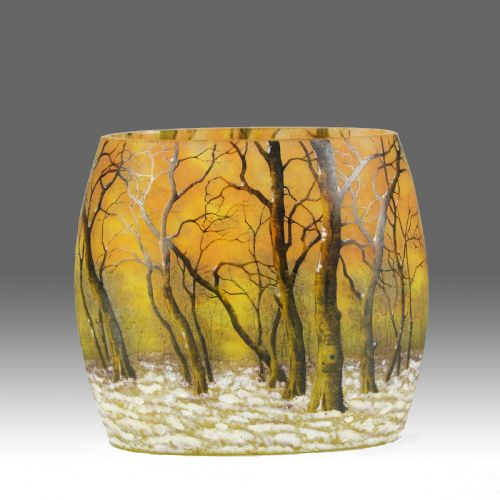
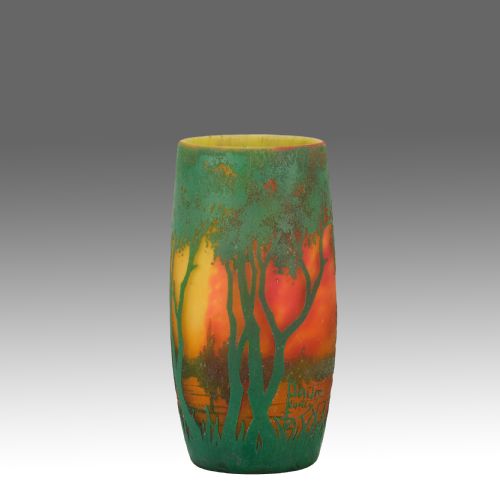
When you search for an orange art glass vase, you enter a world dominated by the organic curves of Art Nouveau and the geometric lines of Art Deco. These pieces span the early decades of the twentieth century, capturing fiery sunsets, autumnal landscapes, and rich floral motifs through striking hues of orange. You are most likely to meet cameo glass vessels rendered by celebrated French glasshouses, where layers of colour are acid-etched to reveal intricate designs.
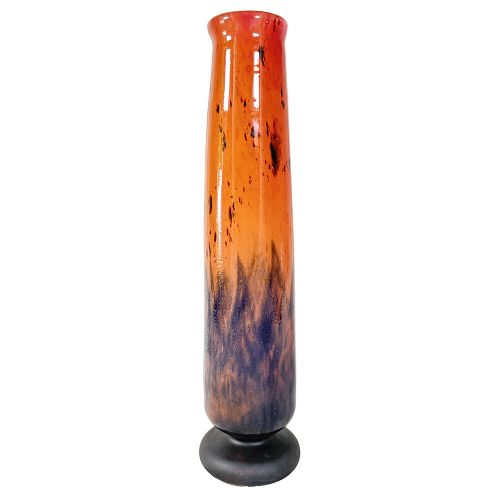
The forms range from large oviform vessels to crescent-shaped and aquatic silhouettes produced across the 1900s, 1910s, 1920s, and 1930s. Alongside cameo techniques, blown glass and powdered glass methods create depth and texture within the glowing orange body of each vase. Some examples incorporate contrasting purple layers or pair the glass directly with wrought iron mounts for a heavier industrial contrast.
How they were made
The creation of these works relies on multi-layered blown glass combined with chemical treatments. Makers fused powdered glass or distinct coloured strata while the material was molten, building up the necessary depth to achieve rich orange tones.
Surface decoration frequently involved acid-etching, a process where portions of the outer glass layer were eaten away by acid to expose contrasting background colours. Enamel details were sometimes hand-applied on top of the etched cameo designs to add fine botanical or landscape shading.
Orange Art Glass Vase Retail Price Guide 2026
Typical asking prices for orange art glass vase among the pieces listed under this phrase on Sellingantiques today, from the lower quarter to the upper quarter. They describe what is for sale here now, not the wider market.
Materials recorded across the inventory include cameo glass, acid-etched glass, powdered glass, wrought iron, and enamel.
What varies in quality
The distinction between tiers rests upon the crispness of the acid-etching and the subtlety of the colour transition across the glass layers. Superior pieces display deep, deliberate carving that gives the orange floral or landscape motifs a distinct sculptural relief.
Another factor is the complexity of the glass body itself, such as the inclusion of internal powdered glass speckling or multi-coloured hues. Works that integrate supplementary materials like forged wrought iron mounts with clean execution command greater visual weight.
Daum Freres·Galle·Schneider·Le Verre Francais·Legras·Venini
The Orange Art Glass Vase Glossary
- Cameo Glass
- Glass vessels formed with multiple layers of different coloured glass, then carved or acid-etched to create a raised design in relief. This technique creates a strong contrast between the orange foreground and the background shades.
- Acid-Etched Glass
- Glass decorated by exposing unprotected areas to hydrofluoric acid to eat away the surface. It allows makers to achieve precise, repeatable depths in multi-layered vases.
- Powdered Glass
- Finely ground glass fused into or onto the vessel during blowing to create mottled colour effects. It introduces complex textures beneath the translucent orange exterior.
- Art Nouveau
- A decorative style characterised by flowing, asymmetrical lines inspired by natural forms. It dominates the earliest twentieth-century pieces featuring floral and landscape subjects.
- Art Deco
- A later style defined by streamlined geometric forms and symmetrical patterns. It influences the sturdier vessels and those combined with wrought iron frames.
Orange Art Glass Vase: Frequently Asked Questions
How can I tell Art Nouveau from Art Deco pieces?
Art Nouveau examples showcase organic, flowing lines inspired by plants, flowers, and natural landscapes. The orange tones in these works usually depict sunsets or botanical subjects like honeysuckle and montbrecia.
Art Deco items lean towards geometric discipline, structured symmetry, and heavier structural pairings such as wrought iron frames. The motifs become more stylised and industrial rather than strictly botanical.
What causes the different shades of orange in these vases?
The vibrant orange hues result from specific mineral oxides added to the molten glass batch during production. Artisans layered these warm tones over contrasting backgrounds like purple or frosted glass to intensify the visual depth.
Acid-etching through these strata reveals varying thicknesses of the orange glass, producing lighter and darker gradations across the finished design.
Where were most of these coloured glass vases made?
The vast majority of these cameo and art glass pieces originated in France, driven by renowned glasshouses and master artisans working around Nancy and Paris. Workshops utilised local traditions of multi-layered blowing and chemical etching.
A smaller proportion emerged from specialised production centres elsewhere in Europe, including Italian studios known for distinct blown glass forms.