




Art Nouveau Glass Vessel
An art nouveau glass vessel brings organic forms and luminous colour into a room, drawing the eye with fluid lines and naturalistic motifs.

Art Nouveau Glass Vessel
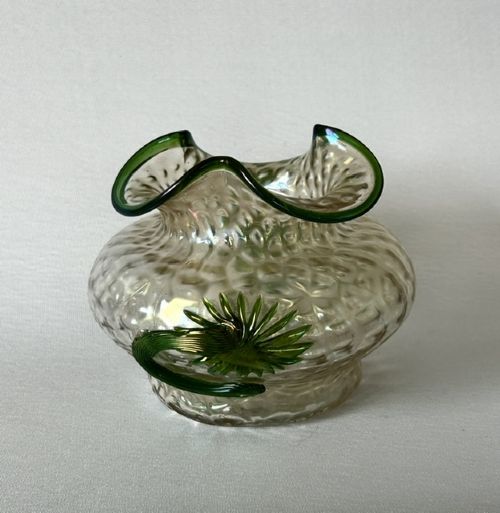
An art nouveau glass vessel encompasses decorative bowls, trinket boxes, decanters, and primarily vases shaped by the aesthetic movements of the late nineteenth and early twentieth centuries. These objects reflect the stylistic currents of Vienna Secession, Jugendstil, and French Belle Epoque, capturing a period of intense artistic experimentation in glass. Buyers find pieces ranging from cabinet-sized botanical vases to large, dramatic centrepieces.
The versions most commonly met on this page date predominantly from around nineteen hundred, alongside examples stretching from the Victorian era into the nineteen twenties and thirties. Forms appear in diverse configurations, including three-handled crystal bowls, banjo vases, and oviform vessels. Makers and workshops from France, Austria, and England dominate the selection, bringing distinct regional interpretations to the form.
How they were made
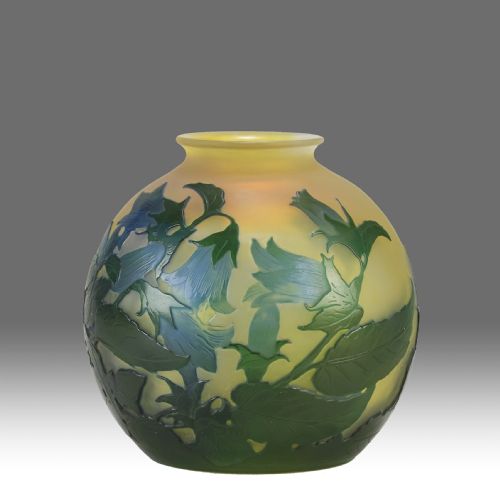
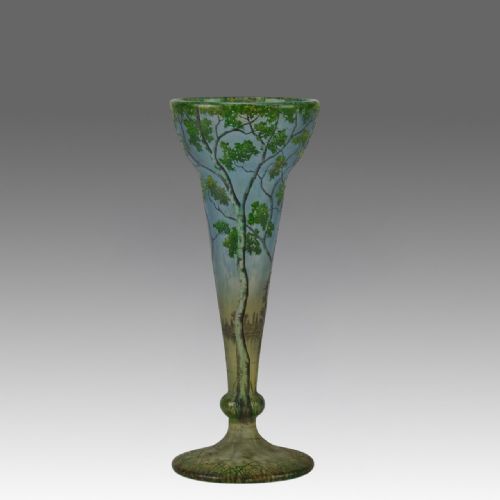
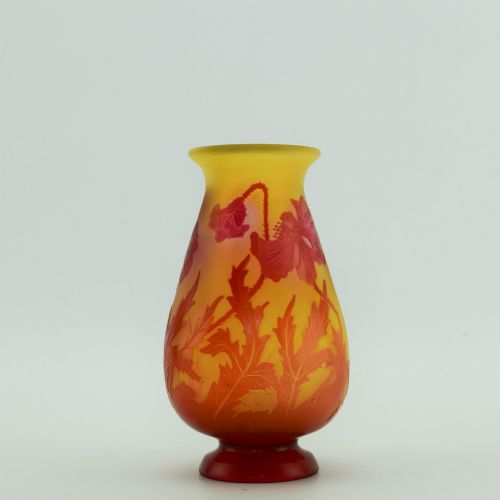
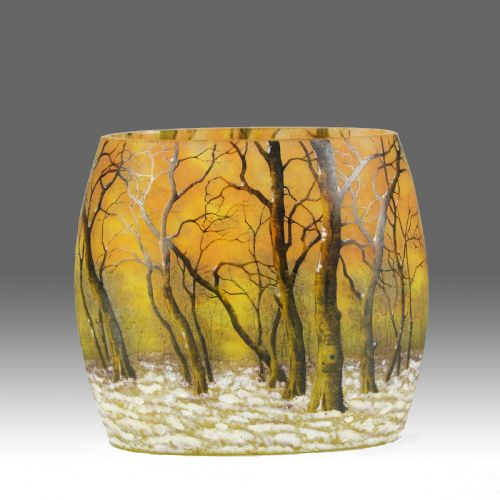
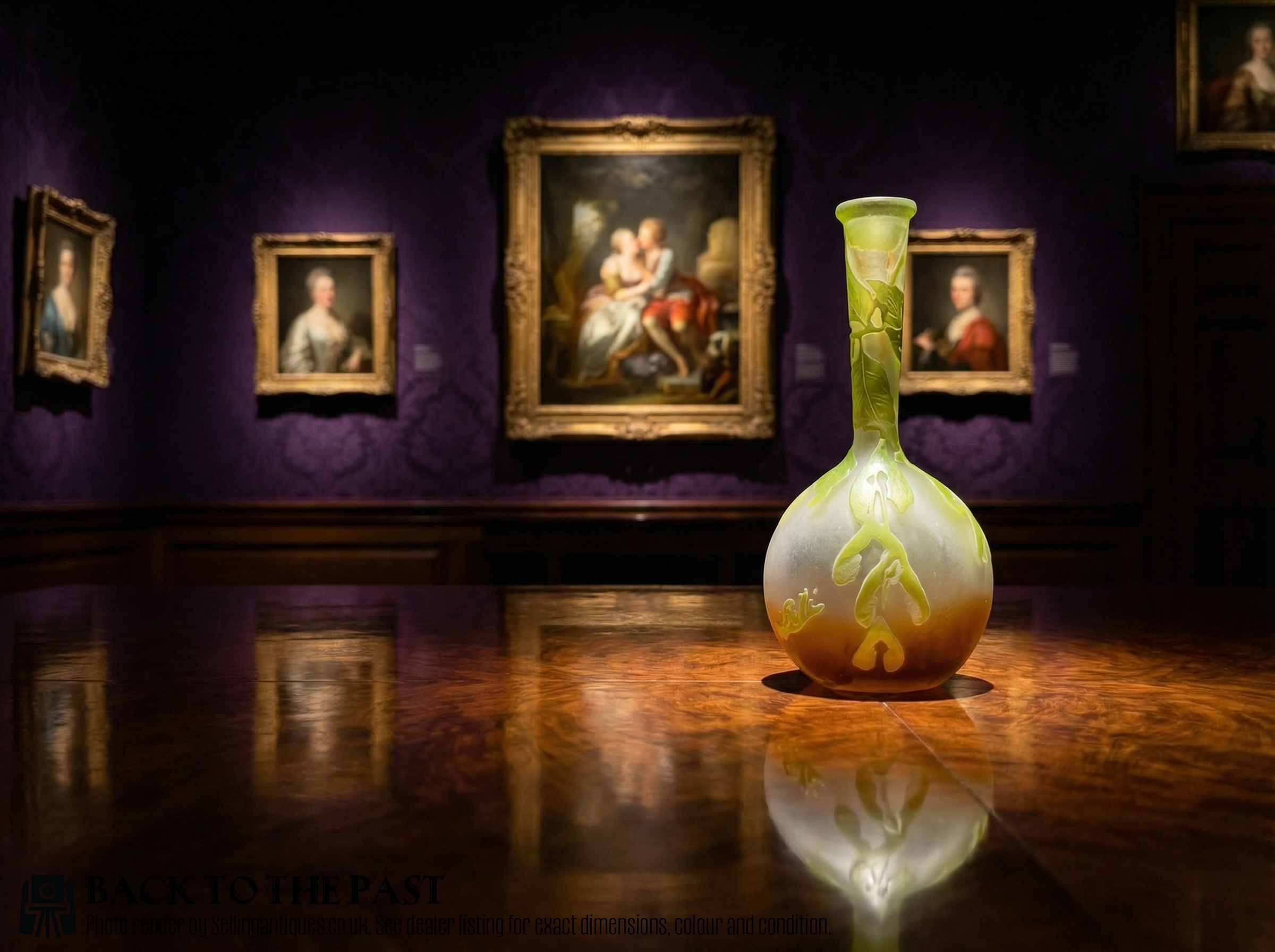
Glassmakers utilised complex techniques such as cameo carving, acid-etching, and optical blowing to build depth and texture within the material. Layers of coloured glass were fused together and subsequently carved or etched away to reveal contrasting motifs, as seen in botanical and landscape designs. Molten metal manipulation allowed for organic shapes, whilst surface treatments introduced iridescent finishes and craquelure effects.
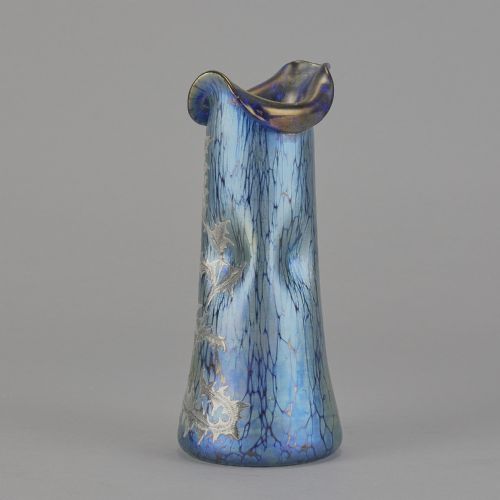
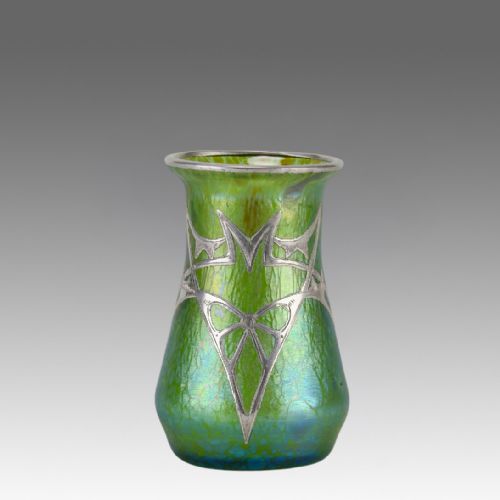
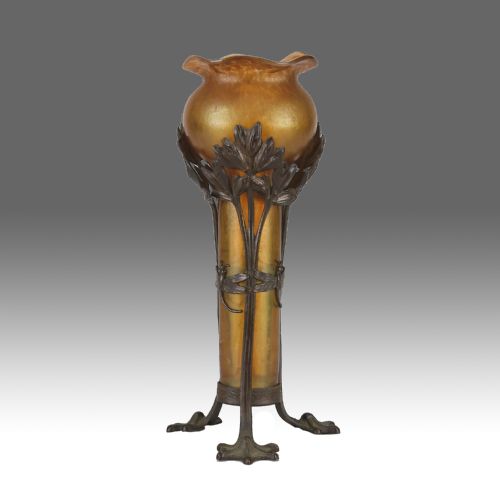
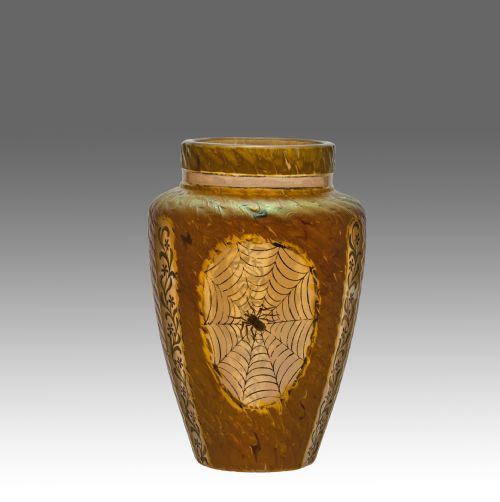
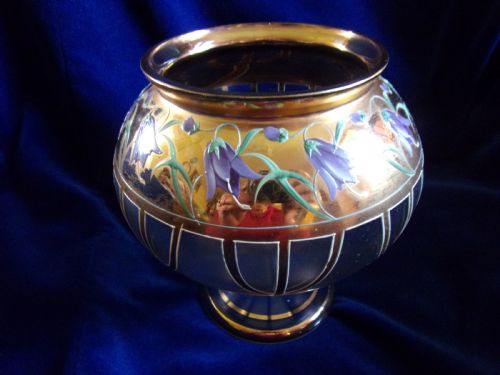
Many vessels incorporate metal elements, combining glass bodies with sterling silver, bronze mounts, silvered pewter, or pewter overlay. Enamel, gold leaf, and paste gilt decoration were frequently applied to the cooled glass surface to highlight floral and geometric patterns. These mixed-media constructions bridge the gap between glassmaking and metalwork, particularly within the Arts and Crafts and Secessionist traditions.
Art Nouveau Glass Vessel Retail Price Guide 2026
Typical asking prices for art nouveau glass vessel among the pieces listed under this phrase on Sellingantiques today, from the lower quarter to the upper quarter. They describe what is for sale here now, not the wider market.
Listings feature pieces spanning from the Victorian period through the eighteen nineties, nineteen hundreds, tens, twenties, and thirties.
What varies in quality
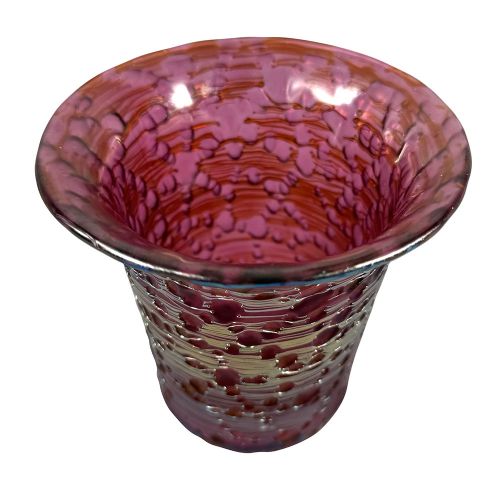
Quality rests upon the depth and precision of the cameo carving, the complexity of the glass body, and the harmony of applied metalwork. Pieces displaying multi-layered acid-etching or intricate blow-out techniques demonstrate superior technical mastery compared to simpler, single-layer surfaces. The subtlety of iridescent effects, such as the shifting tones of Papillon or Orbulin decors, dictates the visual success of the piece.
The integration of secondary materials also separates standard production from exceptional work. Finely detailed pewter overlays, secure bronze mounts, and hand-applied enamel work executed with crisp definition elevate a vessel's presence. Furthermore, strong attribution to renowned glasshouses or specific named designers commands greater distinction among collectors.
Emile Gallé·Loetz Witwey·Daum Frères·Johann Loetz·Kralik Glass·Legras·James Powell·Archibald Knox for Liberty Co·WMF·Rene Lalique
The Art Nouveau Glass Vessel Glossary
- Cameo glass
- A form of glass created by fusing layers of different colours and then carving away parts of the outer layer to form a design. This technique requires exceptional skill to maintain even thickness across the carved motifs.
- Iridescent glass
- Glass treated with metallic salts while hot to produce a shimmering, rainbow-like surface effect. It mimics natural phenomena found on ancient buried glass.
- Jugendstil
- The German-language variant of Art Nouveau, prominent in Central Europe around nineteen hundred. It emphasises flowing, plant-inspired lines and flat, graphic patterns.
- Secessionist
- A style associated with avant-garde artists breaking away from traditional academic art institutions. In these vessels, it manifests through geometric discipline combined with organic curves.
Art Nouveau Glass Vessel: Frequently Asked Questions
What defines an art nouveau glass vessel?
These vessels are defined by their organic forms, asymmetrical lines, and motifs drawn from nature, such as flowers, insects, and landscapes. They reflect the rejection of rigid historicism in favour of fluid, living designs.
Created primarily during the late Victorian and Edwardian eras, they bridge utilitarian object and sculptural art. Makers utilised innovative glass chemistries to achieve surface effects that mimic natural light and texture.
How were these glass vessels used originally?
Many functioned as display vases for seasonal blooms, while others served as decorative bowls, trinket boxes, or decanters for dining. Their primary purpose was aesthetic enhancement of domestic interiors.
Larger pieces stood as centrepieces on tables or cabinets, while smaller cabinet vases were collected as cabinet art. Their integration of metal mounts and precious enamels also marked them as high-status interior ornaments.
How should I care for an art nouveau glass vessel?
Maintenance requires gentle handling, avoiding sudden temperature changes that can stress historic glass bodies. Dusting with a soft, dry cloth is usually sufficient for regular upkeep.
If cleaning is necessary, use lukewarm water and mild soap, taking care to avoid harsh abrasives that might damage applied gold leaf, enamel, or iridescent finishes. Vessels with metal mounts or pewter overlays should be kept dry to prevent corrosion.
How do I tell different periods and styles apart?
Stylistic markers help separate movements, with French Art Nouveau leaning towards naturalistic botanical cameo work, whilst Austrian Secessionist pieces often embrace geometric discipline and intense iridescence. English Arts and Crafts designs frequently incorporate hammered pewter mounts and simpler forms.
Date ranges can be inferred through signatures, factory marks, and the evolution of chemical treatments. Early pieces from the eighteen nineties differ visibly from the bolder, stylized experiments of the nineteen twenties and thirties.