
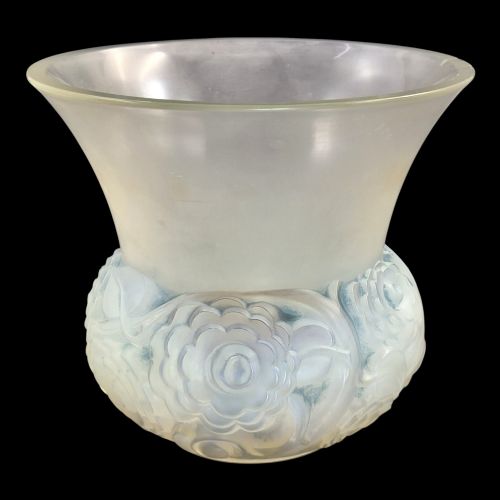
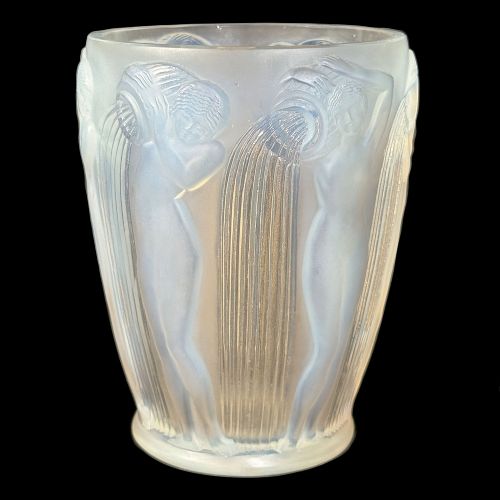


Blue Opalescent Glass Vase
A blue opalescent glass vase captures light with a milky, iridescent glow that shifts from pale azure to amber.
Blue Opalescent Glass Vase
A blue opalescent glass vase brings together the fluid chemistry of pressed and frosted glass with sculptural relief decoration from the early twentieth century. These vessels combine functional forms with the distinct visual properties of opalescence, where minerals added to the molten batch create a milky, fire-opal effect that catches light at the rims and moulded surfaces.
On this page, the pieces you meet span the periods of nineteen hundred, nineteen twenty, and nineteen thirty, matching the Art Nouveau and Art Deco styles recorded in the evidence. Vases of this type range from the botanical motifs of the earlier decade to the geometric and stylised plant forms of the nineteen twenties and thirties.
The object types seen here are exclusively vases, representing the peak of twentieth-century French glass production. The forms vary from banjo shapes to low bowls and cylindrical vessels, each shaped to showcase the interaction between translucent glass and coloured staining.
How they were made
Makers produced these pieces using pressed glass and cameo glass techniques, often employing crystal to achieve clarity and weight. The opalescent effect relies on precise heat control during annealing, which causes specific chemicals within the glass to phase-separate and scatter light with a blue or milky sheen.
Surface details were frequently enhanced with blue stained glass highlights or frosted finishes to accentuate the depth of the moulded relief. Acid-etching and cameo layering appeared on pieces from the opening decade of the twentieth century, while later examples relied on industrial pressing moulds.
Some of these vases depict water carriers and trailing flora, capturing ancient water myths in Victorian and interwar glass.
What varies in quality
Quality in these vessels rests on the crispness of the moulded relief and the intensity of the opalescent fire within the glass. Pieces where the milky blue shimmer concentrates evenly on the raised details show superior control over the cooling process and chemical composition.
The subtlety of hand-applied staining and the finish of the frosted surfaces determine the visual depth of the design. Sharper definition in the botanical and figurative motifs distinguishes the finest examples from simpler production wares.
Rene Lalique·Galle
The Blue Opalescent Glass Vase Glossary
- Opalescent Glass
- Glass that milky or pearlescent quality which reflects blue light in one direction and amber in another. This optical effect results from the controlled partial crystallization of the glass during cooling.
- Cameo Glass
- Vessels made with two or more distinct layers of coloured glass fused together, where the outer layer is carved or acid-etched away to leave a raised design. It requires immense skill to avoid cutting through to the background layer.
- Pressed Glass
- Glass formed by pressing molten metal into a metal mould with a plunger. This technique allowed makers to produce intricate decorative patterns rapidly in high volume.
- Frosted Glass
- Glass with a textured, matte surface created by acid-etching or sandblasting. It diffuses light softly and contrasts sharply with polished or opalescent highlights.
Blue Opalescent Glass Vase: Frequently Asked Questions
What is a blue opalescent glass vase?
A blue opalescent glass vase is a decorative vessel made from special glass that scatters light to create a milky, blue-white glow. These pieces often feature moulded relief decoration from the early twentieth century.
They represent a high point in French glassmaking, combining technical innovation in the kiln with distinctive Art Nouveau and Art Deco designs.
How do I date my vase?
Dating relies on the stylistic markers of the design, such as fluid Art Nouveau plant stems versus geometric Art Deco forms. The evidence on this site spans the years nineteen hundred, nineteen twenty, and nineteen thirty.
Makers' signatures, registry marks, and the specific moulding techniques used can also narrow down the production period to a particular decade.
How were these vases used?
These vessels were primarily designed as decorative display objects for the home during the early twentieth century. Their striking optical properties meant they stood well on their own without needing flowers.
Some forms, such as the banjo vase or cylindrical shapes, were equally suited to holding single stems or dried botanical arrangements.
How do I care for opalescent glass?
Care for these pieces by dusting gently with a soft, dry cloth and avoiding harsh chemical cleaners that might damage the frosted or stained surfaces. Hand washing in lukewarm water with mild soap is sufficient when cleaning is necessary.
Keep them away from direct sunlight for extended periods and stable display surfaces where they will not be knocked.