


Blue Glass Decorative Vase
A blue glass decorative vase brings rich colour and light to a room, ranging from moulded French opalescent vessels to Victorian enamel-painted works.
Blue Glass Decorative Vase
A blue glass decorative vase is a display vessel shaped for interior placement, appearing across periods from Victorian manufacture through to mid-century modern design. These objects take forms such as baluster shapes, pairs with ormolu trim, and sculptural opalescent pieces.
The versions most frequently met on this page span the late nineteenth century and the early decades of the twentieth century. They include Art Nouveau cameo glass creations, French mould-pressed items, and cobalt vessels with metal mounts.
Makers and makers' studios such as Daum Frères, Emile Gallé, and René Lalique dominate the finer examples of the form. Buyers encounter these alongside unsigned Victorian glass and mid-century decorative pieces.
Materials and methods
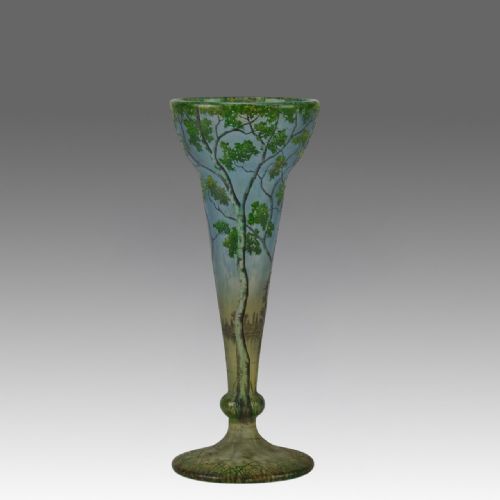
Glass production for these vases involves techniques like cameo carving across layered coloured glass, acid etching, and mould-pressing to achieve opalescent finishes. Workshops also utilised enamel painting on glass surfaces to create botanical and landscape motifs.
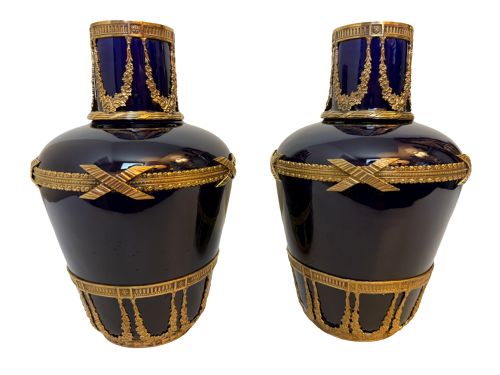
Metal mounts in ormolu and pewter overlay frequently complement the glass bodies. These fittings are secured to the collars and bases of the vessels to add structural weight and decorative contrast.
Several Victorian vases feature internal spiral glass trails that catch the light like twisted ribbons of blue confectionary.
Quality factors
The distinction between tiers rests upon the depth of the cameo carving and the clarity of the mould work in opalescent pieces. Signed glass by established makers displays sharper detail in botanical or landscape subjects.
Enamel work and metal mounts vary from simple surface decoration to detailed, hand-painted panels and heavy cast ormolu trim. The integration of metal mounts with the glass body determines the structural integrity of the piece.
Daum Frères·Emile Gallé·René Lalique
The Blue Glass Decorative Vase Glossary
- Cameo glass
- A vessel formed of multiple fused layers of glass of different colours, acid-etched or carved by hand to reveal a contrasting design in relief.
- Opalescent glass
- A translucent glass that appears milky blue in transmitted light and warm amber or orange in reflected light, popular in twentieth-century French production.
- Ormolu
- Gilded bronze used for decorative trim, handles, and bases on nineteenth-century glass vases.
- Baluster
- A vase shape characterised by a rounded body that tapers towards a narrow neck and wide foot.
- Enamel
- Opaque vitreous compositions applied to the surface of glass and fired to create colourful painted decoration.
Blue Glass Decorative Vase: Frequently Asked Questions
What is opalescent glass?
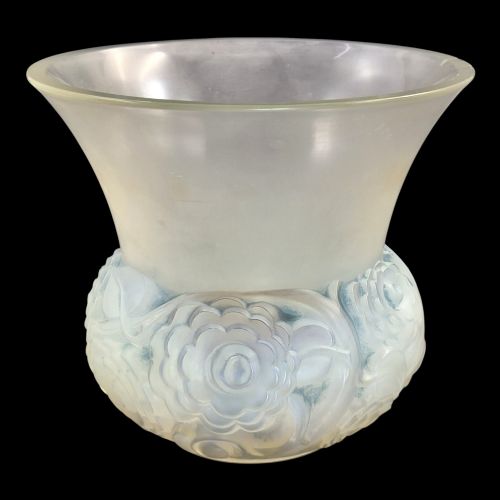
Opalescent glass displays a milky, translucent quality that shifts in tone depending on the angle of the light. Twentieth-century French makers used this property to highlight moulded floral and geometric patterns.
Pieces by René Lalique frequently employ this medium to give depth to relief designs. The play of light across the milky surface defines the visual appeal of these vessels.
How were metal mounts used on glass vases?
Metal mounts in ormolu or pewter frame the rims, necks, and bases of nineteenth-century glass vases. These fittings provide protection to vulnerable edges while adding architectural structure to the display piece.
French nineteenth-century pieces often pair blue glass bodies with cast ormolu trim. Art Nouveau examples favour pewter overlays worked into organic plant motifs.
Can I use these decorative vases for flowers?
While these items were originally produced as decorative display objects, many can hold water and stems safely. Antique glass requires careful handling and cleaning to preserve delicate enamel and cameo surfaces.
Vessels with metal mounts or delicate opalescent finishes need particular care to avoid moisture damage to trims and internal residue buildup. Displaying them empty avoids potential risks to fragile materials.