



Opalescent Glass Art Vessel
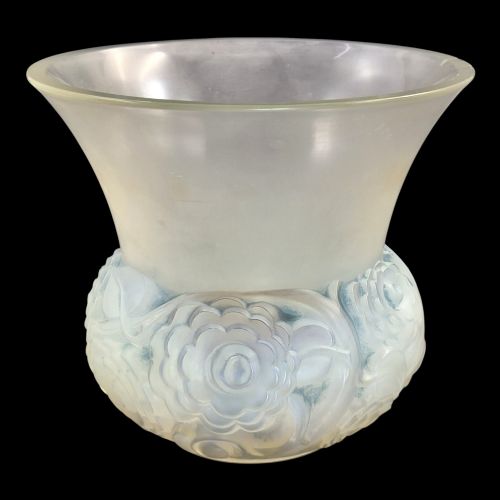
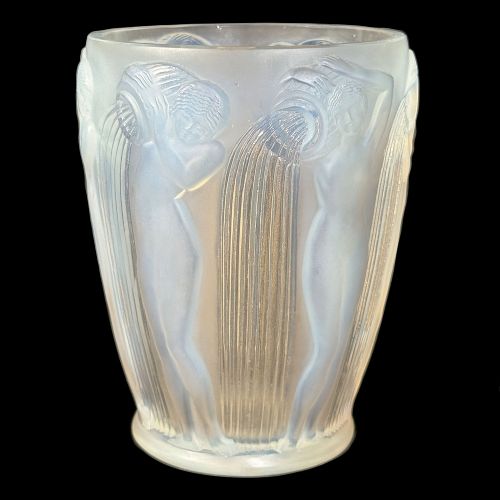
An opalescent glass art vessel catches the light with milky blue fires, offering the tactile weight and sculptural form collectors prize.
Opalescent Glass Art Vessel
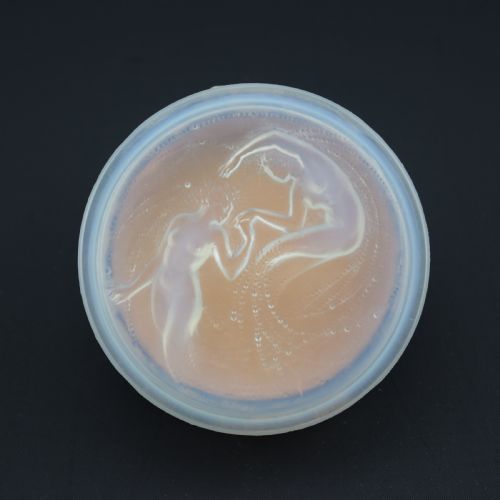
An opalescent glass art vessel is a decorative object taking the form of vases, bowls, and trinket boxes produced primarily during the early twentieth century. When you search for this phrase, you encounter works that shift in tone depending on the angle of the light, moving from translucent white to glowing amber or blue.
The pieces available trace the transition from organic plant motifs to geometric modernism, spanning the Art Nouveau and Art Deco periods. Vases dominate the selection, often featuring moulded flora and fauna rendered in high relief against frosted backgrounds.
French makers established the aesthetic standards for these objects, utilising specialised moulding techniques to create depth within the material. Collectors find both large display vessels and smaller lidded boxes, each demonstrating the plastic qualities of glass.
How they were made
Makers used pressed glass and cameo glass techniques, shaping molten material into heavy metal moulds that imparted intricate surface detail. The opalescent effect relies on chemical additions that scatter light, creating the signature milky luminescence within clear or tinted crystal.
Designers applied coloured stain into the recessed portions of the moulded design to accentuate the sculptural motifs. Acid-etching and frosting finished the surfaces, contrasting polished highlights with satin textures.
Listings feature opalescent, frosted, and cameo glass forms primarily spanning the Art Nouveau and Art Deco periods.
What varies in quality
The crispness of the moulded relief dictates visual success, separating sharply defined flora and fauna from softer, worn impressions. Depth of opalescence also varies, with superior examples displaying intense blue or amber fire when lit from the side.
Surface finish and the application of contrasting stain contribute significantly to the visual impact of a piece. Original patination and clean, unpolished mould seams indicate careful workshop production.
Rene Lalique·Galle
The Opalescent Glass Art Vessel Glossary
- Opalescent glass
- Glass that diffuses light to display a milky, bluish glow, caused by the precipitation of microscopic particles during cooling. This optical property creates the shifting colour effects characteristic of the style.
- Cameo glass
- Vessels carved from multiple layers of differently coloured glass to create a contrasting design. This technique requires considerable skill to cut down to the background layer.
- Pressed glass
- Molten glass shaped by being pressed into a metal mould using a plunger. This method allowed for the efficient production of complex, high-relief patterns.
- Frosted glass
- Glass with a textured, matte surface created by acid-etching or sandblasting. It diffuses light and softens the appearance of the vessel.
- Art Deco
- A design style of the 1920s and 1930s characterised by stylised motifs, symmetry, and geometric abstraction. It succeeded the flowing organic forms of Art Nouveau.
Opalescent Glass Art Vessel: Frequently Asked Questions
What periods do these pieces date from?
The examples on this page primarily date from the early decades of the twentieth century, specifically spanning the Art Nouveau and Art Deco eras.
Production methods peaked during the 1920s and 1930s in France, coinciding with major international exhibitions.
How were these vessels used?
Many functioned as ornamental vases for display rather than utility vessels for fresh flowers. Trinket boxes served as dressing table accessories for small valuables.
Their primary purpose was artistic decoration, capturing light to display the qualities of the moulded glass.
How can I tell Art Nouveau from Art Deco styles?
Art Nouveau pieces feature flowing, asymmetrical lines inspired by natural forms such as flowers and vines. Gallé works typically represent this organic approach.
Art Deco designs employ strict symmetry, stylised geometry, and structured relief motifs, as seen in many Lalique production pieces.