



1930s French Glassware
These 1930s French glassware pieces capture the sharp lines and tactile surfaces of Art Deco design that collectors prize.
1930s French Glassware
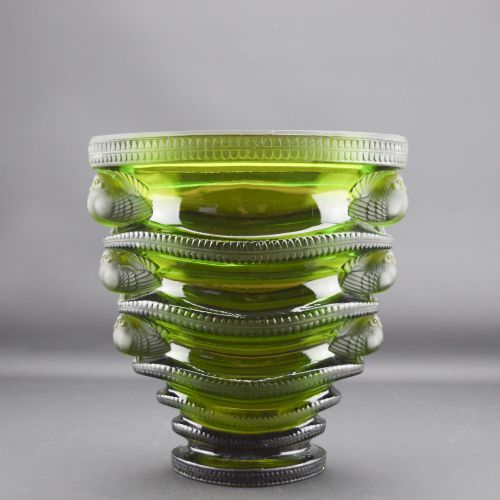
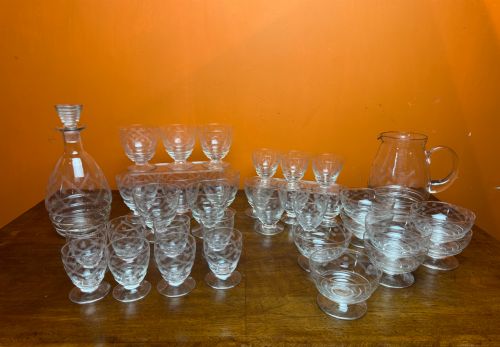
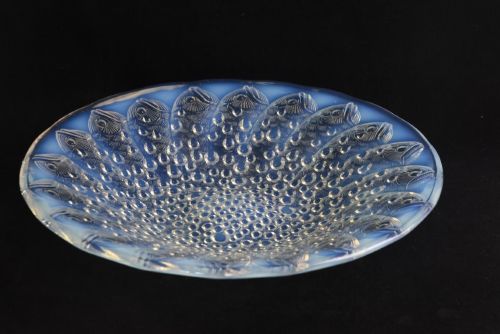
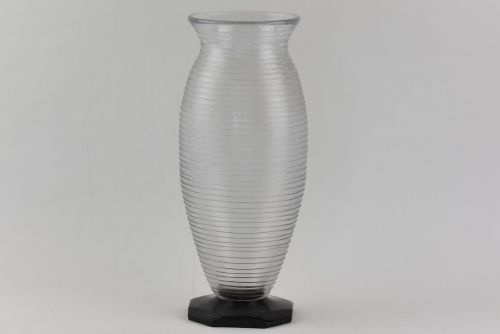
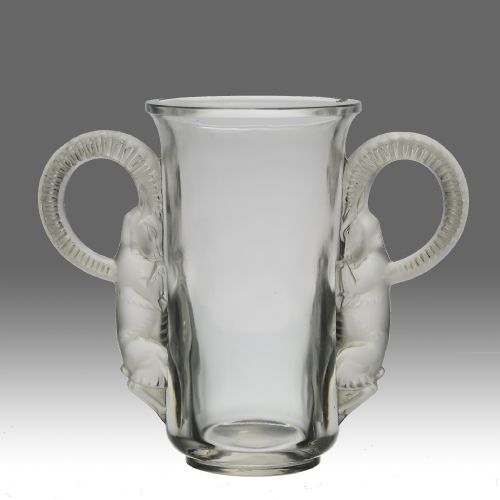
Vases and decorative bowls dominate the available forms, often showcasing moulded relief patterns of flora and fauna. Alongside these display pieces, smaller functional items such as perfume bottles and drinking glasses appear, representing the diverse output of the era.
The objects stem almost exclusively from the Art Deco style, displaying characteristic geometric symmetry alongside stylised natural motifs. Originating entirely from France, these items reflect the sophisticated decorative tastes of the interwar decades.
How they were made
Makers utilised various glass techniques including moulding, blowing, and casting to shape the material into complex relief designs. Opalescent, frosted, and clear glass served as the primary mediums, frequently enhanced through acid-etching or engraving to accentuate surface textures.
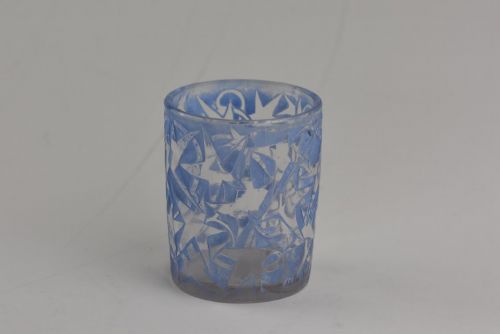
Colour manipulation played a significant role, with artisans employing olive green, blue staining, and Vaseline glass formulations to create striking visual depth. The interplay between polished clear sections and frosted or stained reliefs defines the technical execution of these pieces.
The selection spans the Art Deco style, utilising moulded, frosted, opalescent, and acid-etched glass across Vases, Perfume Bottles, and Bowls from the 1920s and 1930s.
What varies in quality
Quality rests in the crispness of the moulded relief and the successful distribution of opalescence within the glass body. Superior examples maintain sharp definition in intricate details like feathers, leaves, or geometric facets, whereas lesser execution yields blurred contours and muted optical effects.
The sophistication of the secondary surface treatment, such as skilful blue staining or precise acid-etching, separates standard production from exceptional artistry. Depth of colour and the harmonious balance between transparent and frosted areas dictate the overall success of each object.
Rene Lalique·Daum·Etling·Sabino
The 1930s French Glassware Glossary
- Opalescent Glass
- Glass that diffuses light to display milky, iridescent blue or amber tones. This optical effect shifts depending on the angle of illumination and the background.
- Acid-Etched Glass
- Glass treated with acid to eat away the surface and create a frosted matte finish. This technique highlights carved details and softens the glare of clear areas.
- Moulded Glass
- Glass shaped by being pressed into a metal or wooden mould while hot. The process allows for consistent production of high-relief decorative motifs.
- Vaseline Glass
- Glass containing uranium dioxide that glows a bright yellow-green under ultraviolet light. It was popular in decorative objects during the early twentieth century.
- Coupe Ouverte
- French term for an open bowl or shallow dish. These open forms often showcase extensive relief work across the interior or exterior surface.
1930s French Glassware: Frequently Asked Questions
What defines Art Deco glassware?
Art Deco glassware relies on stylised natural forms, geometric symmetry, and strong sculptural relief. Pieces from this movement often combine clear glass with frosted or stained highlights.
The aesthetic prioritises bold decorative impact over delicate fragility, making these objects both functional and sculptural.
How do I care for opalescent glass?
Clean opalescent glass gently using lukewarm water and a mild, non-abrasive soap. Avoid harsh chemical cleaners and ultrasonic baths that can damage delicate surfaces or added colour stains.
Dry the piece immediately with a soft, lint-free cloth to prevent water spots from forming on the textured areas.
Are these pieces signed?
Many items feature signature marks etched, moulded, or engraved directly into the base or side. These signatures identify the maker or workshop responsible for the production.
Signatures vary from simple block capitals to cursive script, depending on the specific studio and production date.
How can I tell frosted from clear glass?
Frosted glass has a textured, matte appearance that diffuses light rather than allowing a clear view through the material. It is achieved through acid-etching or mechanical sandblasting.
Clear glass remains transparent and polished, often contrasting directly against frosted relief sections on the same object.