
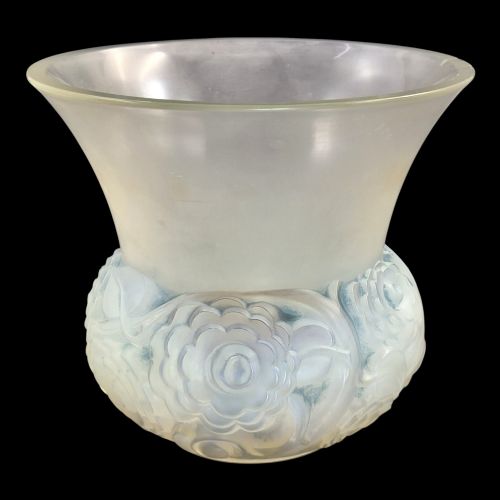
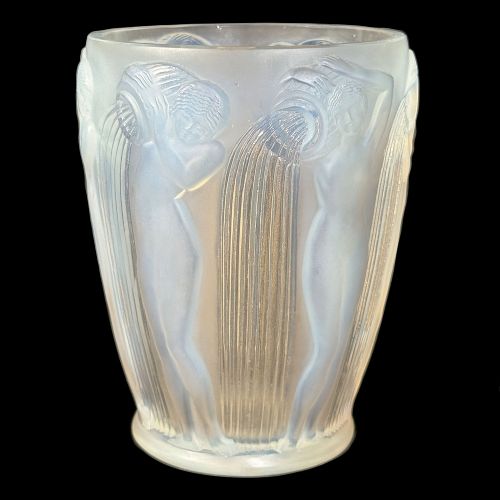


Blue Opalescent Vase
A blue opalescent vase brings glowing depth to a room, catching the light with milky blue highlights that shift as you move around it.
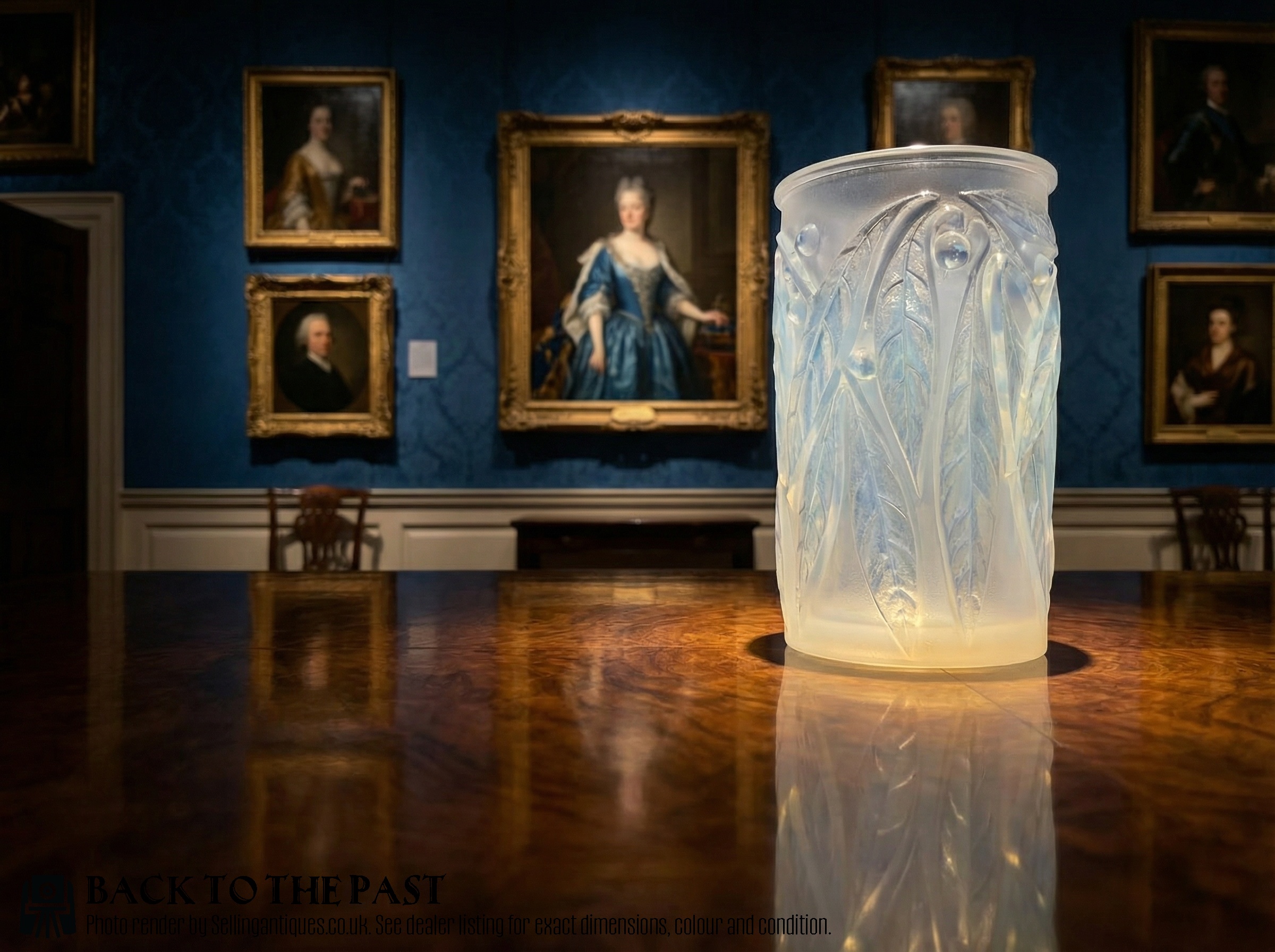
Blue Opalescent Vase
A blue opalescent vase is a glass vessel that displays a milky, translucent quality with characteristic blue highlights, typically produced during the early twentieth century. These pieces combine decorative moulding with the striking optical effects created by special glass formulations.
The versions most commonly met on this page belong to the Art Deco and Art Nouveau periods, originating from prominent glassmakers of the era. The selection centres on pressed glass and cameo glass forms created during the 1900s, 1920s, and 1930s.
Vases in this category range from botanical motifs featuring floral designs like the Ceylan, Laurier, and Gui patterns to figural scenes such as water carriers. Each object showcases the distinct artistic concerns of its period, from naturalistic plant forms to stylised geometric rhythms.

How they were made
The production of these vessels relies on specialised glassmaking techniques, most notably pressed glass and cameo glass methods. Molten glass is forced into metal moulds or layered in multiple colours and carved back to achieve contrasting designs.
The characteristic opalescent effect is achieved through chemical agents added to the glass batch, which scatter light and produce the signature milky blue glow when illuminated. Stained glass details are frequently added by hand to enhance specific elements of the moulded relief.
Blue Opalescent Vase Retail Price Guide 2026
Typical asking prices for blue opalescent vase among the pieces listed under this phrase on Sellingantiques today, from the lower quarter to the upper quarter. They describe what is for sale here now, not the wider market.
Several vessels take their names from climbing plants, capturing delicate leaf patterns that wrap permanently around cold glass.
What varies in quality
Quality in these glass pieces rests upon the crispness of the moulded detail and the successful distribution of the opalescent effect across the surface. Stronger examples display sharp definition in the botanical or figural relief and an even, luminous play of light.
The depth and subtlety of the blue staining, where present, distinguish finer production from simpler work. The skill with which the maker handled the optical properties of the glass ultimately determines the visual impact of the finished vessel.
Rene Lalique·Galle
The Blue Opalescent Vase Glossary
- Opalescent glass
- Glass that exhibits a milky appearance with contrasting highlights, usually shifting between blue and amber tones in the light. This optical property is produced by adding specific minerals to the batch during melting.
- Pressed glass
- Glass formed by crushing molten metal into a metal mould using a plunger. This technique allowed for intricate relief patterns to be produced with consistency.
- Cameo glass
- Vessels made by fusing two or more layers of coloured glass together before carving away the exterior layers to leave a raised design. It is a demanding method requiring precise hand work.
- Art Deco
- A design style of the 1920s and 1930s characterised by streamlined forms, stylised motifs, and geometric symmetry. It succeeded the more organic curves of the preceding movement.
- Art Nouveau
- An international style of the late nineteenth and early twentieth centuries inspired by natural forms and structures, particularly the curved lines of plants and flowers.
Blue Opalescent Vase: Frequently Asked Questions
What is a blue opalescent vase?
A blue opalescent vase is a decorative glass vessel that scatters light to create milky blue highlights across its moulded surface. These pieces were primarily produced by leading European glassmakers during the early twentieth century.
They combine artistic moulding techniques with specialised glass chemistry to produce shifting visual effects. Collectors prize them for their distinctive play of light and period design.
How do I date a blue opalescent vase?
Dating these vases involves examining the stylistic markers of the design, such as Art Nouveau floral curves or Art Deco geometric forms. Most examples on record date from the 1900s through the 1930s.
Maker signatures, mould marks, and production techniques also help establish the approximate period of manufacture. Comparing the motifs to documented works by known makers provides further confirmation.
Where were these glass vases made?
These decorative glass vessels originate primarily from European workshops and studios active during the early twentieth century. France is a major source for the pressed and opalescent pieces found in this category.
Renowned glasshouses and independent artisans developed specific chemical recipes for opalescent glass during this period. Their output defined the aesthetic of the Art Nouveau and Art Deco movements.
How should I display a glass vase?
Displaying opalescent glass effectively requires careful placement near a natural light source to activate the milky blue highlights. Placing the vessel where light can pass through or catch the surface relief brings out its optical qualities.
Because the glass relies on illumination to show its full range of tones, avoiding dark, enclosed shelves helps reveal the subtle details of the moulding.