

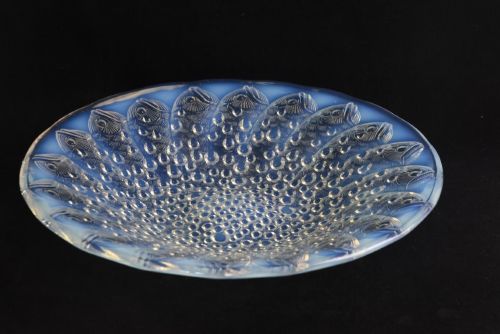


Opalescent Art Glass
Opalescent art glass brings together milky translucence and shifting blue and amber tones in decorative vessels, lighting and objects from the early twentieth century.
Opalescent Art Glass
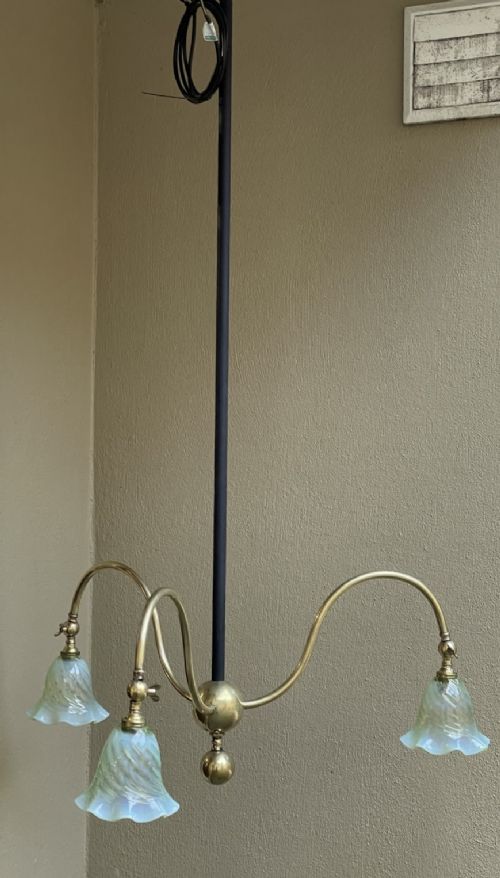
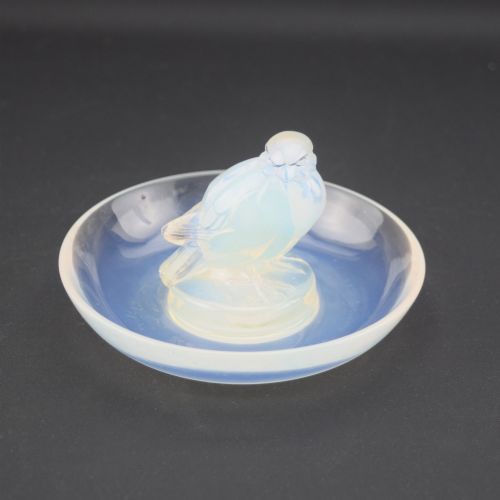
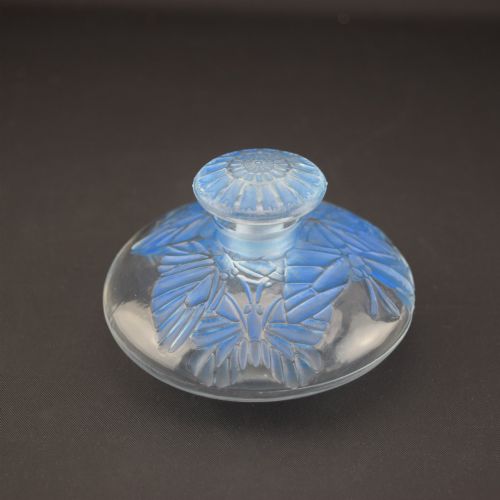
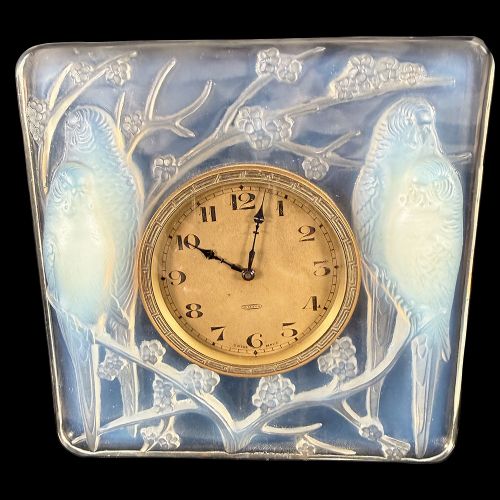
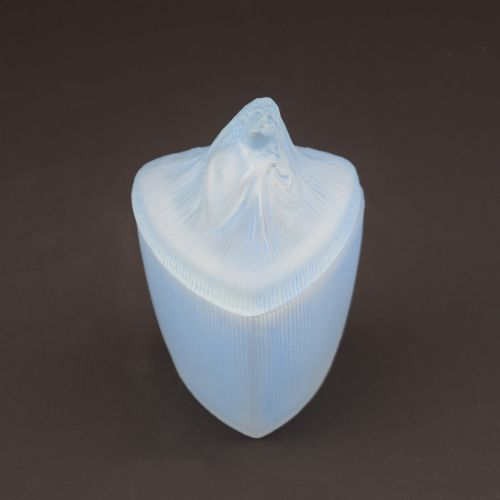
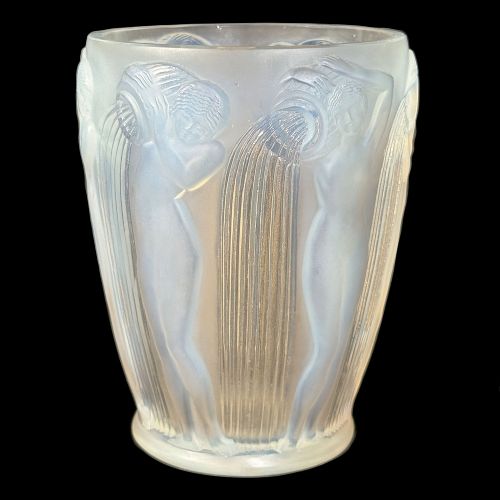
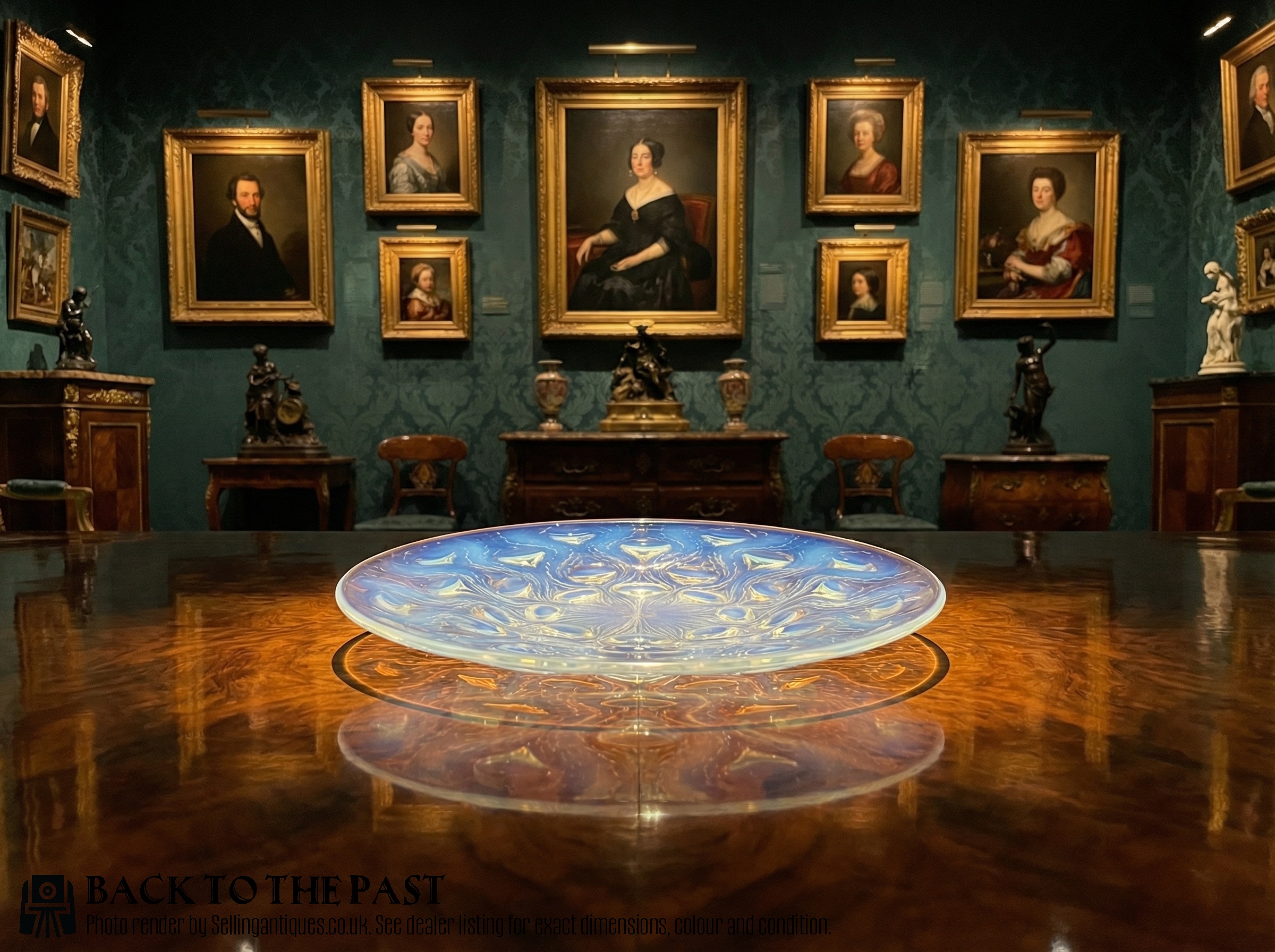
When you search for opalescent art glass, you encounter pieces designed to catch and refract light through a milky, translucent medium that shifts from blue to amber depending on the angle of illumination. These objects span decorative vessels, plates, bowls, car mascots, clocks and lighting fixtures produced primarily during the 1920s and 1930s.
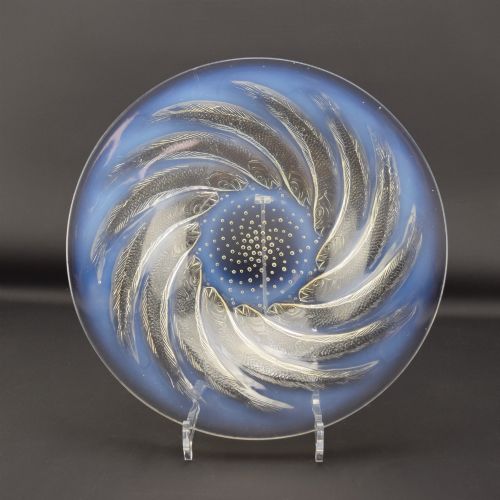
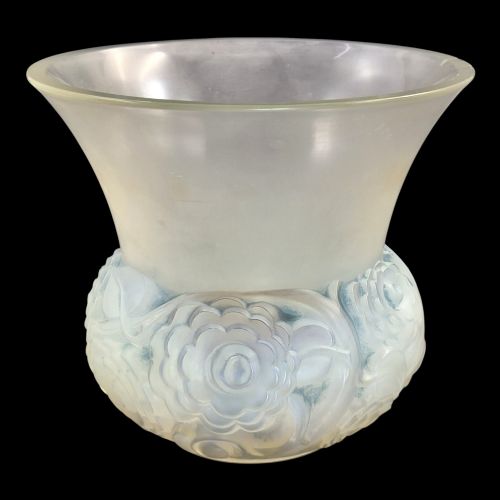
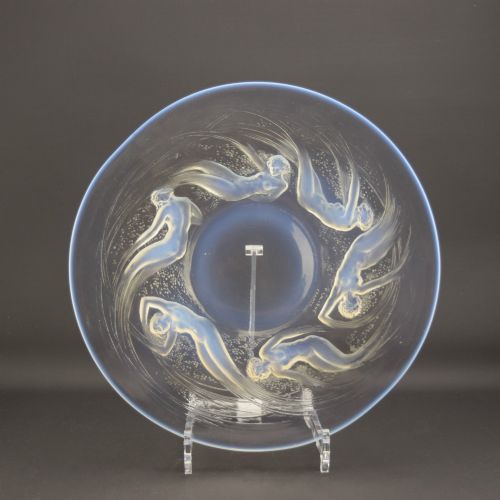
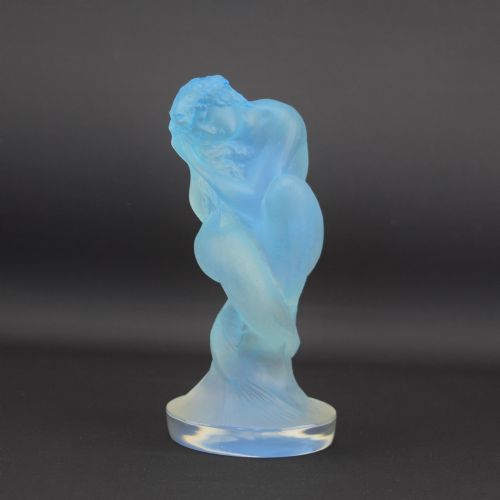
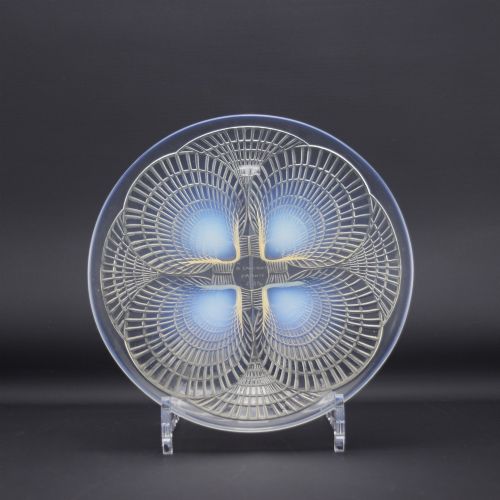
The most common examples on this page are French Art Deco tableware and decorative bowls featuring moulded relief designs of fish, flowers, birds and human figures. Alongside these French works sit English pressed glass bowls and assorted ceiling lights and lampshades from the Arts and Crafts and Art Nouveau periods.
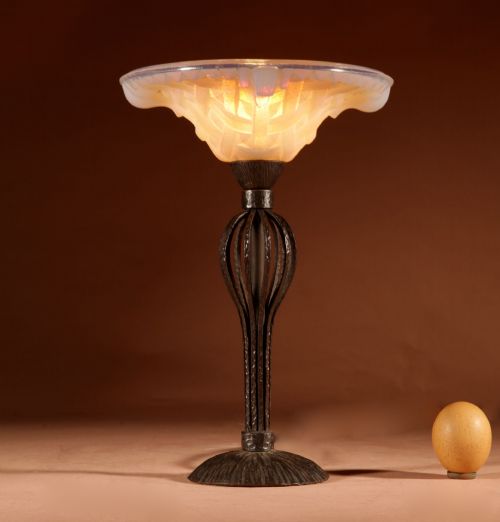
Production methods rely on specific chemical additives within the glass batch, which create the characteristic opalescence upon cooling and reheating. Makers combined this specialised glass with metal mounts in brass, copper, wrought iron and chrome to form lamps, pendants and centrepieces.
How They Were Made
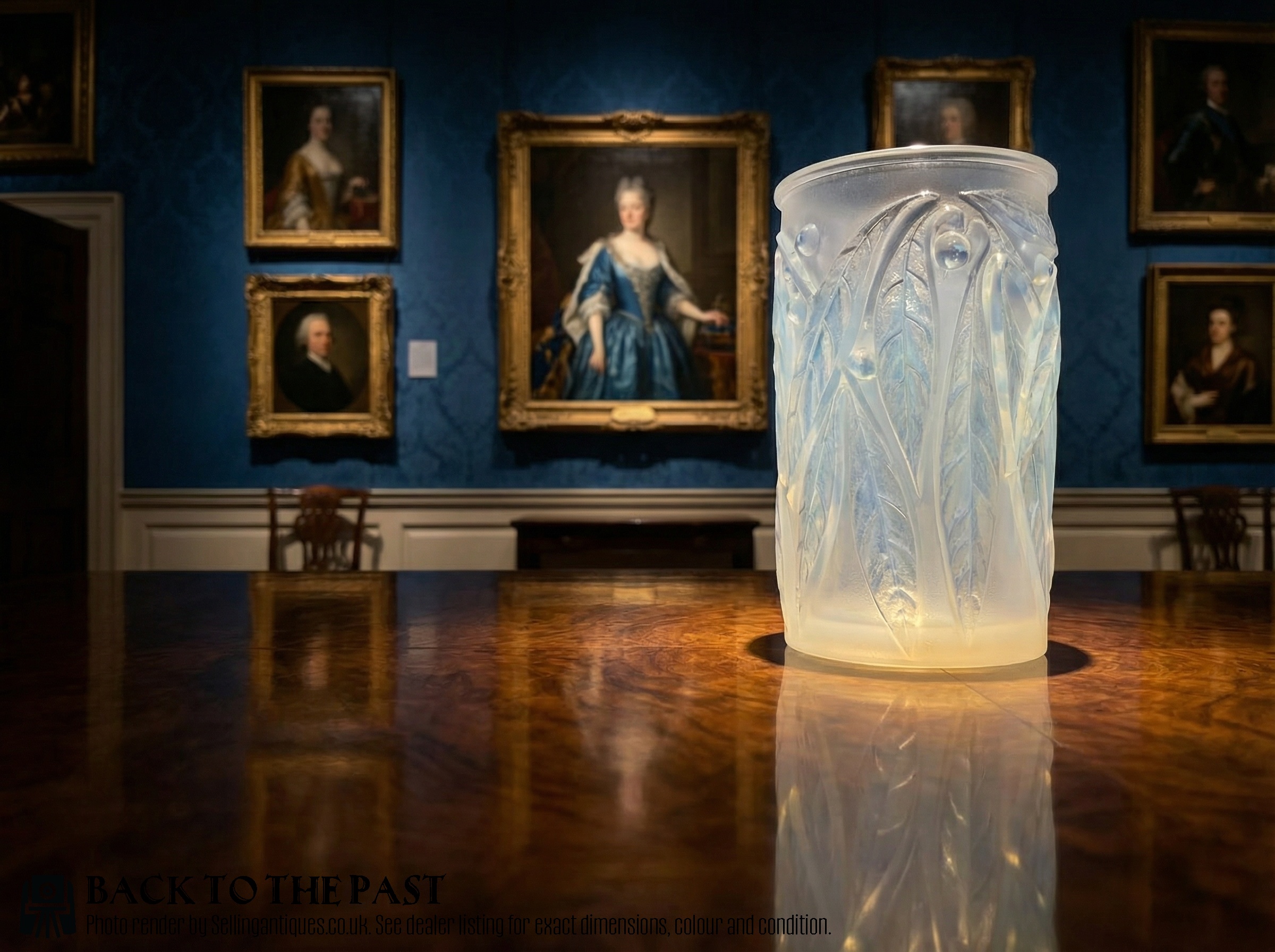
Makers produced these pieces using moulding and pressing techniques, forcing molten glass into metal dies to achieve sharp relief details such as overlapping scales, petals and feathers. The chemistry of the glass batch utilised bone ash, arsenic or other opacifying agents to scatter light and create the milky blue effect.
Finishing work often involved high-relief polishing, staining or enamelling to accentuate the moulded motifs against the translucent ground. Many decorative objects and lighting shades were then mounted into frames or fittings made from brass, wrought iron, copper or chrome.
Opalescent Art Glass Retail Price Guide 2026
Typical asking prices for opalescent art glass among the pieces listed under this phrase on Sellingantiques today, from the lower quarter to the upper quarter. They describe what is for sale here now, not the wider market.
Listings span the Victorian period through the 1940s, with the 1920s and 1930s representing the largest share of items.
What Varies in Quality
Quality rests upon the crispness of the moulded relief and the intensity of the optical effect within the glass itself. Superior pieces display deep, sharply defined motifs where the milky opalescence and fire show vivid contrast against the clearer body.
The integration of the glass with its surrounding metalwork also distinguishes better examples, particularly where wrought iron, bronze or chrome mounts are designed specifically for the piece rather than adapted from standard stock.
Rene Lalique·G Vallon·Etling·Joblings·Ezan·Pierre D Avesn·Verlys·Sabino
The Opalescent Art Glass Glossary
- Opalescence
- An optical property in glass where light scattering creates a milky, translucent appearance with contrasting blue and amber tones. This effect defines the visual character of the category.
- Coupe ouverte
- A wide, open bowl or shallow vessel often mounted on a short foot. These pieces frequently feature moulded animal or floral motifs across the interior.
- Car mascot
- A sculptural glass ornament fitted to the radiator cap of an automobile. These items were widely produced in moulded glass during the Art Deco period.
- Cameo glass
- A vessel formed of multiple fused layers of glass that are carved or acid-etched away to leave a raised design. This technique appears in earlier turn-of-the-century works.
Opalescent Art Glass: Frequently Asked Questions
How do I clean opalescent glass?
Wash the glass gently in warm, soapy water using a soft cloth, avoiding abrasive pads or harsh chemical cleaners that can damage the surface.
Dry the piece thoroughly with a lint-free towel to prevent water spots from obscuring the delicate opalescent effect.
Can these ceiling lights be rewired?
Most period lighting fixtures accept modern wiring and can be adapted by a qualified electrician to meet current safety standards.
Retaining the original metal galleries and chains helps preserve the historical integrity of the piece while updating the internal electrical components.
What period do most pieces come from?
The majority of pieces date from the 1920s and 1930s, aligning with the height of the Art Deco movement in France and England.
Earlier examples from the Victorian, Edwardian and Art Nouveau eras also appear, utilising brass and copper mounts alongside softer floral motifs.
How do I display decorative bowls?
Place bowls and chargers near a natural light source or on a lit display surface to allow light to pass through the translucent glass.
Positioning the items away from heavy traffic areas protects the raised moulded details from accidental chips and surface wear.