



Clear Crystal Vase
These heavy, refractive clear crystal vase pieces span the Victorian, Edwardian and Art Deco periods, offering striking optical clarity for floral display.
Clear Crystal Vase
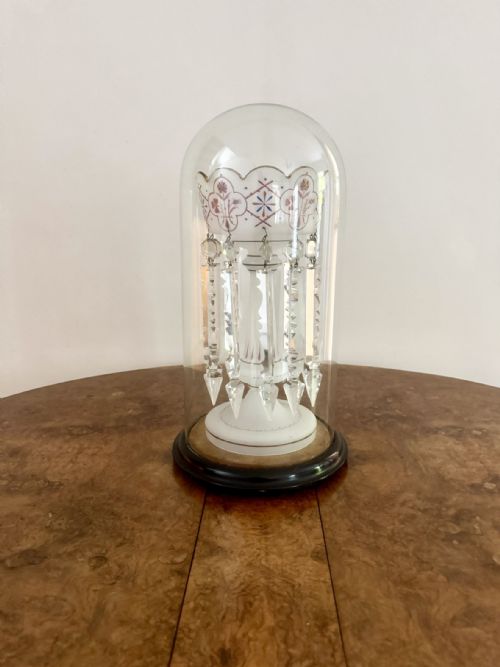
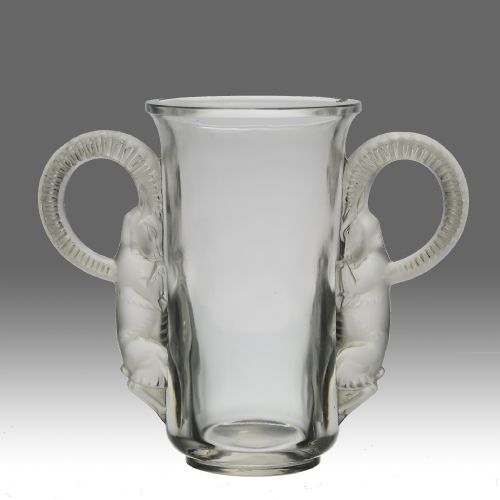
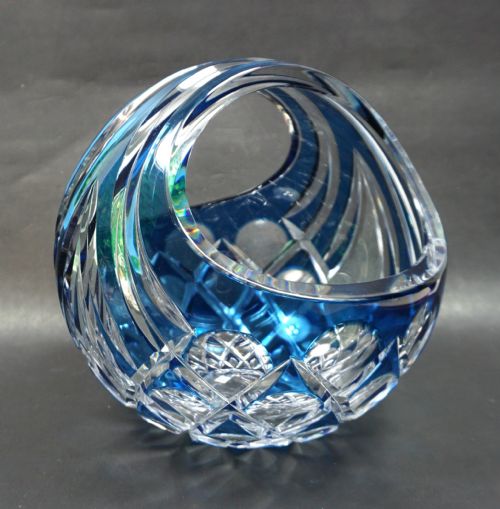
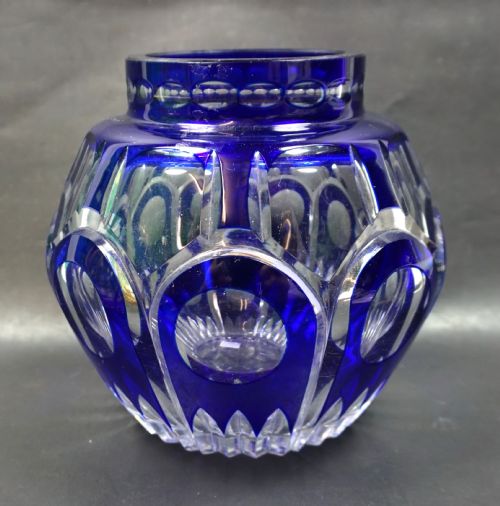
When searching for a clear crystal vase, buyers encounter items ranging from Regency celery vessels and Victorian cut glass to modernist Art Deco designs. The pieces on this page include tall lily vases, lidded vessels and heavy table centrepieces.
Most items date from the nineteenth and early twentieth centuries, encompassing styles from Art Nouveau and French Belle Epoque to robust Black Forest and Bohemian works. These objects served both functional display and decorative table duties in period homes.
Materials and technique
Maker workshops utilised lead crystal, clear glass and cased or overlay glass, often applying deep wheel cutting, acid etching and frost finishes. Pieces feature added elements such as paste gilt decoration, silver plated mounts and enamel painting.
Engraving techniques involved hand wheel work to create intricate motifs like portraits or botanical elements, while moulding shaped heavy bubble glass forms during the Art Deco era.
Clear Crystal Vase Retail Price Guide 2026
Typical asking prices for clear crystal vase among the pieces listed under this phrase on Sellingantiques today, from the lower quarter to the upper quarter. They describe what is for sale here now, not the wider market.
Listings span multiple eras including the Regency period, Victorian, Edwardian, and Art Deco, using materials from frosted glass to lead crystal.
What varies in quality
The standard of a piece rests upon the crispness of its wheel cutting and the optical purity of the material itself. Heavier lead content yields sharper facets and deeper resonance.
Artistry in secondary elements, such as delicate hand-painted enamel details, gilt borders or companion silver-plated mounts, elevates the standing of an individual vessel.
René Lalique·Val St. Lambert·Daum·St Louis glassworks·Stevens & Williams·Baccarat·Stuart
The Clear Crystal Vase Glossary
- Lead crystal
- Glass containing substantial lead oxide, which increases weight, refractive index and brilliance. This material permits deep, sharp cutting.
- Cased glass
- Glass formed of two or more distinct layers of different colours, allowing artisans to cut through the outer layer to reveal the contrasting colour beneath.
- Wheel engraving
- A technique where glass is held against rotating abrasive wheels to cut deep intaglio scenes or decorative patterns.
- Celery vase
- A tall nineteenth-century vessel designed specifically to hold stalks of celery upright on the dining table.
- Overlay
- A method where a layer of coloured glass is fused over clear crystal before being carved or cut away to create patterns.
Clear Crystal Vase: Frequently Asked Questions
How do I clean a heavy crystal vase safely?
Wash the vessel by hand in warm water using a mild detergent, avoiding sudden temperature changes that can crack historical glass. Line the sink with a towel to cushion the heavy base during washing.
Dry the piece immediately with a lint-free cloth to prevent water spots and preserve the refractive clarity of the cut facets.
What is the difference between glass and lead crystal?
Lead crystal contains a high percentage of metallic oxide, which increases the density, weight and light dispersion compared to standard soda-lime glass. This heavier material rings when struck gently.
The added weight and softer composition also make lead crystal more suitable for deep facet cutting and wheel engraving.
How can I tell a Victorian cut glass vase from an Art Deco one?
Victorian examples typically display dense, all-over geometric cutting, brilliant polished facets and heavier proportions, often paired with silver plating or gilt accents. Their silhouettes favour traditional urn, celery or trumpet shapes.
Art Deco pieces, by contrast, embrace stylised floral motifs, frosted surfaces, bold geometric streamlining or smooth modernist contours associated with makers from the 1920s and 1930s.
Were these vases meant strictly for flowers?
While many served as flower holders, numerous historical vessels functioned as mantel lustres, decorative centrepieces, or dining table ornaments without holding water.
Large nineteenth-century pieces often stood on side tables or formed part of multi-piece epergne table services designed purely to reflect candlelight.