






Antique Crystal Vase
These heavy, refractive vessels catch the light across centuries, spanning robust Regency forms through to delicate Art Nouveau contours.
Antique Crystal Vase
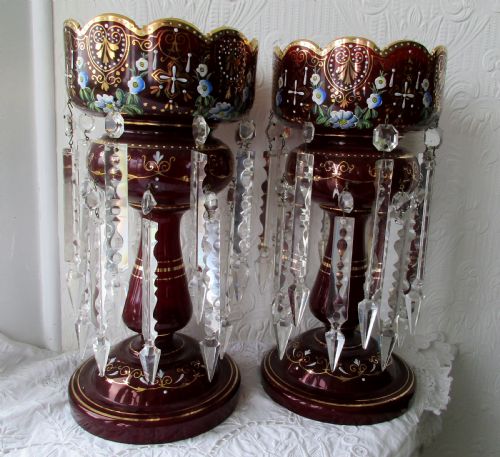
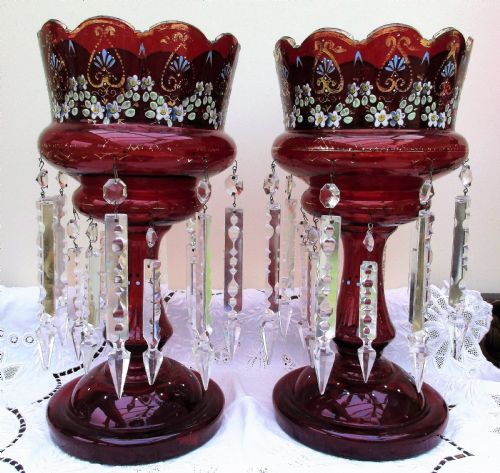
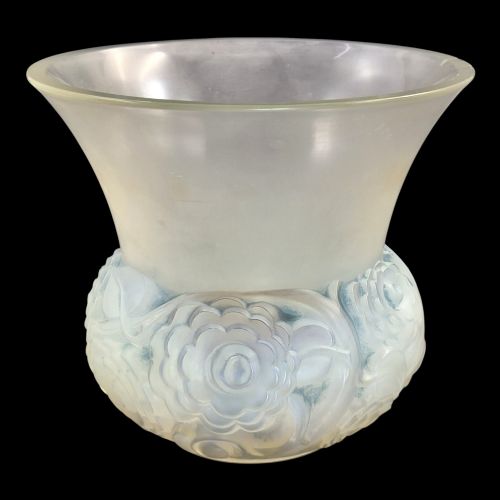
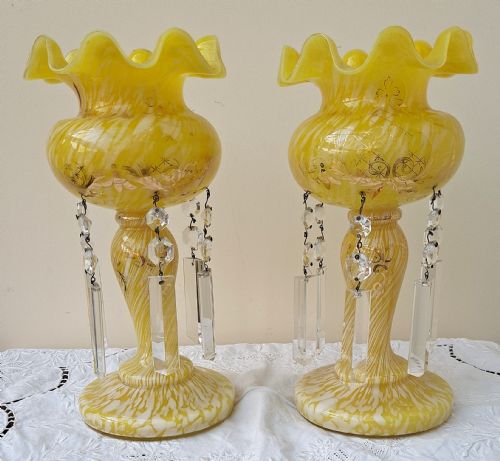
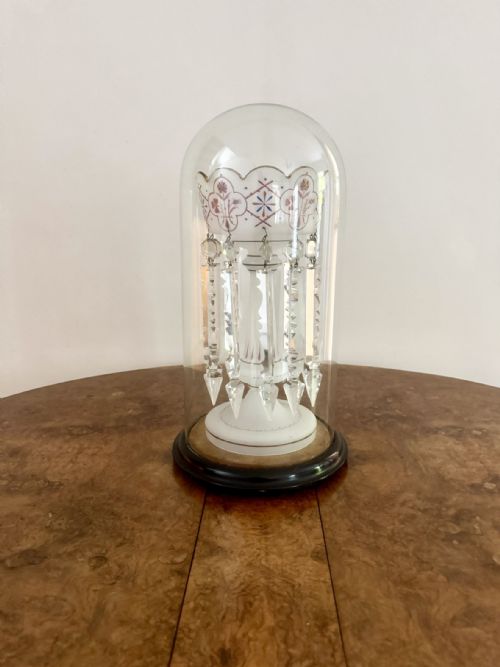
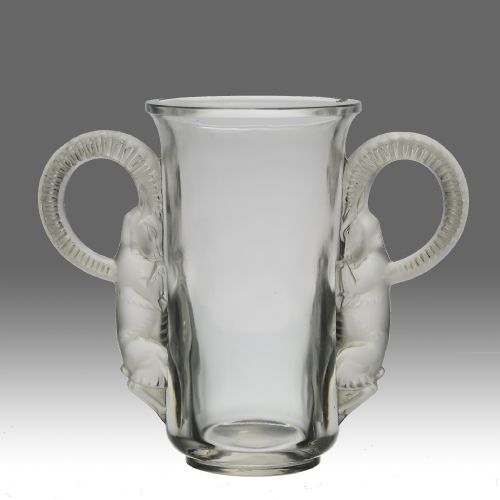
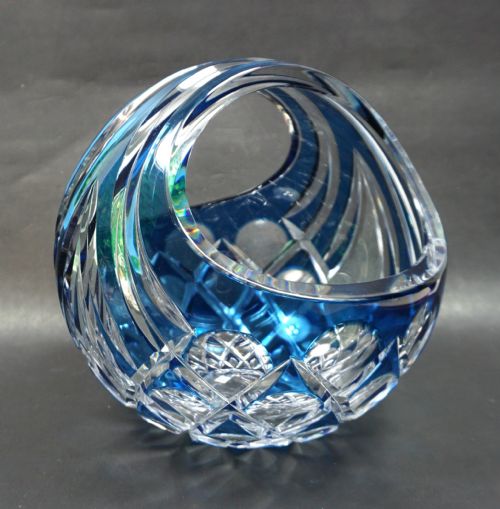
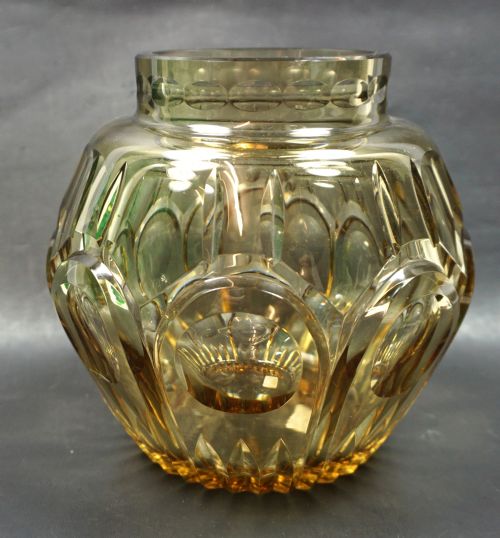
An antique crystal vase encompasses heavy lead glass vessels alongside coloured overlay pieces, ruby glass lustres, and wheel-engraved showpieces designed to display stems or catch the ambient daylight.
The pieces on this page draw from periods spanning the Regency era, Victorian decades, Edwardian years, and the Art Deco movement.
Vessels take many forms, from tall lily vases and celery jars to table centrepieces and elaborately hung lustres.
How they were made
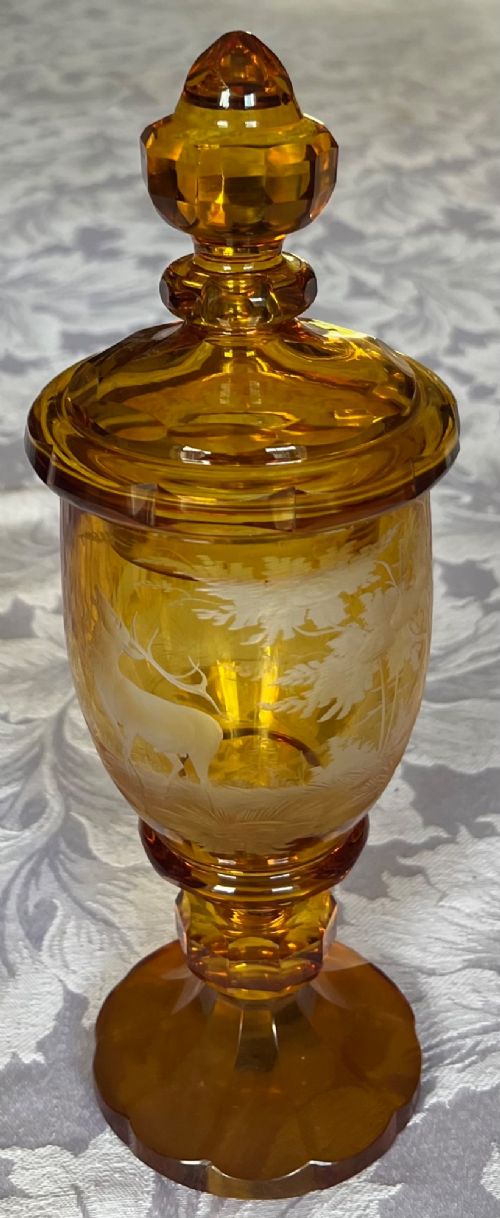
Makers utilised heavy lead crystal and clear glass, frequently casing them in layers of coloured glass before cutting through the outer layer to expose the contrasting metal beneath.
Decoration relied upon wheel engraving, hand cutting, paste gilding, and applied enamel, sometimes paired with silver plated mounts, ormolu, or carved wooden Black Forest frames.
One inquisitive philosopher made his way onto an English wheel-engraved glass vase, sharing shelf space with cheerful peacock eyes.
What varies in quality
Depth and crispness of the wheel cutting dictate the fidelity of the facets, where sharper edges create superior refractive flashes in the material.
The purity of the metal and the saturation of coloured glass layers reveal the skill of the glasshouse, distinguishing standard production wares from premier works.
Rene Lalique·Daum·Charles Graffart·St Louis glassworks·Val St Lambert·Stuart·Waterford
The Antique Crystal Vase Glossary
- Lead crystal
- Glass containing a high percentage of lead oxide, which increases the weight, brilliance, and softness for deep cutting.
- Overlay glass
- A technique where a layer of coloured glass is fused over a clear or contrasting body before portions are cut away.
- Lustre
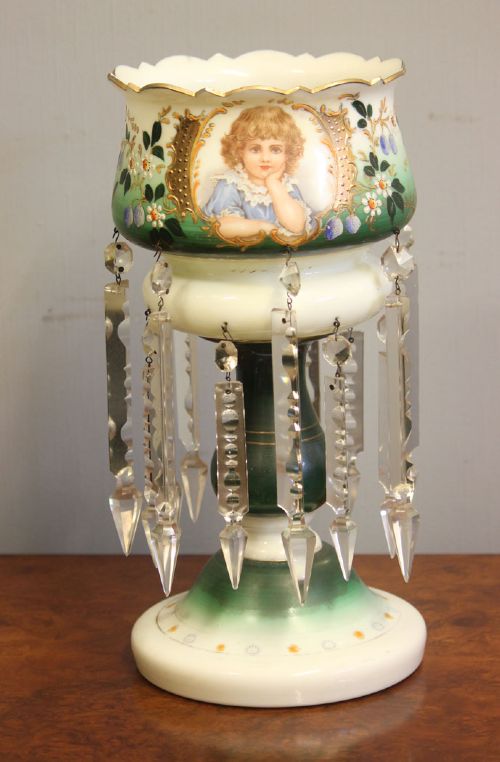
- A decorative table vase or centrepiece fitted with a ring of hanging glass prisms designed to refract candle or daylight.
- Celery vase
- A tall, footed vessel originally utilised on Victorian dining tables to hold stalks of celery upright.
- Flash glass
- A thin layer of coloured glass applied over a clear body, allowing glasscutters to expose the clear layer beneath during wheel work.
Antique Crystal Vase: Frequently Asked Questions
How do I clean an antique crystal vase safely?
Wash these vessels by hand in lukewarm water using a mild detergent, placing a towel at the bottom of the sink to cushion the heavy base. Avoid sudden temperature changes to prevent thermal shock from cracking the aged material.
Dry the piece immediately with a lint-free cloth to maintain the clear brilliance of the lead glass facets and prevent water spotting.
Can I use these vases for fresh flowers?
Water can be safely held in most heavy crystal vessels, provided you avoid abrasive brushes or harsh chemical cleaners that might scratch the interior or damage old gilding. Take care when placing heavy stems into antique lead glass to avoid chipping the rim.
Empty the water regularly and rinse the vessel thoroughly to prevent mineral deposits from clouding the vintage surfaces.
How do I date an antique crystal vase?
Examine the base for signs of wear, such as fine scratches known as shelf wear, which indicate age and handling over decades. Pontil marks left from the glassblower's rod also help determine the method of manufacture and approximate period.
Compare the decorative style, such as heavy Victorian cutting or geometric Art Deco lines, against documented periods like the Regency or Edwardian eras.
What is the difference between glass and lead crystal?
Lead crystal contains metallic lead oxide, which adds significant weight, increases the refractive index, and allows for deeper, sharper facet cutting than standard soda-lime glass. This high density produces a resonant ringing sound when the rim is tapped gently.
Standard glass is lighter and harder, often utilised for simpler moulded or blown forms without the heavy hand-cut facets typical of fine crystal.