



Pair of Glass Vases
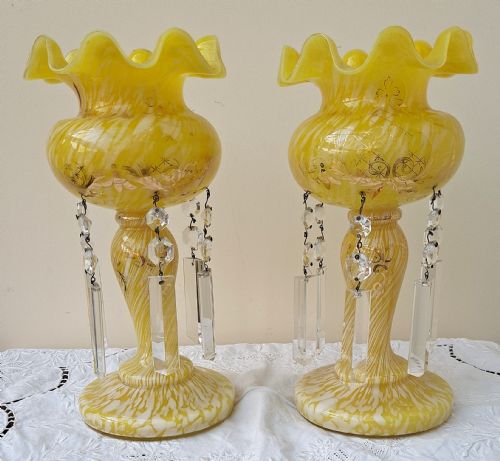
These pair of glass vases bring symmetry to a mantel or console, offering matched forms that span Victorian, Edwardian and Secessionist periods.
The Nature of the Pair
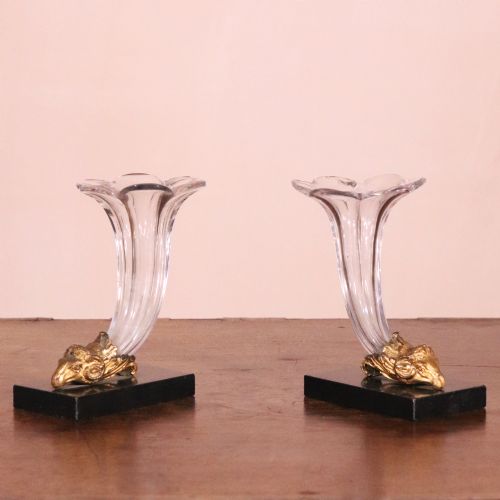
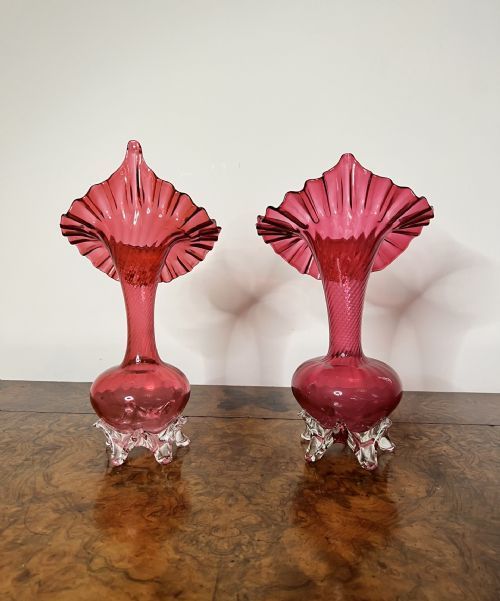
A pair of glass vases provides balanced display vessels designed to mirror each other in form, material and colour across mantelpieces and tables. Buyers seeking these dual objects encounter forms ranging from heavy cut display pieces to delicate Jack-in-the-pulpit shapes and slender cylinder vessels.
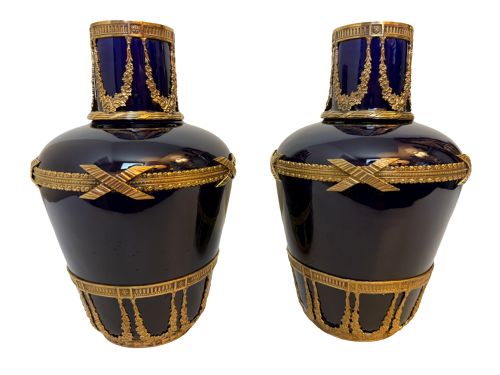
The selection encompasses nineteenth-century Victorian productions, Edwardian examples and continental works from the early twentieth century. Common variations include covered vessels, spill vases, and specimens mounted in silver or ormolu.
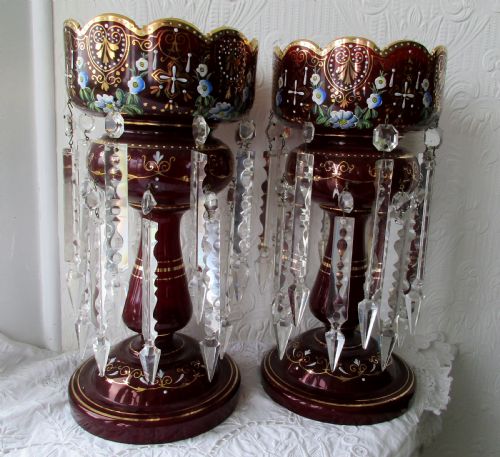
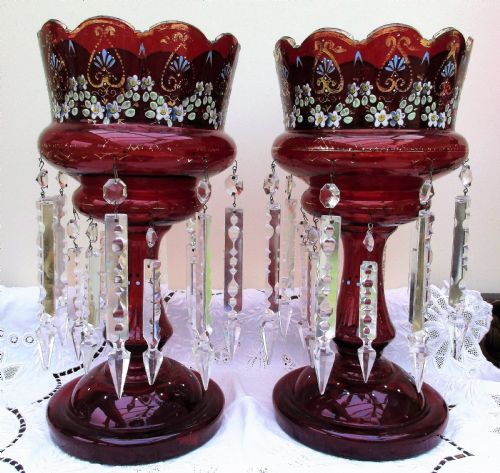
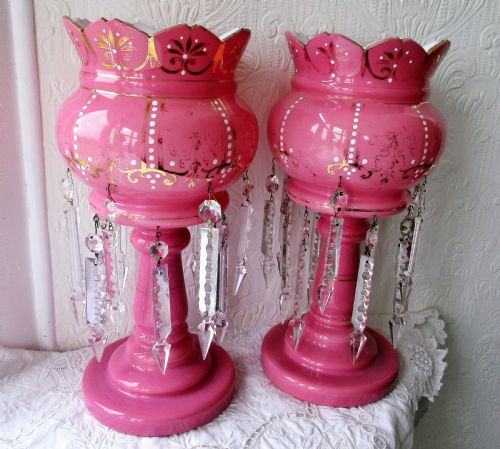
Victorian examples frequently showcase vibrant colours such as cranberry, blue, uranium vaseline and opaque black glass, often enriched with enamel painting or gilding. Later works embrace Secessionist lines, cut crystal, and iridescent finishes.
Materials and Techniques
Glassmakers utilised diverse blowing and moulding techniques to shape soda glass, crystal, and opaline into distinct silhouettes. Molten material was manipulated freehand into undulating rims or pressed into complex moulds before cooling.
Surface ornamentation involved cutting facets into heavy blanks, wheel engraving, chemical flashing, and applying enamel paints or precious metals. Certain specimens incorporate metal elements, combining silver plate, solid silver, bronze, or ormolu mounts with the blown glass bodies.
Some Victorian glass vases arrived filled with sea shells, turning the mantelpiece into a cabinet of curiosities.
Distinctions in Execution
Quality rests in the crispness of the glass cutting, the depth and clarity of coloured layers, and the finesse of any applied enamel or gilded details. Superior examples exhibit precise symmetry between the two vessels and heavier, stable metal mounts.
The distinction between standard production and top tier work is visible in the control of the medium, whether through sharp intaglio carving, complex cased colours, or the refined execution of decorative motifs.
Loetz·Freidrich Egermann·Karl Palda·Moser·Harrach
The Pair of Glass Vases Glossary
- Cranberry glass
- A rich red-pink transparent glass created by adding gold chloride to the molten batch. It is characteristic of Victorian decorative wares.
- Uranium vaseline glass
- A yellowish-green glass containing small amounts of uranium dioxide, which glows brightly under ultraviolet light. It was widely utilised in the nineteenth and early twentieth centuries.
- Jack-in-the-pulpit
- A distinctive nineteenth-century vase form featuring a flared, ruffled rim resembling the flower of the same name. It required skilled manipulation of the hot glass while expanding the top.
- Cut glass
- Glass decorated by abrading the surface against rotating wheels to form geometric patterns and facets. Deeper cutting characterises heavier display pieces.
- Ormolu
- Gilded bronze mounts applied to the base, rim, or handles of glass vessels. It provides structural support and decorative contrast.
Frequently Asked Questions
How were these vases used historically?
Paired vessels served primarily as decorative ornaments on mantelpieces, credenzas, and dining tables, often holding cut flowers or dried botanicals.
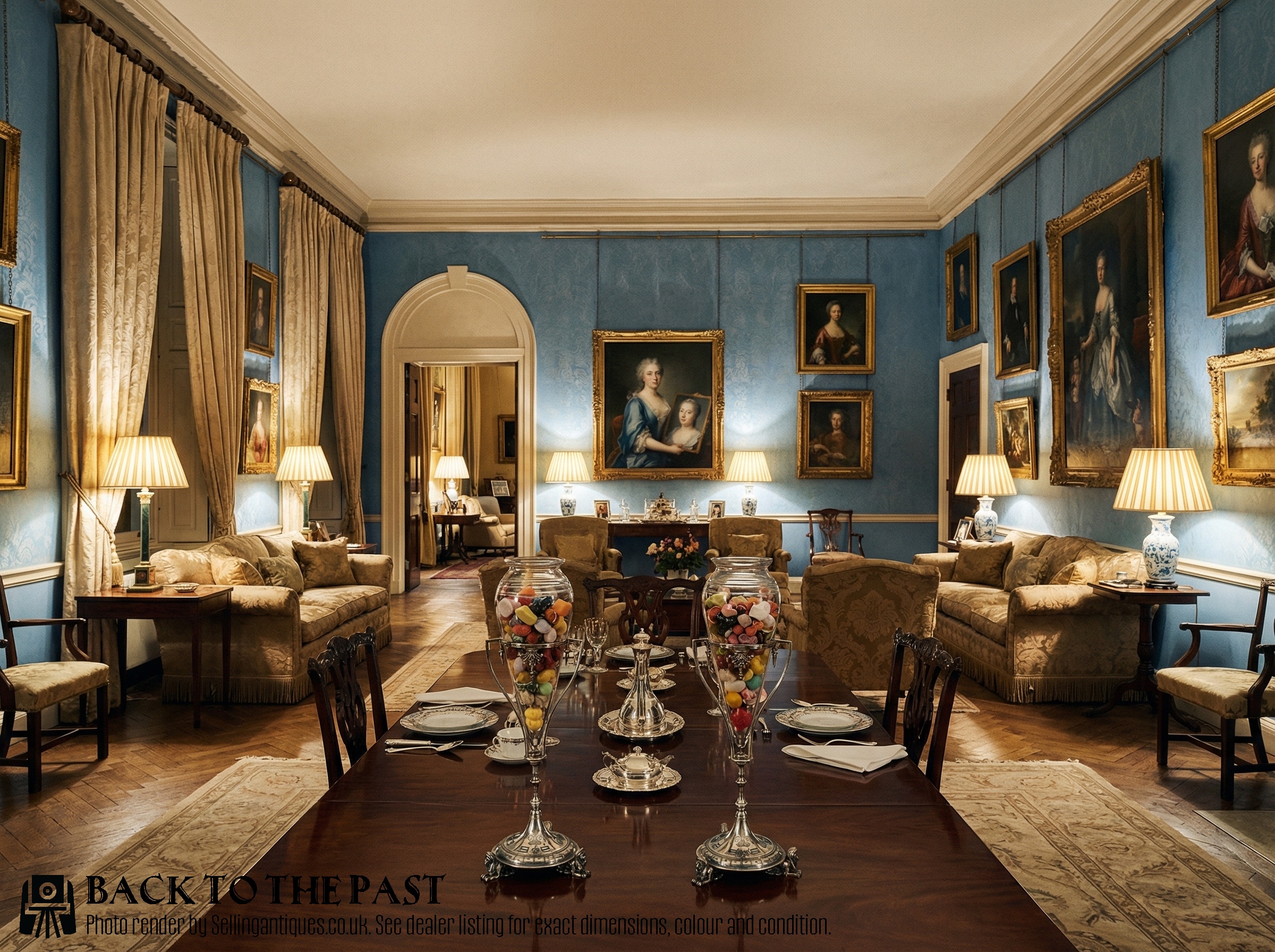
Some specialised forms, such as covered vessels or bon-bon containers, functioned as lidded display pieces or receptacles for sweets.
How do I care for antique glass?
Dust these items gently with a soft cloth and wash by hand in lukewarm water using mild, non-abrasive soap when necessary.
Avoid sudden temperature changes to prevent thermal shock, and keep metal-mounted or gilded examples away from harsh chemical cleaners.
How do I distinguish Victorian from Edwardian pieces?
Victorian examples often favour saturated colours, heavy enamel work, opalescent tones, and elaborate decorative treatments like the Jack-in-the-pulpit form.
Edwardian pieces tend toward lighter colour palettes, simplified silhouettes, and refined cut glass or silver mountings reflecting changing tastes at the turn of the century.
What is cased glass?
Cased glass consists of two or more distinct layers of glass fused together during production, often combining contrasting colours.
Artisans then cut through the outer layer to reveal the contrasting colour underneath, creating deep visual contrast and intricate patterns.