


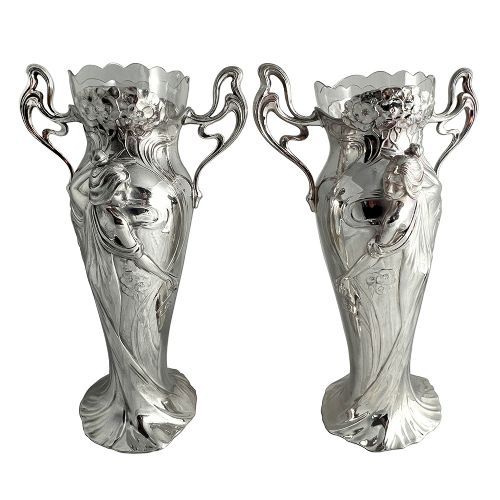


Edwardian Silver Glass Vases
Edwardian silver glass vases combine delicate blown or cut vessels with gleaming metal mounts for a striking table display.
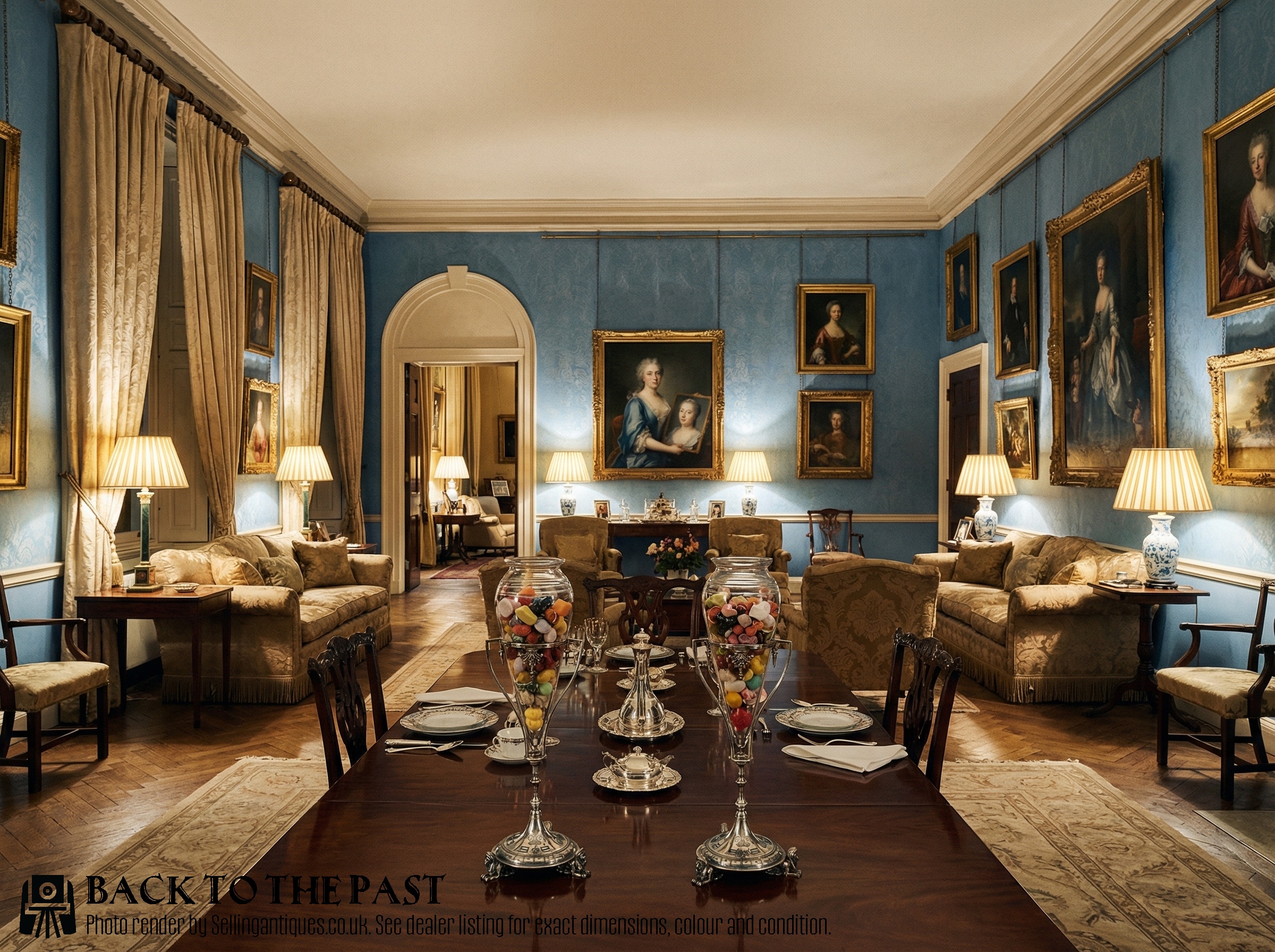
Edwardian Silver Glass Vases
When you search for edwardian silver glass vases, you encounter a refined pairing of glass vessels with metal mountings typical of the early twentieth century. These pieces range from tall spill vases and flutes to robust centrepieces and epergnes designed to hold fresh blooms.
The version you are most likely to meet on this page combines clear cut glass or coloured vessels with sterling silver rims or heavy silver plated collars. Makers often utilised green or red glass liners paired with hallmarked silver from regional offices such as Chester.
Origins stretch from the Edwardian period proper back into the late Victorian era, with continental workshops also contributing distinct metalwork. Forms frequently lean towards slender proportions intended for mantelpieces or dining tables.
Craftsmanship and materials
The foundation of these objects relies on blown or moulded glass, often enhanced by deep hand cutting or lustrous iridescent finishes. Workshops employed techniques such as overlaying the glass body with cast pewter or silvered metal to create organic motifs.
Metal components include heavy sterling silver mounts, silver plate, and silvered pewter shaped into collars, bases, and figural supports. Artisans secured these metal elements directly to the glass liners to create stable, functional display vessels.
Listings feature items from the Edwardian and Victorian periods, alongside early 20th-century pieces utilising glass, sterling silver, silver plate, and pewter.
Assessing quality
Quality rests upon the crispness of the glass cutting and the weight of the silver or pewter mounts rather than mere scale. Pieces featuring intact coloured glass liners and well preserved metal patination stand apart from plainer examples.
The integration between the glass vessel and its metal frame dictates the overall refinement of the piece. Substantial gauge silver and clear hallmarks indicate a higher grade of manufacture compared to lighter, unmarked alternatives.
Loetz Witwe·WMF·Goldsmiths & Silversmiths
The Edwardian Silver Glass Vases Glossary
- Spill vase
- A tall, slender vessel originally designed to hold wooden spills used for lighting fires and candles. These objects frequently double as slim floral holders.
- Epergne
- A large ornamental centrepiece featuring multiple detachable branches or vases for holding flowers and fruit. They often combine a central glass trumpet with smaller suspended vessels.
- Silvered pewter
- A base metal alloy coated with a layer of silver to emulate solid silver tableware. This material gained popularity during the Art Nouveau period for sculptural vessels.
- Iridescent glass
- Glass treated with metallic salts while hot to produce a rainbow sheen upon the surface. This technique was favoured by continental makers around nineteen hundred.
- Liner
- A removable glass insert designed to sit inside a metal basket or frame to protect the outer structure from moisture. Liners allow for easy cleaning after holding water and flowers.
Edwardian Silver Glass Vases: Frequently Asked Questions
What are edwardian silver glass vases?
These pieces are decorative vessels that combine glass bodies with silver or pewter mounts, produced primarily around the turn of the twentieth century. They were created to display cut flowers on dining tables and mantelpieces.
Craftsmen paired clear, cut, or coloured glass with sterling silver rims, heavy silver plate, or cast pewter frames. Their forms range from simple flutes to elaborate multi-vessel epergnes.
How were these vases used?
Owners placed them on dining tables, sideboards, and drawing room mantelpieces to hold fresh floral arrangements. Removable glass liners protected the metal mounts from standing water.
Smaller spill vases served a dual purpose for holding tapers alongside decorative blooms. Centrepieces anchored large table settings during formal Edwardian dining.
How do I care for silver and glass?
Wash the glass liners gently in warm soapy water, removing them from the metal mounts beforehand to prevent moisture damage. Dry the components thoroughly after cleaning.
Polish the silver or pewter mounts sparingly with a soft cloth and appropriate metal cleaner, avoiding contact with the glass surface. Store pieces away from damp environments to preserve the metal finish.
How can I tell the period?
Look for hallmarks stamped on the silver components, which often indicate the assay office and date letter corresponding to the early 1900s. Stylistic cues such as organic floral motifs point towards the Edwardian era and Art Nouveau movement.
Unmarked pieces often rely on material characteristics, such as iridescent glass finishes or silvered pewter, to suggest a manufacturing date around nineteen hundred.