
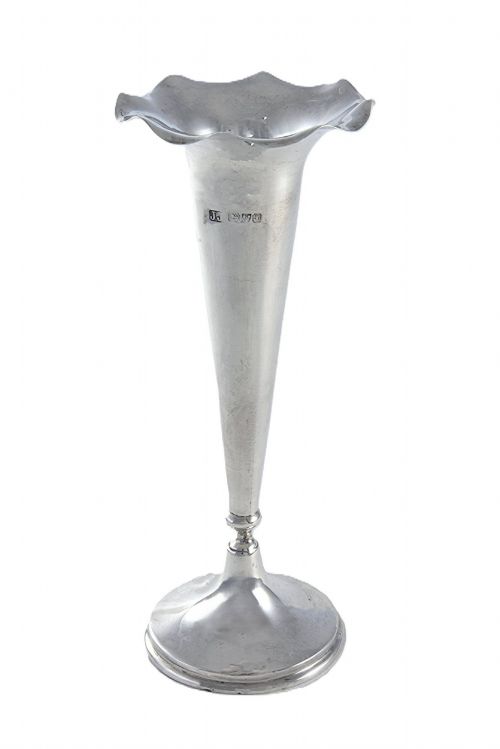


Fluted Silver Vase
These fluted silver vases bring sharp vertical lines and bright metallic reflection to a room, spanning periods from George III to Art Deco.
Fluted Silver Vase
A fluted silver vase combines vertical channeled surfaces with precious or plated metal, creating distinct play of light across the body. When searching for a fluted silver vase, a buyer encounters forms ranging from tall trumpet shapes to paired table ornaments and single posy holders.
The pieces appearing on this page span several eras including Georgian, Victorian, Edwardian, and Art Deco. Buyers are most likely to meet Edwardian trumpet shapes and silver plated variations alongside occasional glass flutes fitted with sterling silver bases.
How they were made
Makers utilised sterling silver and silver plate over base metal, alongside chrome in later twentieth century examples. Glass components also appear combined with metal bases to form structured flutes.
Techniques relied on hammering, casting, and plating to achieve the characteristic fluted channels that define the rims and bodies of these vessels.
Listings feature items from the Georgian period through to the 1930s, constructed in sterling silver, silver plate, glass, and chrome.
What varies in quality
Quality rests in the crispness of the fluting and the weight of the metal used in construction. Substantial sterling silver examples show deeper definition in their channels compared to lighter plated alternatives.
The integrity of the form and the balance between the flared rim and the weighted base dictate the overall success of each piece.
W&H
The Fluted Silver Vase Glossary
- Sterling silver
- A silver alloy containing 92.5 percent pure silver by mass and 7.5 percent other metals, usually copper. This standard ensures durability while maintaining high metal purity.
- Silver plate
- A layer of silver applied to a base metal core such as copper or nickel silver. This technique offered an accessible alternative to solid silver objects.
- Trumpet vase
- A vessel shaped like a musical wind instrument, widening gradually from a narrow base to a flared rim. This form suits floral arrangements with long stems.
- Epergne
- A large table centrepiece featuring multiple detachable dishes or vases branching from a central stand. These items dominated formal dining tables during the Victorian and Edwardian periods.
- Fluting
- Parallel rounded grooves cut or pressed into the surface of a metal or glass object. This decorative treatment adds texture and enhances reflective qualities.
Fluted Silver Vase: Frequently Asked Questions
How do I clean a silver vase?
Use a soft cloth and a specialised silver polish designed to remove tarnish without scratching the metal surface. Avoid harsh abrasives that can wear away thin plating.
For pieces with glass inserts, remove the glass before cleaning to protect both materials from moisture damage and cleaning agents.
Can these vases hold water?
Solid sterling silver and glass combination pieces generally hold water safely for fresh floral displays. Silver plated items require caution to ensure the interior protective coating remains intact.
Dry the interior thoroughly after use to prevent corrosion or spotting, particularly around soldered joints and seams.
How do I date a silver vase?
Look for hallmarks stamped into the metal, which indicate the assay office, standard of silver, and year of manufacture. Stylistic clues such as Edwardian trumpet shapes or Art Deco chrome provide additional dating evidence.
Compare the weight, construction methods, and decorative motifs with documented examples from specific periods like the Victorian era or the 1930s.
Where should I display a trumpet vase?
Place tall trumpet vases on sturdy side tables, mantels, or dining surfaces where their vertical profile draws the eye upward. Ensure they sit away from heavy foot traffic to prevent accidental tipping.
Pairing matching vases on either side of a fireplace or mirror creates a balanced decorative arrangement within a room.