


Antique Glass Trumpet Vase
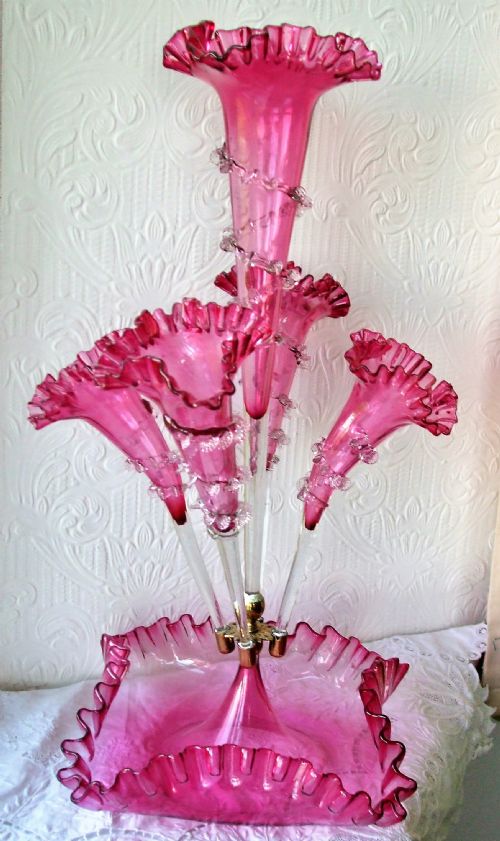
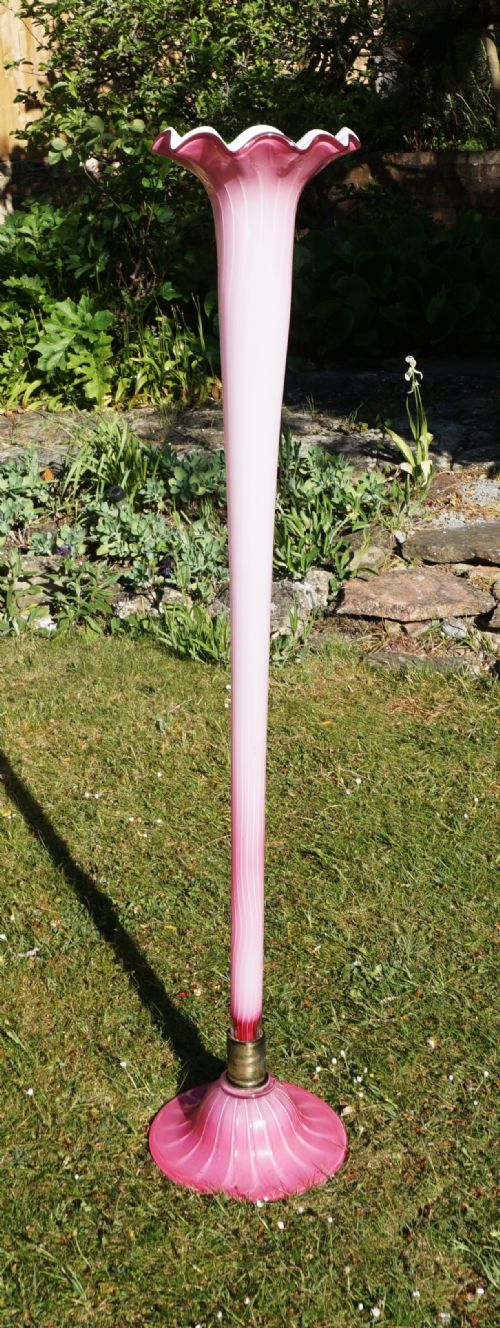
An antique glass trumpet vase rises in a clean bell shape to hold long stems, bringing height and colour to a room.
Antique Glass Trumpet Vase
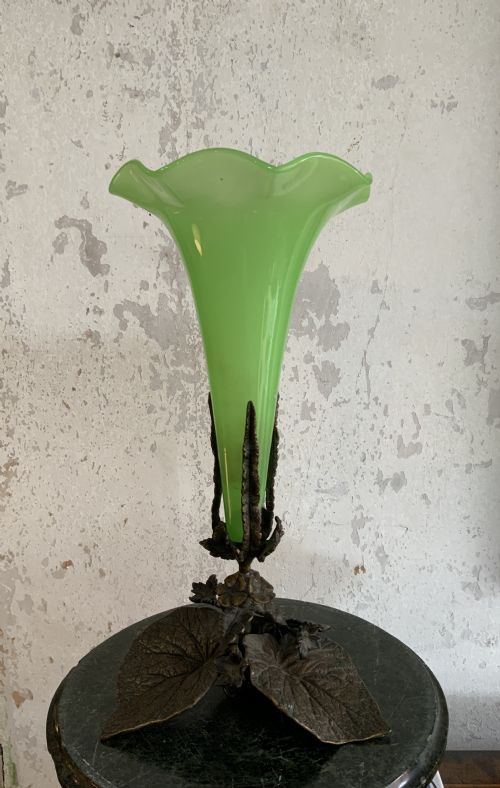
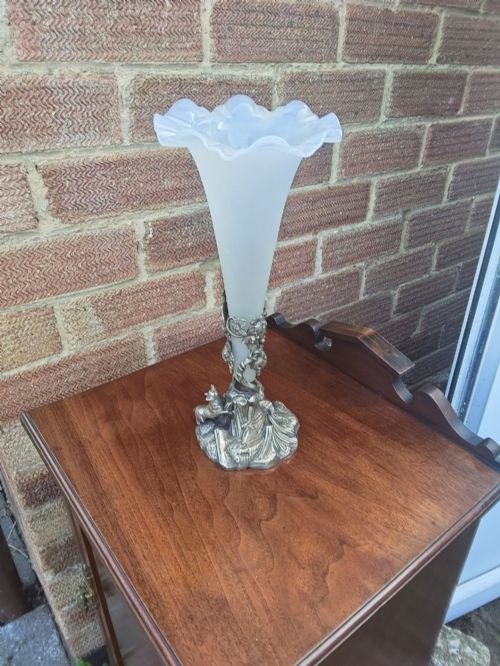
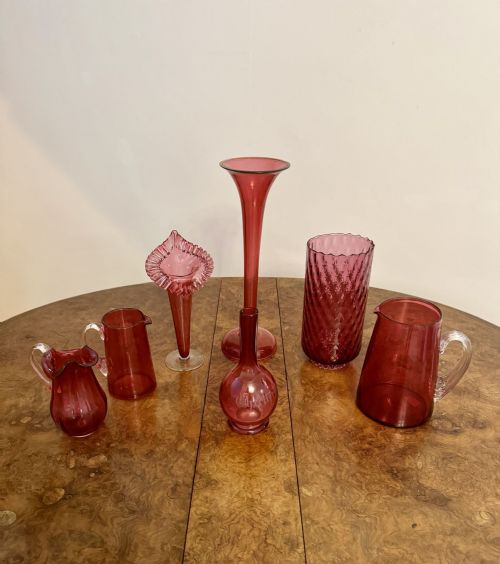
An antique glass trumpet vase is a slender, flared vessel designed to display single blooms or structured arrangements with elegance. When searching for an antique glass trumpet vase, buyers encounter Victorian cranberry glass pieces, Edwardian examples with silver bases, and striking Art Nouveau floriform designs.
The selections span the nineteenth century into the 1930s, encompassing standalone flutes, multi-trumpet epergnes, and grand floor-standing pieces. Many examples incorporate brass, bronze, or silver plate mounts that support the delicate glass bowls.
Makers and workshops from England, France, and beyond utilised varied techniques to shape clear, frosted, opalescent, and cased glass. These vessels functioned as table centrepieces or mantel ornaments, reflecting the decorative tastes of the Victorian and Edwardian eras.
Materials and construction methods
Glassmakers blew molten metal by hand into distinct moulds or manipulated it freehand to achieve the characteristic flaring trumpet silhouette. Cranberry, uranium, and cased glass achieve their vibrant hues through the addition of metallic oxides during the melting process.
Mounts of silver, brass, and gilt bronze were cast and worked to secure the fragile glass components safely. Engraving, gilding, and white cane decoration were frequently applied to the cooled glass surfaces by hand.
Antique Glass Trumpet Vase Retail Price Guide 2026
Typical asking prices for glass trumpet vase among the pieces listed under this phrase on Sellingantiques today, from the lower quarter to the upper quarter. They describe what is for sale here now, not the wider market.
Materials recorded across the inventory include cranberry glass, uranium glass, opalescent glass, brass, and silver plate.
Assessing quality and craftsmanship
Superior examples display balanced proportions, with even wall thickness and precise control over colour saturation within the glass. The integration of metal mounts, whether sterling silver or gilt bronze, reveals the skill of the silversmith or metalworker.
Artistry in surface decoration, such as fine wheel engraving, careful gilding, or the iridescent sheen on Favrile pieces, elevates a standard vessel to a masterwork. The clarity of crystal and the complexity of multi-trumpet epergne assemblies distinguish finer pieces.
Baccarat·LC Tiffany·Josiah Williams & Co·Powell·Nazeing
The Antique Glass Trumpet Vase Glossary
- Cranberry glass
- A rich red-pink transparent glass created by adding gold chloride to the molten batch. It became particularly popular during the Victorian period for tablewares and decorative ornaments.
- Epergne
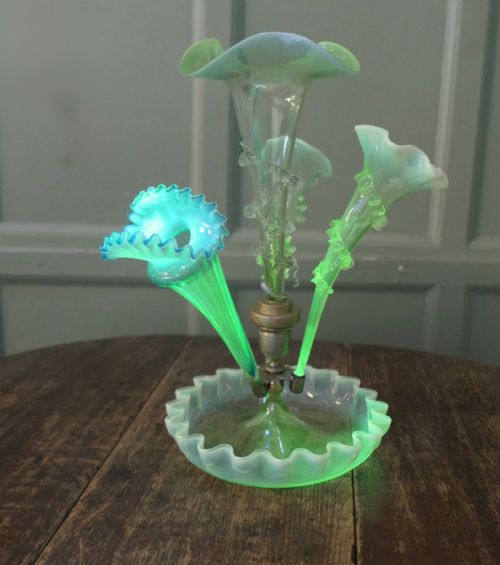
- A large table centrepiece featuring a central bowl with multiple branching trumpets or baskets attached. These pieces held fruit, sweetmeats, or flowers for formal dining.
- Uranium glass
- Glass containing a small percentage of uranium oxide, which glows bright green under ultraviolet light. It was widely produced in the nineteenth and early twentieth centuries.
- Cased glass
- Glass composed of two or more distinct layers of different colours, often cut away to reveal the contrasting layer beneath. This technique allowed makers to create depth and rich colour combinations.
- Favrile glass
- An iridescent art glass developed and patented by Louis Comfort Tiffany. The technique produced shimmering metallic surfaces inspired by ancient patinated glass.
Antique Glass Trumpet Vase: Frequently Asked Questions
What is an epergne?
An epergne is an elaborate table centrepiece that combines a central bowl with several smaller trumpet vases or baskets. Victorian households used them on dining tables to hold flowers or fruit during meals.
Over time, many of these multi-trumpet structures have lost some of their detachable flutes or original hanging baskets. Complete sets with matching glass trumpets remain especially desirable for collectors.
Why does uranium glass glow?
Uranium glass glows a vivid fluorescent green when exposed to ultraviolet or black light because of the uranium oxide content. Victorian and Edwardian glassmakers used this compound as a colourant to achieve bright yellow-green shades.
The level of radiation in these antique pieces is extremely low and considered safe for display purposes. Collectors often use UV torches to verify the authenticity of nineteenth-century uranium glass items.
How were trumpet vases used?
Trumpet vases held single long-stemmed flowers such as lilies or roses to decorate mantelpieces and dining tables. Their narrow bases and flared rims kept tall stems upright and well-spaced.
Larger floor-standing versions stood directly on the floor in grand nineteenth-century hallways or parlours. Smaller posy vases were designed for more intimate table settings.
How do I date an antique glass vase?
Dating relies on stylistic clues, manufacturing techniques, and any associated metal mounts or silver hallmarks. Pontil marks on the base of hand-blown vessels often indicate an older nineteenth-century origin.
Art Nouveau pieces show organic floriform shapes typical of the late Victorian and Edwardian periods. Silver mounts frequently carry date letters that pinpoint the exact year of manufacture.