


Ruffled Rim Vase
A ruffled rim vase brings dramatic flair to a room, offering fluid, crimped glass edges that catch the light.

Ruffled Rim Vase
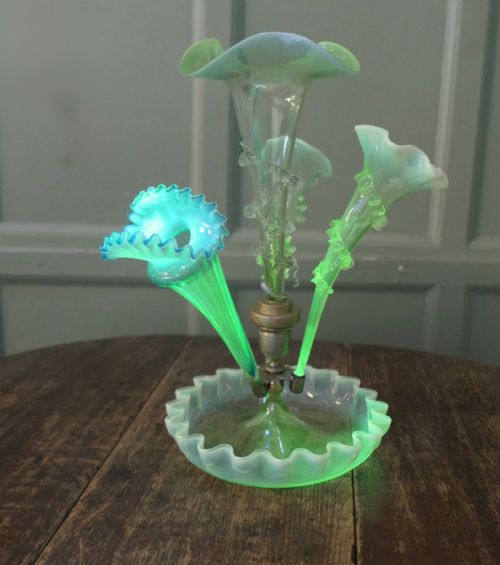
When you search for a ruffled rim vase, you encounter decorative glass vessels spanning the Victorian era through to the early twentieth century. The selection ranges from tall floor-standing examples and mantle lustres to multi-trumpet epergnes and cabinet pieces.
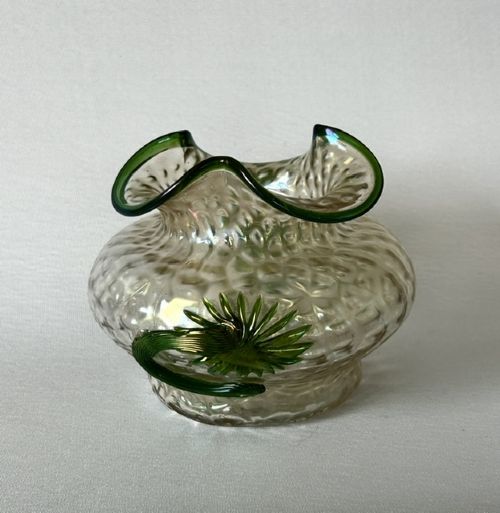
Most items you meet here originate from English, French, and Bohemian makers working in distinct nineteenth and twentieth-century styles. The form is defined by its characteristic undulating top edge, shaped while the glass was hot.
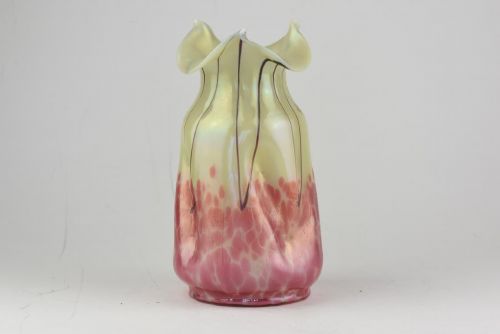
Victorian and Art Nouveau aesthetics dominate the items listed here, showing both organic floral influences and precise hand-blown techniques. These pieces function primarily as decorative centrepieces rather than utilitarian flower holders.
How they were made
Makers utilised various glass formulations including satin glass, opalescent glass, and cased glass layers to achieve rich depth of colour. Cranberry and uranium glass variants required precise mineral additions to the molten batch.
The distinctive ruffled rim was shaped by hand manipulation while the glass remained malleable on the punty iron. Artisans also applied enamel decoration and surface textures such as the Martele finish after the initial blowing process.
Materials represented include uranium glass, satin glass, cased glass, and cranberry glass.
What varies in quality
Distinction across the range lies in the crispness of the rim manipulation and the complexity of the glass body. Multi-layered cased glass and intricate hand-enamelled scenes separate standard production pieces from superior works.
Named makers such as Pallme Konig, Kralik, and Baccarat demonstrate higher standards of glass chemistry and artistic execution. The weight of the metal and the depth of the iridescent or satin finish dictate the upper tier.
Pallme Konig·Kralik·Baccarat·Webb·Legras
The Ruffled Rim Vase Glossary
- Cased glass
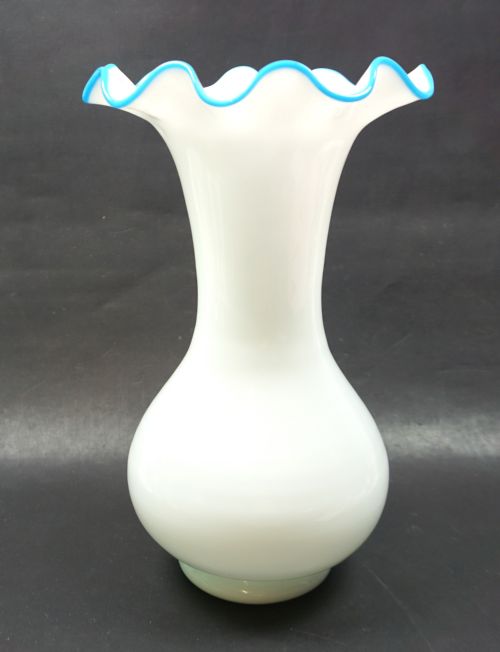
- Glass formed of two or more distinct layers of different colours, often contrasting an inner white layer with an outer coloured or satin finish.
- Uranium glass
- Glass containing uranium oxide that glows vibrant green under ultraviolet light, popular in nineteenth-century decorative pieces.
- Epergne
- A centrepiece stand featuring a central trumpet flanked by smaller detachable trumpets or baskets, frequently finished with crimped rims.
- Mantle lustres
- Mantelpiece ornaments featuring glass prisms hung from a central vase body, popular during the Victorian period.
- Satin glass
- Glass treated with hydrofluoric acid vapour or mechanical means to produce a velvety, matte surface texture.
Ruffled Rim Vase: Frequently Asked Questions
How do I clean a ruffled rim vase?
Wash the glass gently in lukewarm water using mild soap and a soft cloth to protect delicate enamelling or satin finishes. Avoid submerging mounted metal fittings or exposing antique glass to sudden temperature changes.
Dry the piece thoroughly with a lint-free towel, taking extra care around the fragile crimped edges of the rim.
Are these vases safe to hold water?
Many nineteenth-century glass pieces were intended purely for display and may have internal stresses or pontil marks unsuited to holding liquids. It is safer to use them dry or employ a discreet inner plastic vessel if you wish to display fresh stems.
Checking the interior for historical residue or hairline fractures helps determine whether the piece can handle moisture safely.
How do I date a Victorian piece?
Examine the base for a polished pontil mark, which often indicates nineteenth-century hand-blown manufacturing techniques. Stylistic markers such as Mary Gregory style enamelling or satin glass finishes point directly to the Victorian era.
Comparing the colour palette and glass weight with known maker signatures helps narrow down the decade of production.
What is cased glass?
Cased glass consists of two or more fused layers of glass, typically combining a white interior with a coloured exterior layer. This technique allowed artisans to cut through the outer layer or create rich, opaque colour combinations.
Look closely at the rim to spot the distinct boundary lines where the separate layers of glass meet.