


Crimped Rim Glass Vase
A crimped rim glass vase brings nineteenth-century colour and texture to a room, catching the light through shaped and folded glass edges.
Crimped Rim Glass Vase
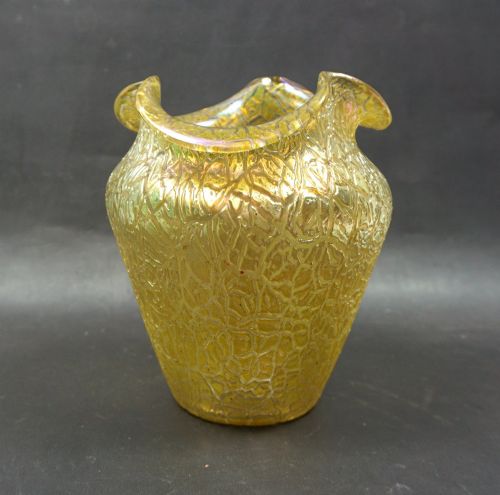
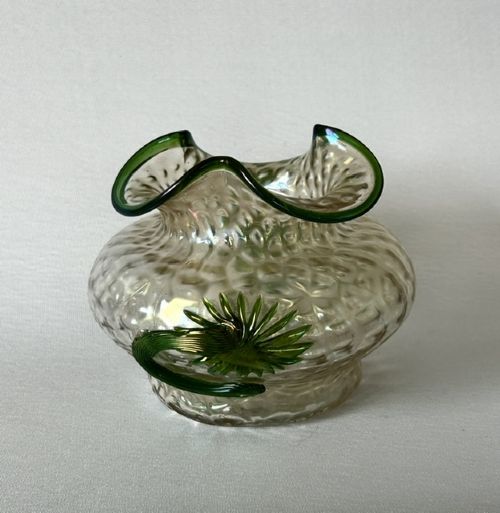
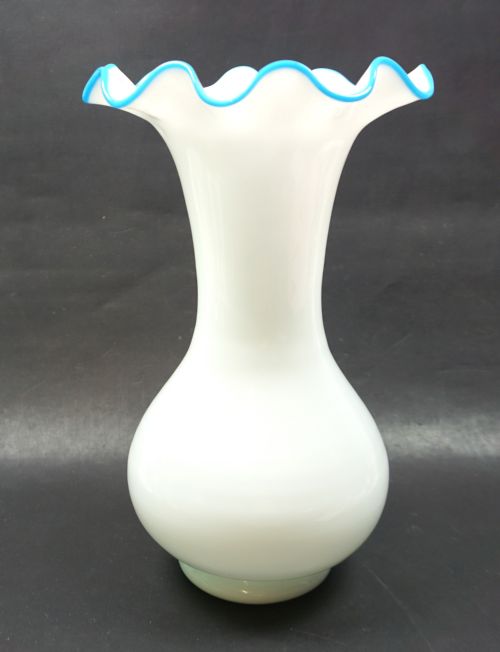
When you search for a crimped rim glass vase, you encounter pieces spanning the nineteenth century and the early twentieth century, including Victorian examples and Art Nouveau forms. These vessels take various shapes, from posy vases and lily vases to larger lustres and art glass pieces.
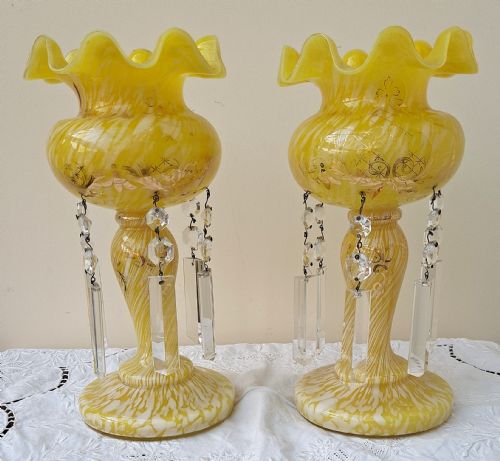
The version you are most likely to meet on this page is a Victorian glass vase, often rendered in satin glass, cranberry glass, or yellow glass with characteristic folded or fluted rims. English and Bohemian makers dominate these listings, alongside French works from Baccarat.
Beyond standard vases, the category encompasses matched pairs and decorative lustres that share the defining manipulated glass edge. Each piece displays the Victorian appetite for vibrant hues and tactile glass manipulation.
How they were made
These vessels rely on blown glass techniques, where artisans shaped molten material into vases, lustres, and bowls before manipulating the openings while hot. Makers applied contrasting glass trails, white cane decoration, or enamel details to the body while the metal remained pliable.
Specialised glass types define the physical structure of these pieces, notably cased glass, satin glass, and iridescent glass. Some works combine distinct colour layers, such as pink and cranberry bodies paired with uranium green glass bases.
The signature crimped rim required skilled hand-forming at the furnace, pinching and folding the soft glass edge into ruffles, flutes, or wave patterns. Makers like Loetz, Kralik, and Thomas Webb utilised these thermal shaping methods to create distinct surface textures.
Crimped Rim Glass Vase Retail Price Guide 2026
Typical asking prices for crimped rim glass vase among the pieces listed under this phrase on Sellingantiques today, from the lower quarter to the upper quarter. They describe what is for sale here now, not the wider market.
Some nineteenth-century bases glow an unexpected bright green under ultraviolet light thanks to added uranium.
What varies in quality
Quality rests in the precision and balance of the hot-worked rim, where fluid, symmetrical crimping distinguishes superior pieces from heavy or stiff formations. The weight and clarity of the underlying crystal or coloured glass set the standard for each vessel.
The sophistication of the colour application, whether through shaded satin glass, cased layers, or iridescent finishes, determines the visual depth of the object. Hand-painted enamel details and integrated decorative trails demand high technical control from the maker.
Attribution to documented makers such as Thomas Webb, Loetz, Kralik, or Baccarat elevates a piece through evidence of superior design execution and workshop heritage.
Loetz·Kralik·Baccarat·Thos. Webb & Sons
The Crimped Rim Glass Vase Glossary
- Cranberry glass
- A transparent red glass coloured with gold chloride, widely used in Victorian tableware and decorative vases. It ranges from pale pink tones to deep ruby shades.
- Satin glass
- Glass treated with hydrofluoric acid to produce a characteristic velvety surface texture that diffuses light softly. It frequently appears in shaded Victorian wares.
- Cased glass
- Glass formed of two or more distinct layers of different colours, often blown together and manipulated while hot. This technique allows exterior surfaces to contrast sharply with interior hues.
- Lustres
- Decorative mantelpiece ornaments featuring hanging glass prisms suspended from a central vase or bowl. They combine standard vase forms with reflective crystal drops.
- Uranium glass
- Glass containing a small percentage of uranium oxide, which glows bright green under ultraviolet light. It appears in nineteenth-century bases and decorative accents.
Crimped Rim Glass Vase: Frequently Asked Questions
How do I clean a crimped rim glass vase?
Wash the glass gently in lukewarm water using mild soap, supporting the delicate folded rim with your hand at all times. Avoid submerging antique pieces with painted enamel decoration for extended periods.
Dry the vessel promptly with a soft, lint-free cloth to prevent water spots, taking care around the sharp folds of the crimped edge where dust collects.
How can I tell Victorian glass from later copies?
Examine the base of the vessel for pontil marks, where the glassblower's rod was snapped off and ground down manually. Victorian pieces typically show appropriate wear patterns and hand-finished irregularities on the underside.
Consider the weight, colour saturation, and method of rim crimping, as modern reproductions often lack the spontaneous fluidity of nineteenth-century hot-worked glass.
What is the difference between a posy vase and a lustre?
A posy vase is designed as a standalone vessel for holding small bunches of flowers, featuring a compact body and an expanded rim. These pieces rely on colour and form alone for their decorative impact.
A lustre is a taller ornamental centrepiece fitted with a rim hung with cut glass prisms, intended to reflect candlelight rather than display stems.