


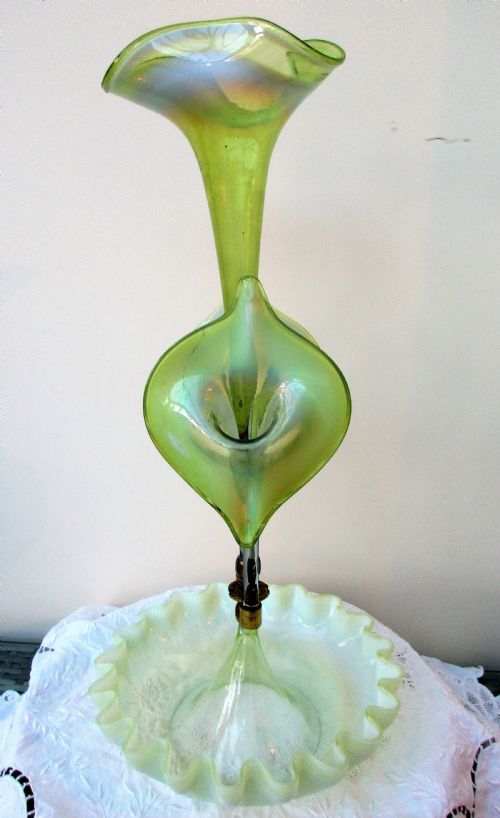


Uranium Glass Vase
A uranium glass vase glows intensely under ultraviolet light because uranium oxide is added to the molten batch.
What these pieces are
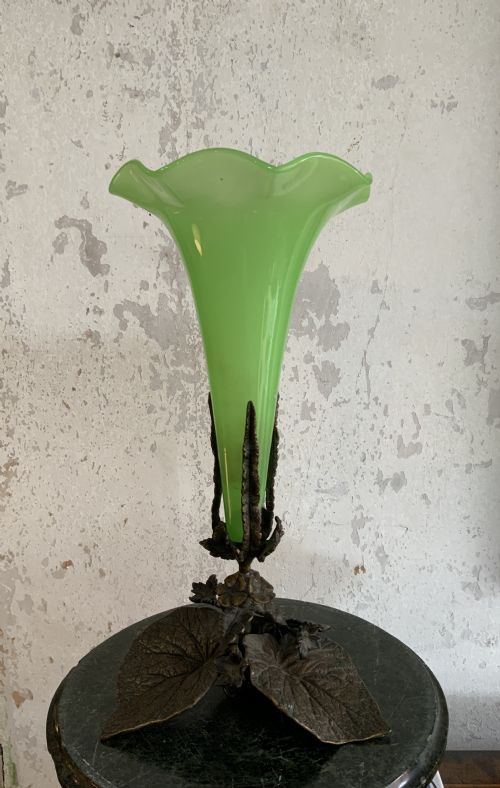
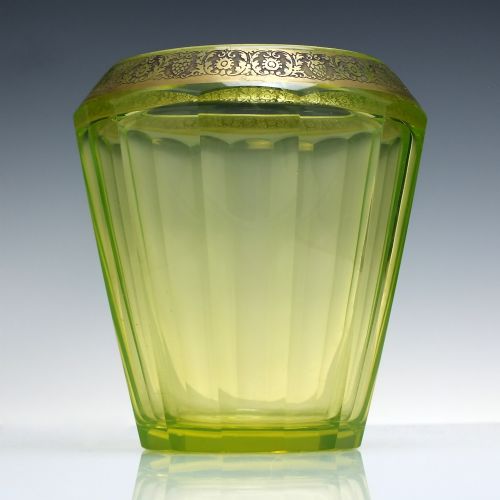
A uranium glass vase is an object made from glass incorporating uranium oxide, which produces a distinctive yellow-green colour visible by daylight and a bright green fluorescence under UV light. Buyers look for these pieces to add a striking optical property and a specific historical aesthetic to a cabinet or room.
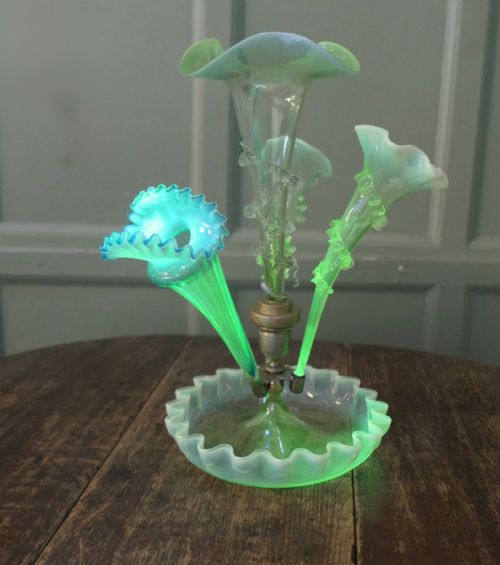
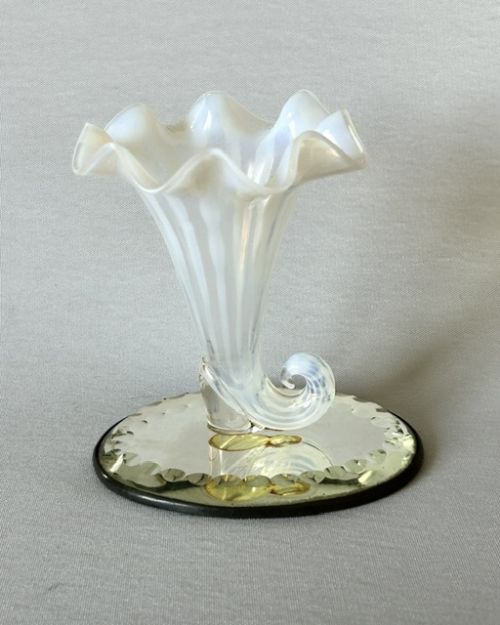
The selections available include Victorian and 1900s items alongside Art Deco examples, spanning single posy vases, multi-trumpet epergnes, and bowls with brass or silver mounts. Victorian pieces often combine uranium or vaseline glass with opalescent elements, cranberry glass, or precious metal bases, while later examples incorporate enamel decoration or metal frogs.
Makers and houses associated with these items include Moser, Thomas Webb, John Walsh, Karl Palda, and Walther & Sohne. Forms range from simple hand-blown trumpets to elaborate multi-piece table decorations and signed Art Deco designs.
How they were made
These items are produced using glassblowing and moulding techniques, often integrating uranium oxide directly into the batch to achieve the characteristic translucent green or yellow tone. Artisans combine the material with gold leaf, enamel, or coloured glass sections like cranberry glass and opalescent borders.
Many multi-part forms involve separate manufacturing processes for the glass inserts and their metal components, utilising brass, silver, or gilt bronze holders. Pieces from specific makers also show hand-blown trumpet formations and specialised enamel painting applied to the cooled surface.
Retail Price Guide 2026
Typical UK retail prices for uranium glass vase, calculated from the Sellingantiques database of over a million retail prices indexed since 2003. This retail price guide relies exclusively on Sellingantiques data; no external sources or auction records are used, so the figures do not describe the wider market.
These pieces wait quietly in dim rooms, hiding their neon green superpowers until someone shines a torch in the dark.
What varies in quality
Quality in a uranium glass vase rests upon the dexterity of the glassblower and the complexity of the form, such as multi-trumpet epergnes or detailed Art Deco silhouettes. Signed pieces by established makers or houses like Moser and Karl Palda display superior execution in cutting, enamelling, and overall proportion.
The integration of secondary materials also influences the piece, with substantial silver, brass, or gilt bronze mounts elevating the status of a posy vase or bowl. The clarity of the glass, the vibrancy of the vaseline or opalescent shading, and the strength of the ultraviolet reaction distinguish finer examples.
Karl Palda·Thomas Webb·John Walsh·Walther & Sohne·Moser
The Uranium Glass Vase Glossary
- Uranium Glass
- Glass containing a small percentage of uranium dioxide, added as a colouring agent. This imparts a translucent yellow or green hue and causes the material to glow under ultraviolet light.
- Vaseline Glass
- A specific type of transparent or translucent yellow-green uranium glass that resembles petroleum jelly in appearance. It is frequently encountered in Victorian and early twentieth-century decorative pieces.
- Epergne
- A large table centrepiece featuring a central bowl with multiple detachable trumpet vases branching outwards. Victorian versions often utilise uranium glass for these trumpet inserts.
- Posy Vase
- A small vessel designed to hold a short bunch or posy of flowers. These often appear in pairs or singular unusual forms with silver or brass mounts.
- Opalescent Glass
- Glass that has a milky, semi-opaque appearance with a bluish or pearlescent rim. This effect is achieved through controlled reheating during the shaping process.
Frequently Asked Questions
How can I tell if my vase is real uranium glass?
Genuine pieces display a distinctive translucent yellow-green tint in normal daylight. The most reliable test involves shining a 395nm ultraviolet torch on the glass in a darkened room, which should cause it to emit a bright neon green fluorescence.
Historical context also matters, as the vast majority of these items were produced during the Victorian era through the Art Deco period. Weight, construction methods, and period-appropriate mounts provide further clues to authenticity.
Is uranium glass safe to have in the home?
These decorative items emit very low levels of radiation, generally considered negligible for ornamental display purposes. They do not pose a health hazard when kept on a shelf or inside a cabinet.
Precautions mainly involve avoiding use for acidic food or drink, as historically some low-level leaching could occur. Normal handling and displaying present no risk to collectors.
What is the difference between vaseline glass and uranium glass?
Vaseline glass is a specific subset of uranium glass defined by its translucent yellow colour resembling petroleum jelly. While all vaseline glass contains uranium, not all uranium glass is vaseline glass, as much of it is a distinct green shade.
Collectors often use the terms interchangeably in casual conversation, but strict vaseline glass refers strictly to the yellow variety.
How should I clean and care for my glass?
Wash the pieces gently by hand using lukewarm water and a mild dish soap. Avoid harsh scrubbers, abrasive detergents, or sudden temperature changes that could stress antique glass.
If the piece includes metal mounts like silver or brass, keep cleaning solutions away from the metal to preserve the original finish. Dry with a soft cloth to prevent water spots.
When were these vases typically made?
The examples on this page span from the Victorian period through 1900 and up to the Art Deco era around 1930. Victorian pieces frequently feature elaborate epergnes and posy vases with silver or bronze holders.
Later Art Deco production, particularly from Czech workshops, favoured geometric silhouettes and enamel decoration. Each era brought distinct design characteristics to the glass.