


Antique Vaseline Glass
Antique vaseline glass brings a luminous yellow-green tone to oil lamps, epergnes and table pieces through the presence of uranium in the melt.
Antique Vaseline Glass
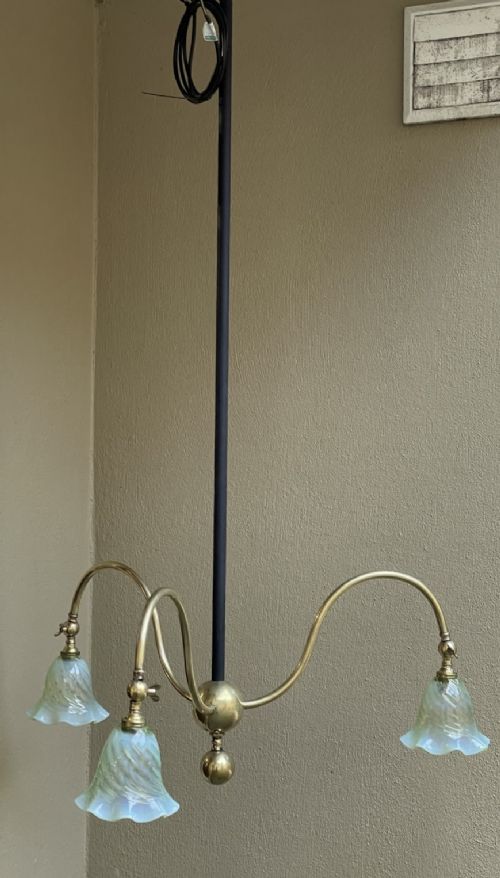
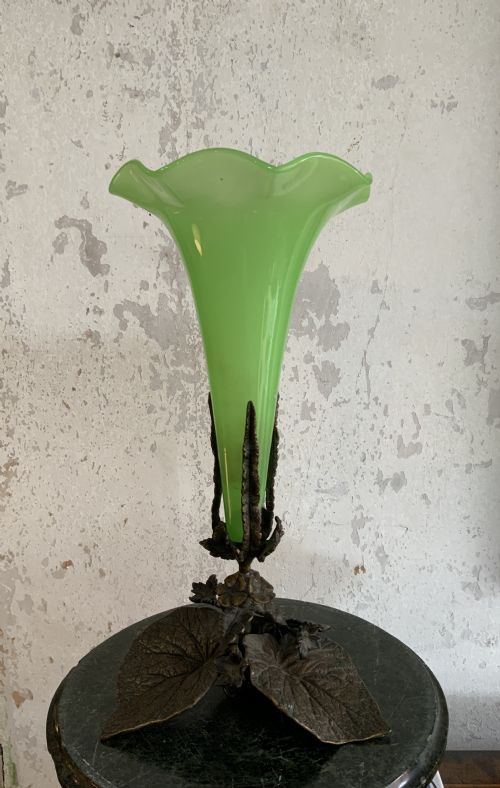
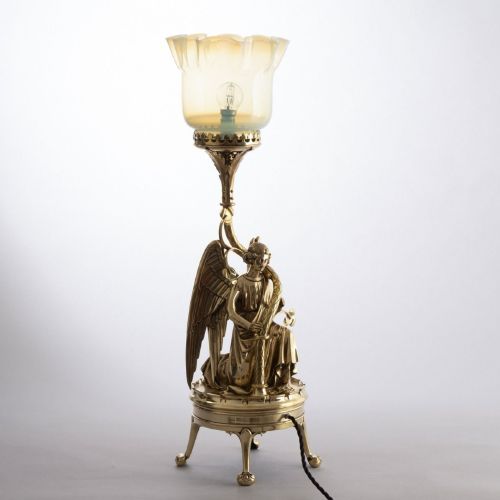
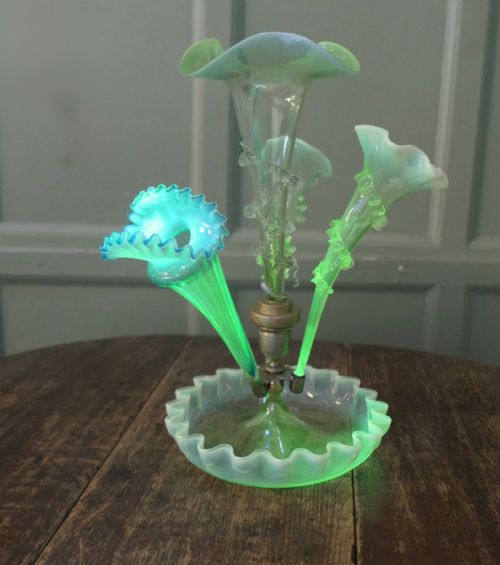
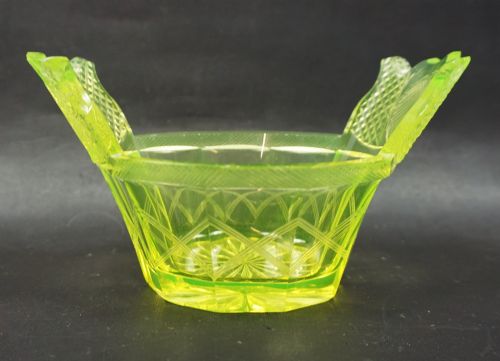
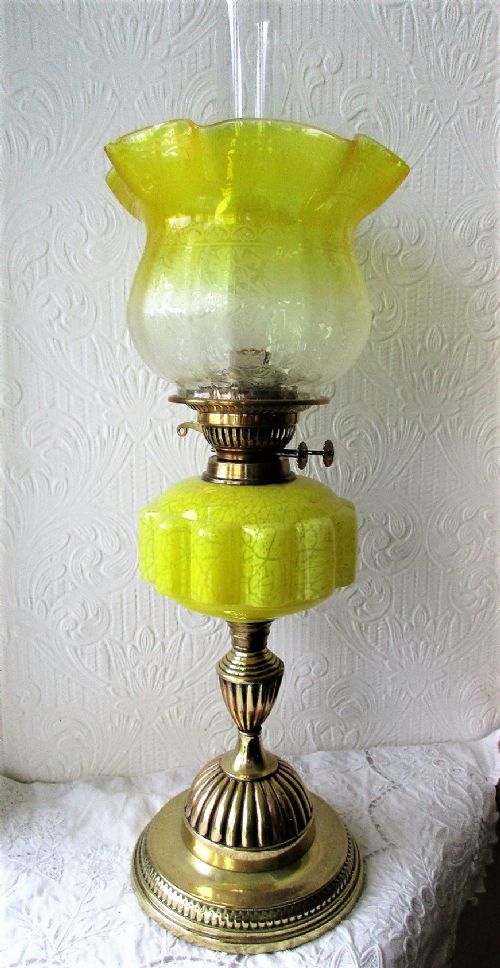
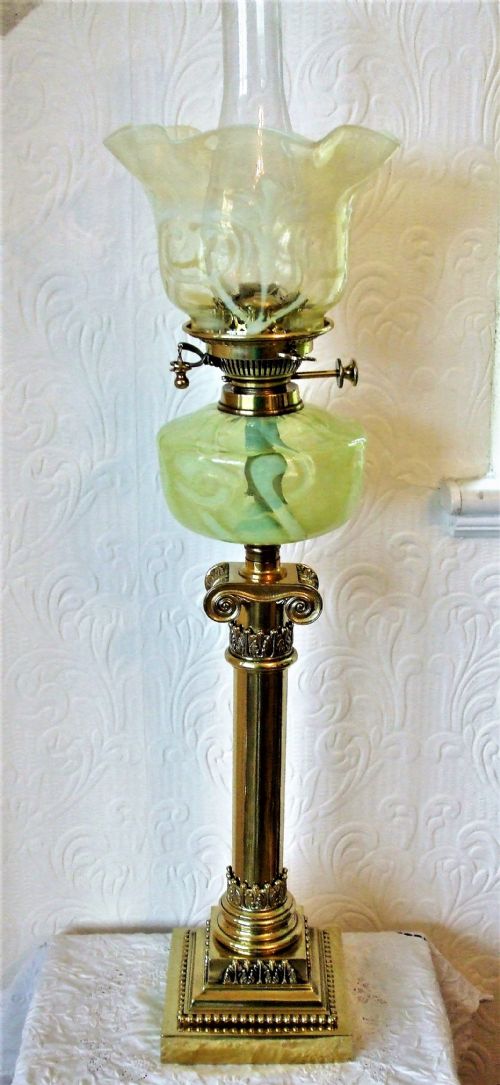
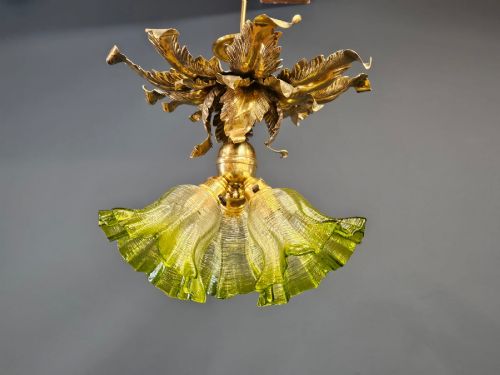
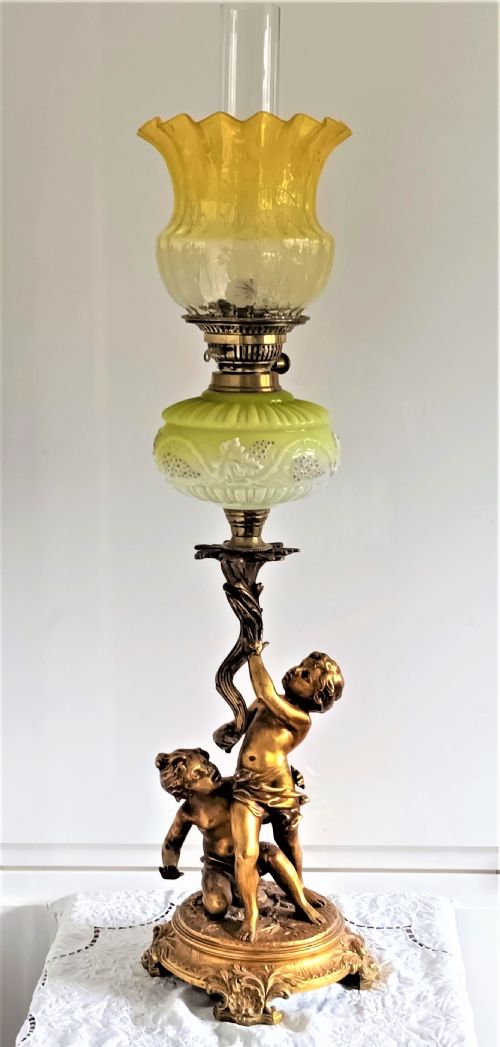
When you search for antique vaseline glass, you encounter items shaped by Victorian, Edwardian and Art Deco makers who harnessed uranium oxide to colour their wares. The selection here leans heavily towards nineteenth-century lighting, including oil lamps with brass or bronze columns, ceiling lights and multi-trumpet epergnes.
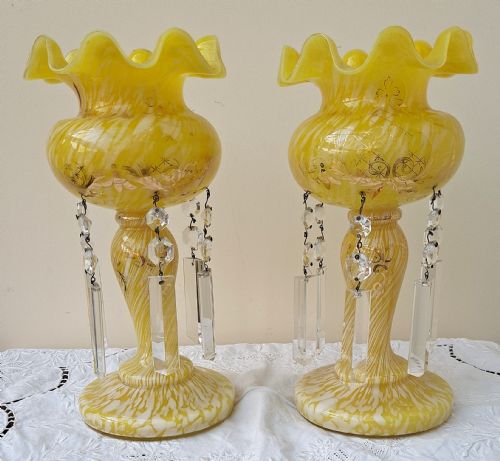
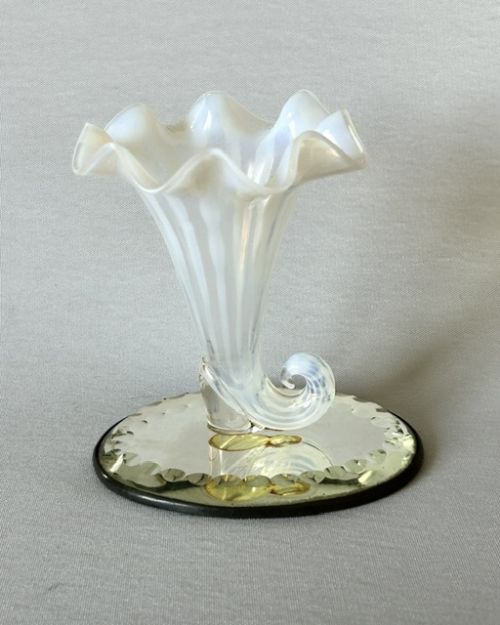
Beyond illumination, the form list encompasses dishes, bowls, scent bottles, lustres and vases with cornucopia or jack-in-the-pulpit profiles. These pieces sit within broader design movements such as Gothic Revival, Arts and Crafts and Art Nouveau, pairing the distinctive glass with silver plate, copper, or brass mounts.
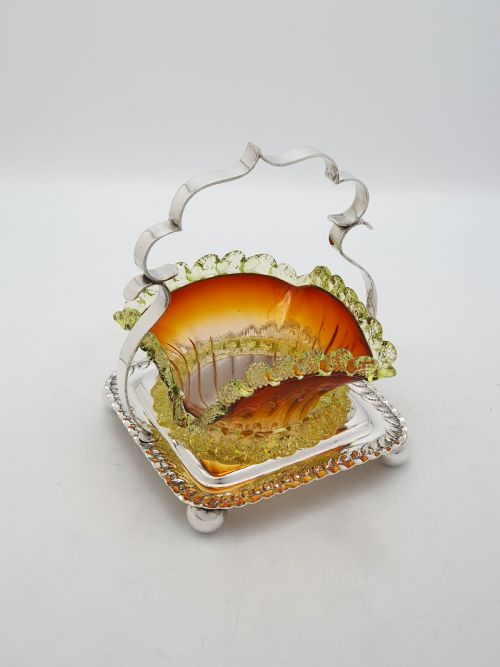
The objects serve both decorative and functional roles, from a simple preserve dish to a three-light ceiling fixture originating in Manchester. Each piece exhibits the characteristic glow under ultraviolet light, anchoring the category in genuine nineteenth and early twentieth-century production.
How they were made
The material relies on glass batch formulas incorporating uranium dioxide, which yields a transparent or translucent body ranging from pale yellow to vibrant green. Hand blowing shapes vessels like vases and decanters, while mould-blowing and pressing create lamp shades, dishes and patterned baskets.
Metalwork forms an integral part of many pieces, involving cast brass columns, spun copper shades, or silver-plated stands that cradle the glass bowls. Craftspeople combined these elements using threaded collars, mounts, and fitted galleries to secure the delicate glass components.
One listed dish arrives with the honest note that natural light shows no glow until the ultraviolet lamp appears.
What varies in quality
Excellence in these pieces rests upon the crispness of the glass moulding, the depth of the uranium coloration, and the integrity of the paired metalwork. Superior examples display smooth rims, well-defined opalescent borders, and original brass or silver-plated mountings without replacement parts.
Artistic execution distinguishes standard production from works by notable makers, seen in hand-applied enamelling, complex cut facets, or the structural complexity of multi-trumpet epergnes. The harmony between the glass body and its metal housing dictates the overall stature of the object.
Hinks·Davidson·Moser·Karl Palda·Benson
The Antique Vaseline Glass Glossary
- Vaseline glass
- A type of glass coloured with uranium oxide that exhibits a characteristic yellow-green hue and a bright green glow under ultraviolet light. It gained popularity during the Victorian period for tableware and decorative objects.
- Epergne
- A centrepiece stand featuring a central bowl surrounded by multiple detachable trumpets or cornucopias for holding flowers or fruit. They frequently combine vaseline glass with cranberry or opalescent glass elements.
- Lustre
- A mantle ornament comprising a bowl or vase fitted with a matching saucer and hung with long glass prisms. These pieces catch the light and reflect the subtle tones of the coloured glass.
- Opalescent glass
- Glass that incorporates agents causing a milky, semi-translucent appearance, particularly along the fluted or frilled rims of bowls and vases. This effect creates a distinct contrast against the transparent body.
- Silver plate
- A base metal, often copper or brass, coated with a thin layer of pure silver. It provides the reflective mounts and stands for many Edwardian and Victorian glass dishes and centrepieces.
Antique Vaseline Glass: Frequently Asked Questions
How do I know if it is real vaseline glass?
Genuine pieces display a characteristic yellow or yellow-green colour in natural light and emit a bright green fluorescence under ultraviolet light due to the uranium content in the glass.
Examine the weight and finish, as older pieces often show mould seams, pontil marks, or hand-finished details consistent with nineteenth and early twentieth-century production methods.
Are these items safe to use for food?
While the glass contains trace amounts of uranium, historical tableware and decorative dishes were generally used for dry goods, preserves, or display rather than daily acidic food service.
Modern collectors primarily acquire these objects for display, lighting, and decorative interior use rather than practical dining purposes.
How should I clean my glass pieces?
Wash the glass gently in lukewarm water using mild detergent and a soft cloth to protect the surface from scratches and preserve any delicate metal mounts.
Avoid abrasive sponges or harsh chemicals, particularly on pieces that combine glass with silver plate, brass, or delicate hand-applied enamel details.
What periods do these items come from?
The listings encompass items spanning the Victorian era, the Edwardian period, and the Art Deco style of the early twentieth century.
Earlier nineteenth-century examples often feature heavy brass oil lamps and multi-piece epergnes, while later twentieth-century items include streamlined clocks and geometric vases.