



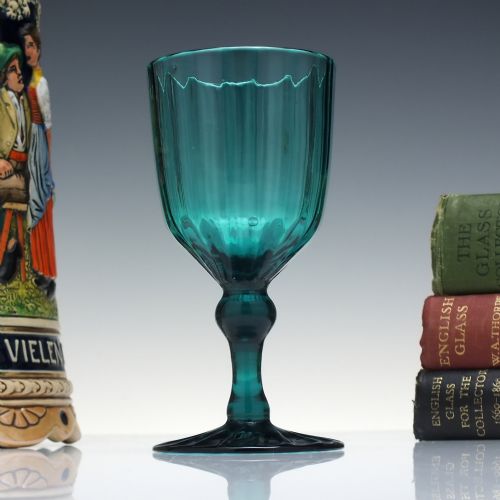


Antique Green Wine Goblets
Antique green wine goblets bring rich colour and historic character to the table, spanning Georgian ribs to Victorian enamels.
Antique Green Wine Goblets
Materials and production methods
Makers utilised glass, lead glass, and coloured glass, shaping them through hand-blowing and rib-moulding techniques. Lead crystal provided weight and clarity, while blown glass allowed for delicate stems and hollow formations.
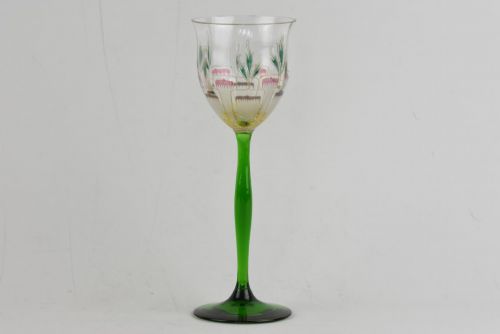
Decoration often involved polychrome enamel, gold leaf, and cut glass designs. Enamelled floral patterns and armorial motifs were applied by hand to surfaces on Bohemian and continental vessels.
Uranium glass glows under ultraviolet light, making Victorian vaseline goblets a conversation starter after dark.
Assessing quality in coloured glassware
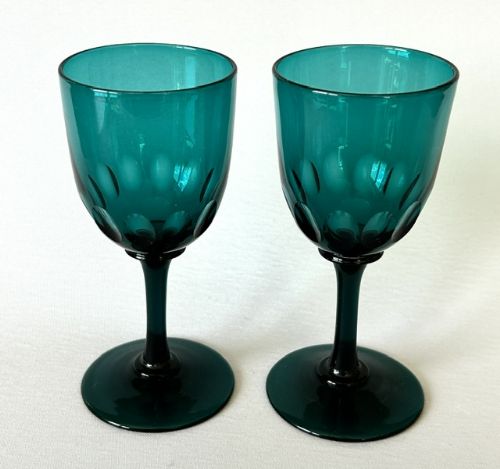
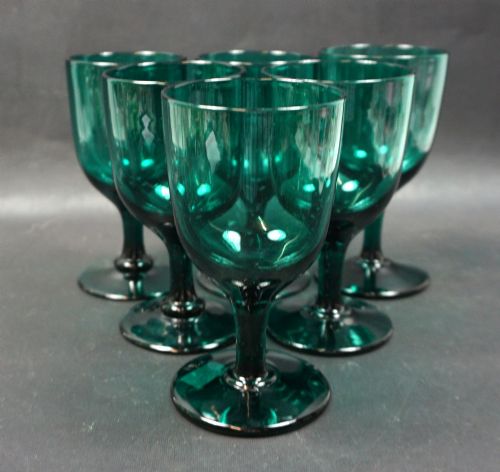
Quality rests in the depth of the green colouration and the precision of the hand-blown form. Heavy lead glass and crisp rib-moulding separate finer tablewares from simpler utilitarian vessels.
The finesse of any enamel decoration or gold leaf application dictates the upper tier of the range. Intricate armorial details and balanced proportions demonstrate superior craftsmanship.
Baccarat·Theresienthal·St Louis Massenet·Lobmeyer·Frits Hechert
The Antique Green Wine Goblets Glossary
- Roemer
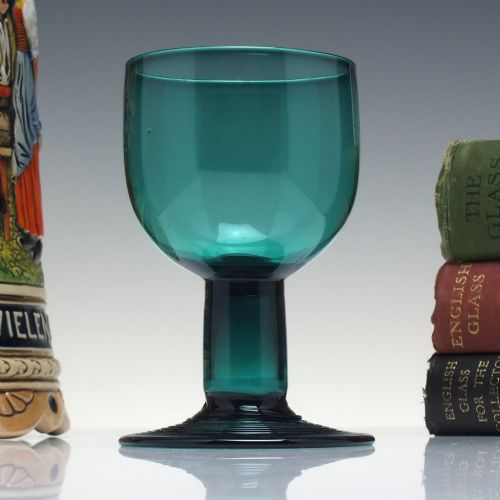
- A traditional Germanic drinking glass featuring a large bowl resting on a cylindrical hollow stem. These pieces often display a pale green hue and historical export origins.
- Hock glass
- A tall-stemmed wine glass traditionally used for hock or white wine. They frequently appear in coloured glass with enamelled decoration.
- Rib-moulded
- A technique where glass is blown into a ribbed mould to create vertical ridges along the body. This method adds texture and strength to Georgian drinking vessels.
- Vaseline glass
- A type of glass coloured with uranium oxide that exhibits a distinct yellowish-green tint. Victorian makers utilised this material for decorative tablewares.
- Dram glass
- A small drinking vessel designed for spirits rather than wine. These compact glasses appear in eighteenth-century and nineteenth-century forms.
Antique Green Wine Goblets: Frequently Asked Questions
What are antique green wine goblets?
Antique green wine goblets are historical drinking vessels produced in various shades of green glass, ranging from deep Bristol tones to pale aqua. They encompass forms such as roemers, hock glasses, and rummers.
These glasses were manufactured across Europe, including England, France, and Bohemia, during the Georgian, Victorian, and Edwardian eras.
How were these green glasses used?
They served primarily as dining table glassware for wine, hock, or spirits during formal meals and gatherings. Larger roemers and rummers held generous portions, while dram glasses suited smaller quantities.
Wealthy households utilised matching sets of coloured glassware to display status and complement dining table aesthetics.
How do I live with antique glassware?
Living with antique green wine goblets involves hand-washing them gently in warm water without harsh detergents. Avoiding sudden temperature changes protects the historic glass from thermal shock.
Displaying them in cabinets or using them for special dining occasions allows you to appreciate their colour and tactile forms safely.
How do I tell periods apart?
Georgian pieces often feature heavy lead metal, rib-moulding, and simple export roemer forms with hollow stems. Victorian examples introduce brighter vaseline glass, aqua tones, and varied decorative styles.
Edwardian and later pieces frequently incorporate detailed enamel work, gold leaf, and tall hock glass profiles associated with continental factories.