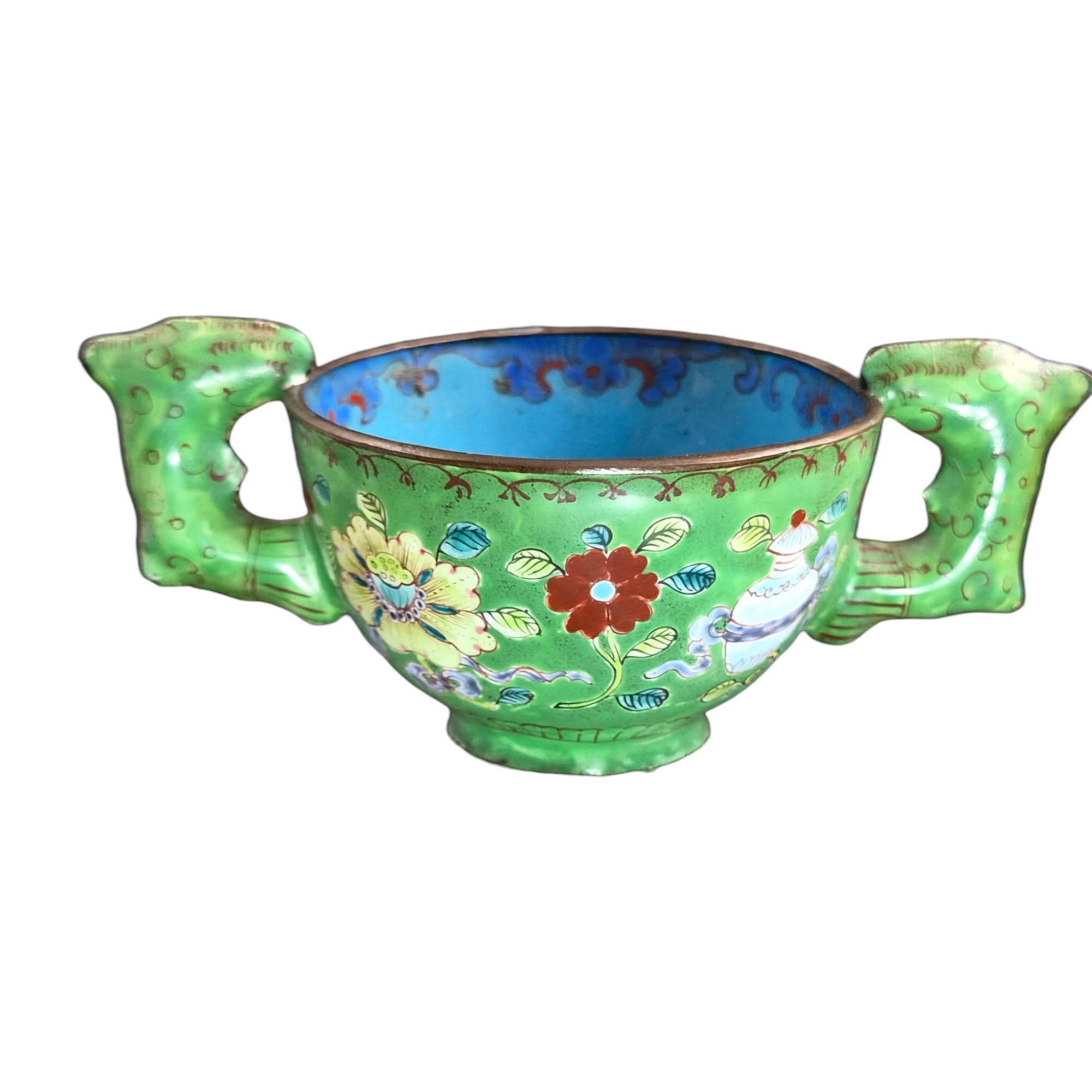
Gillers Antiques Ltd has dated this Canton Enamel Wine Cup to the 18th Century.
This form is known from Qianlong court wares: the Palace Museum, Beijing, holds a Qianlong-marked painted-enamel gold cup and dish with a similarly raised central well.
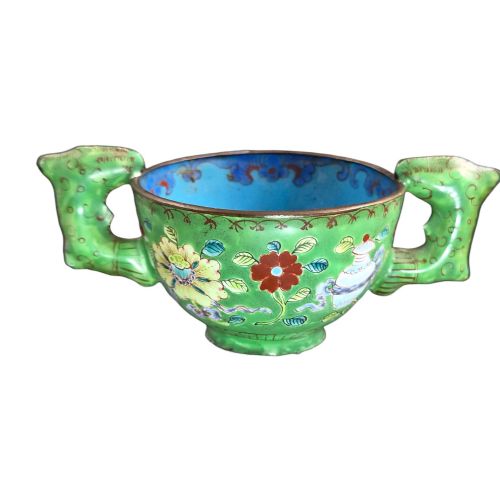
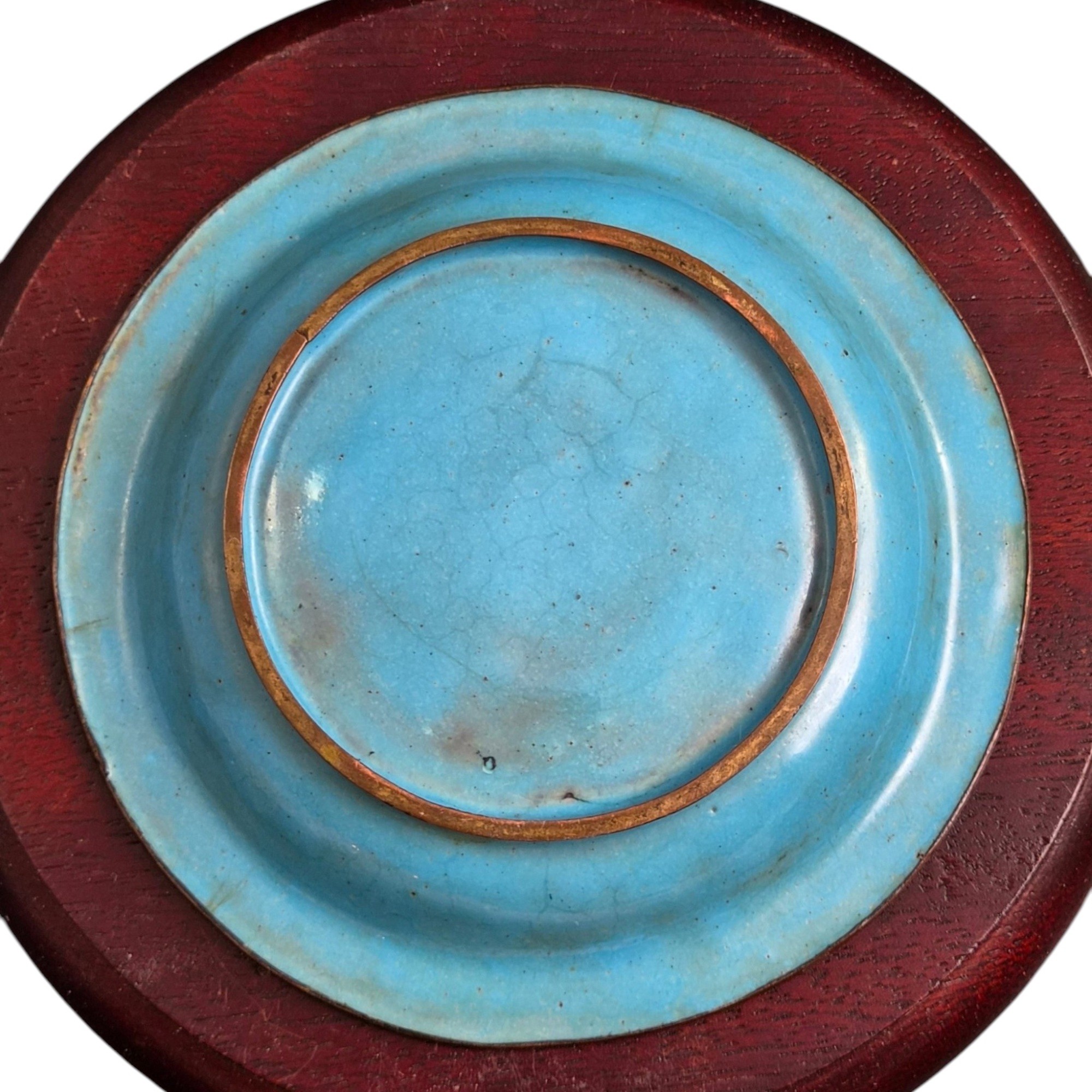
Technique: Painted enamel on copper (hua falang), known in the West as Canton enamel. The copper was coated with a white ground, painted in coloured enamels and fired repeatedly. The pink enamel was produced using gold.
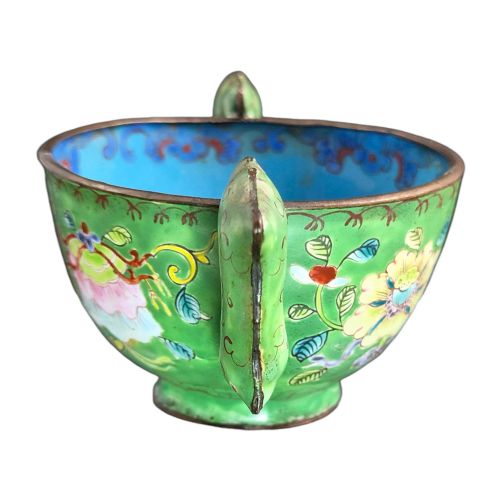
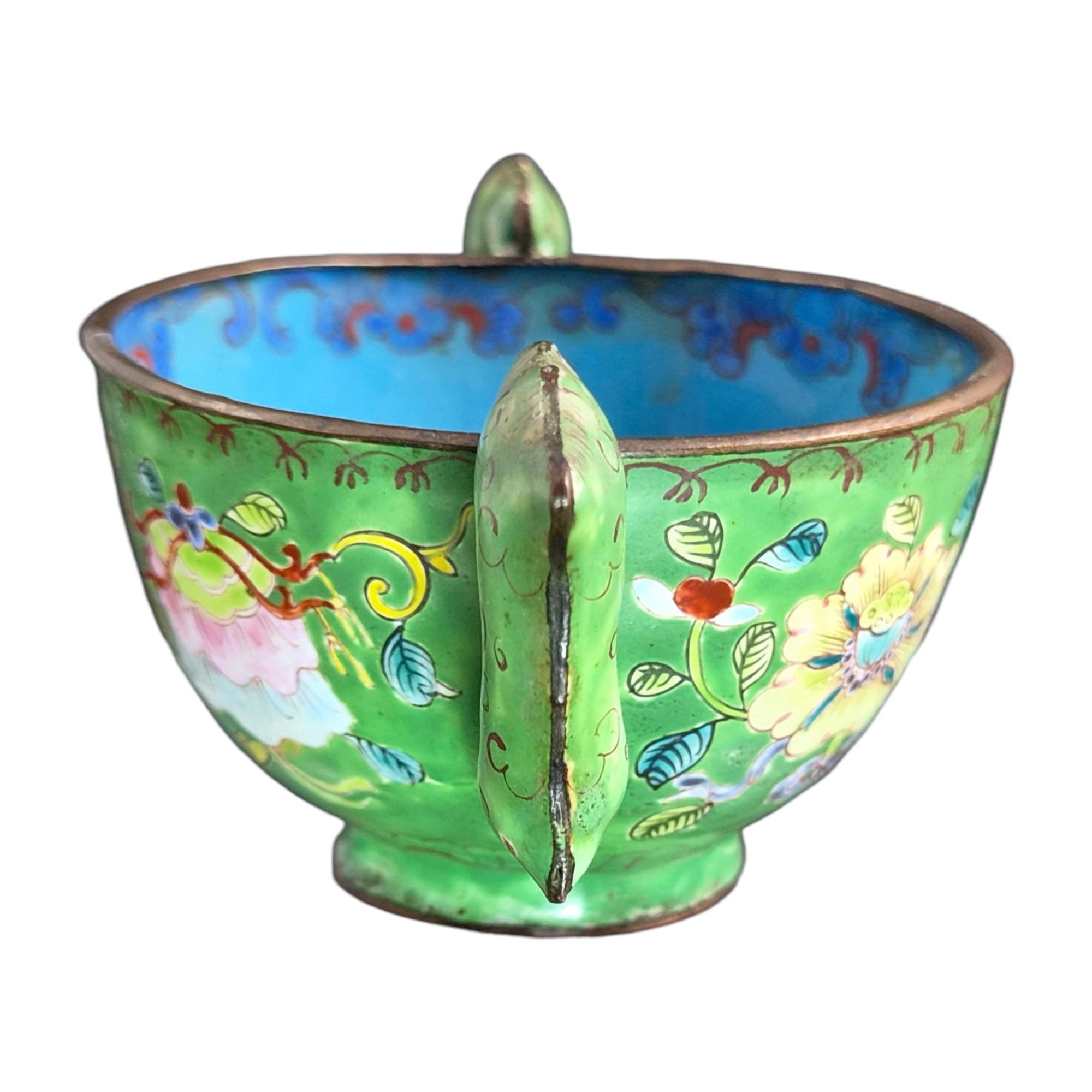
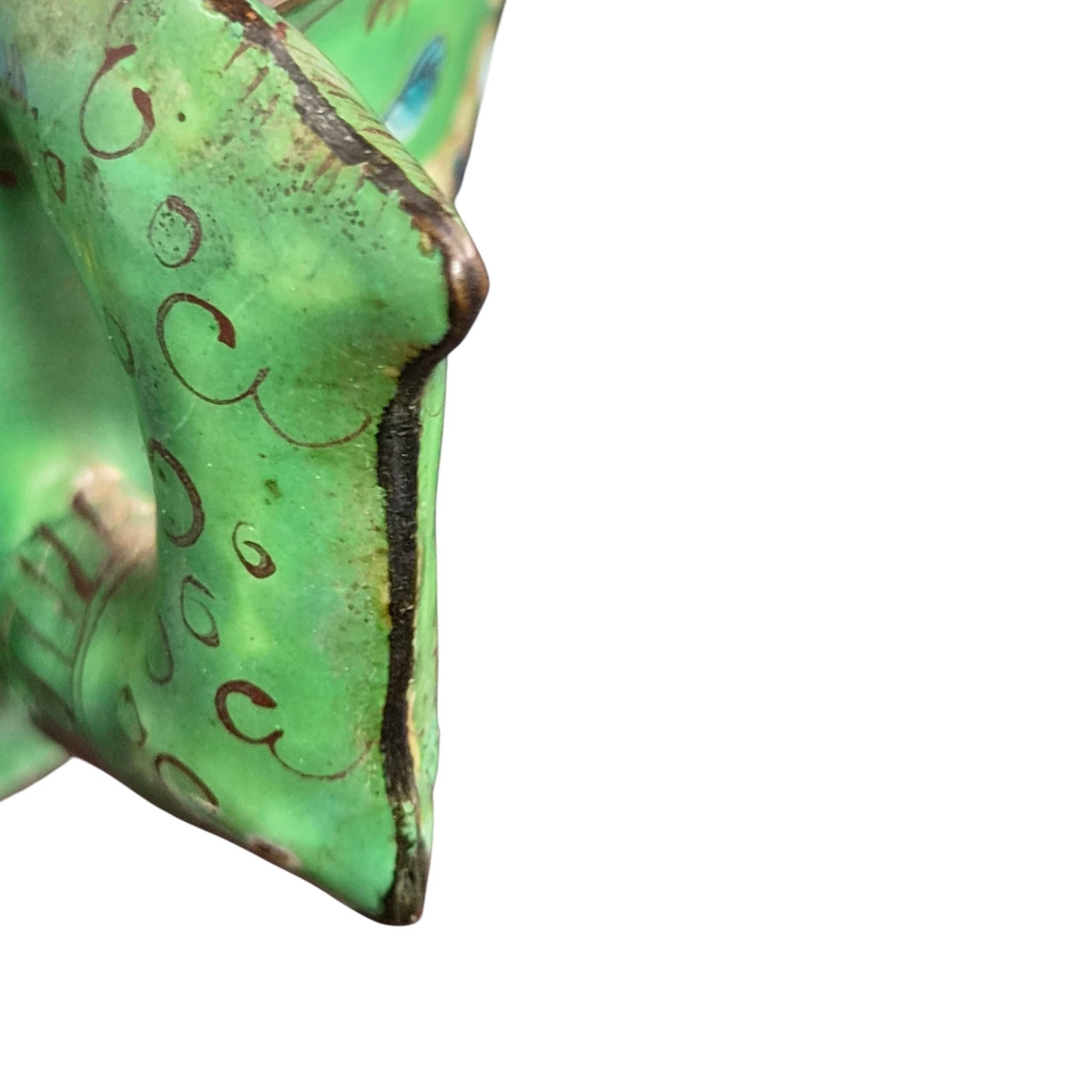
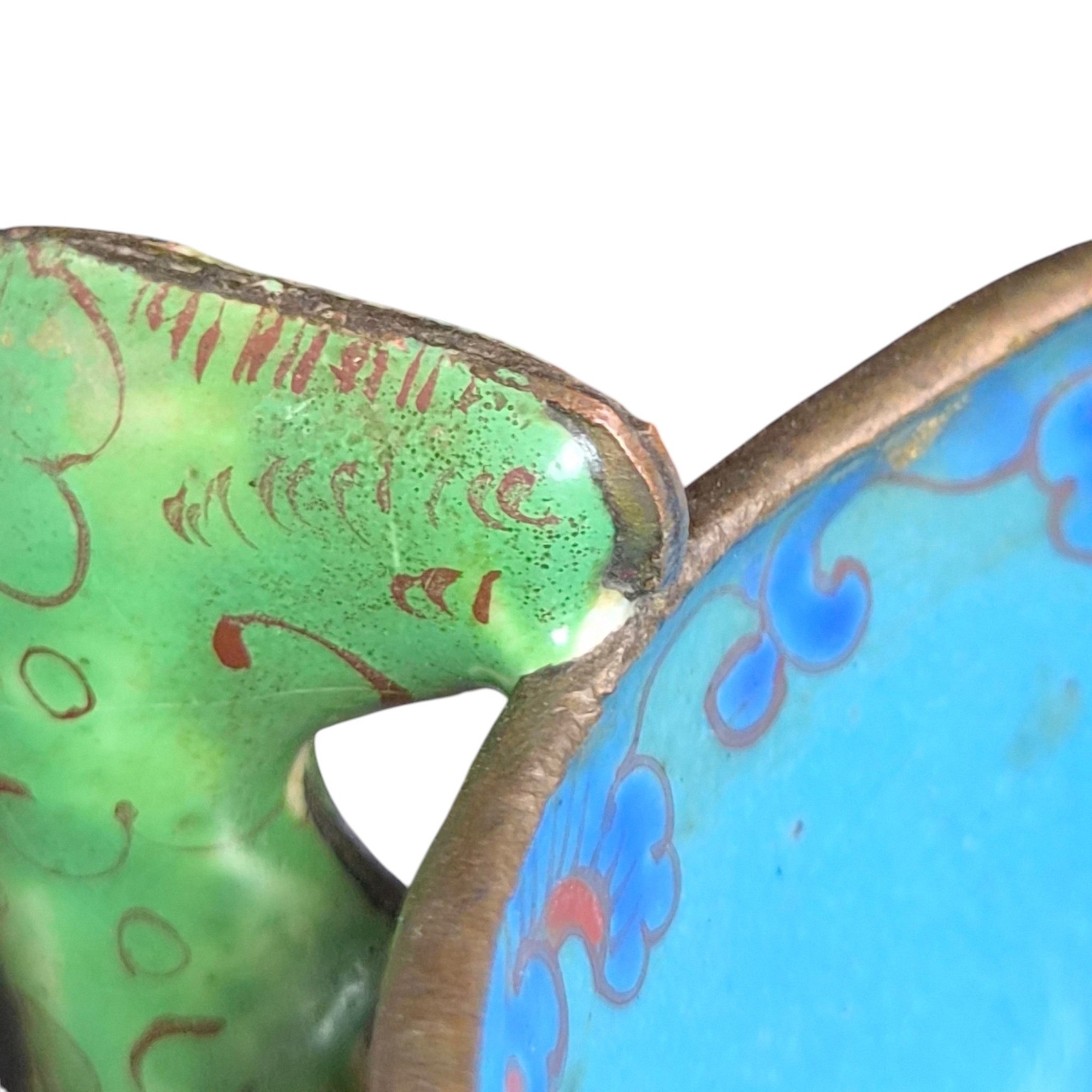
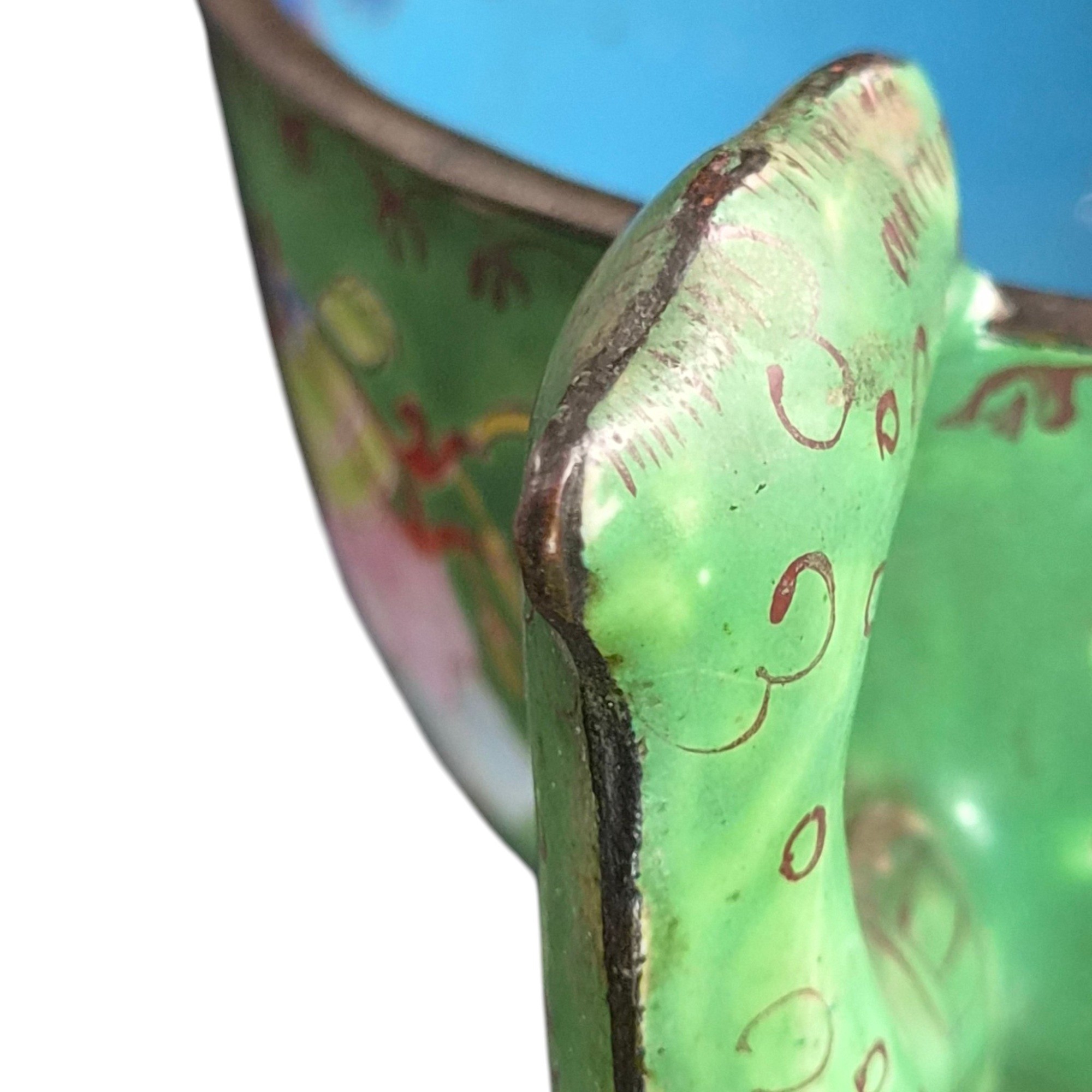
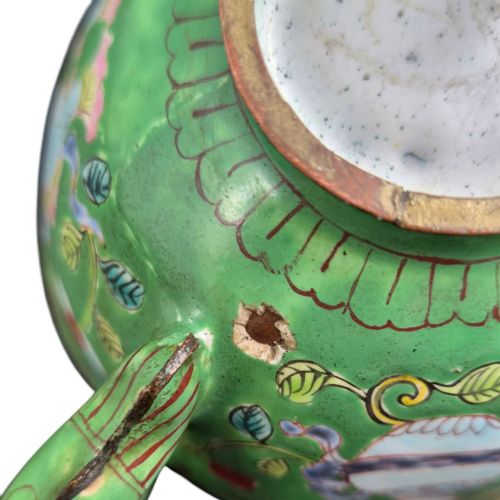
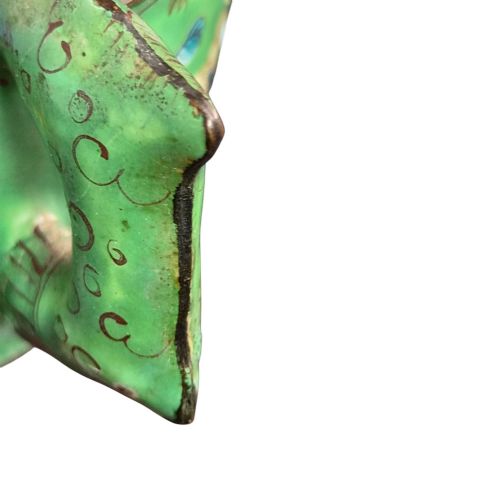
Handles: Each chilong handle is formed from two mirror-image halves, shaped, precisely fitted and joined. This hollow construction is more demanding than casting, while keeping the cup remarkably light (81 g) and reducing heat conduction. The handles were attached before enamelling, with the decoration continuing from handle to bowl.
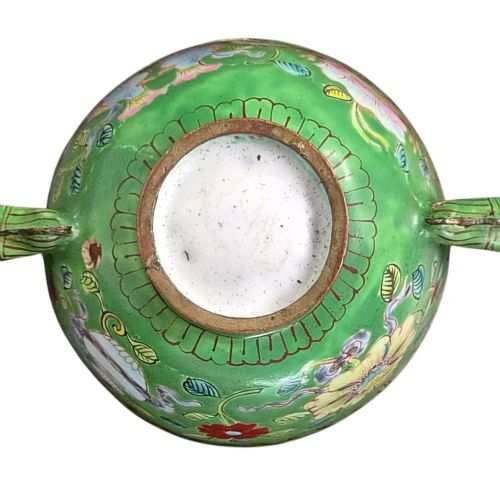
Rarity: Hollow, assembled chilong handles are exceptionally rare in Canton enamel. The only published parallel known to us is a Qianlong-period (1736–1795) Canton enamel twin-handled cup with stylised chilong handles sold through Guest & Gray, a member of the British Antique Dealers’ Association.
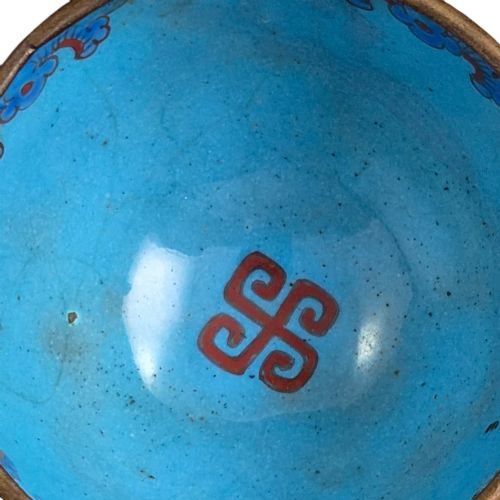
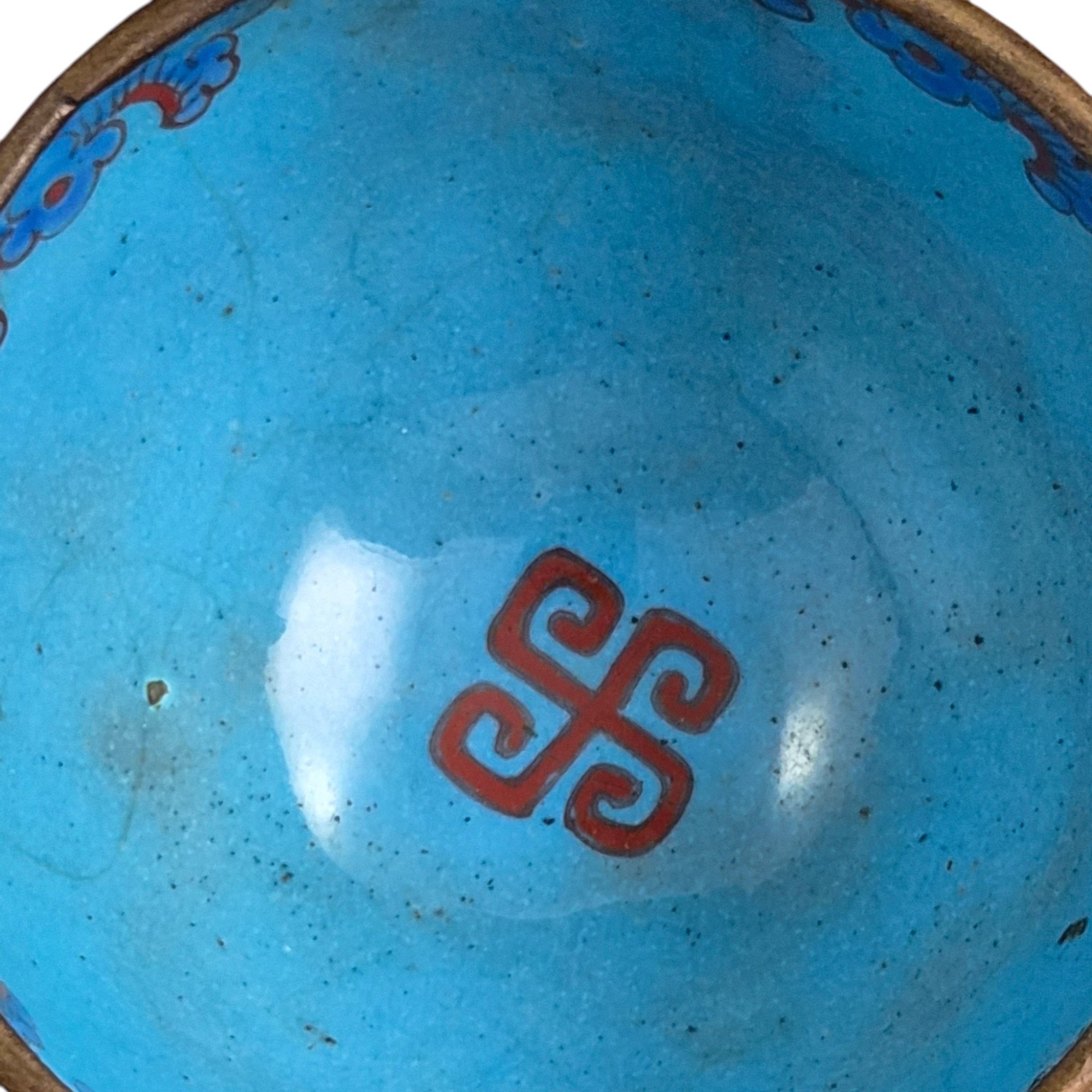
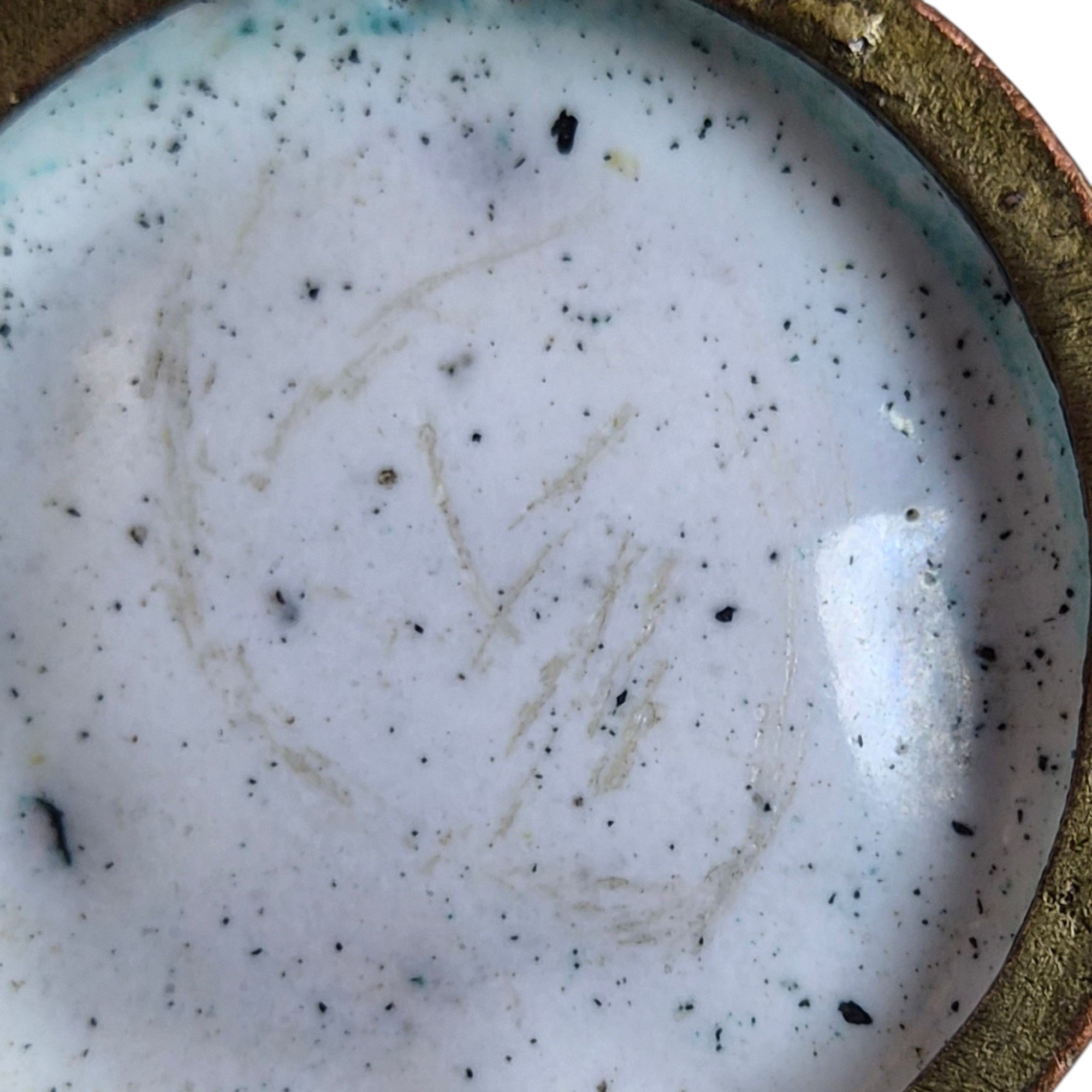
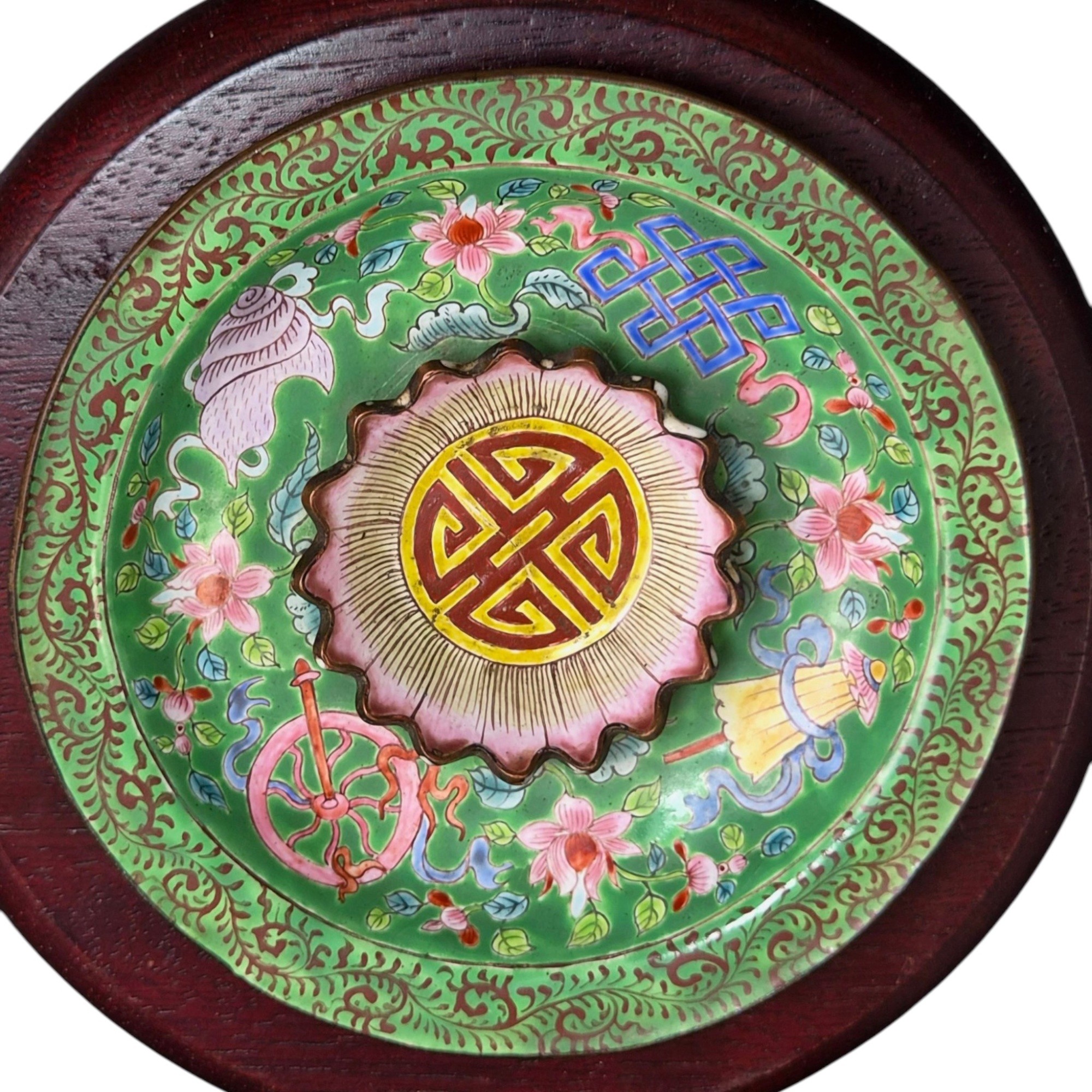
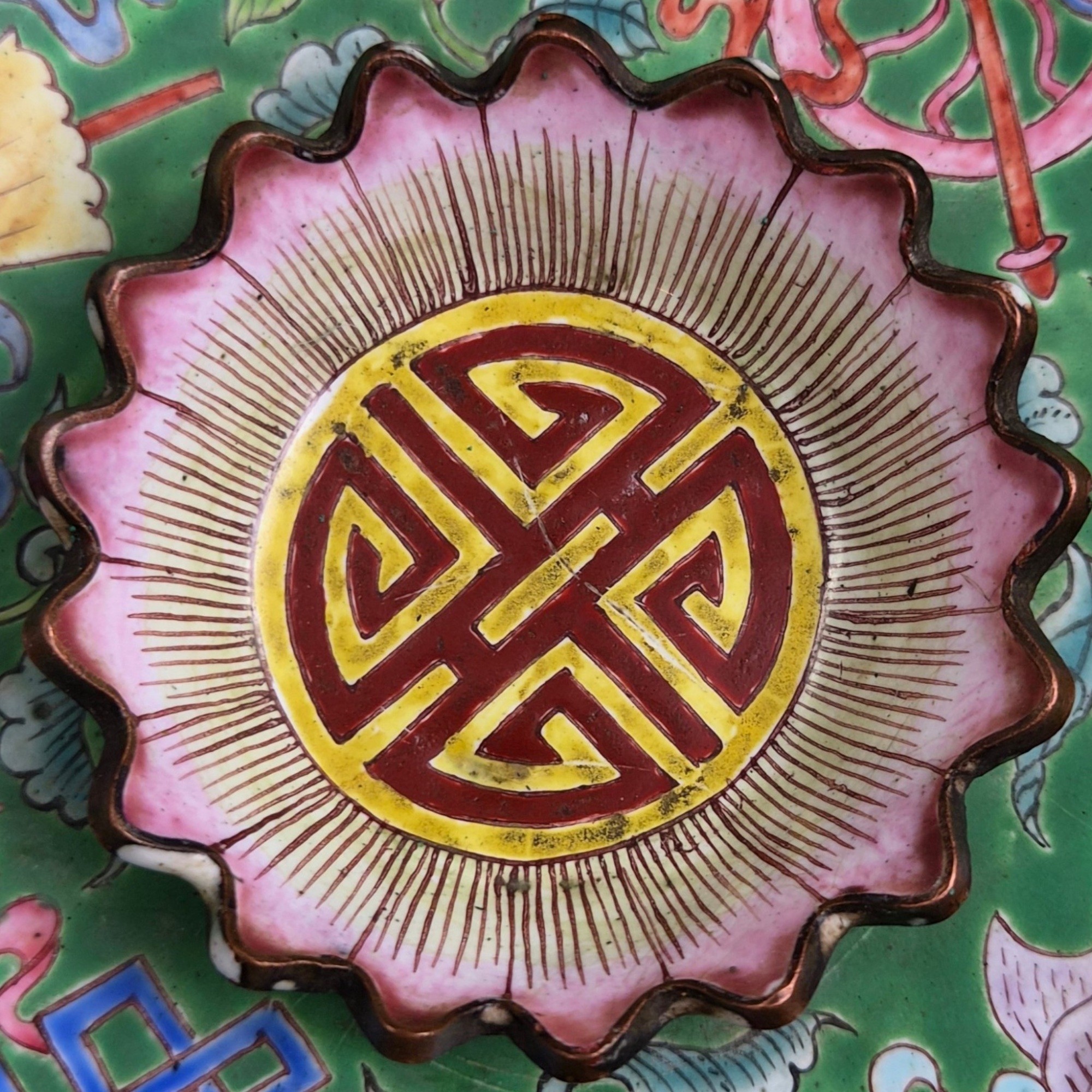
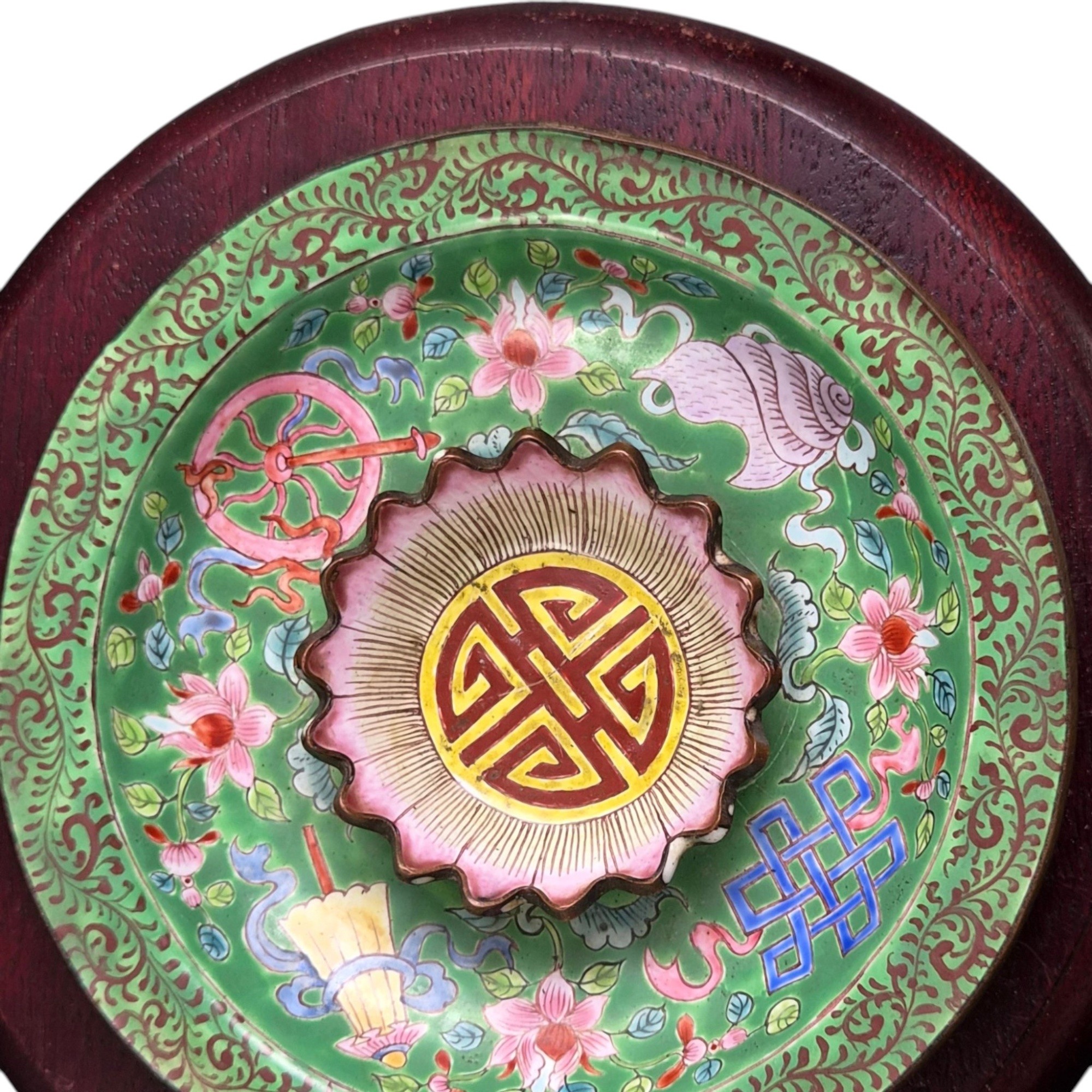
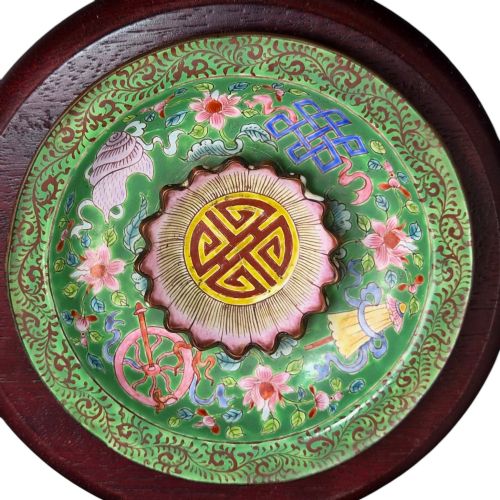
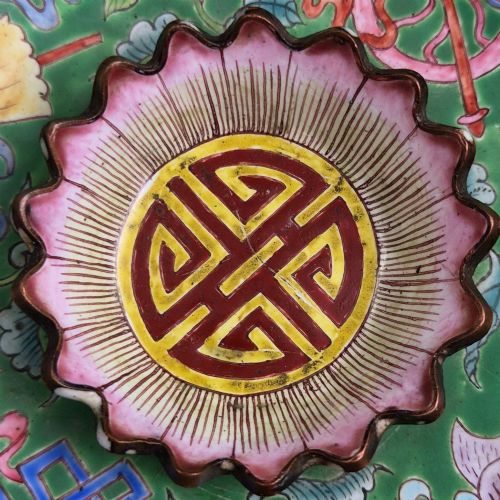
Iconography: Inside the cup is the Buddhist wan symbol 卍. In Chinese, both mirror forms are variants of 萬, “ten thousand”; in Buddhism it is sacred and in China an emblem of boundless longevity. In the centre of the stand is shou 壽, “longevity”, in iron red on a yellow medallion.
Together they form wan shou 萬壽, “ten thousand years of longevity”. With the cup in place, wan rests directly above shou, completing the rebus only when the two pieces are together. Comparable longevity formulas occur on Qing imperial wine sets, including examples in the Palace Museum associated with imperial birthday celebrations.
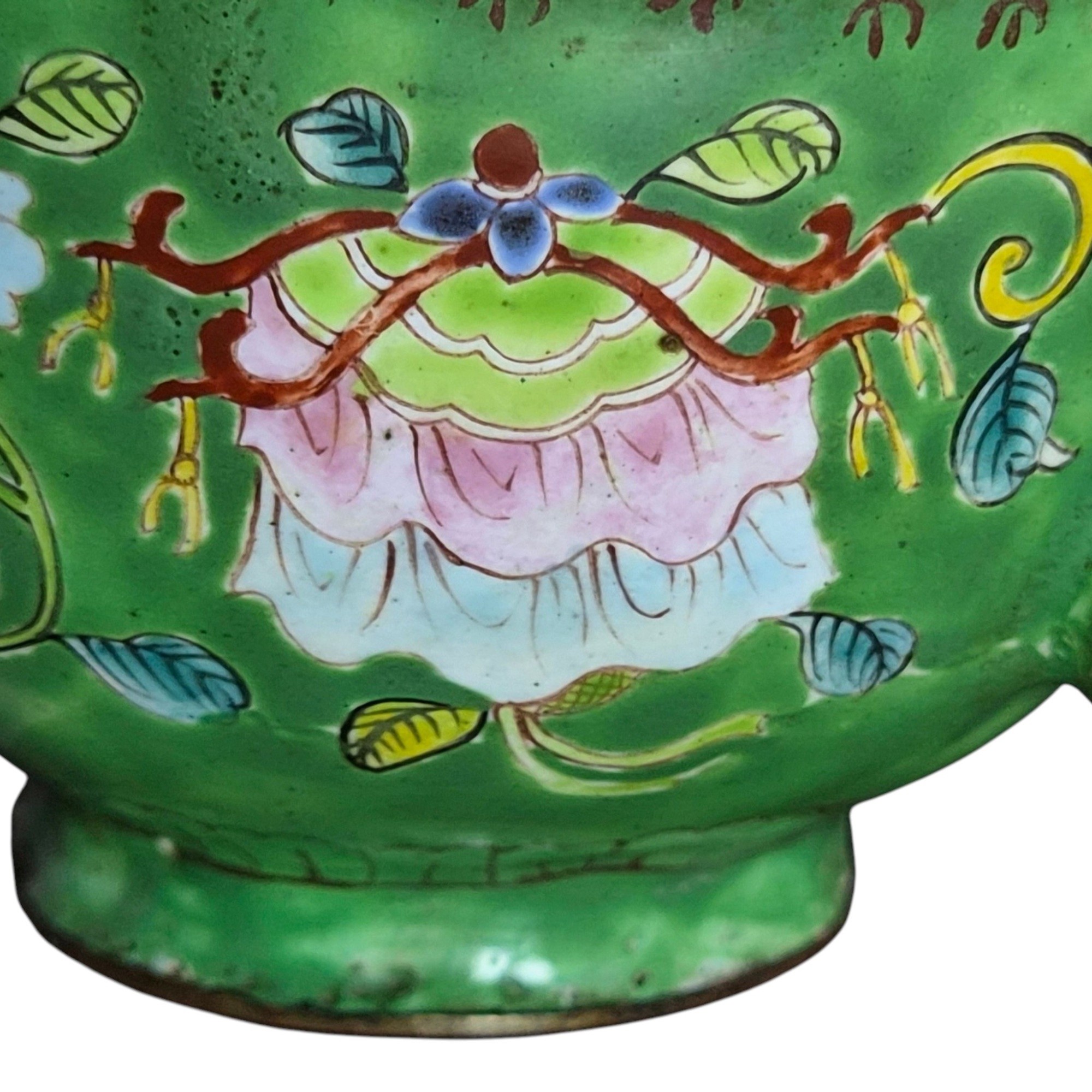
The Eight Buddhist Treasures (bajixiang) form a complete set divided between the two pieces. The stand bears the Wheel of the Dharma, Conch, Parasol and Endless Knot; the cup bears the Canopy, Lotus, Vase and Pair of Fish. The fish also symbolise marital happiness, fertility and abundance, since fish, yu 魚, sounds like yu 餘, “surplus”.
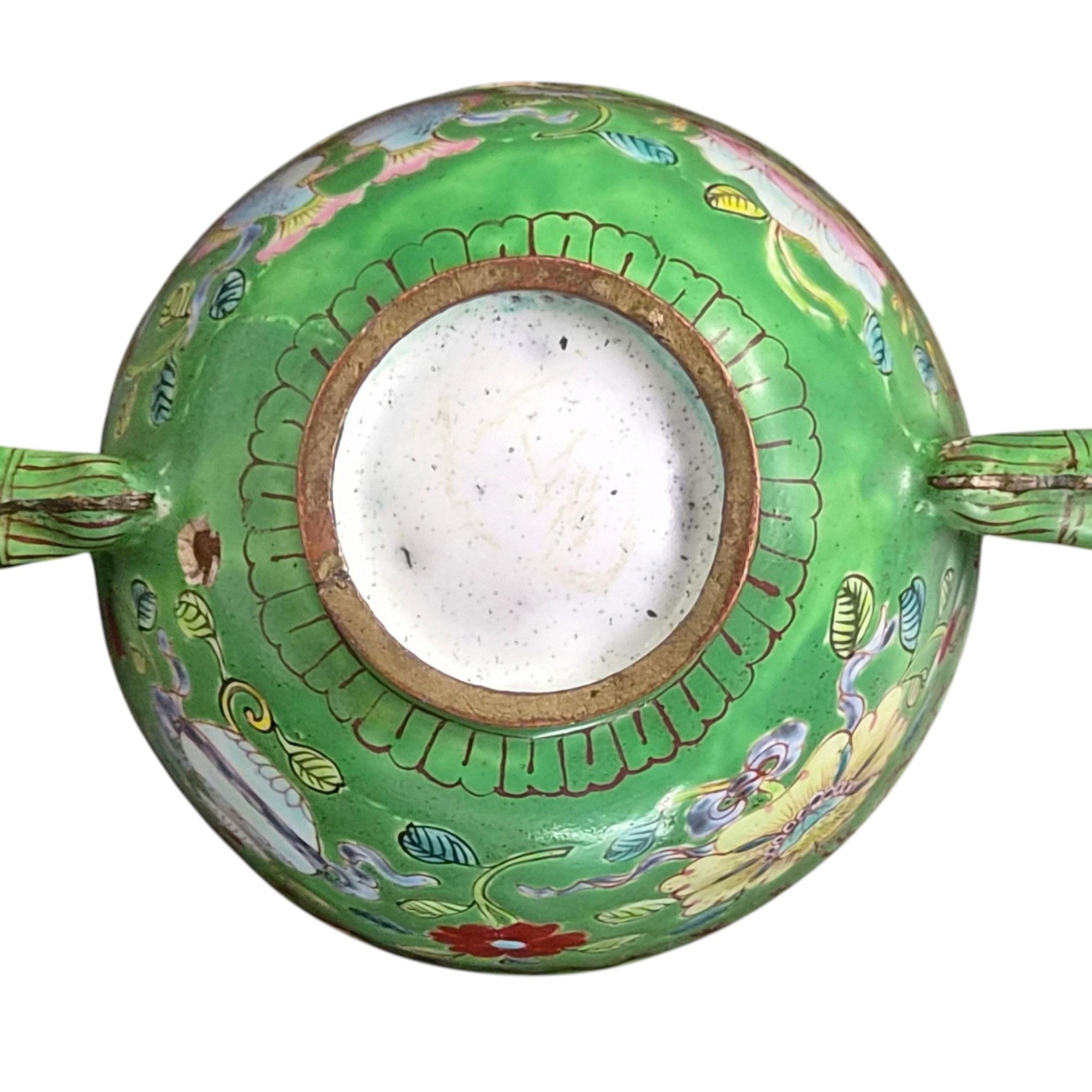
Further decoration includes lotus petals beneath the cup, suggesting a lotus throne; a pendant festoon around the rim; blue cloud scrolls; and scrolling foliage around the stand.
Patronage: The deliberate division of the Eight Treasures between cup and stand, combined with the wan shou rebus, suggests a sophisticated symbolic programme rather than casual decoration. Together with the demanding construction, it points towards a wealthy and educated patron. The longevity theme may indicate a birthday gift, although this cannot be proven.
Rare when made, the set is more remarkable for having survived complete: hollow handles are vulnerable, yet cup and stand remain together.
Attribution: China, Guangzhou (Canton), Qing dynasty, late 18th century
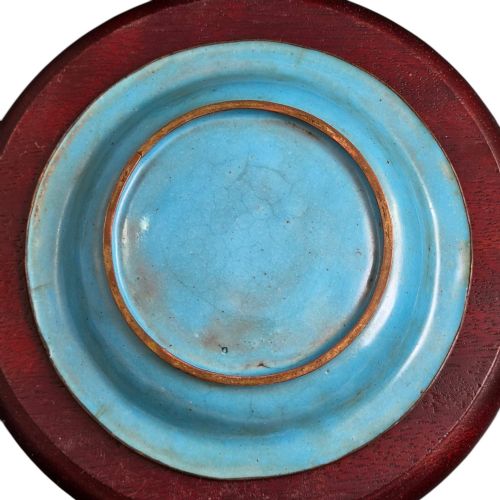
Material: Copper, painted enamels, remains of gilding
Dimensions: Stand 12.4 cm diameter × 2 cm high; cup 5.2 cm high × 6.9 cm diameter, 11.8 cm across handles
Weight: Cup 81 g; stand 141 g
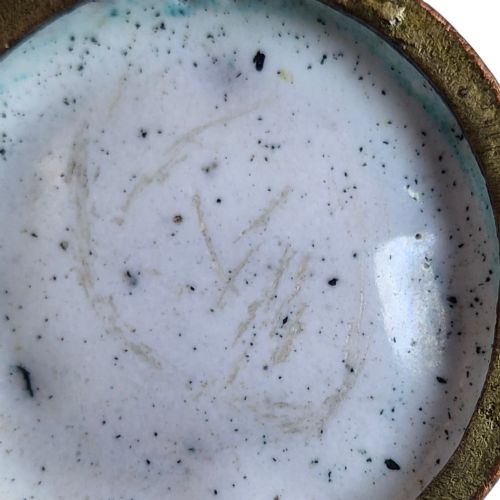
Condition: Very good for its age. The enamel is stable, with no flaking or cracks observed under UV light and no restoration detected. Fine natural surface crazing beneath the stand.
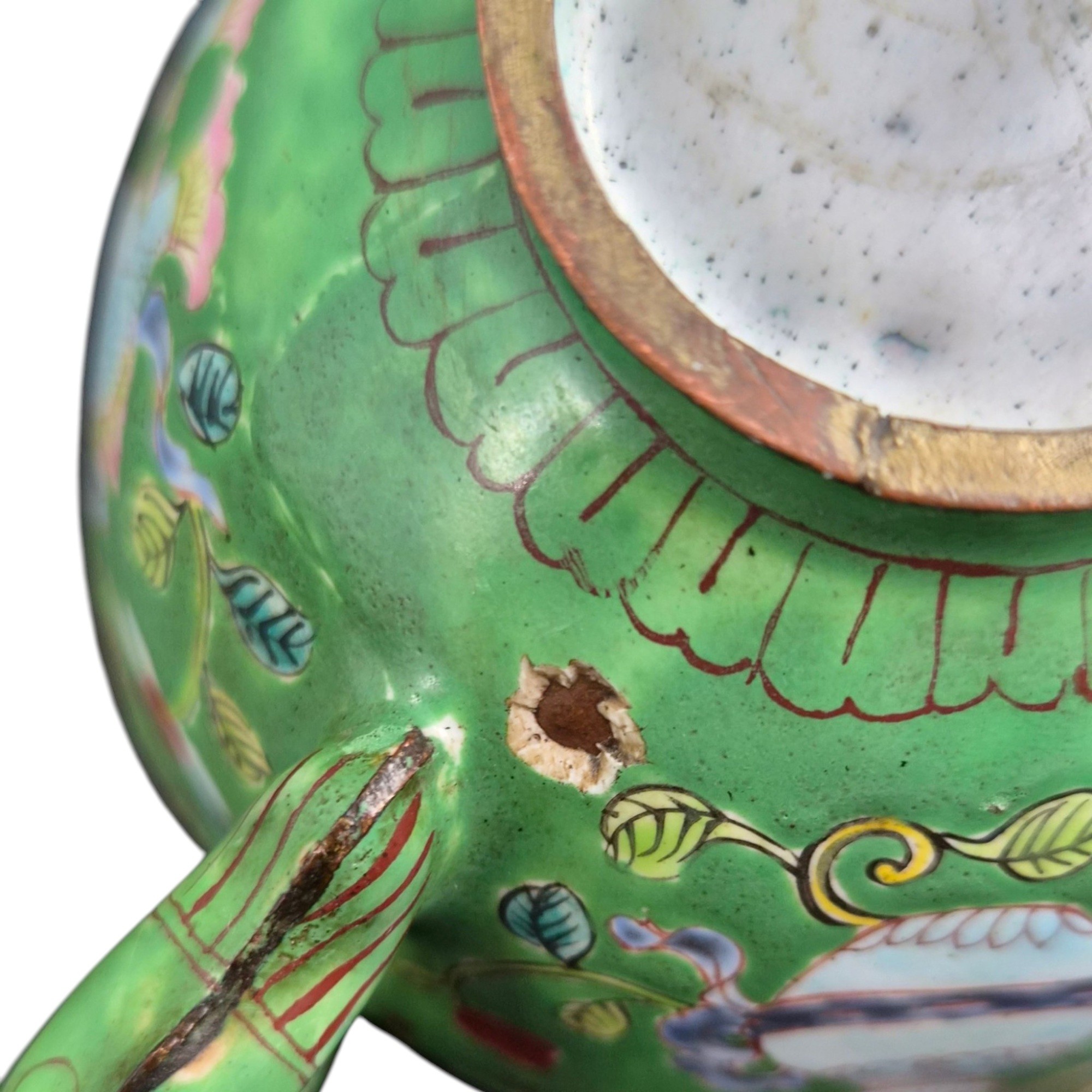
Cup: Small enamel loss of approximately 4 mm at the base of one handle; pinhead chip to the interior; wear along the handle seams, revealing their two-part construction.
Stand: Very slight, barely visible bend to one side of the rim; original joint of the copper foot ring visible. Rims and foot rings show natural wear and traces of gilding.
Photographs form part of the description; please examine them carefully. The set will be packed with great care and sent by insured, tracked delivery.
Gillers Antiques Ltd has dated this Canton Enamel Wine Cup to the 18th Century.

You can view the stock and full dealer information on the Gillers Antiques Ltd Profile Page
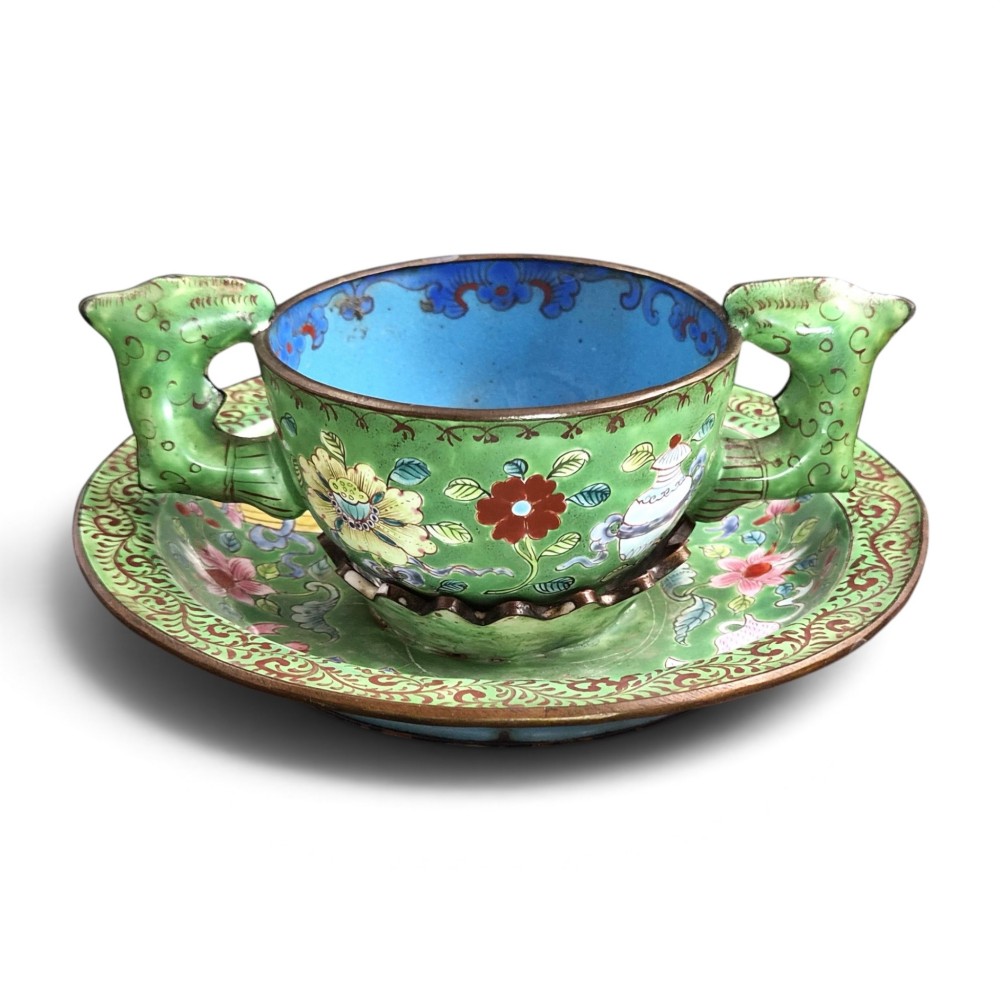
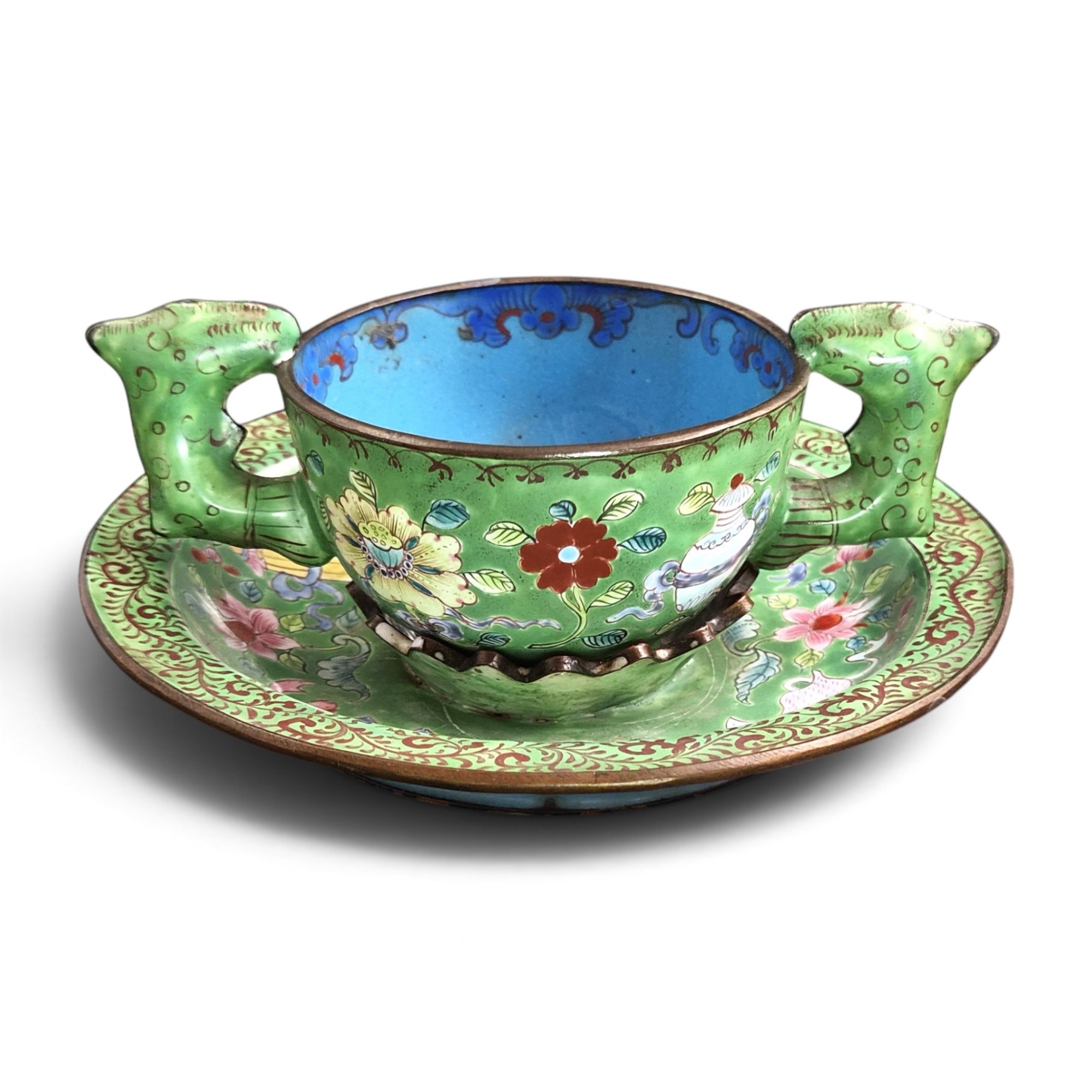
A Rare Chinese Canton Enamel Wine Cup and Stand with Hollow Chilong Handles, the Eight Buddhist Treasures and the Wan Shou Blessing, Late 18th Century