
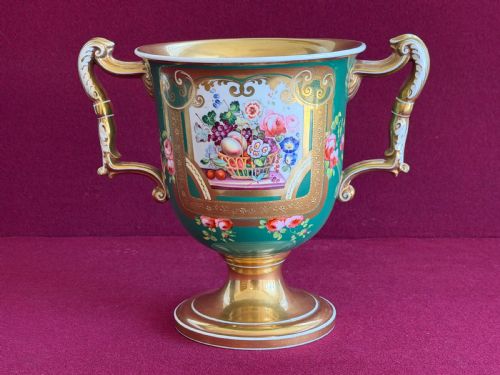


Antique Loving Cups
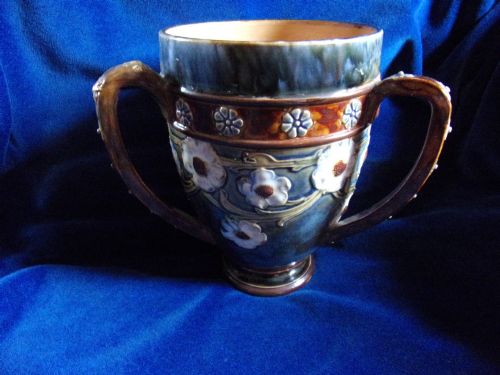
A loving cup is a two-handled drinking vessel, made to be passed from hand to hand at a toast, a wedding or a civic feast so each drinker held it by both handles.
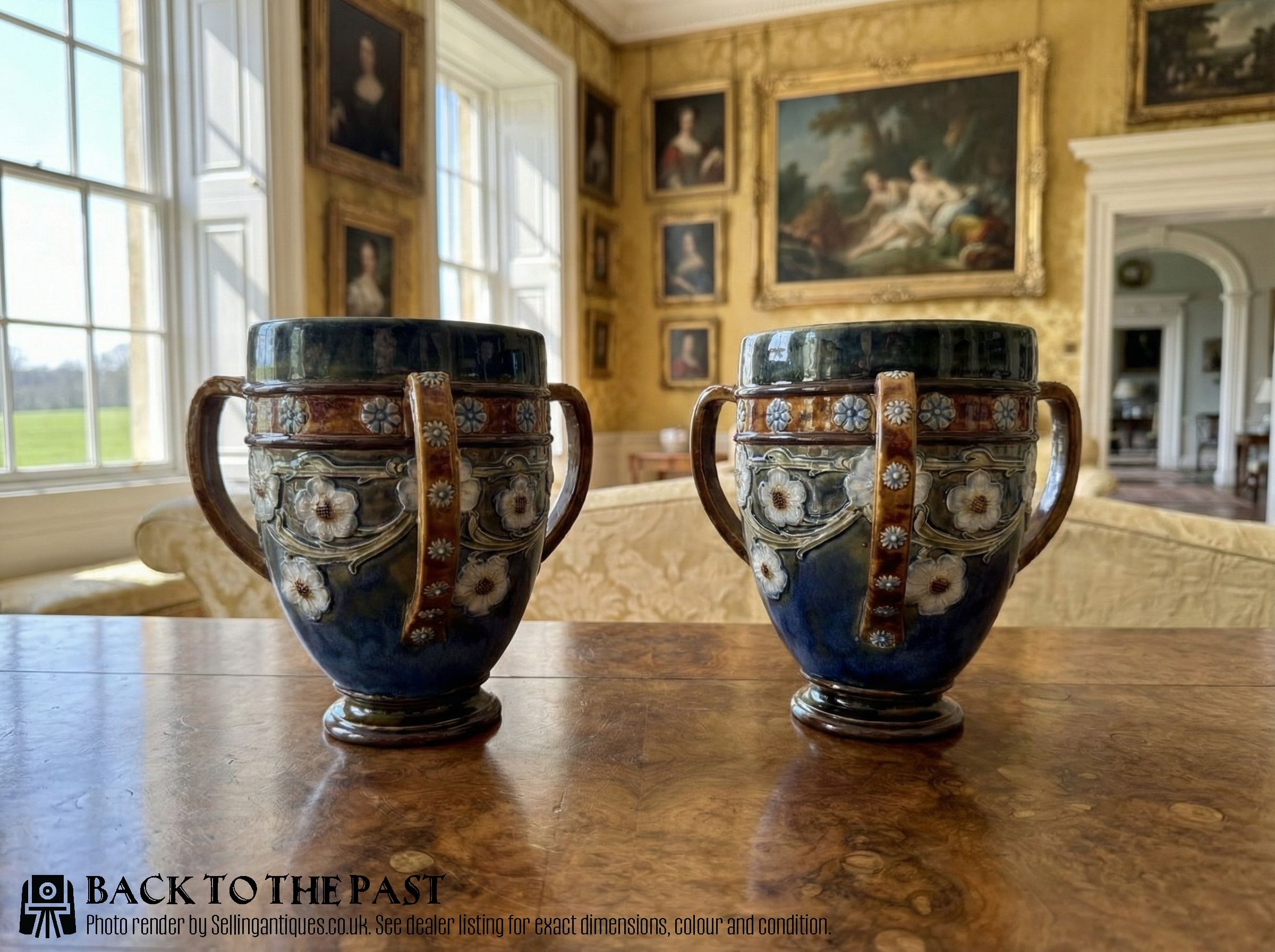
Antique Loving Cups
The form goes back a long way in Britain and Ireland, and from the 18th century onwards potters and porcelain factories made these cups as presentation and commemorative pieces as much as for drinking. Two handles, one bowl, and a shape built for passing round.
What turns up on Sellingantiques is dominated by English ceramics of the 19th century. Nine of twenty-nine listings are dated simply as 19th Century, with three more given as Victorian, and Staffordshire pottery names seven of the sampled titles. The word large appears in seven titles too, so the typical cup you meet is a big earthenware one.
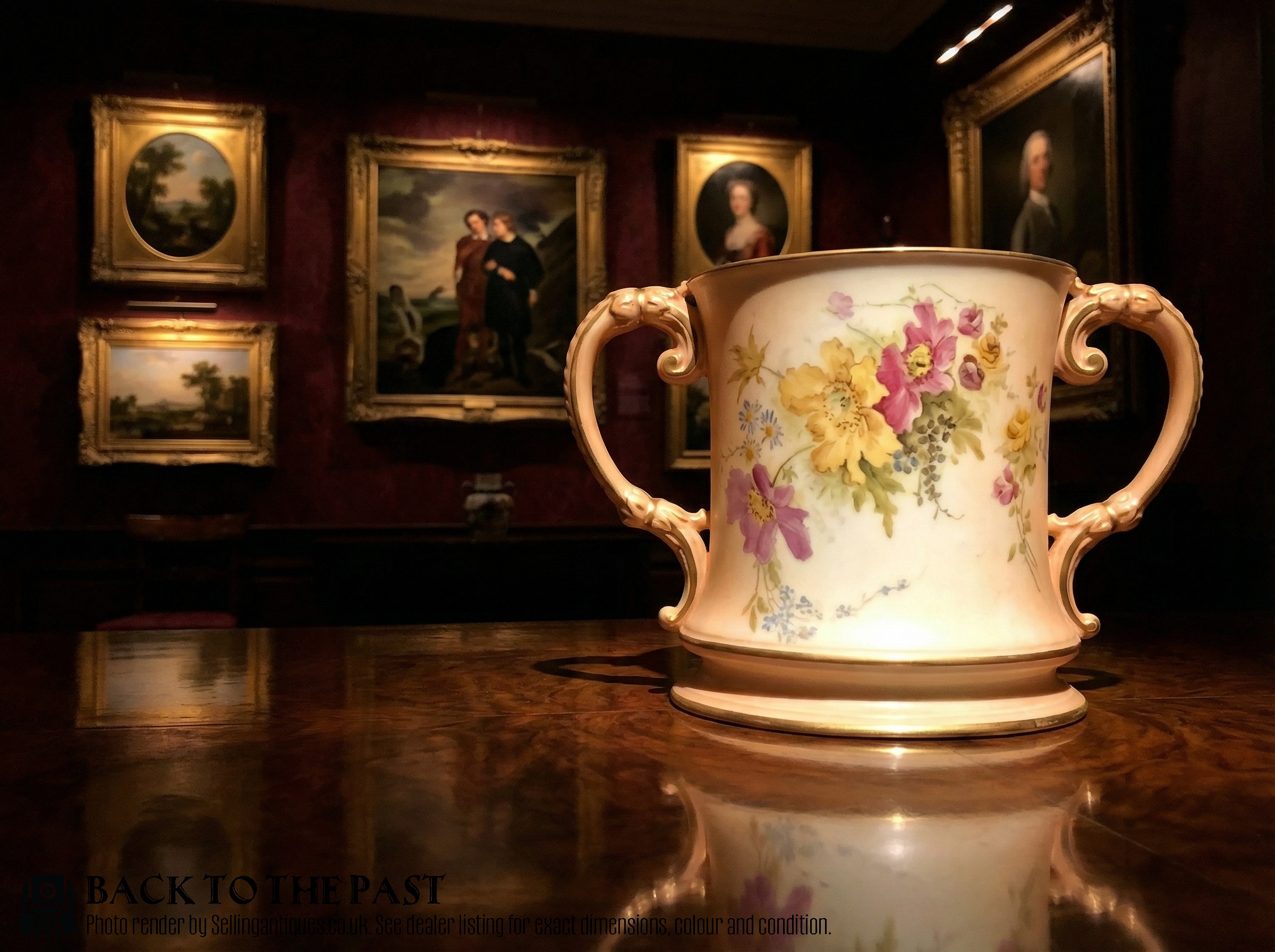
Alongside that sits a smaller run of porcelain: Royal Worcester, including a blush ivory ground and one miniature, Grainger & Co. Worcester, a Derby cup of 1820, H & R Daniel of about 1830, and pieces titled only English Porcelain. Around eight of the twenty-nine are porcelain rather than pottery.
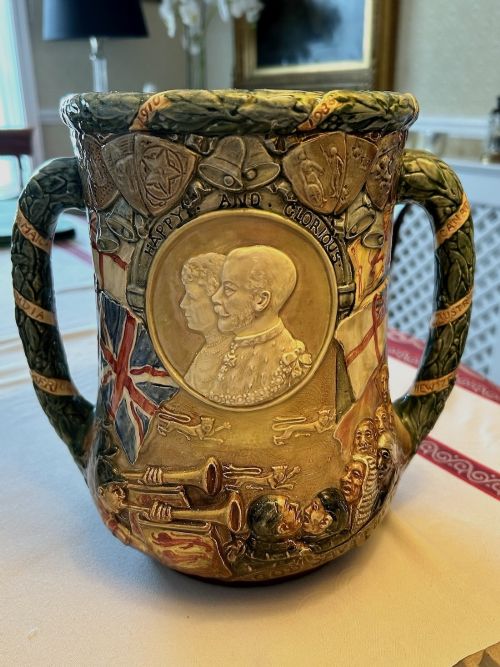
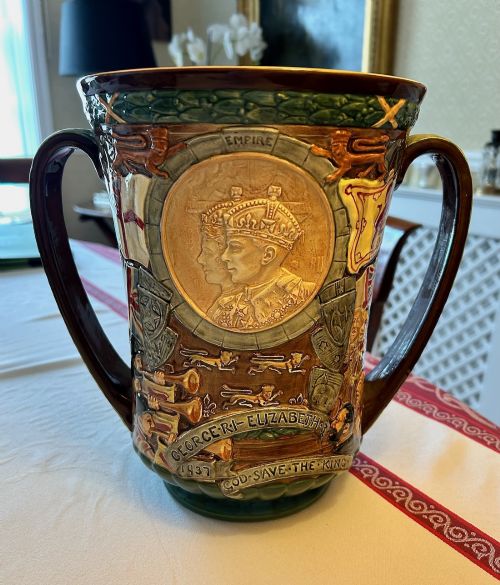
Smaller threads run through the archive. Frog cups, with a modelled frog and sometimes a newt inside the bowl, account for four sampled titles. Three listings are royal commemoratives from Royal Doulton and Wemyss. A single saltglaze stoneware piece is titled a hunting tyg, and one large pottery cup a harvest cup with a silver rim.
Where The Range Splits
Body does most of the work. The porcelain cups, hand-painted and gilded, sit in the upper half of the range, while plain large pottery and stoneware examples cluster at the bottom. Decoration follows the same line: titles carrying blush ivory, chinoiserie, hand painted or a named view of Worcester sit higher than an undecorated 19th-century pottery cup.
Date pulls hard. Only two pieces in the archive are placed in the 18th century, a Staffordshire Whieldon glaze cup put at about 1760 and a pair of Irish cups, and both sit at the very top. Pairs count for something on their own, whether 18th-century Irish, Royal Doulton, or the Staffordshire cups inscribed for Richard & Anne Dalton.
Size lifts a pottery cup rather than a porcelain one. Extremely large and fine & large both sit high, while a plain large 19th-century cup sits lowest. Dealers' own words matter too: rare, very rare or unusual appears on six sampled titles, five of them in the upper half.
Antique Loving Cups Retail Price Guide 2026
Typical UK retail prices for loving cups, calculated from the Sellingantiques database of over a million retail prices indexed since 2003. This retail price guide relies exclusively on Sellingantiques data; no external sources or auction records are used, so the figures do not describe the wider market.
19th Century is the period label used most on Sellingantiques for loving cups, with Victorian next and the 1900s third.

The Antique Loving Cups Glossary
- Loving cup
- A two-handled cup made to be passed between drinkers at a toast. Some dealers title the same form simply as a two-handled cup.
- Frog mug
- A cup with a modelled frog inside the bowl, revealed as the drink goes down. Two of the four frog titles here add a newt.
- Pearlware
- Late 18th and early 19th-century earthenware with a bluish-white glaze, named on Staffordshire cups in this archive.
- Blush ivory
- Worcester's soft shaded ivory ground, seen on two of the porcelain cups.
- Tyg
- An older multi-handled drinking pot. One saltglaze stoneware hunting tyg appears, put as possibly Derbyshire.
- Harvest cup
- A large country pottery drinking vessel, the one here finished with a silver rim.
Antique Loving Cups: Frequently Asked Questions
Are loving cups made of silver?
Not in this archive. Every loving cup that has passed through Sellingantiques is ceramic, from slipware and saltglazed stoneware to painted and gilded porcelain.
The only metal that appears is a silver rim on one large pottery harvest cup. Silver lustre, which turns up on a Staffordshire title, is a metallic decoration on a ceramic body rather than silver itself.
How often do loving cups come up for sale?
About four a year reach Sellingantiques, and twenty different dealers have listed one. Almost nobody carries them as a line.
That means the archive builds slowly, and the smaller threads within it, such as Irish or Scottish examples, appear only once.
Why are so many just dated 19th Century?
Because that is how dealers bracket them. Nine listings carry no more than 19th Century and three say only Victorian, against ten across the whole archive with a clean year.
The dated field spans 1800 to 1920 overall. Regency, the 1850s, the 1900s and the 1910s form the other small clusters, and two pieces are placed in the 18th century.
What is a frog cup?
A loving cup or mug with a frog modelled inside the bowl, which comes into view as the drink empties. Two of the four frog titles here also carry a newt.
The mulberry and lilac tones named on a couple of them refer to the purple-toned transfer or ground colour.
Do commemorative loving cups appear?
Yes, as a small tail at the 20th-century end. A Royal Doulton 1935 Silver Jubilee cup and a 1937 Coronation cup are both in the archive, the Coronation one a limited edition.
A Wemyss coronation cup dated 1902 is the single Scottish entry.
Earlier inscribed pieces exist too, including a dated 1802 pottery cup and one named for Richard & Anne Dalton.
Which factories are named on the porcelain examples?
Royal Worcester accounts for four sampled titles, including a blush ivory cup and a miniature. Grainger & Co. Worcester appears as well.
Derby is named on a cup of 1820 and H & R Daniel on one of about 1830. Some are titled only as English Porcelain, one of them dated about 1849.