
Antique Tea Cups
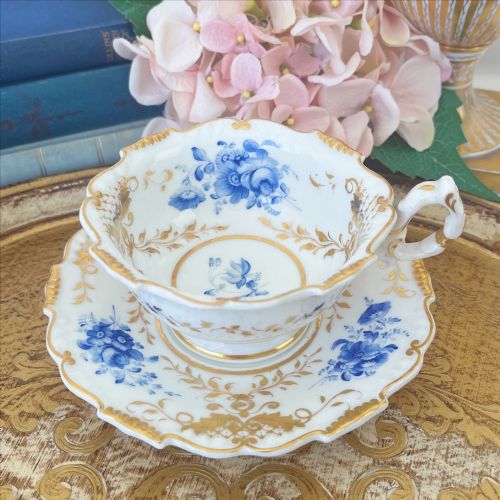
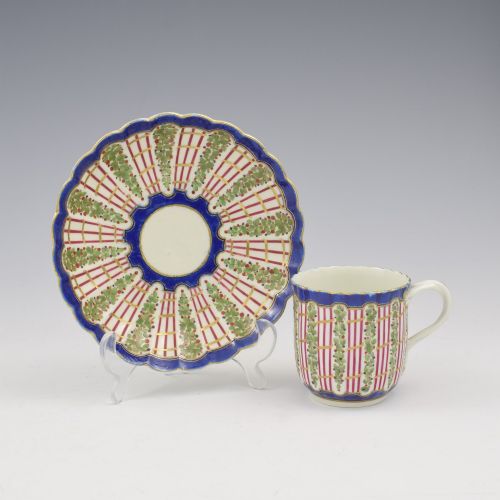
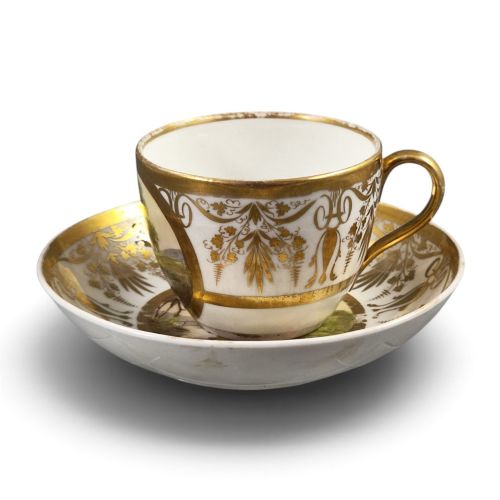
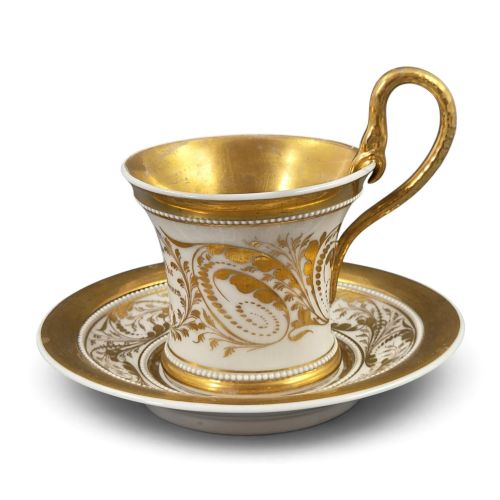
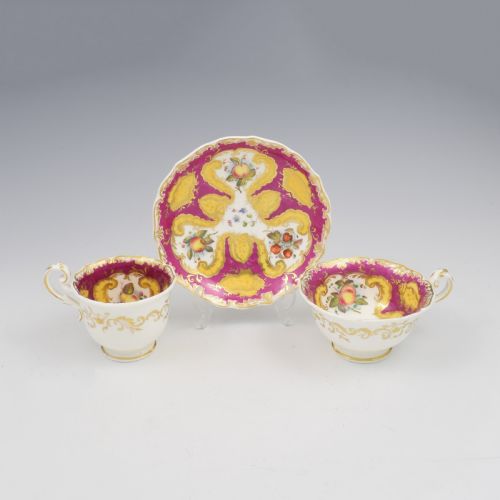
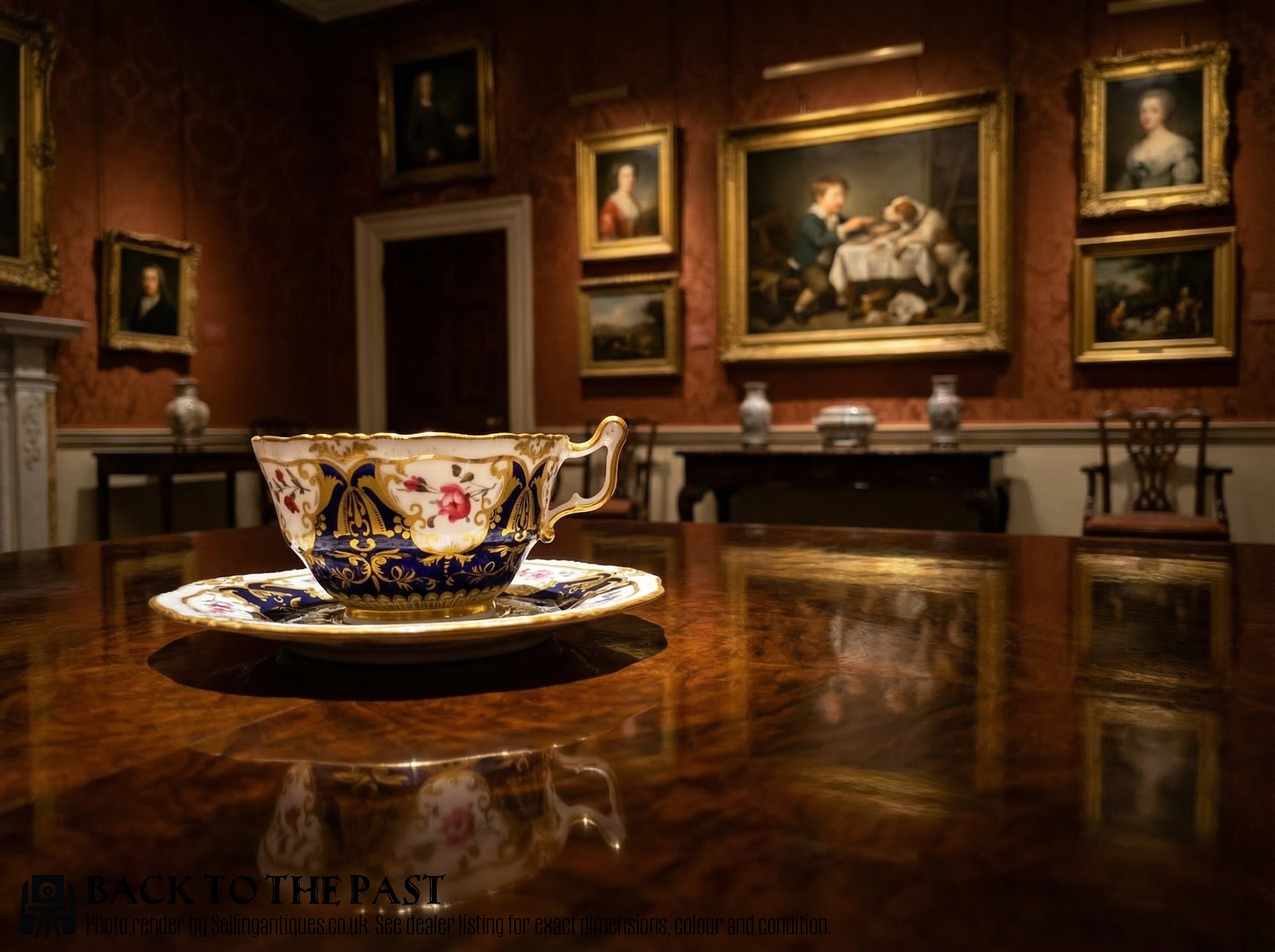
An English porcelain tea cup with its matching saucer, made from the mid-eighteenth century onward as the standard unit of a tea service.
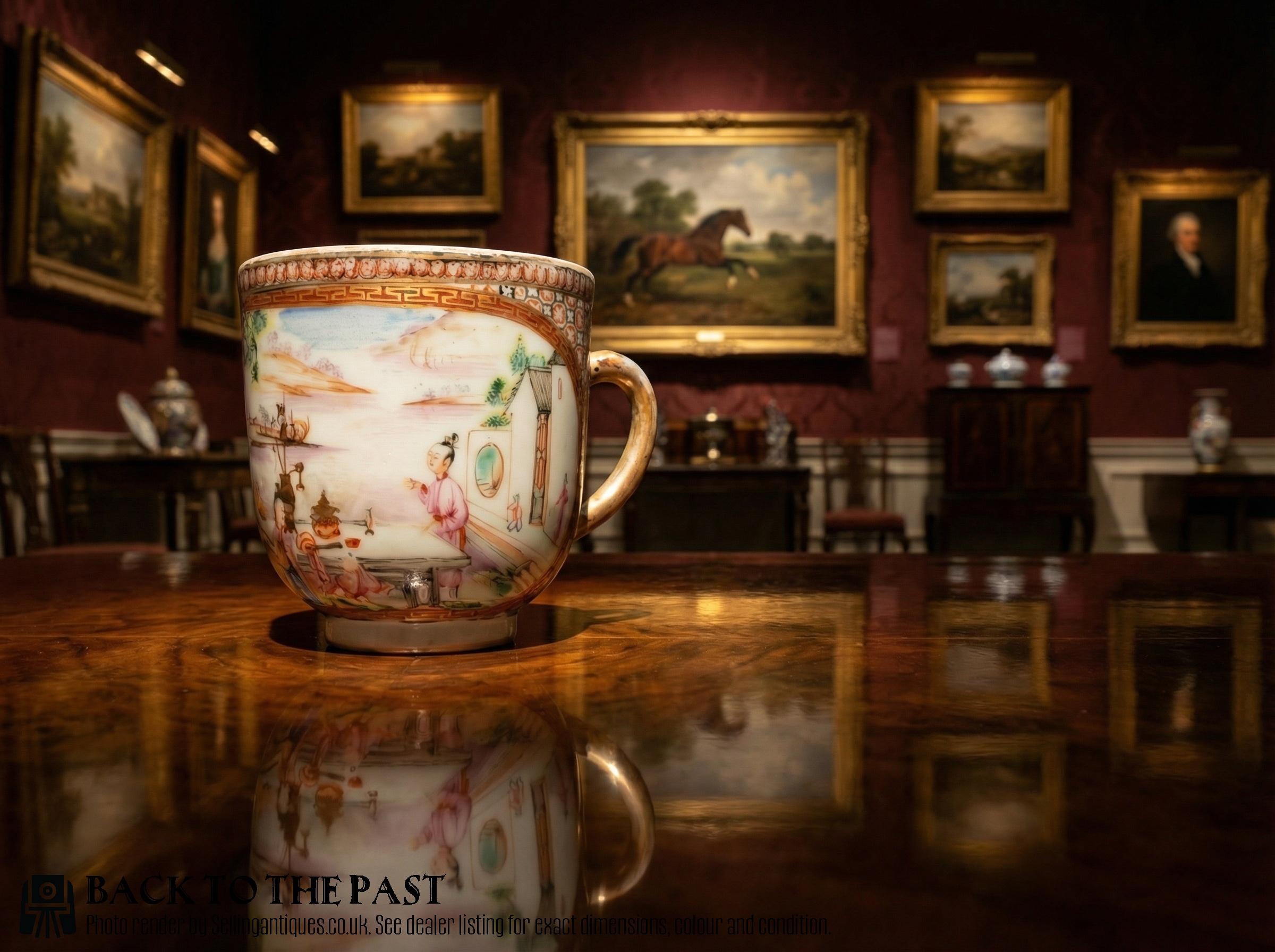
Antique Tea Cups
A cup and saucer sold together as a duo. Of 107 titles in the category, 80 name a saucer and 74 name a cup, and 59 say porcelain outright. Single duos dominate; sets of six, part-services and full tea services turn up as the exception rather than the rule.
Porcelain tea drinking came to Britain with the tea trade, first in handleless tea bowls copied from Chinese imports, then from the new English factories. Handles became usual toward the end of the eighteenth century, and the duo, sometimes supplied with a coffee cup as a trio, settled in as the standard form.
The weight of the category sits in the Georgian and Regency years. Georgian, 18th Century and Regency together account for 54 of the dated listings. Victorian and 19th Century trail well behind, and the twentieth century barely registers. Only 14 listings carry a clean year, so the era label does most of the dating work, and titles often give a tighter circa date than the field does.
Worcester is named in 29 titles and runs through six ownership periods, from First Period to Royal Worcester. Derby appears in 15, from Early Derby through Bloor to Royal Crown Derby. A fifth of titles quote a factory pattern number, attached to Coalport, Ridgway, Spode, New Hall and others. A steady minority is Chinese, Japanese, German, French or Russian.
What Sets Them Apart
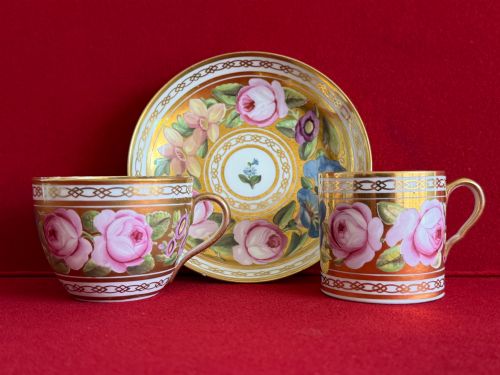
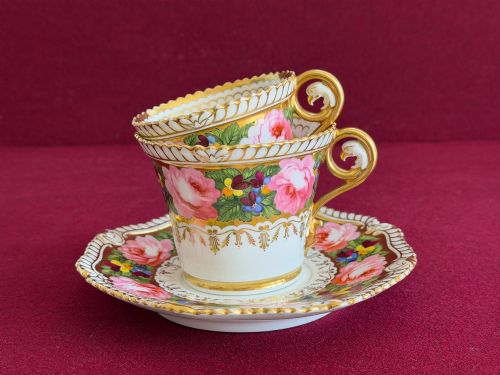
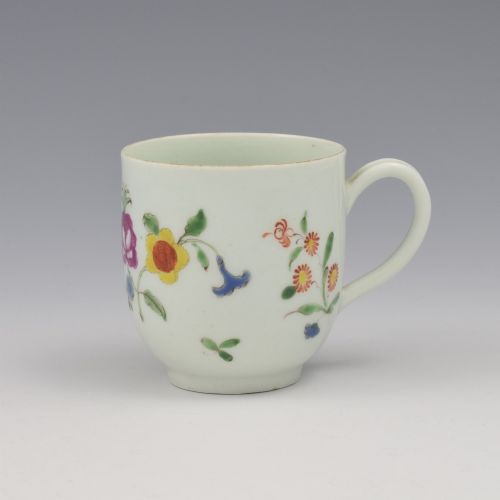
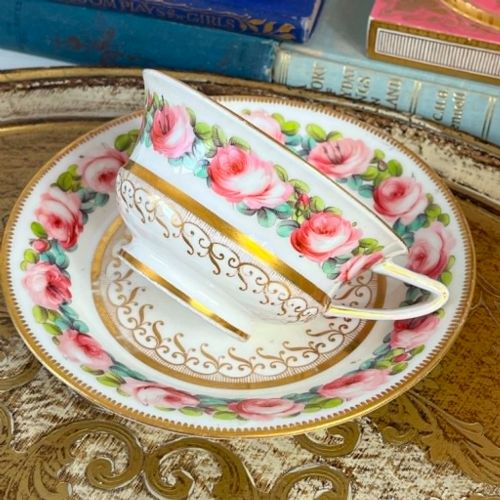
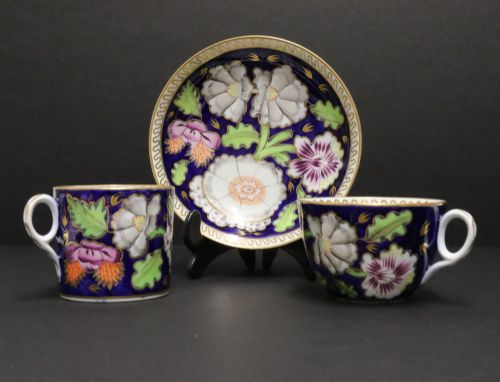
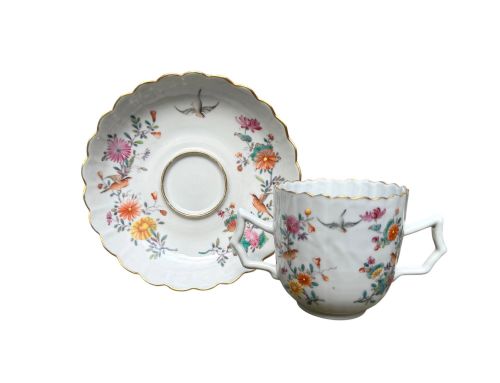
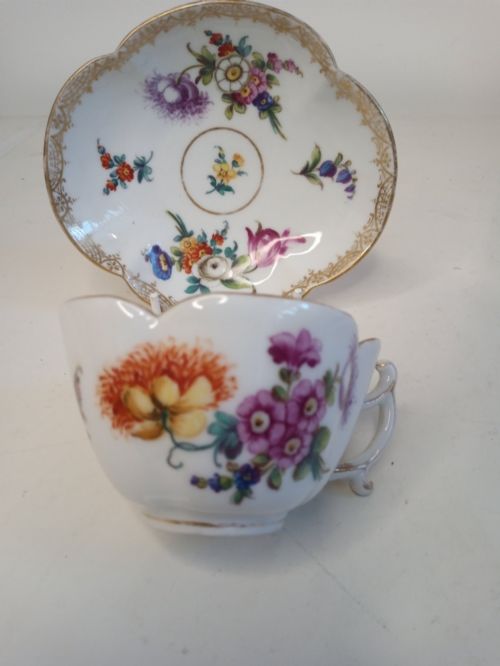
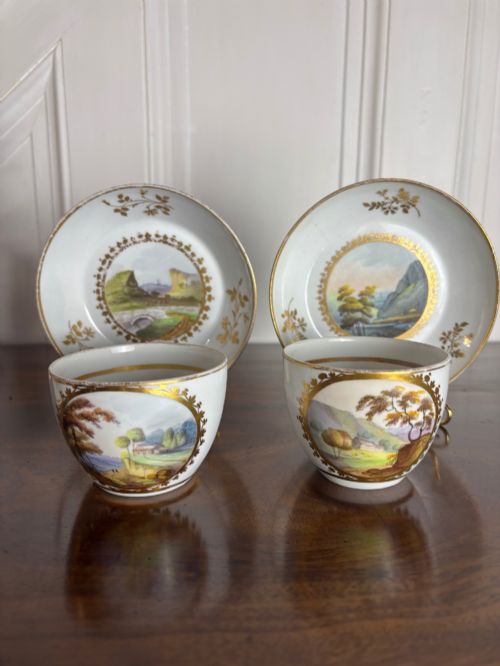
Decoration does most of the separating. Hand-painted work described as blue scale, fancy birds, Kakiemon, landscape or Sevres-style sits well above standard patterns, and where a title names the painter, such as Zachariah Boreman, Samuel Astles or Dr George Davis, the piece goes to the top of the range. So does a documented service, the Bishop of Durham and Prince Regent services among them.
Period matters next. First Period Worcester, named in 12 titles, and Early Derby of c.1760-1790 cluster above the plainer Victorian and Edwardian duos. Cabinet cups, presentation cups and the occasional cup, cover and stand appear disproportionately in the upper part of the range, since they were made to be looked at rather than used.
Quantity lifts a listing too. Sets of six, ten-person tea services and six-place tea and coffee services occupy the upper half, while single duos fill the lower. A quoted pattern number helps mildly, being how the trade pins a piece to a factory and date. The highest prices in the archive belong to Chinese imperial-mark porcelain and a French royal-service set.
Antique Tea Cups Retail Price Guide 2026
Typical UK retail prices for tea cups, calculated from the Sellingantiques database of over a million retail prices indexed since 2003. This retail price guide relies exclusively on Sellingantiques data; no external sources or auction records are used, so the figures do not describe the wider market.
About twelve antique tea cups are listed on Sellingantiques each year, and thirty-one dealers have listed them, so no single shelf holds the category.

The Antique Tea Cups Glossary
- Duo
- A cup and its matching saucer, sold as a pair. It is the standard unit of this category and what a title usually describes.
- Trio
- A tea cup, a coffee cup and one shared saucer. Eight titles use the word.
- Tea bowl
- A handleless cup, the earliest English form. Nine titles mention one, all at the early end of the range.
- Pattern number
- The factory's own number for a decoration, such as 1485 or 4111. Coalport and Ridgway used a fractional style, 2/813 and 2/1114 among them.
- London shape
- An early nineteenth-century cup form with straight flaring sides and an angular handle.
- Blue scale
- A ground of overlapping painted blue scales, usually with reserved panels left clear for painting.
Antique Tea Cups: Frequently Asked Questions
What is a cabinet cup?
A display cup, usually elaborately painted or gilt, made to be shown rather than used at table.
Cabinet cups, presentation cups and the odd cup with cover and stand appear disproportionately in the upper part of the range.
How many Worcester periods appear in these listings?
Six ownership periods are named across the 29 Worcester titles: First Period or Dr Wall, Flight, Barr, Barr Flight & Barr, Flight Barr & Barr, then Grainger's, Chamberlain and Royal Worcester.
First Period is the most frequent of them, in 12 titles. The partnership name is how a Worcester piece gets dated.
Are these sold singly or in sets?
Singly, for the most part. Plural forms are the exception: cups appears in 13 titles, saucers in 8, trio in 8.
Sets of six, ten-person tea services and six-place tea and coffee services do come up, and they sit in the upper half of the range.
Does Imari mean the cup is Japanese?
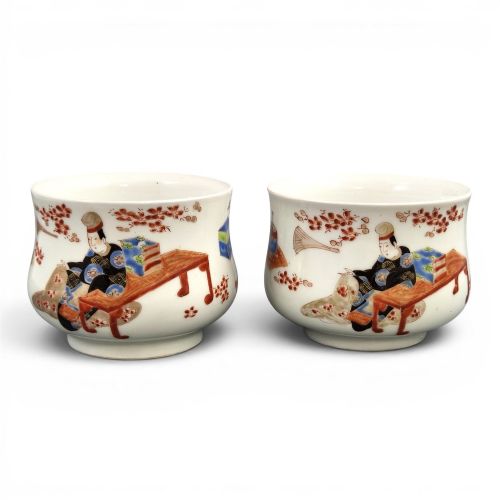
Not on its own. Imari is a dense palette of blue, iron-red and gilt, used on Japanese porcelain and copied on English porcelain too.
The word appears in nine titles and spans both.
What does the date field mean on a listing?
It runs from 1750 to 1940 across the category, but only 14 of the 107 listings carry a clean year. Everything else is placed by era label.
Georgian, 18th Century and Regency are broad bands. Titles frequently carry a tighter circa date, c.1770 or c.1825, than the field records.
Which non-English cups turn up?
Chinese famille rose, Chinese export and Qianlong-marked cups, Japanese sencha cups, Sumida Gawa and lacquer sake cups, KPM Berlin, Sevres and Russian factory wares.
One-offs include WW1 Ottoman Turkish Army officers' tea cups and a Russian cup with cover and stand. About twelve tea cups come to market on Sellingantiques in a year, across 31 dealers.