



Green Glass Roemers
These green glass roemers bring historical colour and distinct forms to the table, offering a tangible connection to centuries of European drinking culture.
Green Glass Roemers
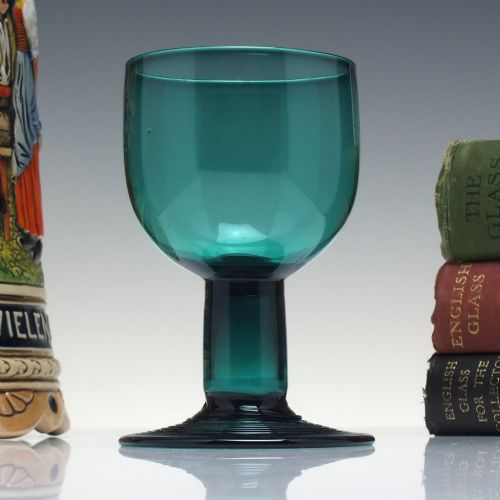
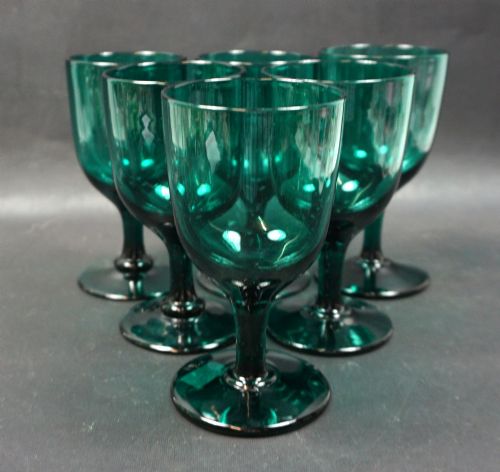
Green glass roemers are traditional European drinking vessels, most often associated with wine, hock, and cordial consumption. When you search for green glass roemers, you encounter forms spanning the eighteenth century through to the early twentieth century.
The selection here includes Georgian export pieces, Victorian examples, and continental European works from Bohemian and Dutch makers. These range from simple wine glasses to large enamelled goblets with characteristic hollow stems.
Factors that define quality
Quality in these vessels is evident in the handling of the metal and the precision of the form. Thinner, more even walls and carefully pulled hollow stems distinguish superior examples from heavier, simpler production.
The refinement of the decorative work also dictates the tier of a piece. Delicate polychrome enamel application or crisp wheel-cutting elevates the standing of a glass far above plain utility ware.
Materials represented include blown glass, lead crystal, and pieces decorated with polychrome enamel.
Baccarat·St Louis Massenet·Lobmeyer·Theresienthal·Frits Hechert
The Green Glass Roemers Glossary
- Roemer
- A traditional Germanic drinking glass featuring a large bowl resting on a cylindrical, often prunted or hollow stem. This form developed in the Rhineland and remained popular for centuries across northern Europe.
- Hollow stem
- A tubular pedestal base characteristic of traditional roemers and certain export wine glasses. It allows the drinker to hold the bowl while maintaining a substantial height.
- Polychrome enamel
- Glass decoration utilising multiple colours of glass paint fused to the surface through firing. This technique appears frequently on Bohemian and continental European vessels.
- Biedermeier
- A Central European design style spanning the early to mid-nineteenth century. It prioritises utilitarian comfort and clean, unpretentious lines in domestic objects.
- Prunt
- An applied blob of molten glass melted onto the stem of a vessel to improve the grip. It is a defining feature of many historical northern European drinking glasses.
Green Glass Roemers: Frequently Asked Questions
What is a roemer glass?
A roemer is a historical style of drinking vessel, traditionally used for white wine, featuring a rounded bowl atop a cylindrical or hollow stem.
The design originated in continental Europe and became a staple of wealthy dining tables over successive centuries.
How were these glasses used?
These vessels served primarily for consuming wine, hock, and cordials during formal meals and gatherings. Their distinct green hue helped mask imperfections in early glass production.
Larger examples, such as goblets, were often displayed as much as they were used for drinking.
How do I date a green glass roemer?
Dating relies on examining the pontil mark, stem construction, and overall weight of the glass. Georgian and eighteenth-century pieces often display rougher pontils and thinner metal.
Victorian and later continental pieces introduce more refined cutting and polychrome enamel work typical of the nineteenth and early twentieth centuries.
Can I use antique green glass daily?
While sturdier than thin modern crystal, historical glassware benefits from careful handling and gentle hand washing. Sudden temperature changes can stress old glass.
Many collectors prefer to use them for special occasions rather than everyday dining.