




Antique Coloured Wine Glasses
These antique coloured wine glasses bring vibrant hues and hand-crafted character to the table, offering a striking departure from plain clear crystal.
Antique Coloured Wine Glasses
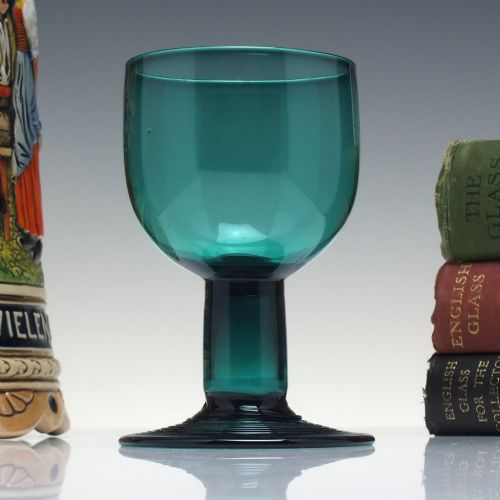
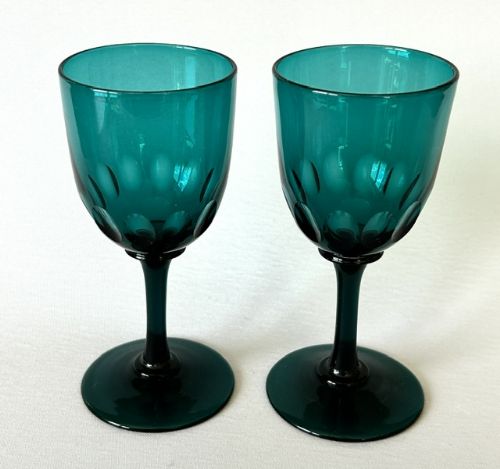
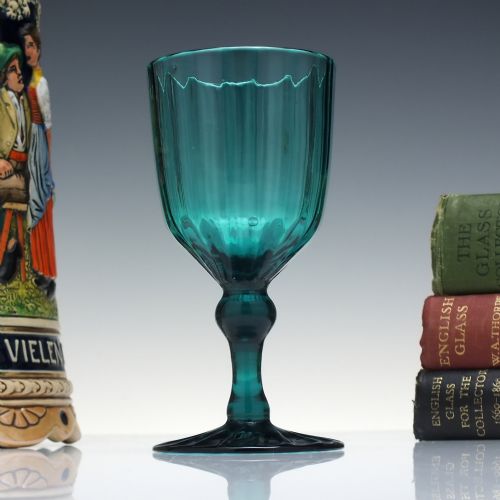
When you search for antique coloured wine glasses, you encounter a spectrum of brilliant shades from deep cranberry and amethyst to vibrant turquoise, aqua, and emerald green. These drinking vessels span the Georgian, Victorian, and Edwardian eras, reflecting changing domestic tastes across the nineteenth and early twentieth centuries.
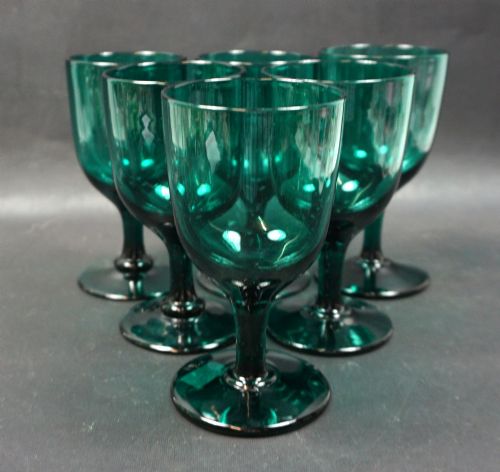
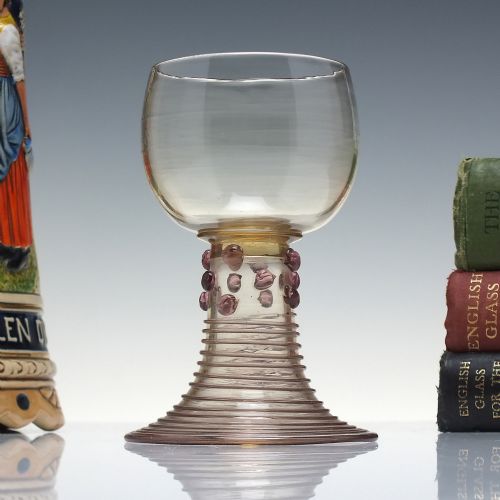
You are most likely to meet sets of six Victorian cranberry glass wine glasses or Georgian pieces in rich turquoise and peacock blue on this page. Forms range from slender wine glasses and dram glasses to taller goblets, roemers, and matching decanters.
Makers and workshops across England, Bohemia, and Italy produced these wares, employing distinct regional palettes and cutting techniques. Sets vary from intimate pairs to larger gatherings of fifteen, each piece carrying the slight irregularities of traditional glass production.
Judging quality and character
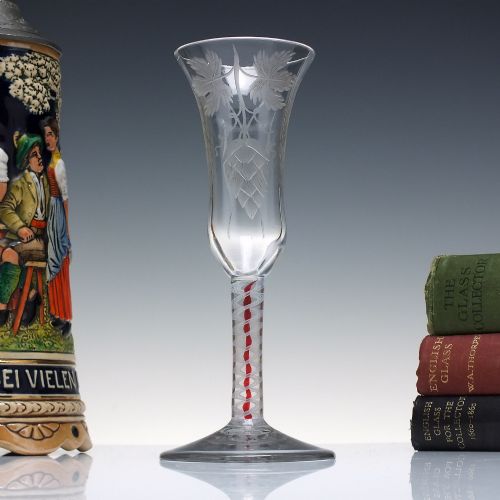
Quality reveals itself in the depth and evenness of the colour throughout the metal, alongside the crispness of any wheel-engraved or cut decoration. Superior examples display balanced proportions between bowl, stem, and foot, showing careful hand-finishing rather than hasty mass production.
The weight and resonance of the lead glass, coupled with the stability and symmetry of the foot, distinguish finer work from simpler utilitarian drinking vessels. Matching sets of six or more command attention for their uniformity, preserving a complete table service across generations.
Listings feature glass pieces spanning the Georgian, Victorian, and Edwardian periods, utilising materials from cranberry and amethyst glass to lead crystal.
The Antique Coloured Wine Glasses Glossary
- Cranberry glass
- A rich pinkish-red glass coloured with gold chloride, highly popular during the Victorian period. It appears frequently in sets of wine glasses and tablewares.
- Roemer
- A traditional Germanic or continental European wine glass featuring a large bowl resting on a cylindrical stem decorated with applied prunts or ribs. They often appear in green or amethyst tones.
- Rib moulded
- A decorative technique where molten glass is inflated inside a patterned mould to create vertical or spiral ridges along the body. This adds texture and refracts light through the coloured metal.
- Lead glass
- Glass containing lead oxide, which increases the weight, brilliance, and clarity of the material. It allowed makers to cut intricate facets into coloured vessels.
Antique Coloured Wine Glasses: Frequently Asked Questions
How do I clean antique coloured wine glasses?
Wash these pieces gently by hand in warm water using a mild detergent, avoiding harsh scrubbers and dishwashers that can damage the old glass. Place a folded cloth at the bottom of the sink to cushion the fragile bowls and stems during cleaning.
Dry them immediately with a lint-free linen cloth to prevent water spots and preserve the polish of the hand-blown surface. Store them upright on a stable shelf away from sudden temperature shifts.
Can I use antique coloured wine glasses for dining?
You can use these glasses for modern dining and entertaining, provided you handle them with the care due to fragile nineteenth and eighteenth-century objects. Their vibrant bowls enhance the presentation of dessert wines, port, and cordials.
Hand-wash them promptly after use and avoid pouring boiling liquids directly into cold glass. Treating them with gentle respect ensures they remain functional pieces of history on your table.
What is the difference between lead glass and normal glass?
Lead glass incorporates metallic lead oxide into the batch, giving the material greater weight, a higher refractive index, and a distinct musical ring when struck. This composition allows the glass to be cut and engraved more deeply without shattering.
Standard or lime glass lacks this lead content, resulting in a lighter weight and softer brilliance. Many antique wine glasses utilise lead metal to achieve their clarity and ringing resonance.