



Emerald Green Glass Stemware
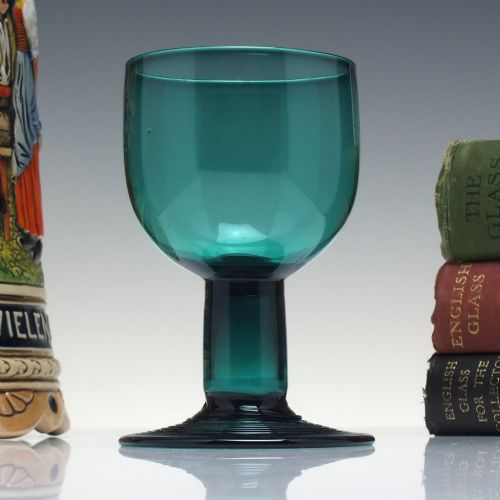
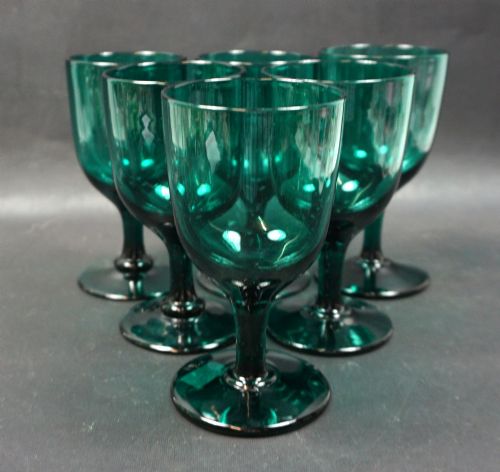
Emerald green glass stemware brings rich colour and striking form to the table, spanning Georgian wine glasses to Art Deco champagne coupes.
Emerald Green Glass Stemware
When you search for emerald green glass stemware, you are looking at drinking vessels shaped for wine, hock, champagne, and drams. These pieces range from Georgian and Victorian eras through to Edwardian, Art Deco, and 1930s designs. They appear in forms such as wine glasses, champagne coupes, and hock glasses.
The pieces you are most likely to meet on this page include sets of Bristol green wine glasses and pairs of cut crystal hock or champagne glasses. English, French, and Biedermeier origins predominate among the items recorded here. They encompass single glasses, pairs, and larger sets numbering up to eight pieces.
How emerald green glass stemware was made
Makers utilised hand-blown glass, lead glass, and lead crystal to shape these drinking vessels. Techniques involved blowing molten material into tulip shapes or forming distinctive stems and bases. Coloured glass and green glass provide the fundamental hue across the selection.
Advanced examples employ cased glass and cut crystal methods. Over crystal techniques overlay green glass onto clear crystal before wheel-cutting geometric or panel patterns through the outer layer. This reveals the contrasting clear glass beneath.
Listings span the Georgian period, Victorian era, Edwardian years, and the 1930s, utilising hand-blown glass, lead crystal, and cased glass.
What varies in quality
Quality rests in the precision of the glassblower's hand and the clarity of the material. Hand-blown glass exhibits subtle variations in weight and wall thickness that distinguish artisan production from standard output. Lead crystal provides greater brilliance and ring when struck gently.
Cut crystal execution marks the upper tier of the range. Crisp facets and deep wheel-cutting on cased glass require exceptional skill from the cutter. The depth of the emerald green colour and the harmony between bowl, stem, and foot dictate the visual success of each piece.
Baccarat·St Louis Massenet
The Emerald Green Glass Stemware Glossary
- Hock glass
- A tall-stemmed wine glass traditionally used for hock or white Rhine wine. These often feature coloured bowls and elaborate cutting.
- Cased glass
- Glass composed of two or more distinct layers of different colours fused together while hot. Cutting through the outer layer exposes the contrasting glass beneath.
- Champagne coupe
- A shallow, broad-bowled stemmed glass designed for sparkling wine. The wide bowl allows the bubbles to dissipate quickly.
- Lead crystal
- Glass containing a high proportion of lead oxide, which increases weight, brilliance, and refractive index. It permits deeper and sharper cutting than standard glass.
Emerald Green Glass Stemware: Frequently Asked Questions
What is emerald green glass stemware?
These pieces are drinking vessels produced in rich green shades, including wine glasses, hock glasses, and champagne coupes. They date from the Georgian period through the 1930s.
Buyers encounter various forms ranging from plain hand-blown English Bristol green to French cut crystal and Biedermeier designs.
Are these glasses safe for drinking?
Most antique green glass stemware remains entirely suitable for occasional use with wine and champagne. The materials used are stable for serving beverages.
Inspect each piece for any structural cracks before use. Hand washing preserves both the glass and any delicate cut surfaces.
How do I tell periods apart?
Georgian and early nineteenth-century pieces often display simpler hand-blown forms with pontil marks on the base. Victorian and Edwardian examples introduce heavier moulding and varied cutting styles.
Art Deco and 1930s items typically feature sharper geometric cutting, cased glass construction, and bolder silhouettes associated with makers like Baccarat.