


Hand Blown Green Glass
Hand blown green glass brings distinct colour and character to a room, ranging from early wine bottles to delicate Victorian wine glasses.
Hand Blown Green Glass
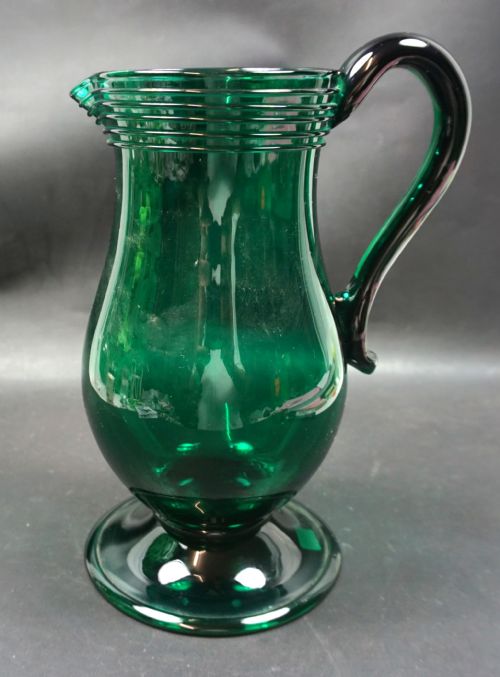
Hand blown green glass encompasses a wide variety of domestic and decorative objects spanning the eighteenth century to the twentieth century. When exploring hand blown green glass, buyers frequently encounter tableware such as wine glasses, dram glasses, rummers, and decanter bottles alongside larger display pieces like vases, ewers, and epergnes.
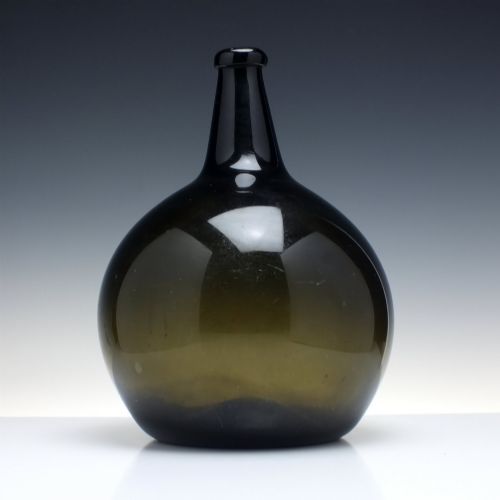
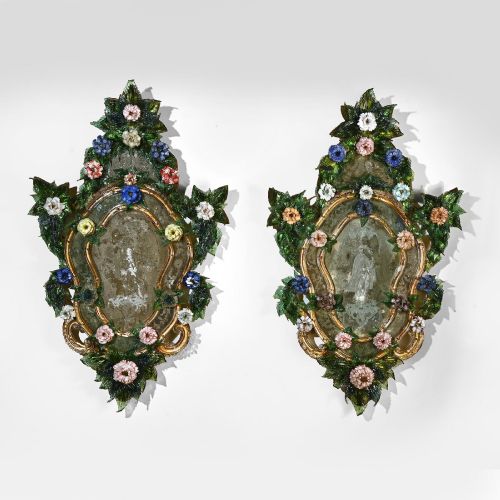
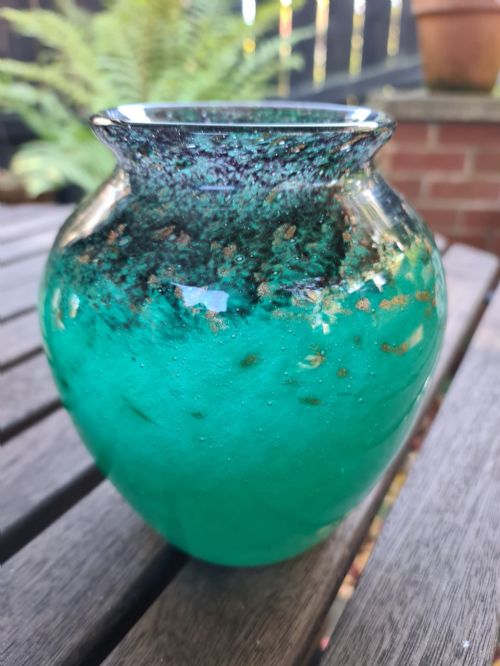
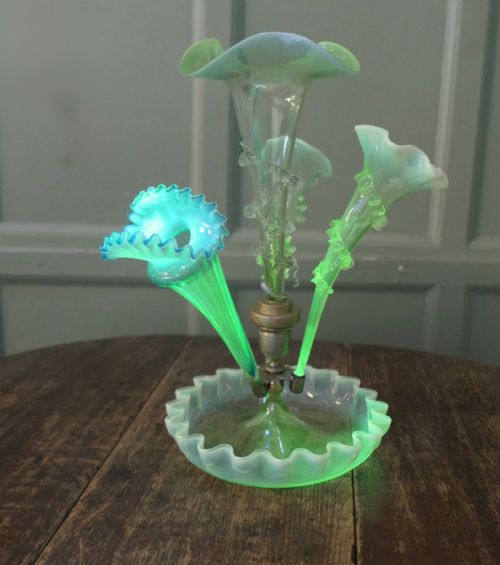
The selection ranges from Georgian utility bottles and Bristol green tableware to Victorian enamel painted jugs, Venetian mirrors, and twentieth century studio pieces from makers such as Monart and Vasart. Forms vary from simple utilitarian pickling jars and carboys to highly decorative handled jugs and trumpet epergnes.
How they were made
Craftsmen utilised free blowing and mould blowing techniques to shape molten material, often applying trails, folded feet, and applied rims to the hot vessel. The distinctive hues arose from natural impurities in the batch or deliberate metallic additions, producing shades from pale turquoise to deep forest tones.
Decoration on these surfaces involved hand painting with enamel, surface engraving, or incorporating Aventurine inclusions within the molten glass body during the forming process.
A cheerful grape lamp brings unexpected illumination to the room.
What varies in quality
Quality rests in the skill of the gather and the balance of the form, where thinner, even walls and crisply applied details demonstrate superior workshop control. The depth and clarity of the colour, combined with the precision of any enamel painting or wheel engraving, elevate certain examples well above standard utility wares.
Monart Glass·Vasart Glass·James Powell
The Hand Blown Green Glass Glossary
- Pontil mark
- The rough scar left on the base of a vessel where the pontil rod was snapped off after blowing. This physical trace indicates traditional hand manufacturing methods.
- Epergne
- A large table centrepiece featuring multiple trumpets or baskets for holding fruit or flowers. Victorian versions in uranium glass are particularly distinctive.
- Carboy
- A large, bulbous glass bottle traditionally used for holding liquids or chemicals. Large examples often display characteristic bubbles and irregularities from early production.
- Bristol green
- A deep, rich shade of green glass historically produced in English manufacturing centres for glassware. It remains a standard term for specific table services from the Georgian and Victorian periods.
Hand Blown Green Glass: Frequently Asked Questions
Is uranium glass safe to display?
Uranium glass contains low levels of uranium oxide added to create a vivid green colour that glows brightly under ultraviolet light. These pieces emit very low levels of radiation, well within safe limits for normal household display.
Standard handling poses no health risk, though the items should not be used for serving acidic foods or daily dining. Simply keep them on display shelves or in cabinets to enjoy their visual properties safely.
How can I tell Georgian glass apart?
Georgian glass often exhibits pontil marks on the base, heavy lead content that gives a resonant ring when tapped, and simpler, heavier proportions. Tool marks and slight asymmetries in the body point directly to manual production methods of the eighteenth century.
Later Victorian and twentieth century pieces tend to show greater standardisation or introduce brighter enamel painting and alternative colour tones. Examining the base and the weight helps separate earlier tablewares from later reproductions.
Where should I place large carboys?
Large carboys and demi-johns work well on the floor near a window where natural light can pass through the thick, bubbles-flecked body. Their substantial size makes them effective standalone floor pieces in hallways or corners.
Keep them away from areas of heavy foot traffic to prevent accidental knocks. Placing them on stable wooden surfaces or directly on stone floors highlights their organic shapes.