



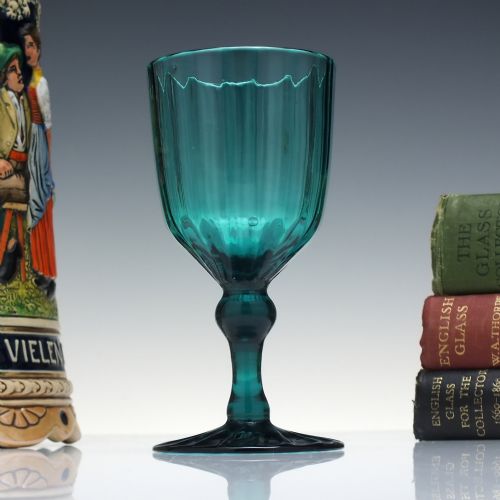


Georgian Green Glass
Georgian green glass encompasses hand-blown wine glasses, deep-hued decanters, and robust bottles valued for their rich tones and utility in historic dining settings.
Georgian Green Glass
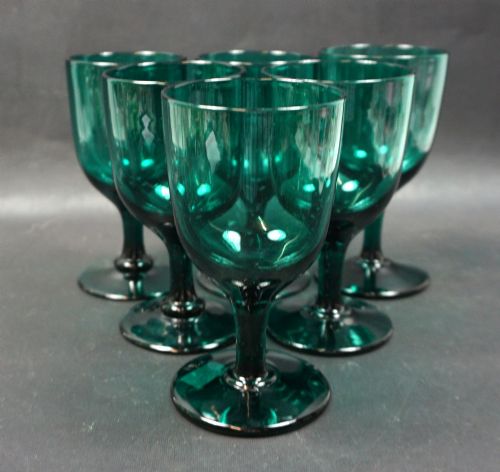
The objects span drinking vessels with hollow or baluster stems, ribbed wine glasses, and deep-toned decanters designed for everyday dining or formal entertaining. Many pieces reflect regional English production centres, notably Bristol, alongside broader domestic and export categories from the Georgian era.
Beyond table glassware, related items appear in darker shades and distinctive forms, including witches balls and cylindrical storage bottles. These functional domestic objects demonstrate the enduring appeal of tinted glass across domestic interiors.
Materials and technique
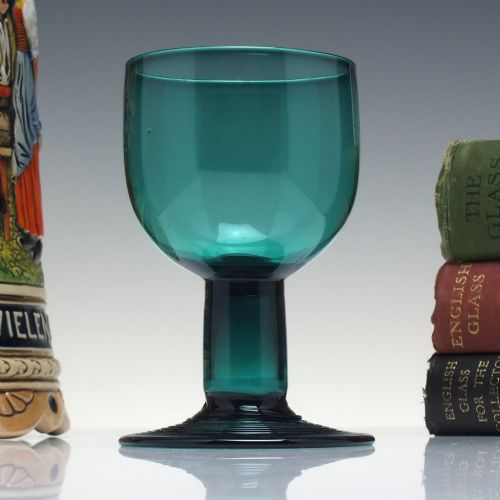
The manufacture of these vessels relies on hand-blown glass techniques that produce characteristic surface bubbles, pontil marks, and variable wall thicknesses. Artisans utilised natural mineral oxides within the batch to achieve the distinct green coloration, ranging from pale turquoise to deep emerald and forest hues.
Forming techniques often involved rib moulding to create tactile fluting on the body of wine glasses and dram cups. Larger storage vessels and decanters were shaped by free-blowing into moulds or manipulated by hand while hot, frequently finished with applied glass trails or hollow stems.
Georgian Green Glass Retail Price Guide 2026
Typical asking prices for georgian green glass among the pieces listed under this phrase on Sellingantiques today, from the lower quarter to the upper quarter. They describe what is for sale here now, not the wider market.
A sixteenth-century superstition suggested that green glass drinking vessels would crack or change colour if poison touched them.
Assessing the standard
Quality rests upon the depth and consistency of the green metal, the balance of the vessel's proportions, and the clarity of any hand-engraved decoration. Finer table wares exhibit careful control over wall thickness and minimal surface distortion, whereas utility bottles display heavier, more rustic characteristics.
Gillows Of Lancaster·Absolon Factory·Josiah Williams And Co·Aldridge And Green
The Georgian Green Glass Glossary
- Pontil mark
- The rough scar left on the base of a vessel where the pontil rod was snapped away after free-blowing. Its presence confirms hand-finished production methods.
- Roemer
- A large German-style drinking vessel featuring a wide bowl supported by a hollow cylindrical stem wrapped in applied raspberry prunts. These were widely adopted in Britain for white wine.
- Rib moulding
- A decorative technique where molten glass is inflated inside a patterned metal or wooden dip mould to create vertical or diagonal ridges. This pattern is often slightly twisted as the vessel is drawn out.
- Mell decanter
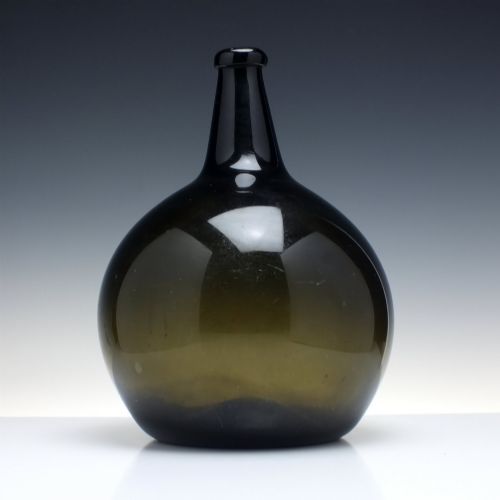
- A heavy-bottomed, sloping wine bottle or decanter shape resembling a mallet. They were designed with wide bases to remain stable on shipboard or during robust dining.
- Paste
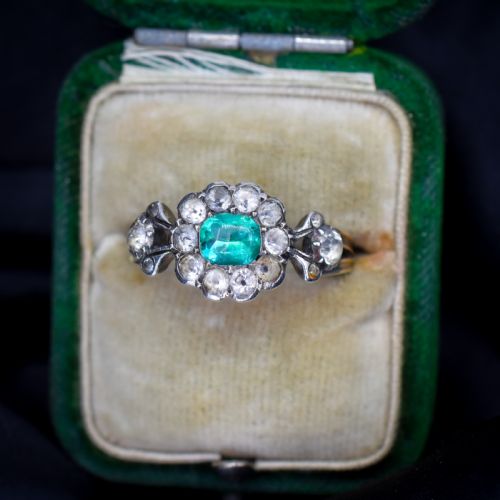
- A dense lead glass cut and polished to imitate gemstones in jewellery settings. It appears frequently in Georgian rings and pendants alongside precious metals.
Georgian Green Glass: Frequently Asked Questions
Were these green glasses used daily?
Many of these vessels served active roles in eighteenth and nineteenth-century dining, holding wines, spirits, and cordials during formal meals and gatherings. Their robust lead or potash composition made them practical for regular service rather than purely decorative display.
Over decades of use, handling created characteristic wear patterns on the bases and rims. These traces of historic use help confirm the age and authenticity of individual pieces.
How can I tell eighteenth-century glass apart?
Examine the base for a rough pontil scar and inspect the metal for tiny air bubbles and impurities typical of early furnace practices. Eighteenth-century forms generally feature shorter, thicker stems and deeper colour saturation compared to later reproductions.
Compare the weight and hand-feel against documented examples from the same period. Variations in hue, from pale turquoise to dark emerald, reflect regional batch recipes and furnace temperatures.
What is a witches ball?
Witches balls are large, ornamental glass spheres traditionally hung in cottage windows to ward off evil spirits and bad luck. Their reflective mirrored interiors were believed to catch and trap malevolent entities.
Today, they survive as colourful decorative objects that showcase early glassblowing techniques and variable tinted metals. Their scale and rich hues make them distinct additions to antique collections.