
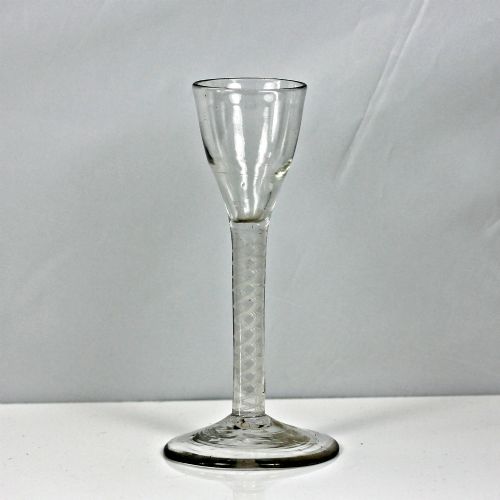
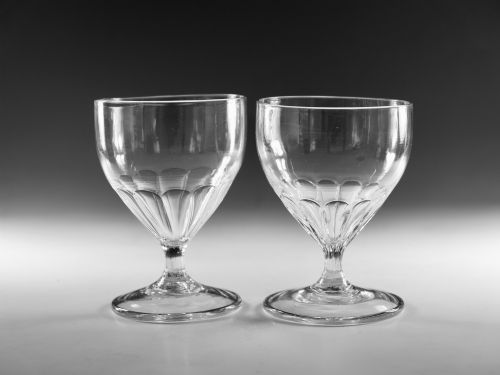

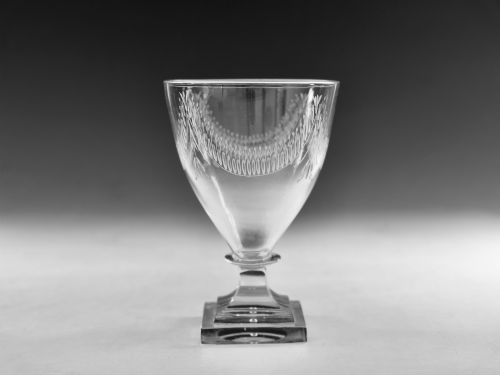
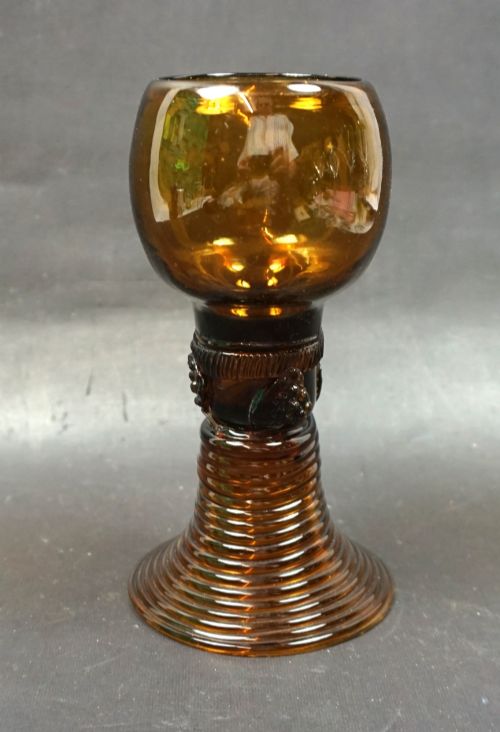
Georgian Wine Goblet
A georgian wine goblet brings weight and clarity to the table, formed from heavy lead glass and shaped by eighteenth-century hands.
Georgian Wine Goblet
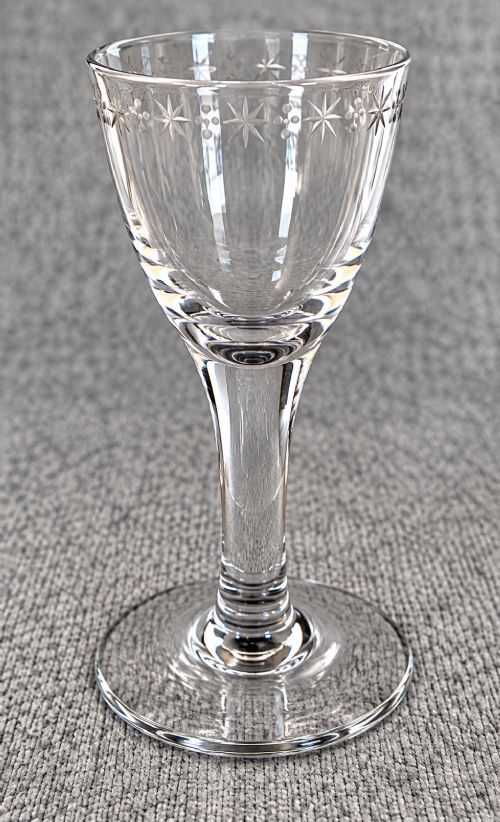
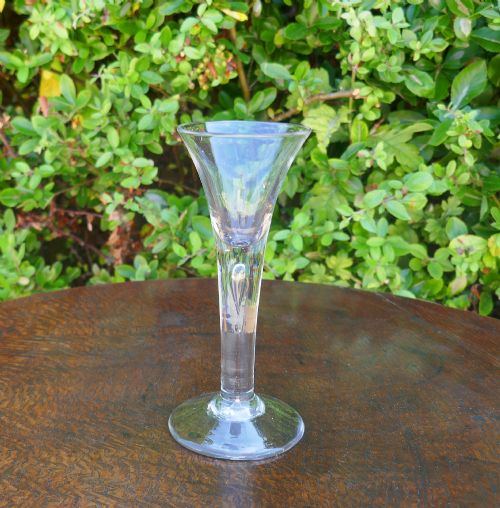
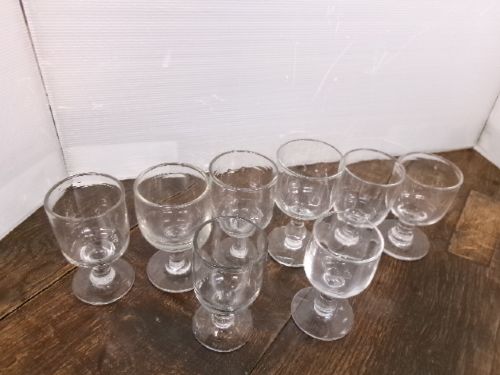
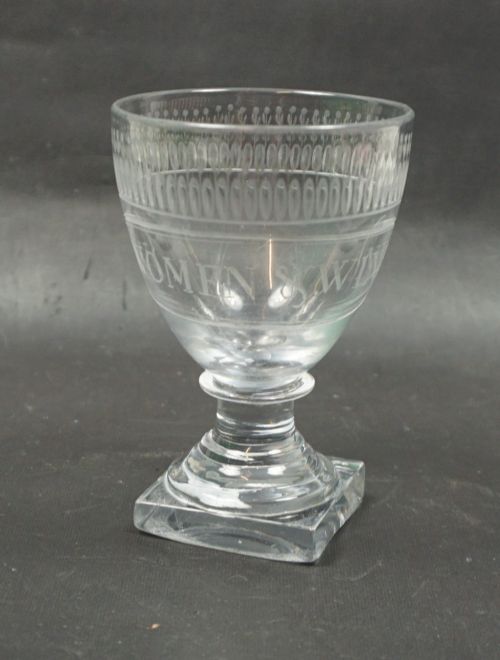
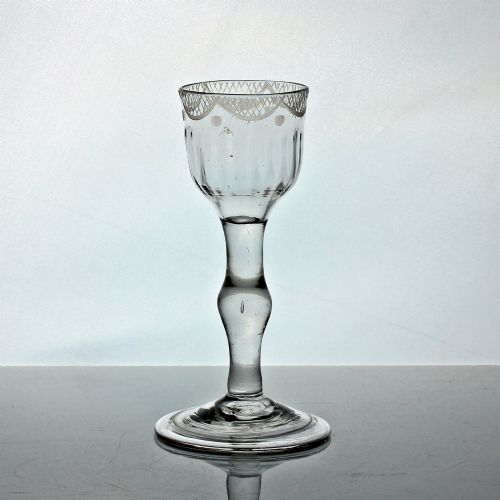
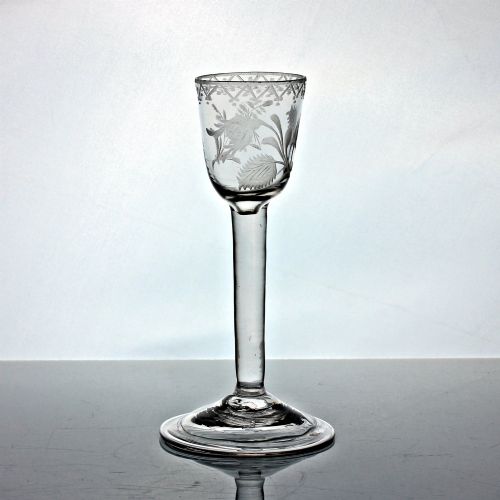
A georgian wine goblet is a drinking vessel or ceremonial piece produced primarily during the eighteenth and early nineteenth centuries. The pieces on this page span styles from plain stems to balusters, air twists, and opaque twists, alongside rummers and silver cups.
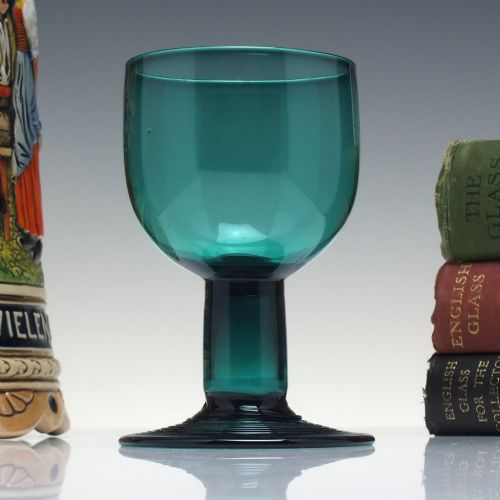
Most examples found here utilise clear lead glass or flint glass, though coloured glass such as Bristol green, dark amber, and amethyst also appear. Forms range from small wine glasses and ale glasses to large ceremonial goblets with folded feet or wide bases.
How They Were Made
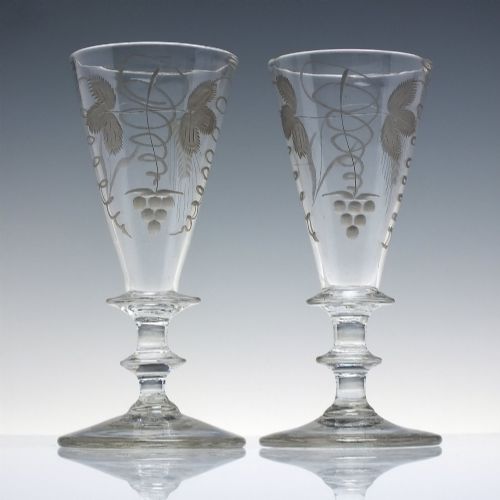
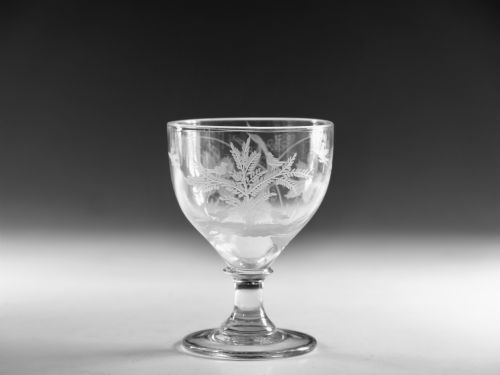
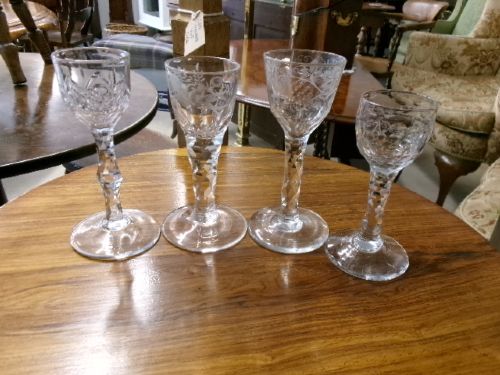
Maker's hands shaped these vessels from molten lead crystal and clear glass, employing techniques like air twisting, opaque twisting, and facet cutting to decorate stems and bowls. Engraving, including swag and tail patterns, armorial motifs, and pan tops, was applied by wheel or diamond point.
Some forms incorporate moulded elements such as ribbed ogee bowls, inverted petal moulding, or applied knops and collars. Non-glass examples on record include turned lignum vitae wood and sterling silver.
Georgian Wine Goblet Retail Price Guide 2026
Typical asking prices for georgian wine goblet among the pieces listed under this phrase on Sellingantiques today, from the lower quarter to the upper quarter. They describe what is for sale here now, not the wider market.
One recorded rummer is engraved with the convivial toast 'Women & Wine', capturing eighteenth-century socializing in glass.
What Varies in Quality
Quality rests upon the clarity of the metal, the precision of the twist or cut, and the balance of the form. A well-proportioned baluster or complex multi-spiral twist demonstrates greater mastery than a plain stem.
The Georgian Wine Goblet Glossary
- Air twist
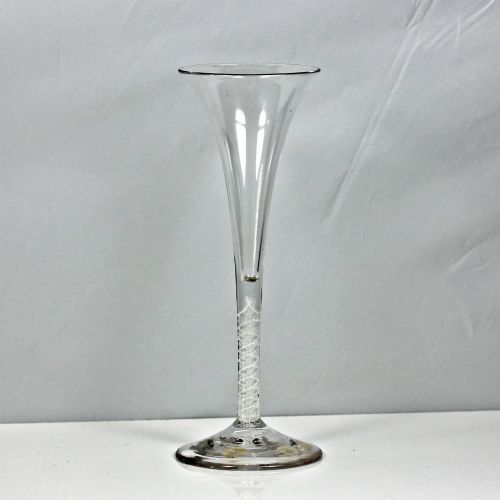
- A stem containing spiral threads of trapped air created during manufacture. This technique produces delicate linear patterns inside the clear glass.
- Opaque twist
- A stem featuring white or coloured enamel rods drawn into spiral threads. Single and double series variations describe the complexity of these internal strands.
- Baluster
- A heavy, swelling stem form reminiscent of architectural balusters. These stems often include knops and collars popular in early eighteenth-century glassware.
- Rummer
- A large, heavy-bowled drinking glass developed for wines, ales, and punch. They typically feature short stems and wide foot bases.
- Ogee
- A bell-shaped bowl with an 'S' curve profile that flares outward at the rim. This form appears frequently on twist stem glasses.
Georgian Wine Goblet: Frequently Asked Questions
What is a georgian wine goblet?
A georgian wine goblet is a drinking vessel made during the eighteenth or early nineteenth century. They include lead glass wine glasses, rummers, and ceremonial cups.
These pieces feature distinct stems such as air twists, opaque twists, and balusters. They reflect the diverse glassmaking techniques of the period.
How do you date a georgian wine goblet?
Dating relies on form, stem construction, and manufacturing characteristics. Early pieces often show heavy baluster stems or plain lead glass.
Later eighteenth-century examples favour twists and facet cutting. Victorian revivals and later nineteenth-century pieces can sometimes mimic these earlier styles.
Were all georgian wine goblets made of glass?
While the majority consist of clear lead glass or flint glass, alternative materials exist. The record includes sterling silver cups and turned lignum vitae wood.
Coloured glass variations, including green, amber, and amethyst, also form part of the historical record.
How were air twist stems formed?
Makers trapped air bubbles within the hot glass gathering before drawing and twisting the metal. This imprisoned the air into delicate spiral threads inside the stem.
Multi-spiral air twists required high skill to maintain even thickness throughout the stem.