Loveday Antiques has dated these Antique Silvered Wall Mirrors to the 19th Century.
Provenance:
Thence by family descent
Literature:
Gillow Furniture Designs 1760-1800, Lindsay Boynton, see figs. 211 and 213 for mirrors with stylistic features in common with our set
Susan E Stuart: Gillows of Lancaster and London 1730-1840, 2009
Gillow in Scotland 1770-1830, David Jones & Jacqueline Urquhart, Regional Furniture Volume XII 1998
Dimensions
The largest mirror
Width 18 1/2 inches - 47cm
Height 43 inches - 110cm
Depth 2 inches - 6cm
The pair of slightly smaller mirrors
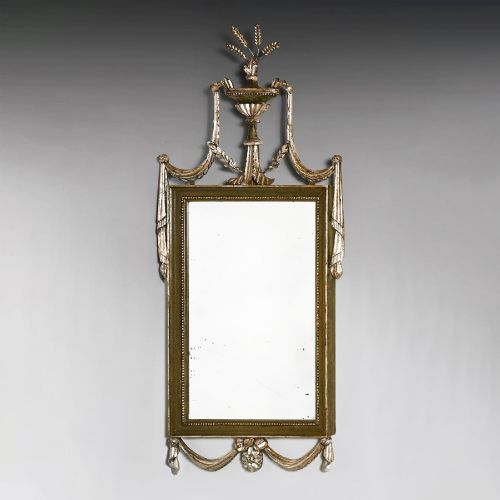
Width 16 1/2 inches - 43cm
Height 39 inches - 100cm
Depth 2 inches - 6cm
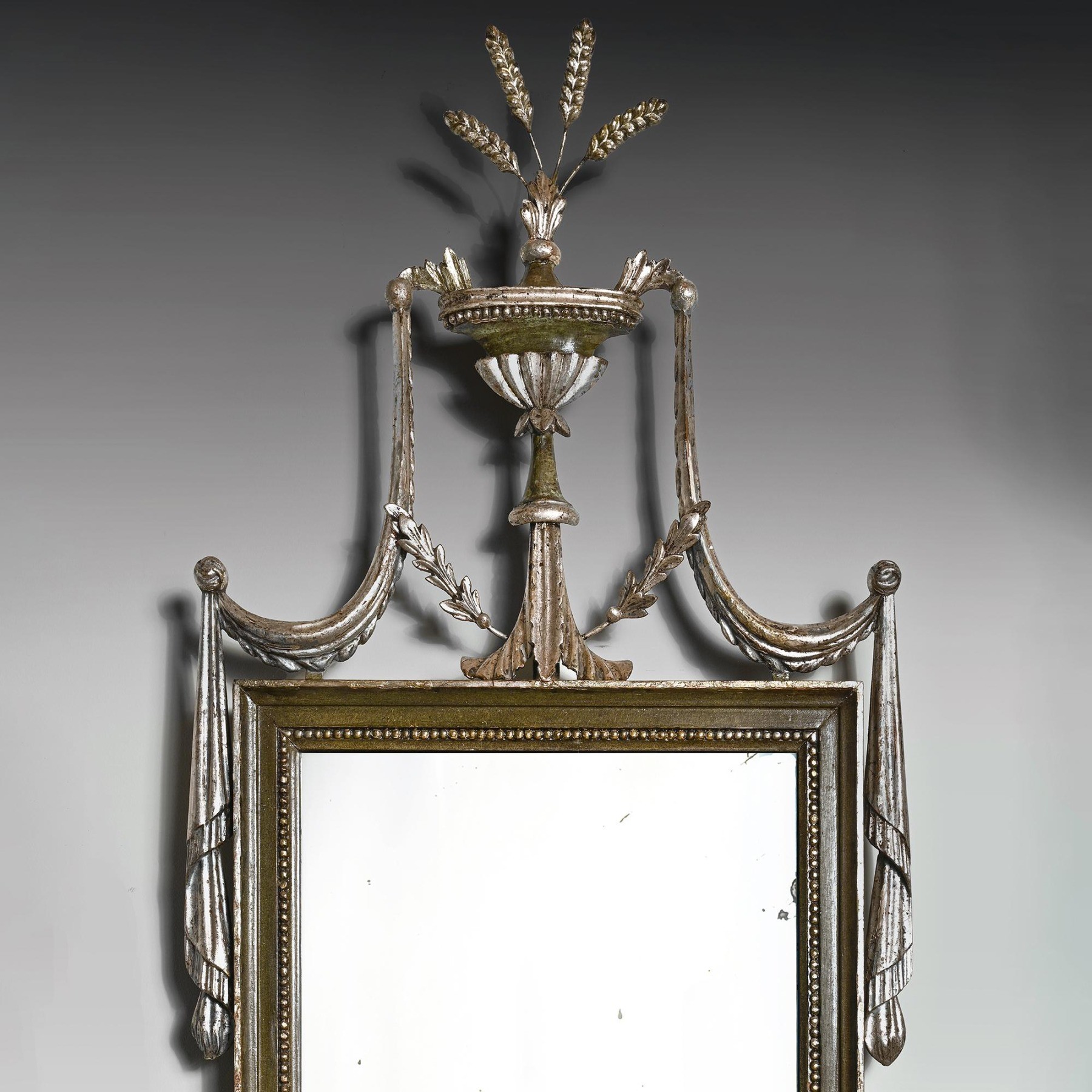
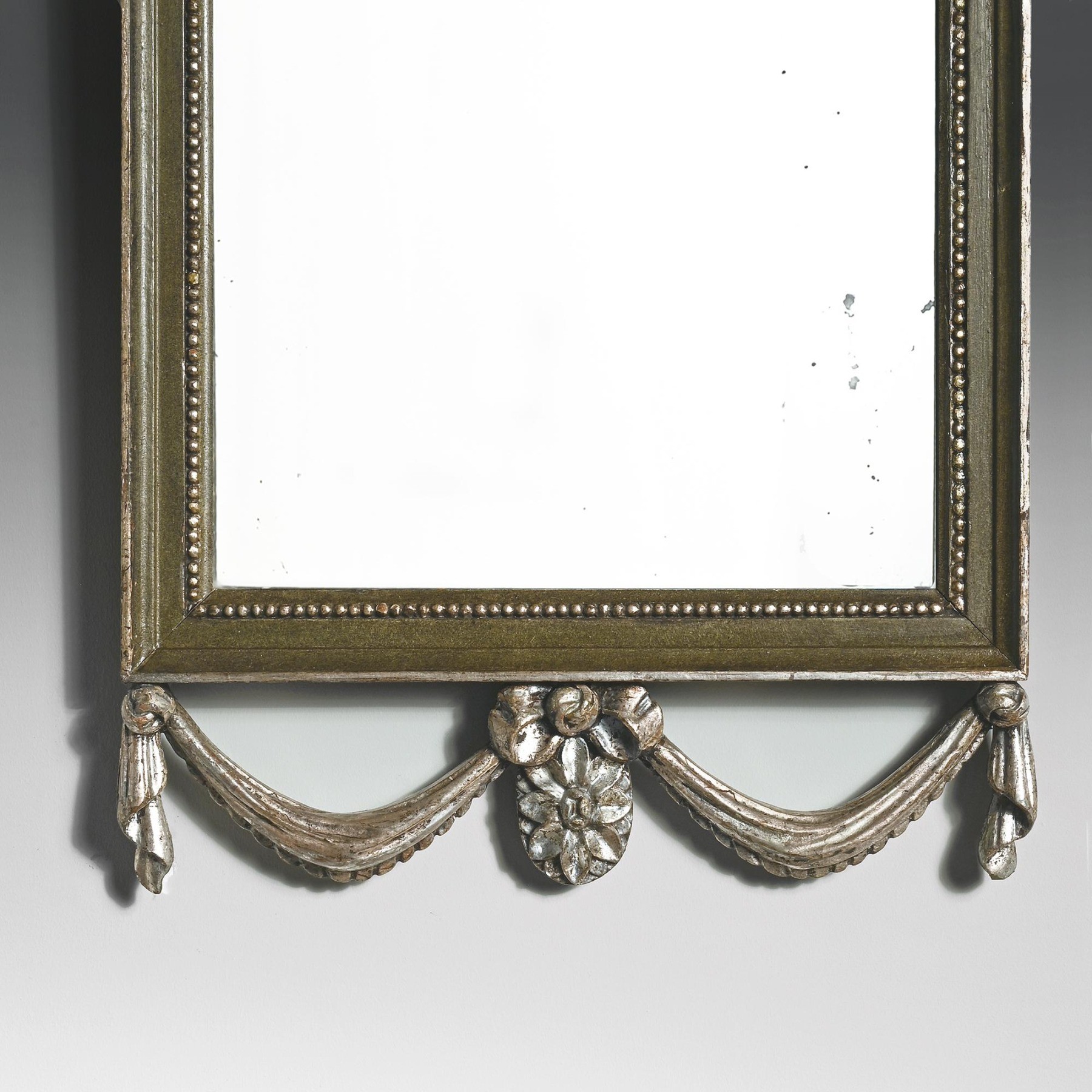
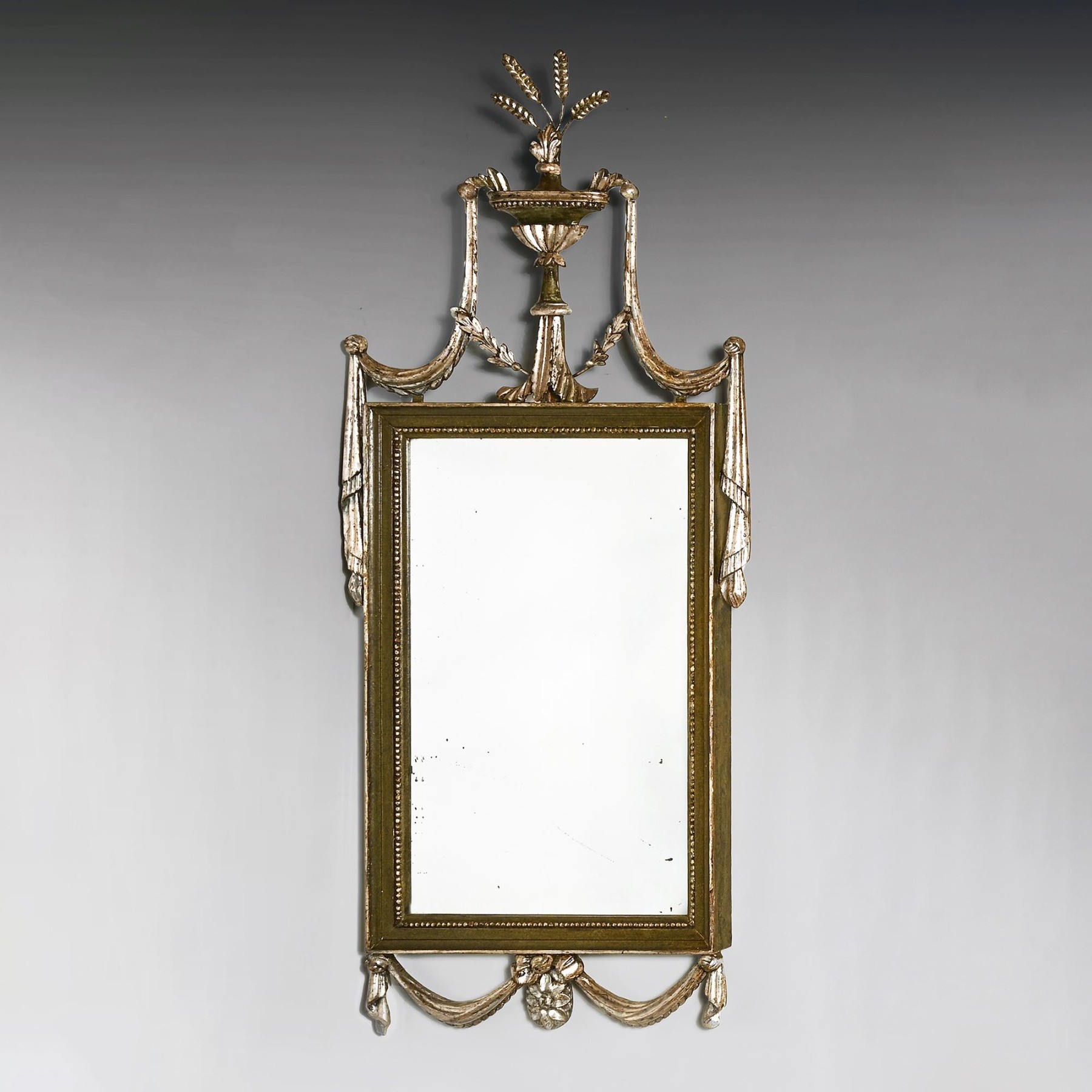
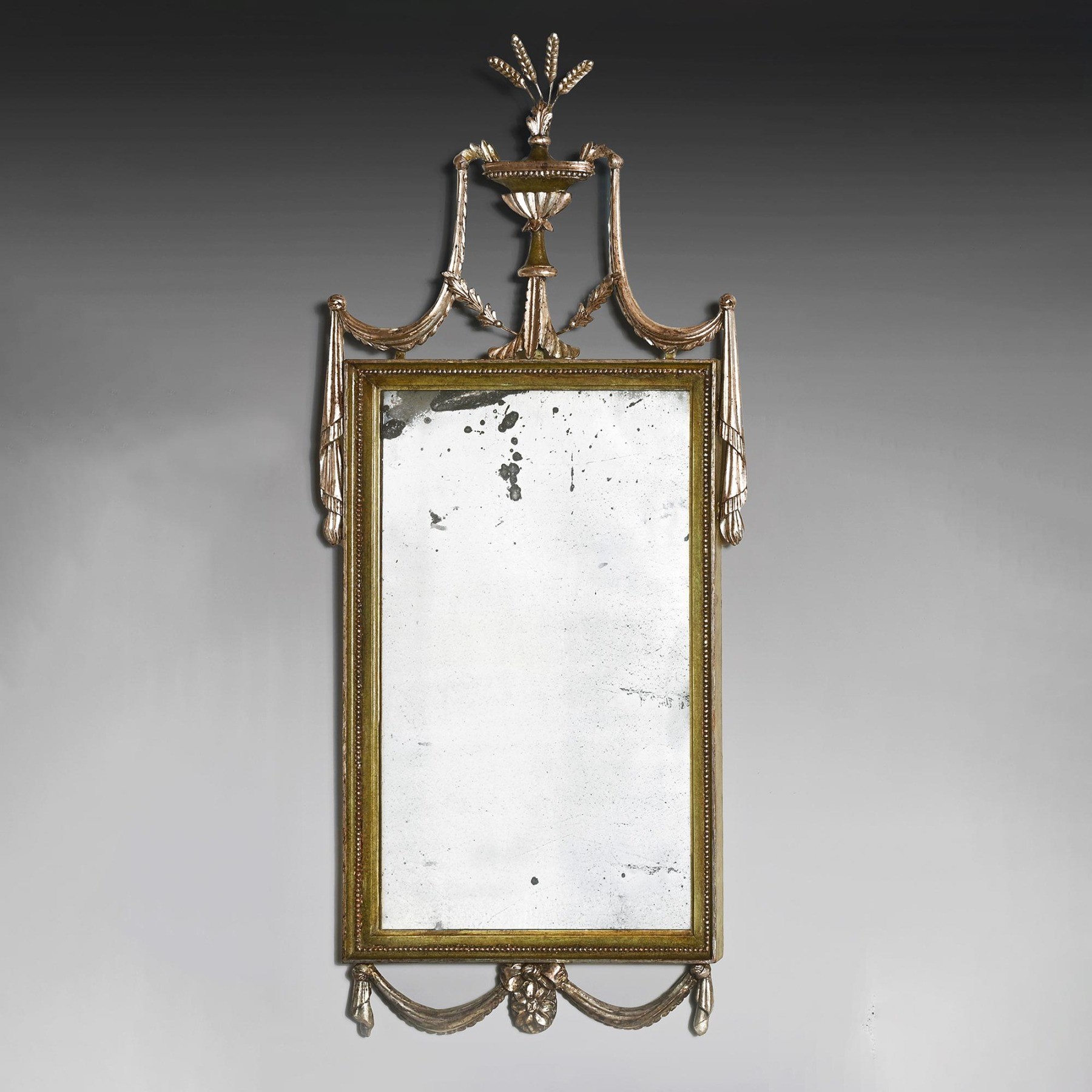
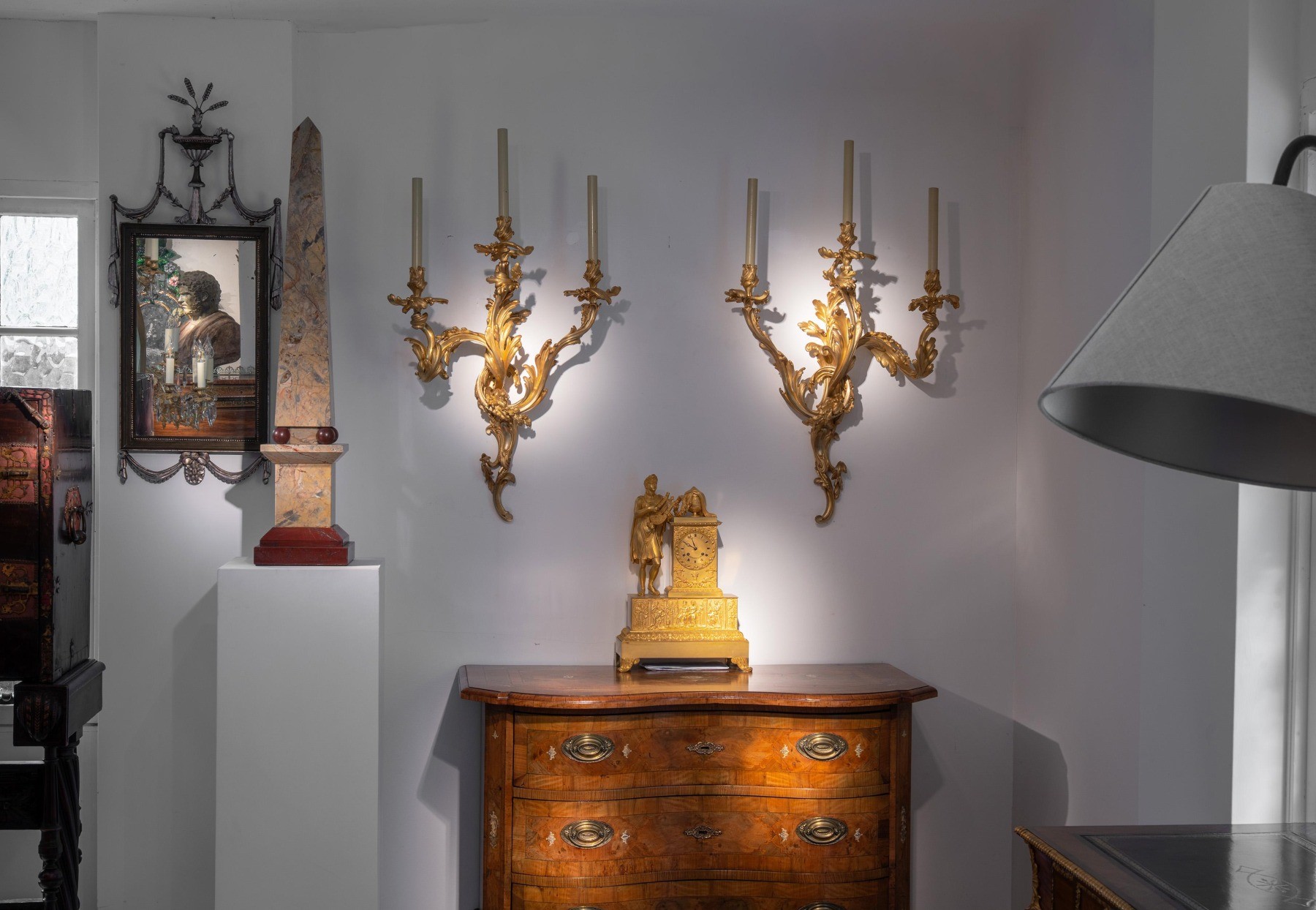
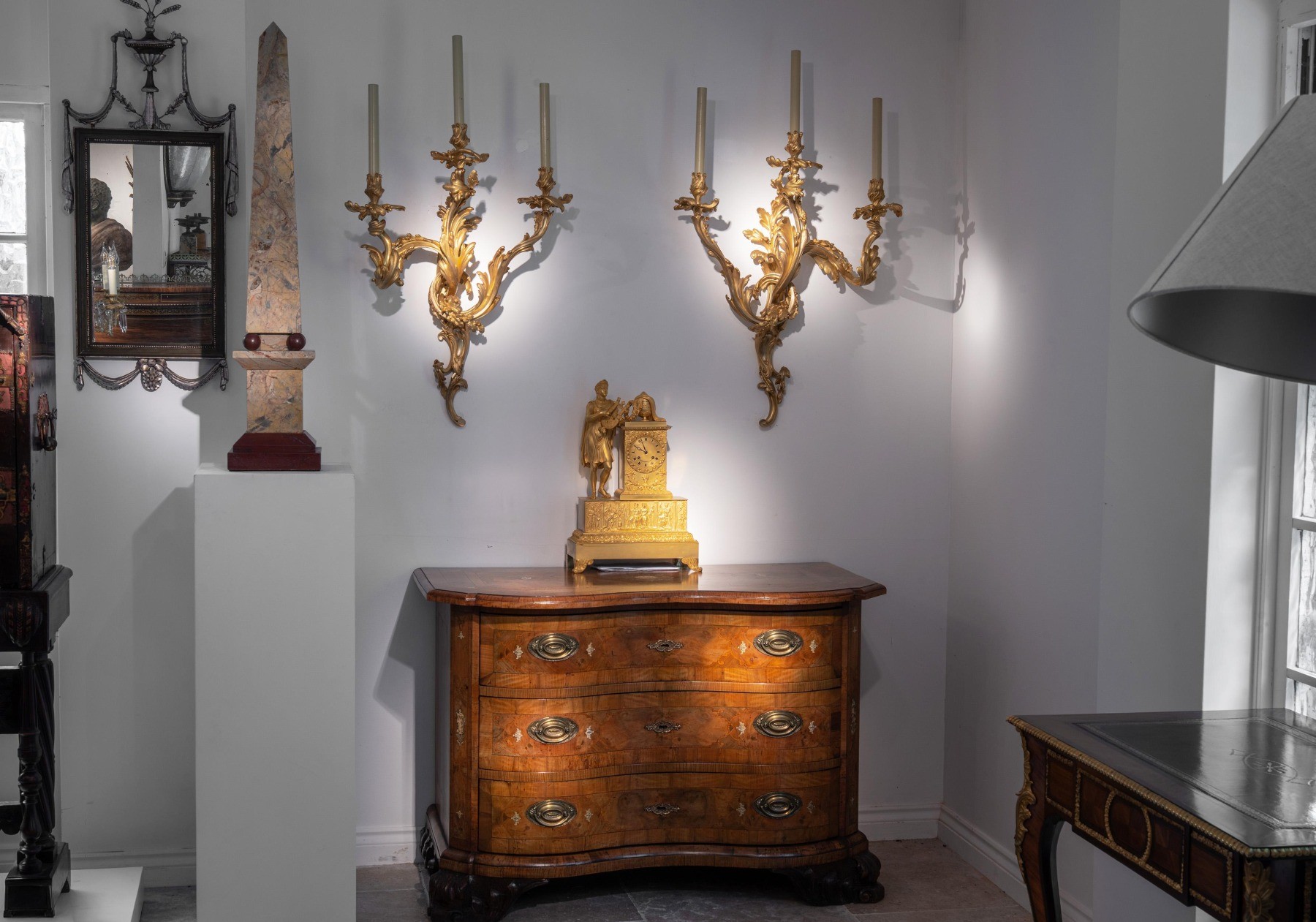
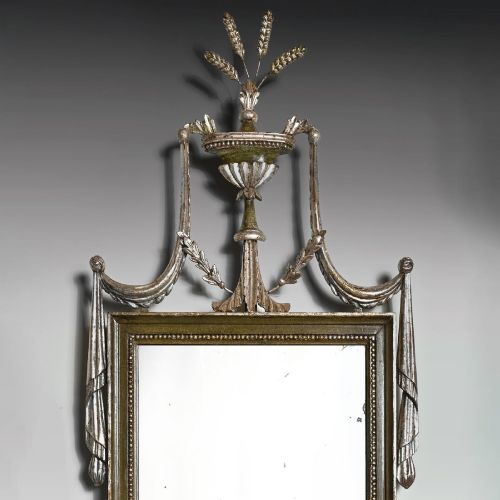
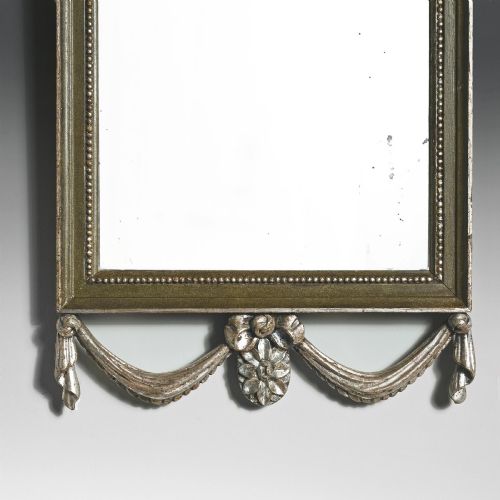
The mirrors of rectangular shape with central urn and swag crestings topped with wheat sheaf finials. The swags of drapery continuing around the sides of the frames and being utilised on the lower aprons, complete with central floral paterae. The inner borders of the frames with beaded detailing and all the mirrors retaining both their original plates and the interesting silvered gesso finish with green painting, a highly unusual combination.
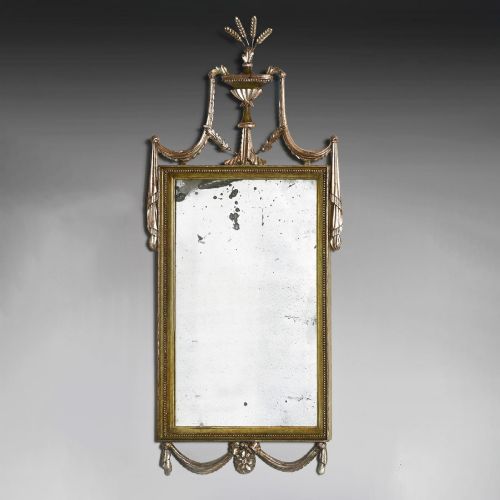
These fine mirrors were executed in the late 19th century by the famous firm of Gillows of Lancaster and London for the Earls of Eglinton, long-time clients of the firm. The first recorded reference to Gillows supplying pieces to the family came in 1794 when Hugh Montgomerie, 12th Earl of Eglinton, ordered pieces for Eglinton Castle. Archibald Montgomerie then commissioned further pieces from the firm in 1800 and there were multiple orders placed after this time for the family's properties, the Earls remaining remarkably loyal to the Gillows workshops. Other pieces from Eglinton Castle and Coilsfield are described in Dr Susan Stuart's monograph on the Gillows firm. A luggage stand and a dressing mirror supplied to the family retain their original Gillows labels, making them interesting and important documentary pieces.
In addition to the firm's long association with the Montgomerie family, these mirrors relate closely to designs first introduced by Gillows in the very late 18th century and illustrated in Dr Lindsay Boynton's work on Gillows furniture designs of the period. With their sophisticated and pared-back neoclassical ornament, the present mirrors relate to what is broadly termed the "Adam" taste, also adopted to a greater or lesser extent by most of the leading architects of the time such as James Athenian Stuart and James Wyatt. A very closely related mirror, made. c.1800 and attributed to Gillows, was sold at Sotheby's on the 1st of October 2008, lot 158. In addition, a mirror at Calke Abbey in Derbyshire, of later regency period date, makes use of wheat sheafs in its cresting and may be seen on the National Trust Collections site here
https://www.nationaltrustcollections.org.uk/object/288325
The use of wheat sheafs in the cresting on the present mirrors is, as discussed, unusual but not unique. In the present case, however, it is likely that the choice had multiple layers of significance. Wheat was associated with the goddess Ceres and also with the idea of plenty, thus making it the perfect choice in a dining room setting. It allowed the owner to hint at their own generosity and their love of entertaining. In the present case, however, it is also likely that the choice of that cresting had heraldic significance. The coat of arms of the Earl of Eglinton includes "three garbs or" on an azure background, the arms of the Buchan family, as part of the quarterings. Garbs in heraldry are wheat sheafs and it is therefore highly possible that these crestings were chosen to emphasise some details of the family's lineage.
Loveday Antiques has dated these Antique Silvered Wall Mirrors to the 19th Century.
Specialist furniture dealers 18th-20th century
You can view the stock and full dealer information on the Loveday Antiques Profile Page
Loveday Antiques is a registered member of LAPADA BADA CINOA
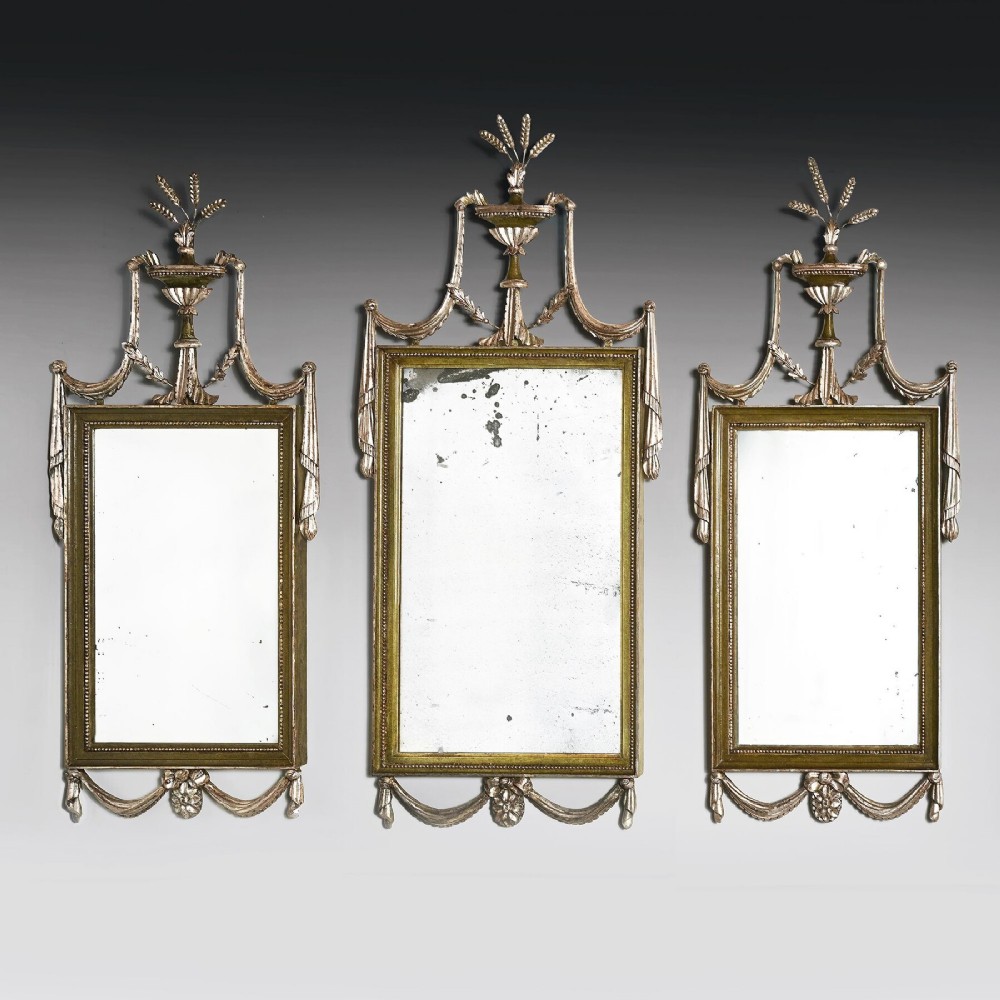
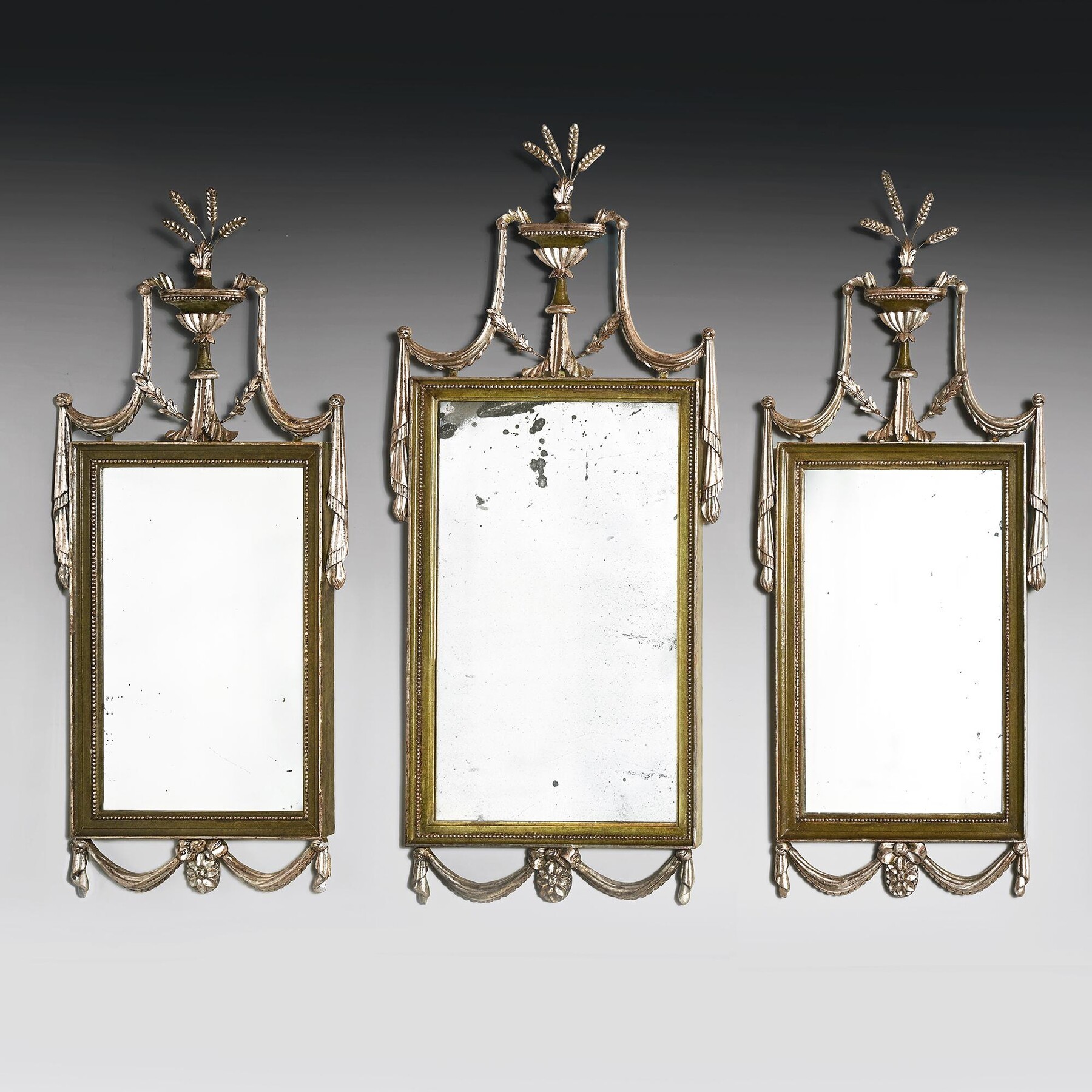
Set of Three Gillows of Lancaster 19th Century Silvered Green Painted Mirrors from Coilsfield House