


Antique Pier Mirror Set
An antique pier mirror set pairs a grand wall glass with a matching console table, bringing architectural balance and reflective light to a room.
Antique Pier Mirror Set
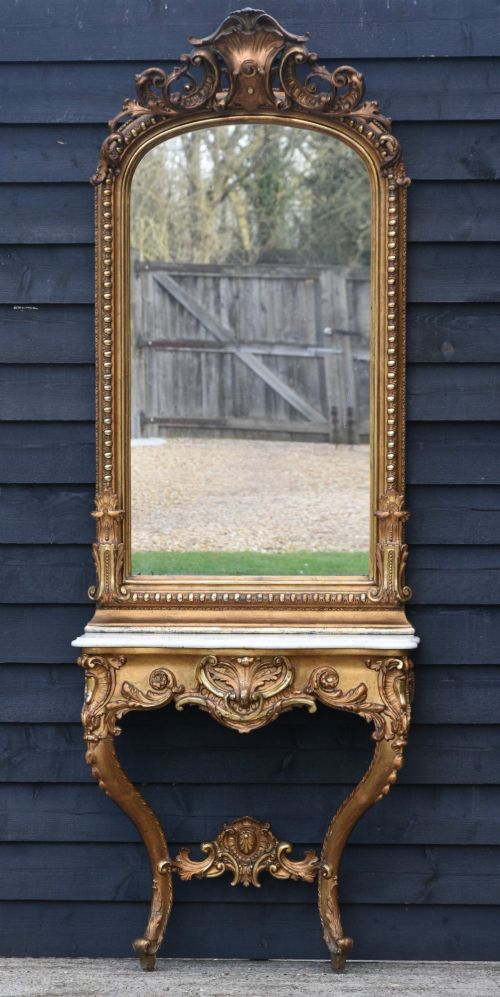
An antique pier mirror set unites a wall mirror with a companion console table, designed historically to sit in the wall space between windows. The pieces appearing here span the nineteenth century into the early decades of the twentieth century, originating from workshops across France, Italy, Sweden, and Britain.
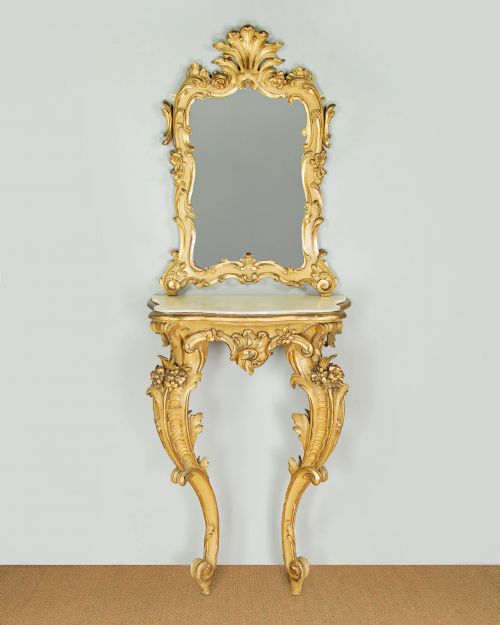
Forms on this page range from compact walnut tables with matching glasses to large giltwood sets displaying ornate carving. Buyers encounter matched pairings where the console table supports a marble top, accompanied by either a tall wall mirror or a trumeau style glass.
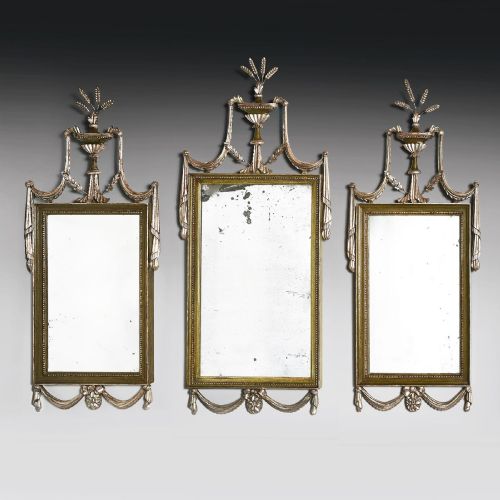
Stylistic influences across the selection draw heavily upon Rococo Revival, Neoclassical, and Biedermeier traditions. These combinations of console tables and mirrors create a unified decorative scheme for an interior space.
How they were made
Maker workshops built these sets using structural timbers such as walnut and general hardwoods, often applying gesso layers to carved wood before gilding with gold or silver leaf. Many console tables incorporate fitted marble tops to provide a durable and weighty surface.
Mirror glass of the period is set within frames carved in styles spanning from French Rococo Revival to George I revival. Surface finishes involve hand painting, silvering, and giltwood work applied to carved wooden structures.
Object types include console tables, wall mirrors, and integrated sets reflecting Rococo Revival, Neoclassical, and Biedermeier design styles.
What varies in quality
The standard of carving distinguishes different examples, separating mass-produced decorative items from pieces featuring deep, hand-carved detail in the gesso and giltwood. Crispness of execution in the scrolls, foliage, and architectural motifs indicates the skill level of the original workshop.
Coherence of the set also matters, as pieces originally built as a matched pair or single ensemble hold greater integrity than later combinations of tables and mirrors. The quality of the marble top and the depth of the silvering on the mirror glass contribute further to the distinction between tiers of quality.
Gillows Of Lancaster
The Antique Pier Mirror Set Glossary
- Pier mirror
- A tall wall mirror designed specifically to hang on the narrow pier of wall between two windows. It frequently sits directly above a matching console table.
- Console table
- A table supported against a wall by console brackets or legs, often topped with marble. In these sets, it coordinates visually with the companion mirror.
- Trumeau mirror
- A decorative wall mirror featuring an upper glass plate alongside a painted panel or carved artwork. These frequently form part of French console table sets.
- Giltwood
- Wood that has been prepared with gesso and covered with thin sheets of gold leaf. This finish defines many nineteenth-century revival frames.
- Biedermeier
- A Central European style popular during the nineteenth century emphasising utilitarian comfort and clean lines. Pieces in this style use domestic timbers like walnut.
- Rococo Revival
- A nineteenth-century design movement resurrecting the asymmetric scrolls and floral motifs of the eighteenth-century Rococo period. It dominates the ornamentation of these giltwood frames.
Antique Pier Mirror Set: Frequently Asked Questions
Where should I place an antique pier mirror set?
These sets suit narrow wall spaces between windows or blank expanses requiring vertical emphasis. The matching console table provides a surface for decorative objects while the glass reflects light into the room.
Positioning the console table firmly against the wall ensures stability, particularly when the top consists of heavy marble. The paired mirror should be hung securely at a height that complements the scale of the table beneath it.
How do I date a pier mirror set?
Dating relies on stylistic clues such as the presence of Rococo Revival scrolls or Neoclassical symmetry, alongside construction methods visible in the timber framing. Nineteenth-century examples often display distinct gesso and giltwood techniques characteristic of that era.
Examining the reverse of the mirror and the underside of the console table reveals wood ageing and assembly methods. Comparing the decorative vocabulary to known revival periods helps narrow down the decade of production.
Are the table and mirror always original to each other?
Many console tables and mirrors were conceived as a unified commission by the workshop, while others were matched together later in their history. Examining the finish, wood species, and wear patterns helps determine if the pieces originated as a set.
Matching giltwood or walnut tones suggest a unified origin, though harmonious marriages of table and glass remain common in the trade. Both integrated sets and thoughtful pairings serve the same decorative function in an interior.
How do I care for giltwood and mirror glass?
Giltwood frames require dusting with a soft, dry brush to protect the delicate gold or silver leaf layers from abrasion. Moisture can damage gesso and leafing, so cleaning products should be kept away from the carved surfaces.
Mirror glass benefits from gentle cleaning using a cloth slightly dampened with water or a mild glass cleaner, avoiding contact with the surrounding wood frame. Regular, careful maintenance preserves the original finishes of both the table and the glass.