

19th Century Wine Glass
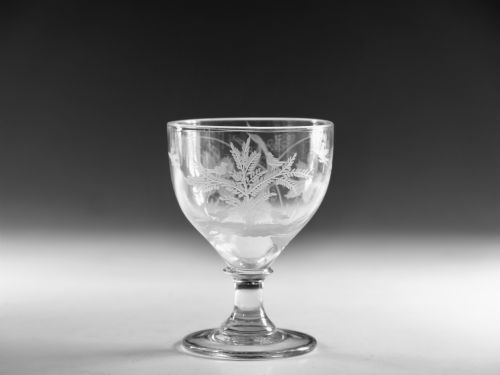
A 19th century wine glass brings heavy lead crystal, vibrant coloured hues, and tactile wheel-engraving to the table.
19th Century Wine Glass
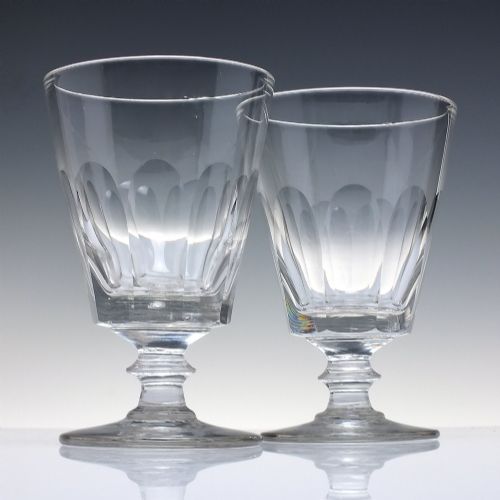
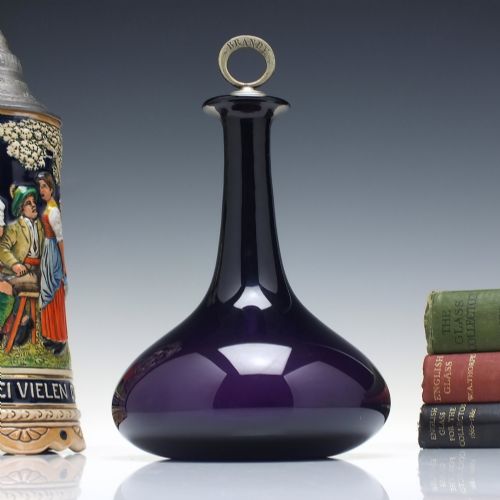
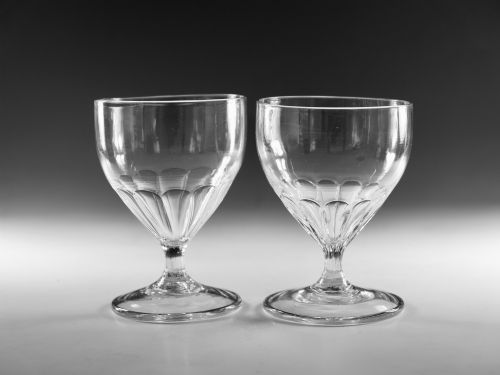
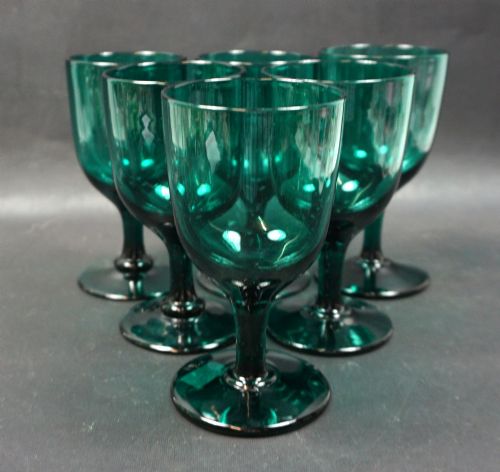
When exploring a 19th century wine glass selection, buyers encounter specimens spanning the Georgian, Regency, William IV, and Victorian eras. The category embraces deep green Bristol hues, rich amethyst, cranberry tones, and clear lead crystal forms designed for formal dining.
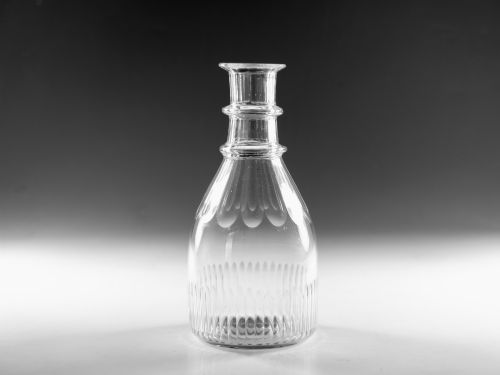
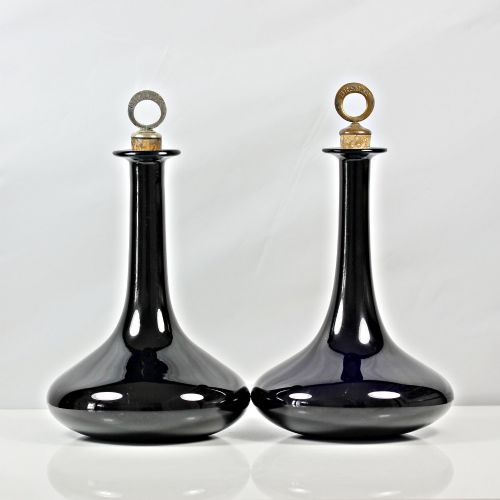
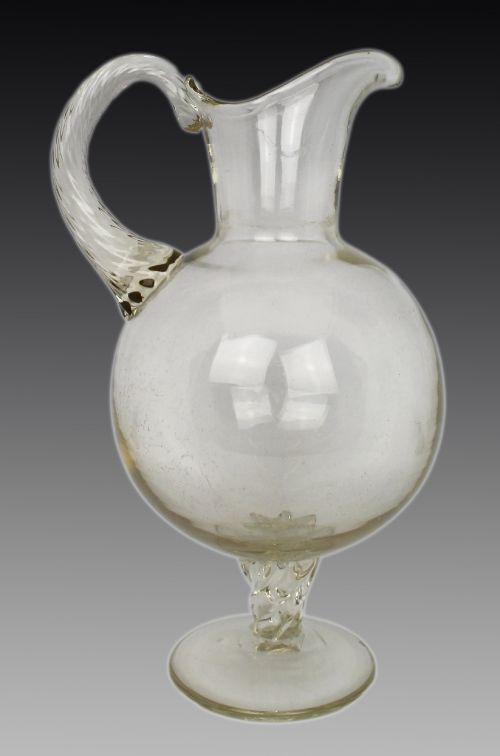
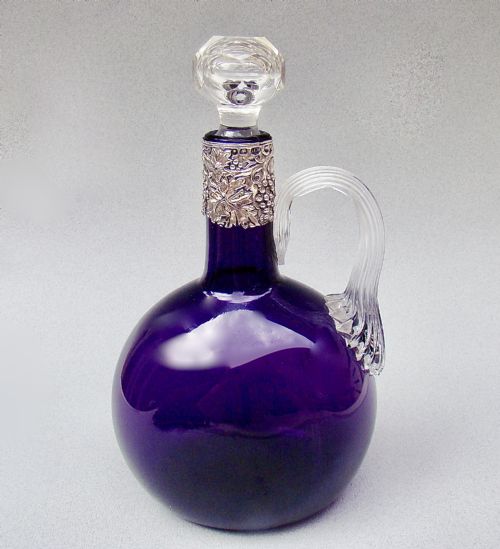
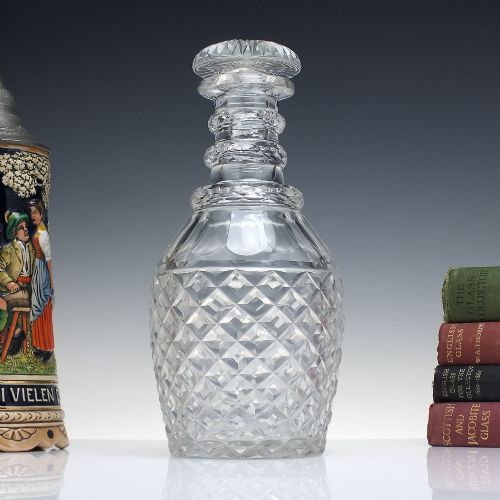
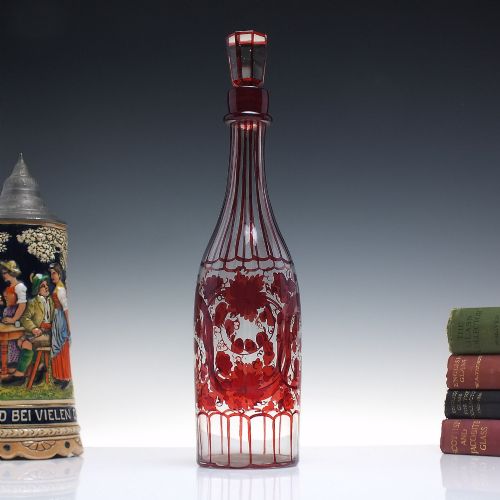
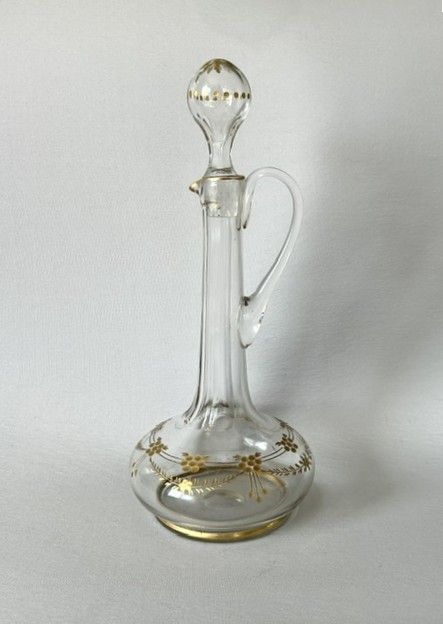
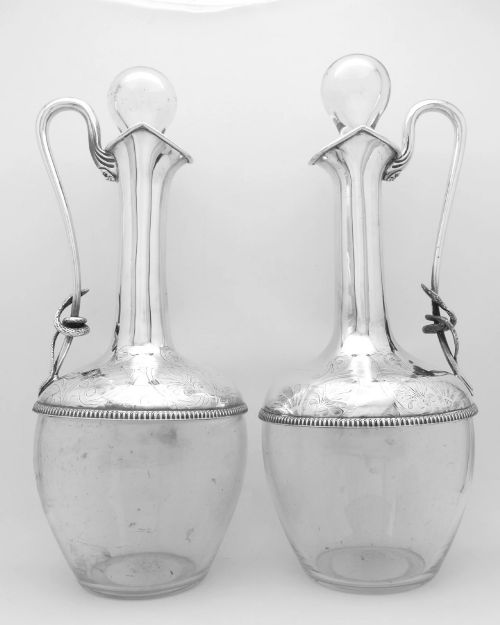
Most examples appearing here take the form of stemmed wine glasses, heavy rummers, or tall goblets, often accompanied by matching decanters and claret jugs. These serving vessels reflect the shifting social rituals of nineteenth-century entertaining across English, Irish, and continental European workshops.
How they were made
Maker operations utilised heavy lead glass and crystal compositions, shaped through hand-blowing and optical moulding techniques. Artisans often applied hammer moulding or overlay methods to build depth in coloured glass pieces.
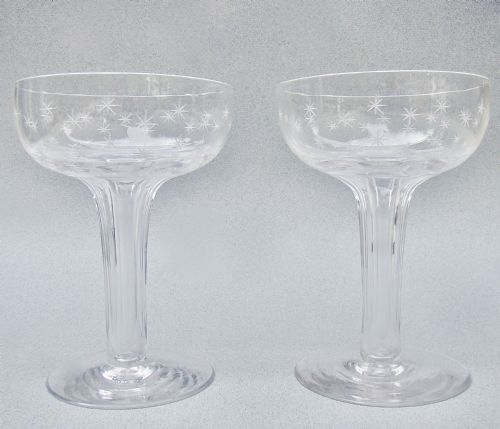
Decoration relied on skilled wheel-engraving, star-cutting, enamel painting, and gilding. Silver mounts and sterling silver handles were frequently added by silversmiths to complete elaborate decanters and claret jugs.
Early coin rummers contain actual currency trapped inside hollow stems, letting guests toast the monarch through solid money.
What varies in quality
The distinction between standard production and exceptional work rests on the clarity of the metal and the crispness of the wheel-cut facets. Heavier lead content provides a resonant ring and greater weight in the hand.
Surface decoration demonstrates varying degrees of artistic control, from simple pan-cutting to deeply engraved botanicals or intricate enamel work. The harmony of proportions between the bowl, stem, and foot ultimately determines the visual balance of the piece.
Henry Matthews·James Powell·Stevens and Williams·Richardson Stourbridge
The 19th Century Wine Glass Glossary
- Rummer
- A large, heavy drinking glass popular in the Georgian and Victorian periods, typically used for ale or wine. These sturdy vessels often feature bucket bowls and thick stems.
- Roemer
- A continental European drinking glass with a large rounded bowl sitting on a hollow, studded stem. They frequently appear in amber, green, or amethyst glass.
- Hobnail cut
- A sharp geometric diamond pattern cut into the surface of glassware, creating a textured exterior. This style catches candle and gas light effectively.
- Hammer moulded
- A technique where molten glass is expanded into a patterned mould to create shallow indentations across the bowl. This process produces a tactile, light-reflecting surface.
- Overlaid glass
- A method involving two or more layers of different coloured glass fused together before cutting. The cutter grinds through the top layer to reveal the contrasting colour beneath.
19th Century Wine Glass: Frequently Asked Questions
Can I still drink wine from them?
Many collectors enjoy using nineteenth-century stemware for special occasions, as the lead crystal and hand-blown forms remain fully functional. Hand-washing is essential after each use to protect the material.
Take care with specimens featuring delicate enamel painting or heavy silver mounts when pouring and washing. The sturdy rummers and heavy goblets handle regular use particularly well.
How do I date an old wine glass?
Examine the weight, pontil mark on the underside, and the cutting style to help determine the manufacturing period. Georgian pieces often display different bowl proportions and stem formations compared to later Victorian iterations.
Consulting recorded patterns and known maker signatures helps narrow down the production decade. Subtle variations in colour chemistry also offer clues to the era of manufacture.
What is the difference between crystal and glass?
Lead crystal contains metallic oxides that increase the weight, refractive index, and acoustic resonance of the material. Standard glass lacks this specific mineral content and feels lighter.
Nineteenth-century makers favoured lead formulations for pieces intended to be deeply cut or engraved. This composition allowed artisans to achieve sharper facets and a brilliant sparkle.