
Victorian Glassware
Victorian glassware brings nineteenth-century colour and weight to the table through heavy lead crystal, vibrant cranberry tints and hand-etched decanters.
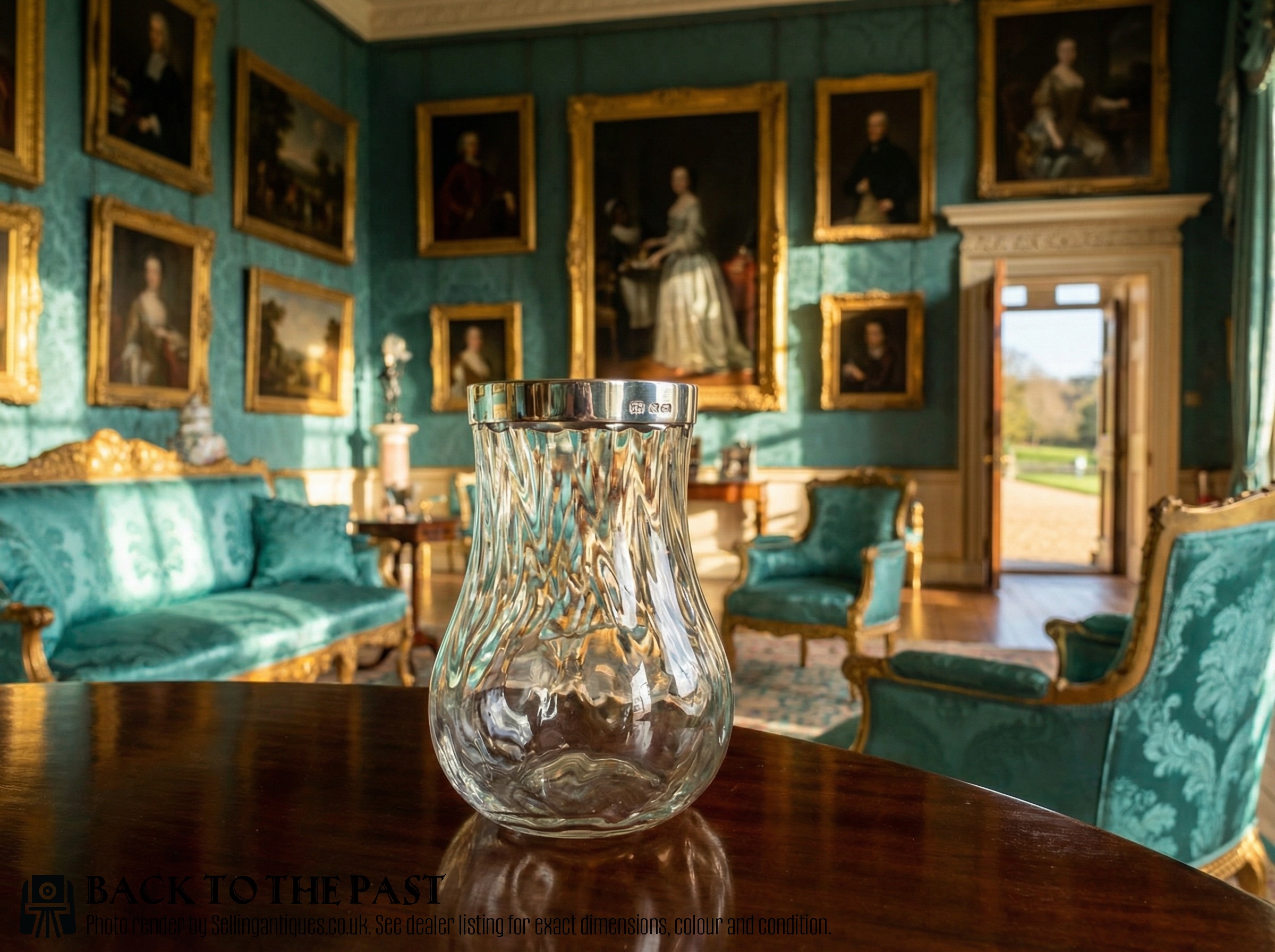
Victorian Glassware
Victorian glassware spans functional table service and decorative mantel ornaments produced during the nineteenth century. The selection on this page centres on drinking vessels, decanters, and vases originating from English, Bohemian, and French workshops.
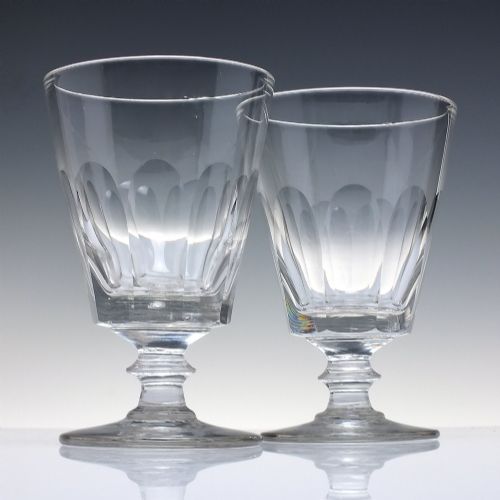
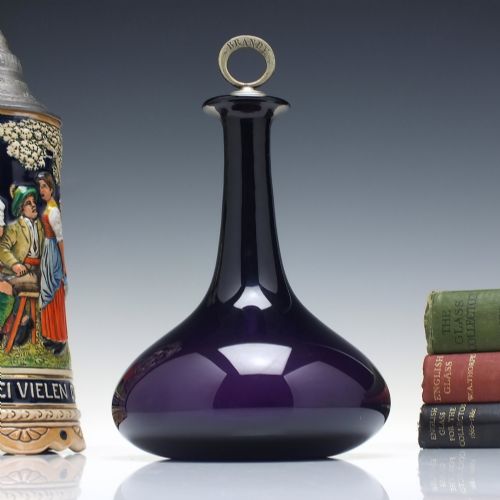
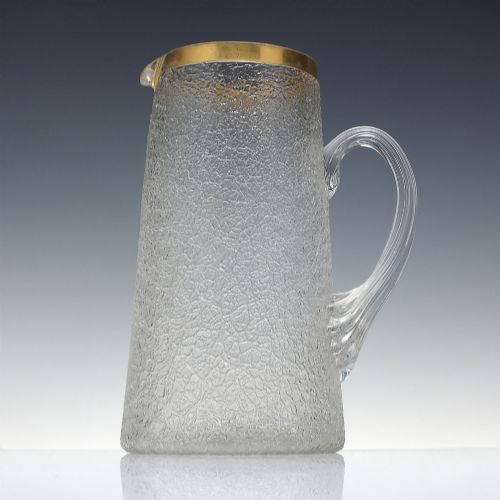
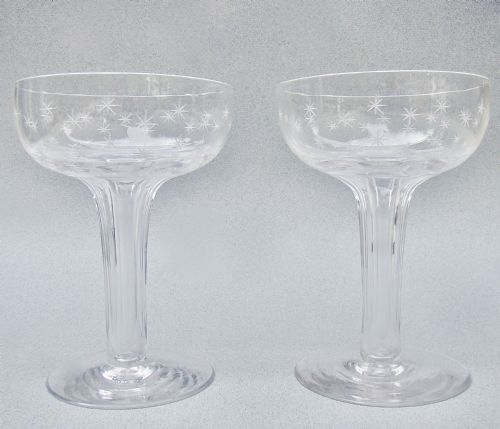
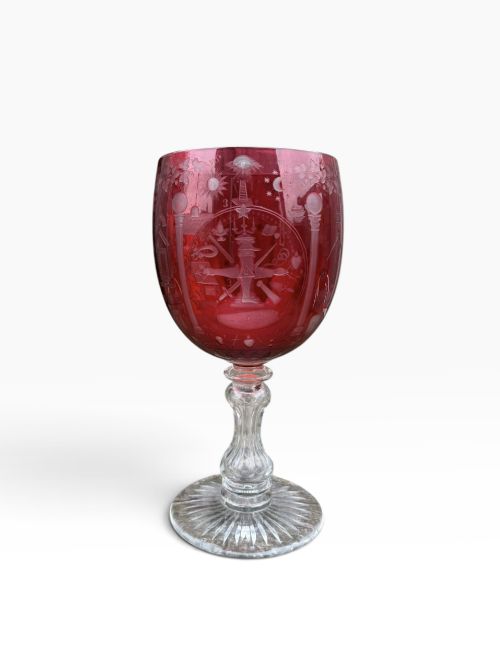
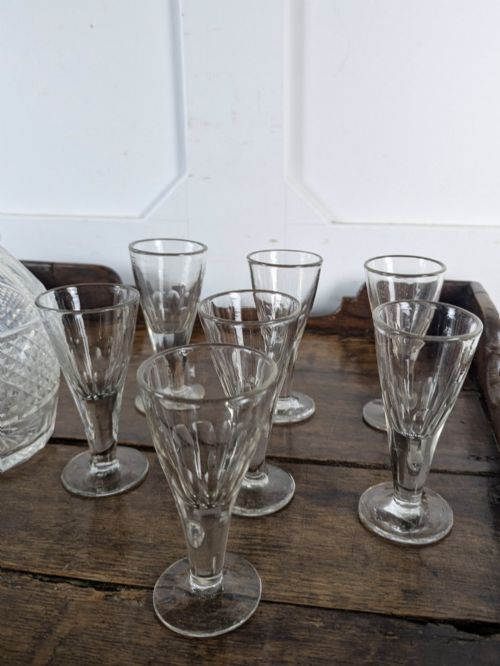
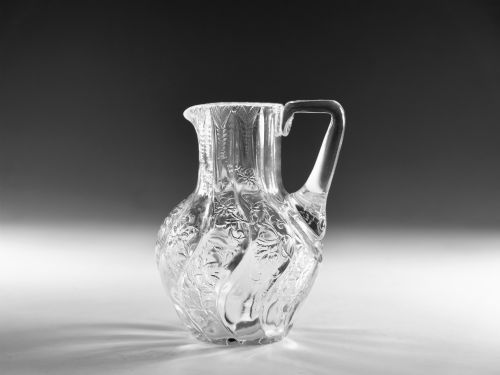
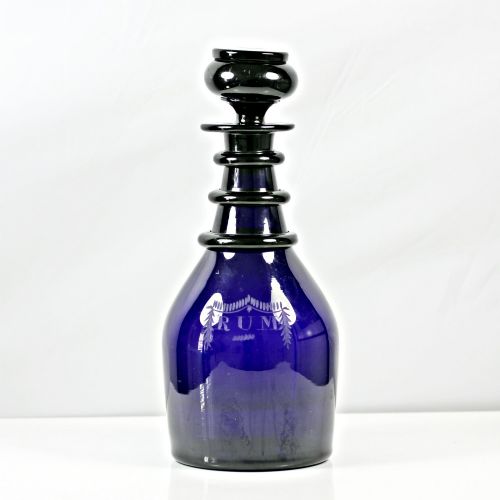
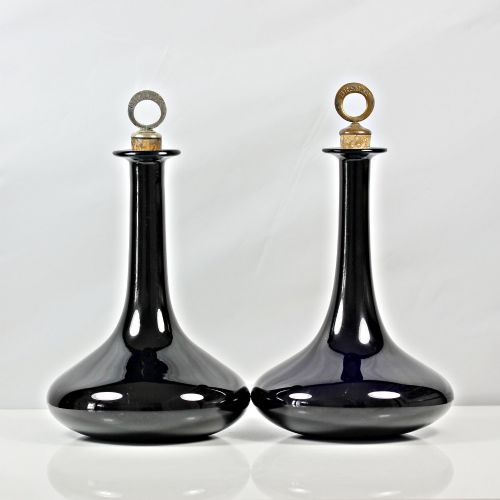
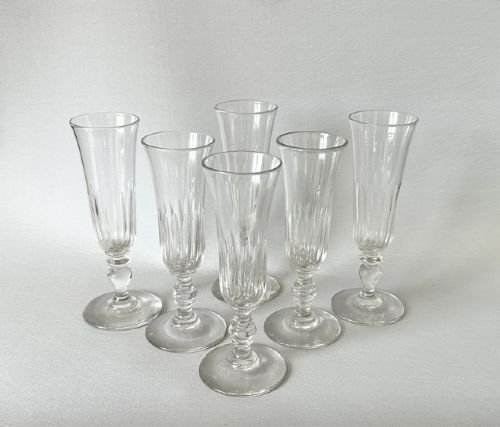
Drinking vessels appear frequently, from thumb-cut sherry flutes and hollow stem champagne glasses to heavy rummers and whisky tumblers. Decanters and water jugs survive in matching sets or individual pieces, often displaying rich Bristol blue or ruby hues.
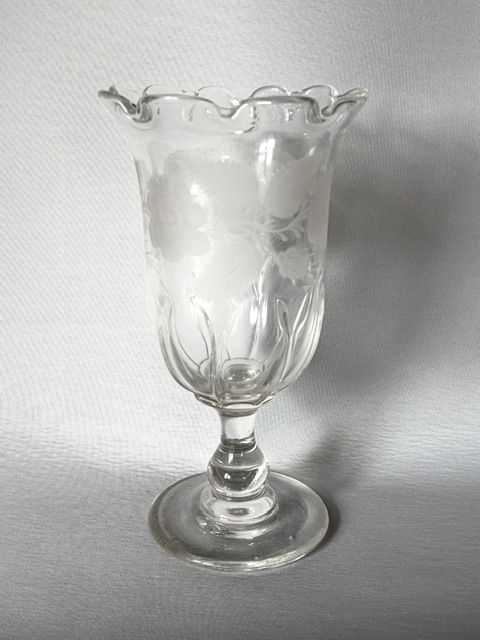
Decorative forms include hand-blown epergnes, celery vases, and vases featuring enamel painting or Mary Gregory style silhouettes. Buyers encounter matched sets alongside single cabinet pieces dating from the eighteen-forties through to nineteen-hundred.
Materials and production methods
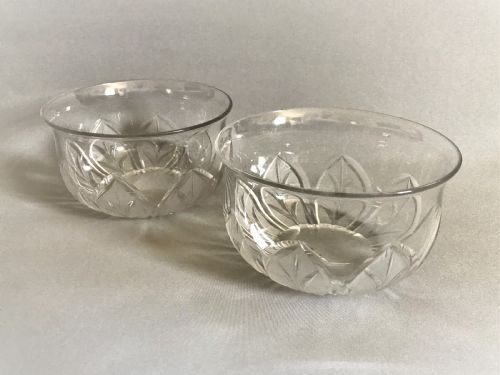
Glassmakers utilised lead crystal and clear glass as the base for much of the table service, applying deep cut facets and thumb-cuts while the metal was thick enough to work. Cranberry glass achieved its distinct pinkish-red tone through the addition of gold chloride to the molten batch.
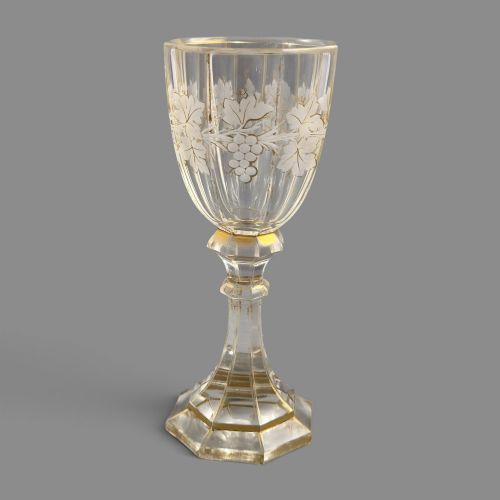
Decoration relied on hand techniques including wheel engraving, star-etching, and surface gilding with gold leaf. Enamel painting and white glass casing added opaque layers that artisans could carve back to reveal contrasting colours beneath.
Fox hunting scenes occasionally gallop across Victorian glass vases, proving that British makers loved hounds almost as much as heavy lead crystal.
Distinctions in quality
Quality rests upon the crispness of the cutting and the weight of the metal. Superior pieces display sharp, clean facet cuts and hand-engraving with clear depth, whereas lesser examples show softer edges and shallower wheel work.
The resonance of the metal and the uniformity of the colour signal superior manufacture in coloured wares like cranberry and Bristol blue. Balance in hand-blown stems and precision in applied elements such as handles or gilded rims separate standard utility vessels from exhibition pieces.
Stevens and Williams·Moser·William Comyns·Baccarat
The Victorian Glassware Glossary
- Cranberry glass
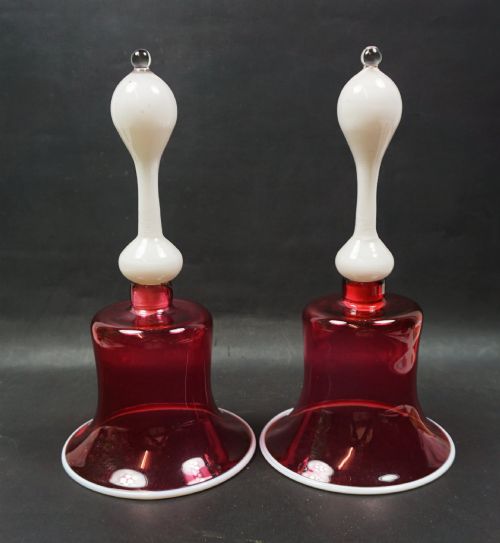
- A transparent red-pink glass coloured with gold, popular for Victorian tableware and decorative jugs. It appears frequently in association with Mary Gregory ornamentation and white glass borders.
- Rummer
- A large, heavy drinking glass with a short stem and rounded bowl used for ale, wine, or spirits. Victorian examples often feature cut glass bases or Masonic engravings.
- Epergne
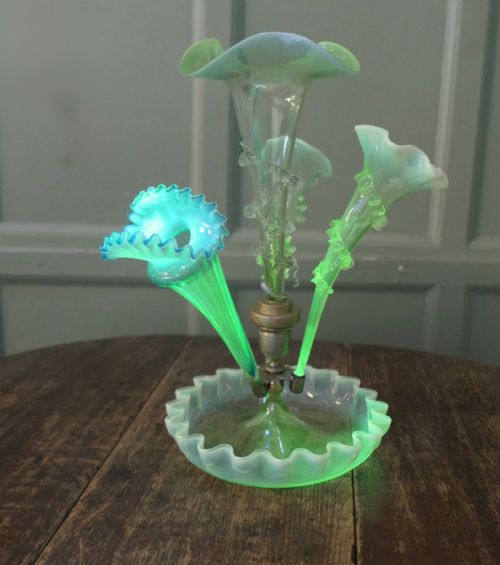
- A large table centrepiece featuring multiple trumpets or baskets branching from a central bowl. French and English examples were commonly hand-blown in uranium or tinted glass.
- Mary Gregory
- A style of silhouette painting on glass depicting children in white enamel, usually set against a coloured background such as cranberry or blue.
- Thumb-cut
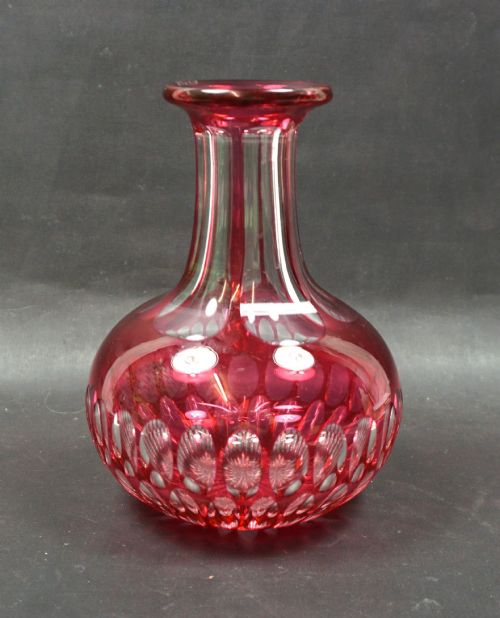
- A series of concave oval depressions ground into the body of a glass or decanter to provide a secure grip. This technique appears widely on nineteenth-century tumblers and flutes.
Victorian Glassware: Frequently Asked Questions
How do I identify genuine Victorian glassware?
Look for heavy lead content, pontil marks on the base of blown items, and hand-applied details rather than machine moulding. Nineteenth-century pieces often display minor surface irregularities and hand-cut facets that feel crisp to the touch.
Examine the style of decoration, such as star-etching or wheel engraving, which corresponds to Victorian manufacturing techniques. Maker signatures or registration marks, where present, help confirm the period of origin.
Can I use antique decanters for serving wine?
Many nineteenth-century decanters remain fully functional for serving wine and spirits today. Their heavy lead crystal construction handles liquid safely, provided they are washed by hand.
Check the interior for staining or sediment build-up from previous use before filling. Gentle cleaning with warm water and specialist beads will restore clarity to the glass.
What caused the red colour in cranberry glass?
The distinct pinkish-red hue of cranberry glass results from adding gold chloride to the molten glass batch. Artisans heated and manipulated this mixture to achieve varying depths of colour.
This costly technique made cranberry items popular for upscale Victorian table settings and decorative glassware. The shade ranges from pale pink to deep ruby depending on the concentration of gold.
How should I clean antique glassware safely?
Wash Victorian glass by hand in warm water using a mild detergent, avoiding harsh scrubbers that can scratch soft lead crystal or delicate gilding. Sudden temperature changes must be avoided to prevent thermal shock and cracking.
Dry pieces immediately with a lint-free cloth to maintain the shine on cut facets and engraved surfaces. Store stemware upright on stable shelving rather than crowding bowls together.