
Clear Glass Jug
A clear glass jug brings a clean, reflective presence to a table, offering both decorative charm and practical service.
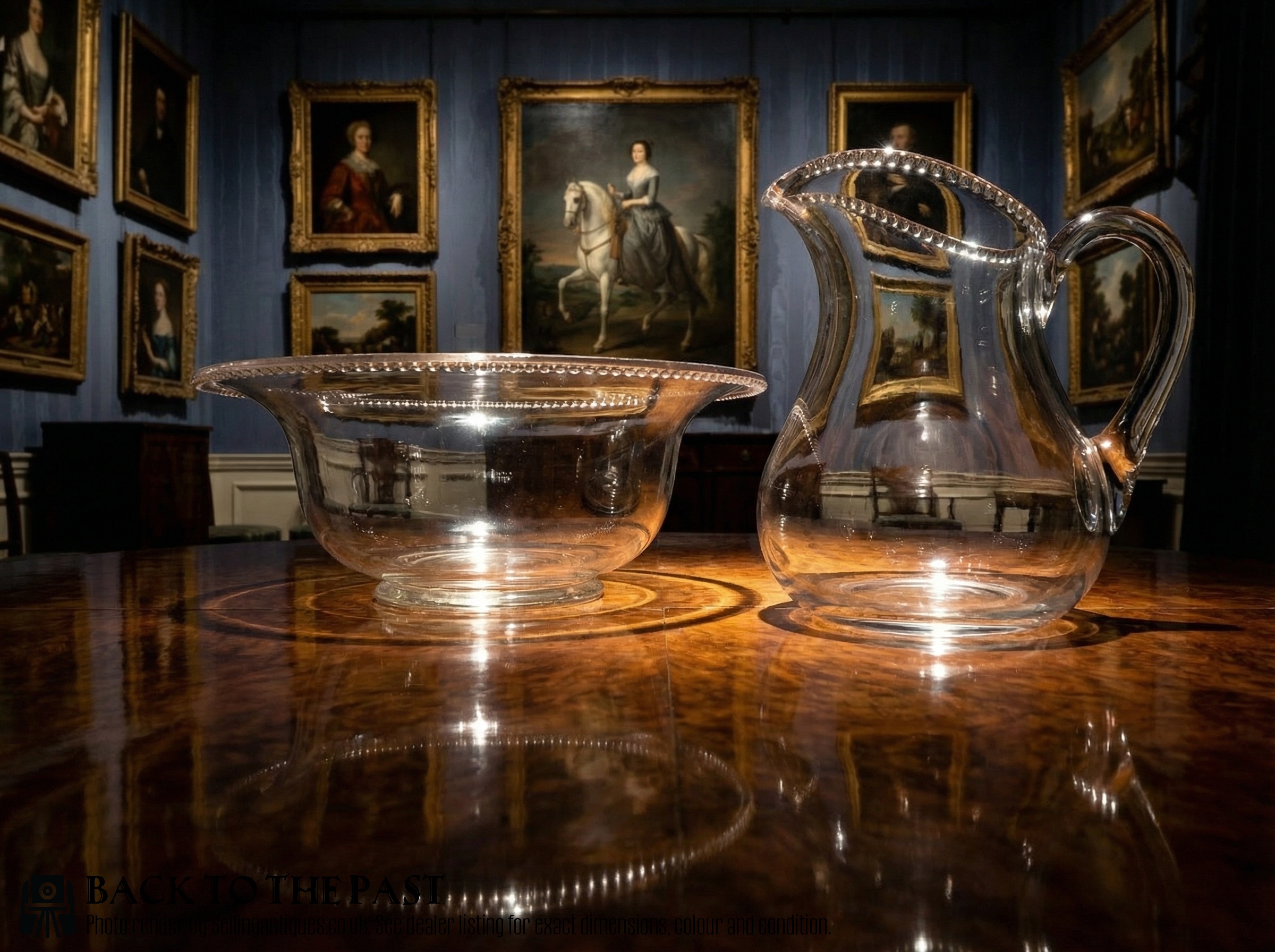
What a clear glass jug is
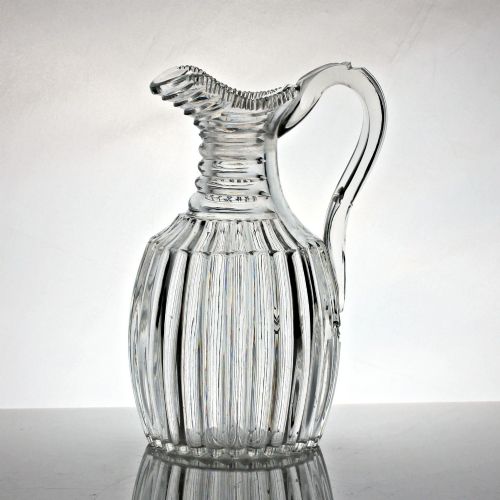
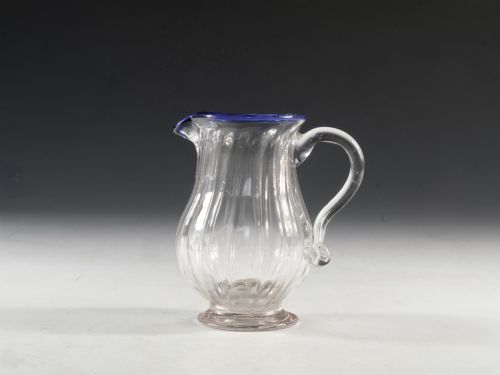
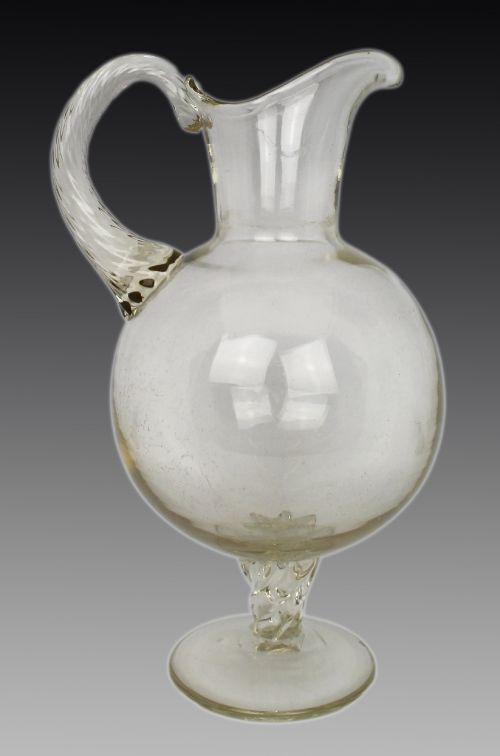
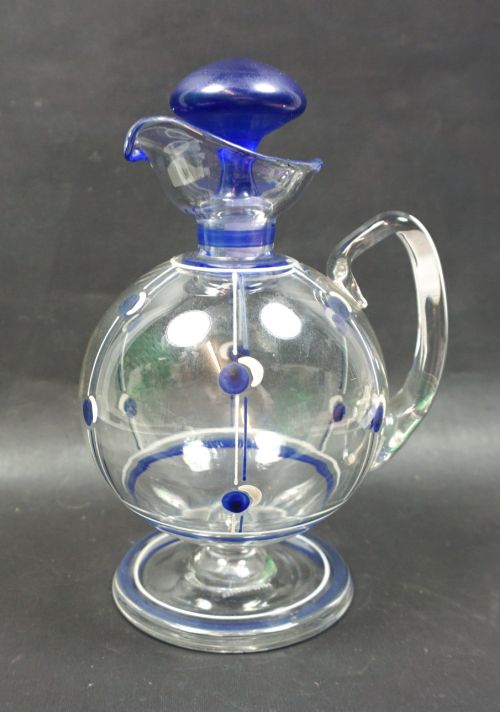
A clear glass jug serves as a functional vessel for water, cream, or wine, appearing in forms ranging from small creamers to large pitchers. When searching for a clear glass jug, buyers encounter various historical eras including the Georgian and Victorian periods.
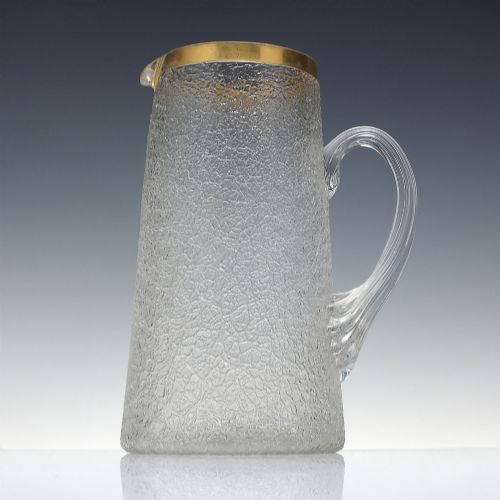
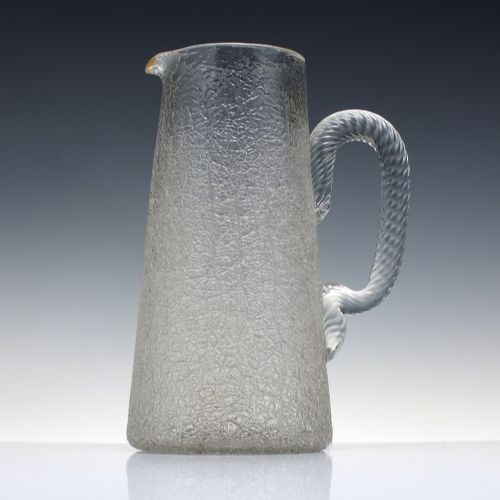
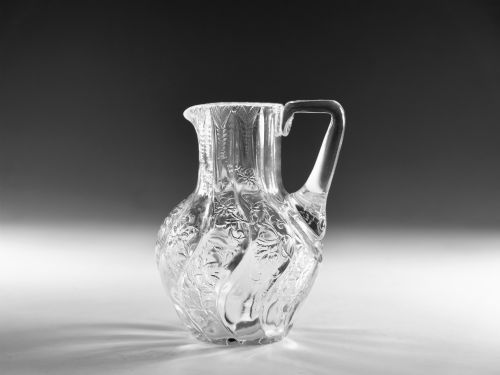
The pieces listed on this page encompass styles such as Regency and Victorian, alongside object types like wash sets and jugs and pitchers. Many examples feature simple forms, whilst others display cut glass or engraved details.
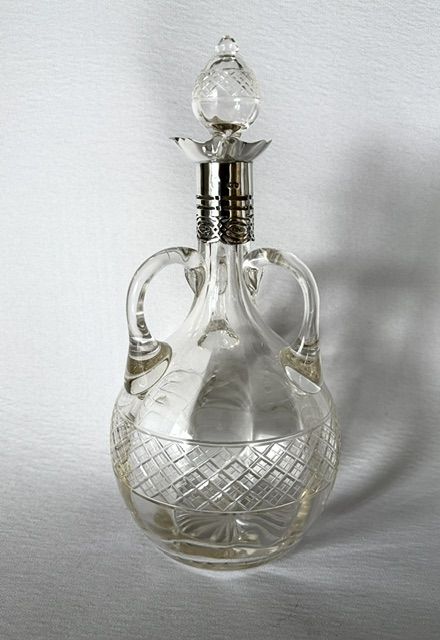
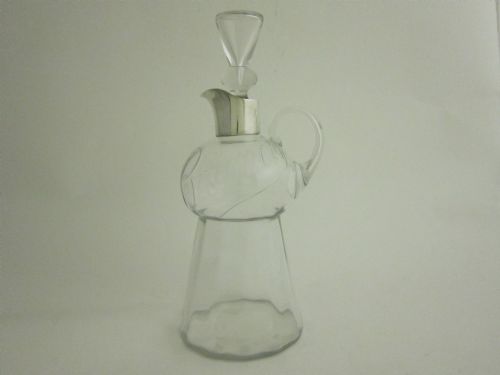
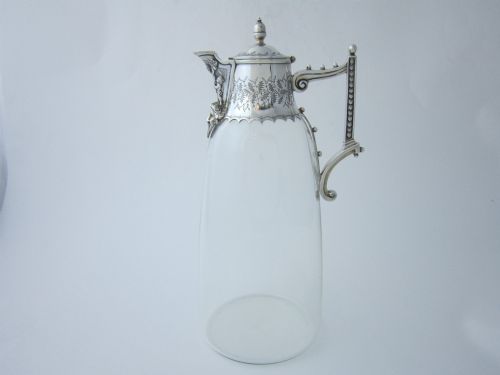
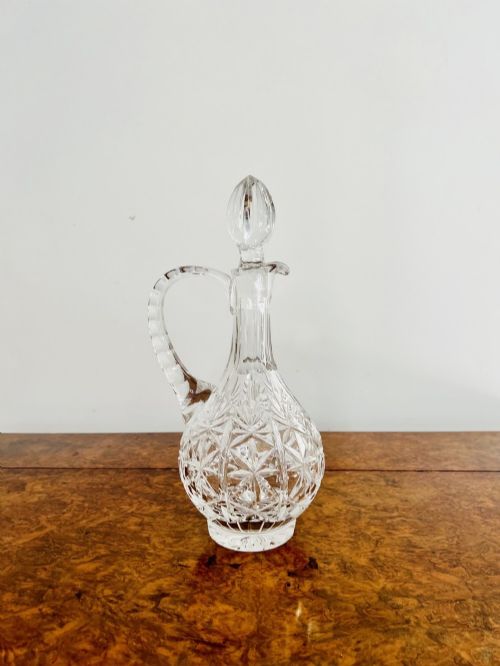
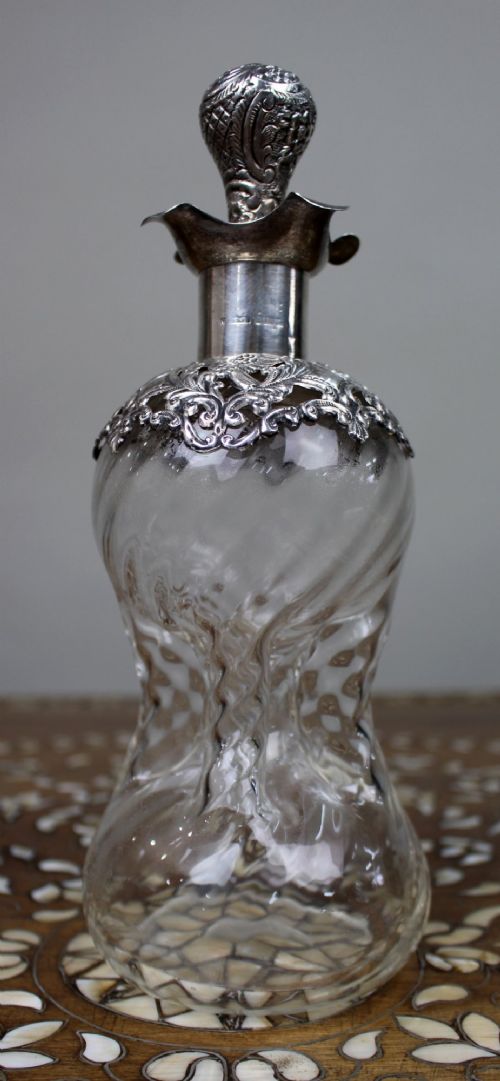
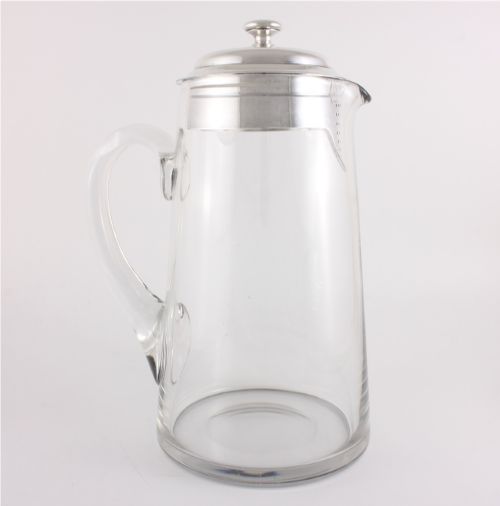
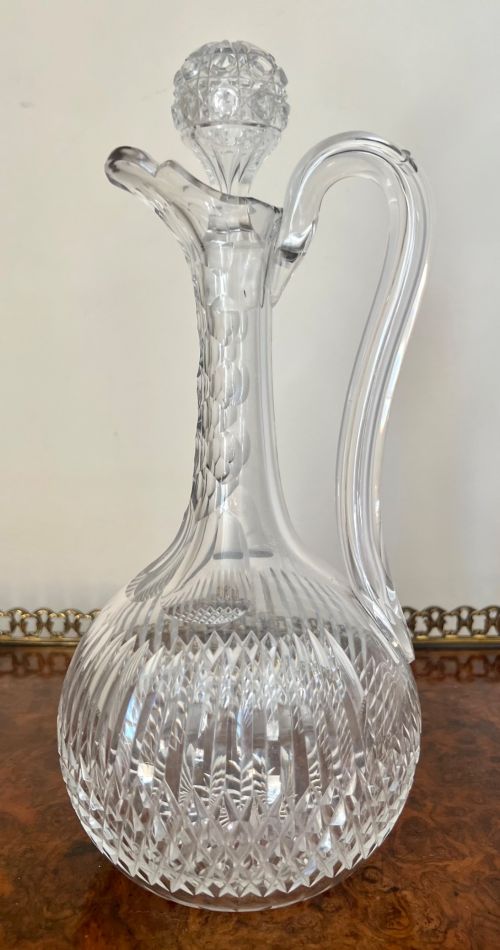
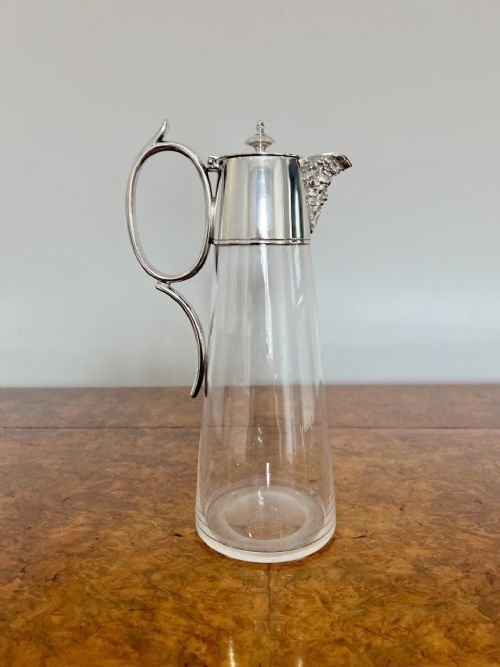
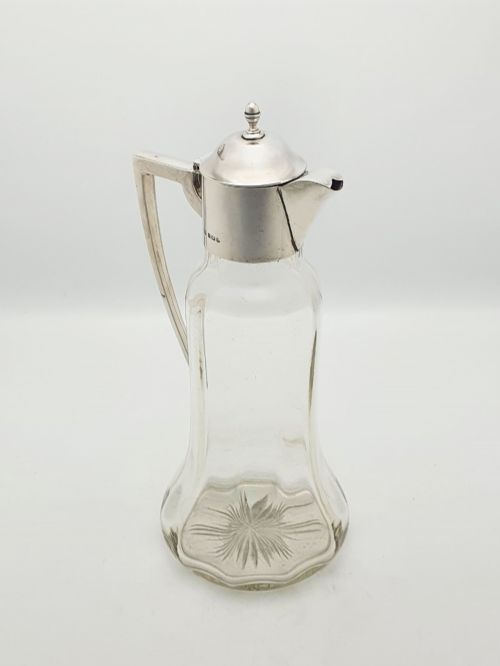
Examples from the archive and current listings demonstrate diverse applications, from claret jugs with silver or silver-plated mounts to delicate cream jugs and large bowls with matching jugs. These vessels originate primarily from English makers and workshops across the nineteenth century.
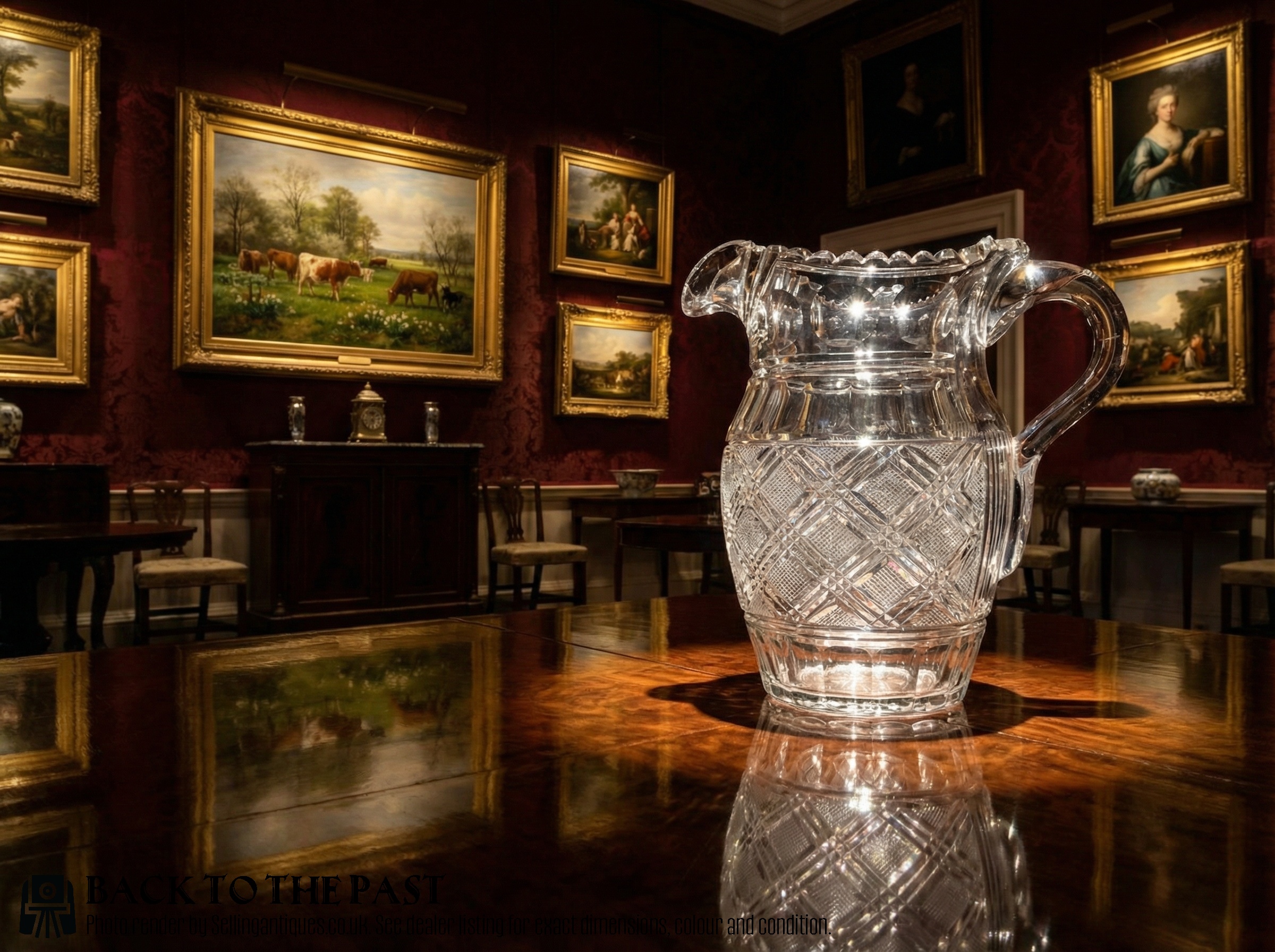
How they were made
Materials recorded in the evidence include lead crystal, clear glass, and cut glass, sometimes combined with white enamel decoration. Artisans shaped these vessels using traditional blowing and moulding techniques.
Surface ornamentation involved intricate cutting, wrythen-moulding, and spiral cutting on ovoid body shapes. Engraving techniques added decorative stars, crests, and floral motifs such as flowers of the union.
Many Victorian pieces incorporate metalwork components, including silver and silver-plated mounts with plain or elaborate designs fitted to the glass bodies.
Retail Price Guide 2026
Typical UK retail prices for clear glass jug, calculated from the Sellingantiques database of over a million retail prices indexed since 2003. This retail price guide relies exclusively on Sellingantiques data; no external sources or auction records are used, so the figures do not describe the wider market.
Some Victorian jugs feature children painted in white enamel amidst foliage, capturing a whimsical snapshot of nineteenth-century taste.
What varies in quality
Quality in these pieces rests upon the clarity of the material and the precision of any cut or engraved decoration. Lead crystal and deep hand-cutting represent the upper end of craftsmanship, offering superior brilliance and weight.
The integration of metal mounts also defines standard, where fully marked silver mounts and secure fittings elevate a claret jug above basic plated wares. Plain vessels rely entirely on the purity of the clear glass and the elegance of their proportions.
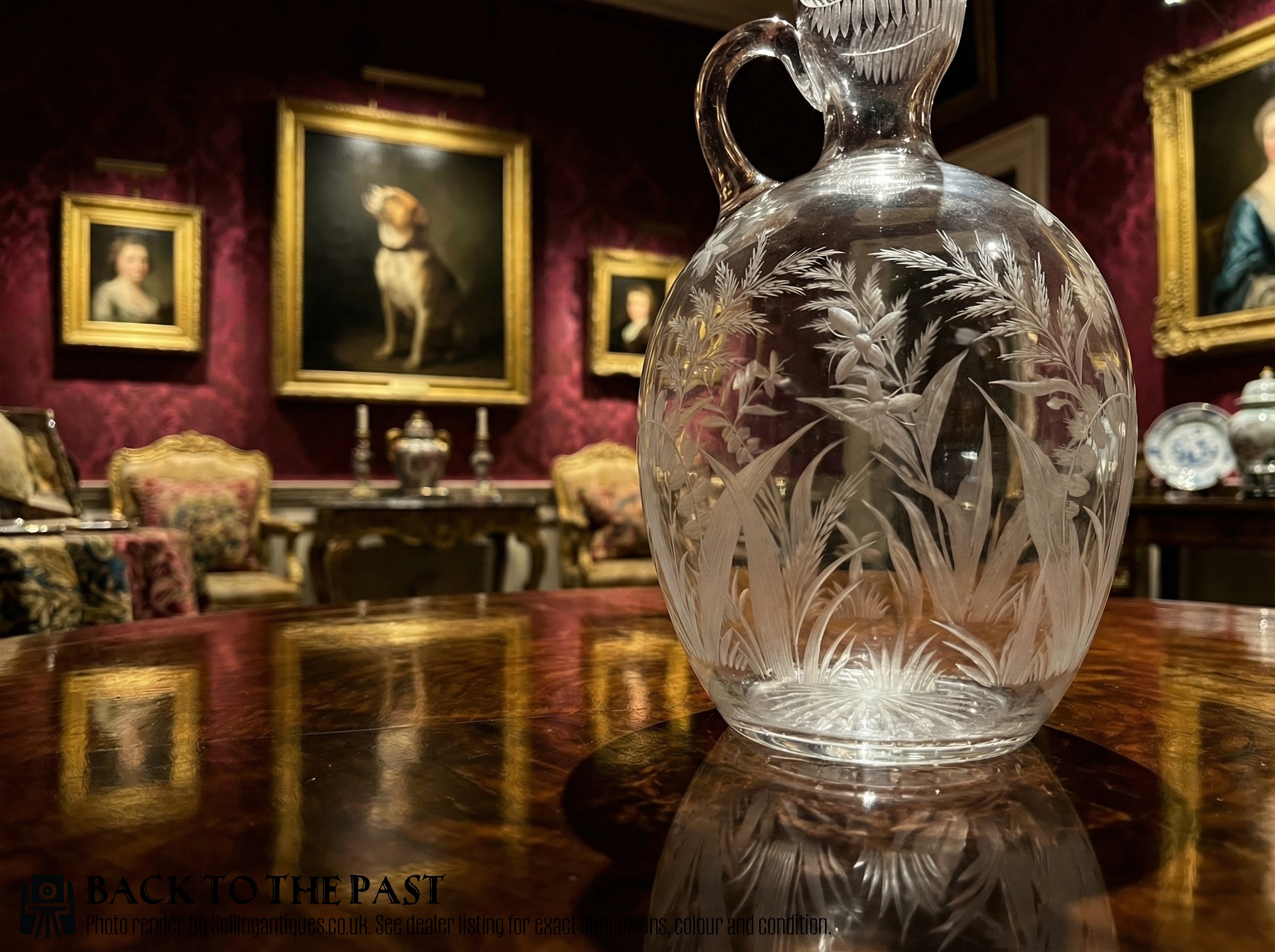
Elkington and Co
The Clear Glass Jug Glossary
- Lead crystal
- A type of glass containing lead oxide that increases weight, refractive index, and clarity. This material allows for deeper and sharper cutting.
- Wrythen-moulded
- A technique creating a twisted or spiral pattern in the body of the glass during blowing. This decorative effect adds movement and catches the light.
- Claret jug
- A pouring vessel specifically designed for serving red wine, typically featuring a glass body fitted with a metal handle, mount, and hinged lid.
- Ovoid shape
- An egg-like curved profile commonly used for the bodies of nineteenth-century jugs and pitchers. This form provides stability and a comfortable pouring balance.
- Mary Gregory glass
- Glass decorated with silhouette figures, usually children in white enamel scenes amidst foliage. This style became popular during the Victorian era.
Frequently Asked Questions
What is a clear glass jug used for?
These vessels were traditionally employed for serving liquids such as water, cream, or wine at the table. Claret jugs held wine for dinner service, whilst smaller pieces served cream.
Today, they function equally well as decorative objects or practical pitchers for everyday dining.
How do I date a clear glass jug?
Dating relies on identifying the style, cutting techniques, and any accompanying metal mounts. Georgian and Regency examples often display specific handle forms and cutting patterns.
Victorian pieces frequently incorporate silver mounts with hallmarks or distinctive decorative elements like white enamel painting.
What is the difference between cut glass and lead crystal?
Lead crystal contains added lead oxide which gives the material greater weight and a higher refractive index than standard glass. Cut glass refers to the decorative facets ground and polished into the surface.
Many pieces combine both attributes, utilising lead crystal as the base material for deep cutting.
Are metal mounts original to the glass?
Silver and silver-plated mounts on nineteenth-century pieces were fitted by makers to enhance the utility and appearance of the vessel. Hallmarks on silver mounts provide exact manufacturing dates and maker marks.
Plain mounts and ornate silver-plated collars both appear across the Victorian period.