
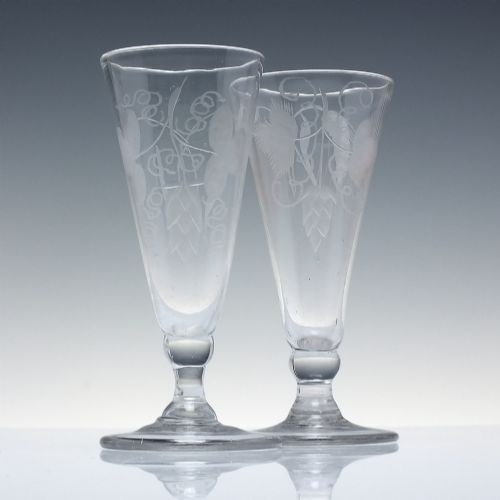
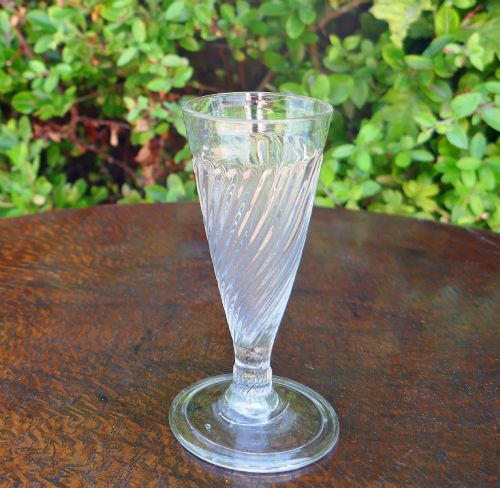
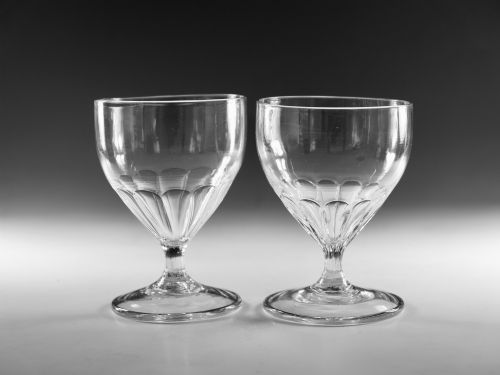
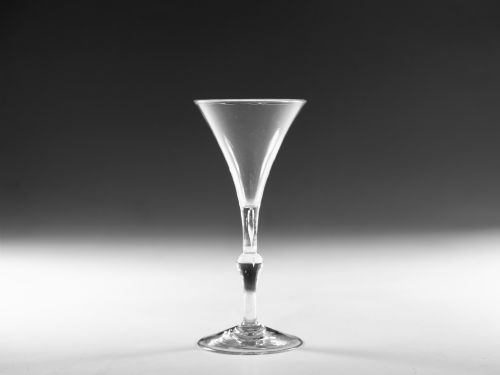
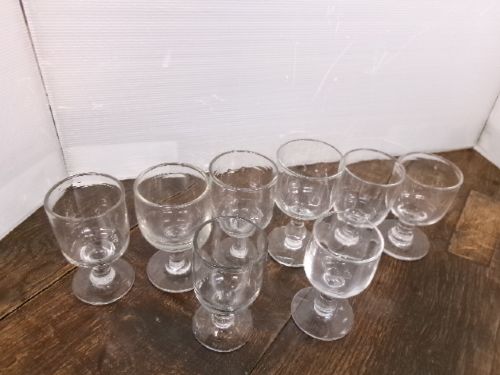
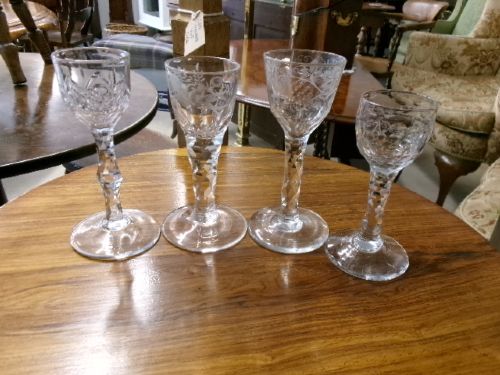
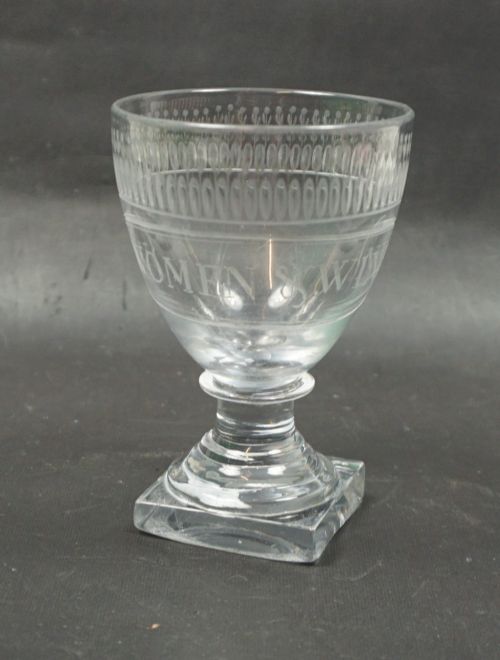
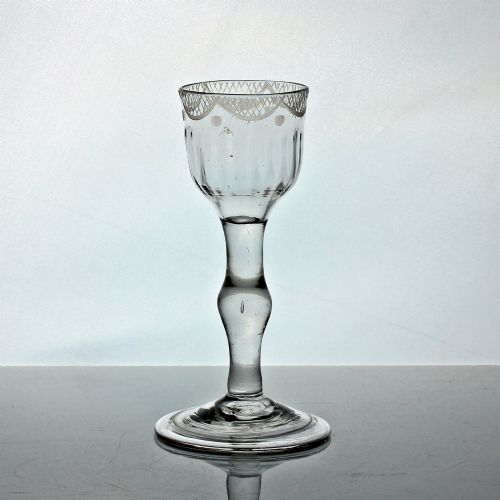
Georgian Glass Goblets
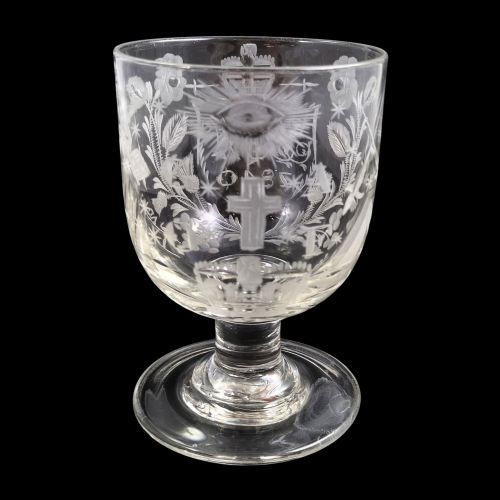
Georgian glass goblets are sturdy lead crystal drinking vessels that bring tactile weight and historic presence to any table.
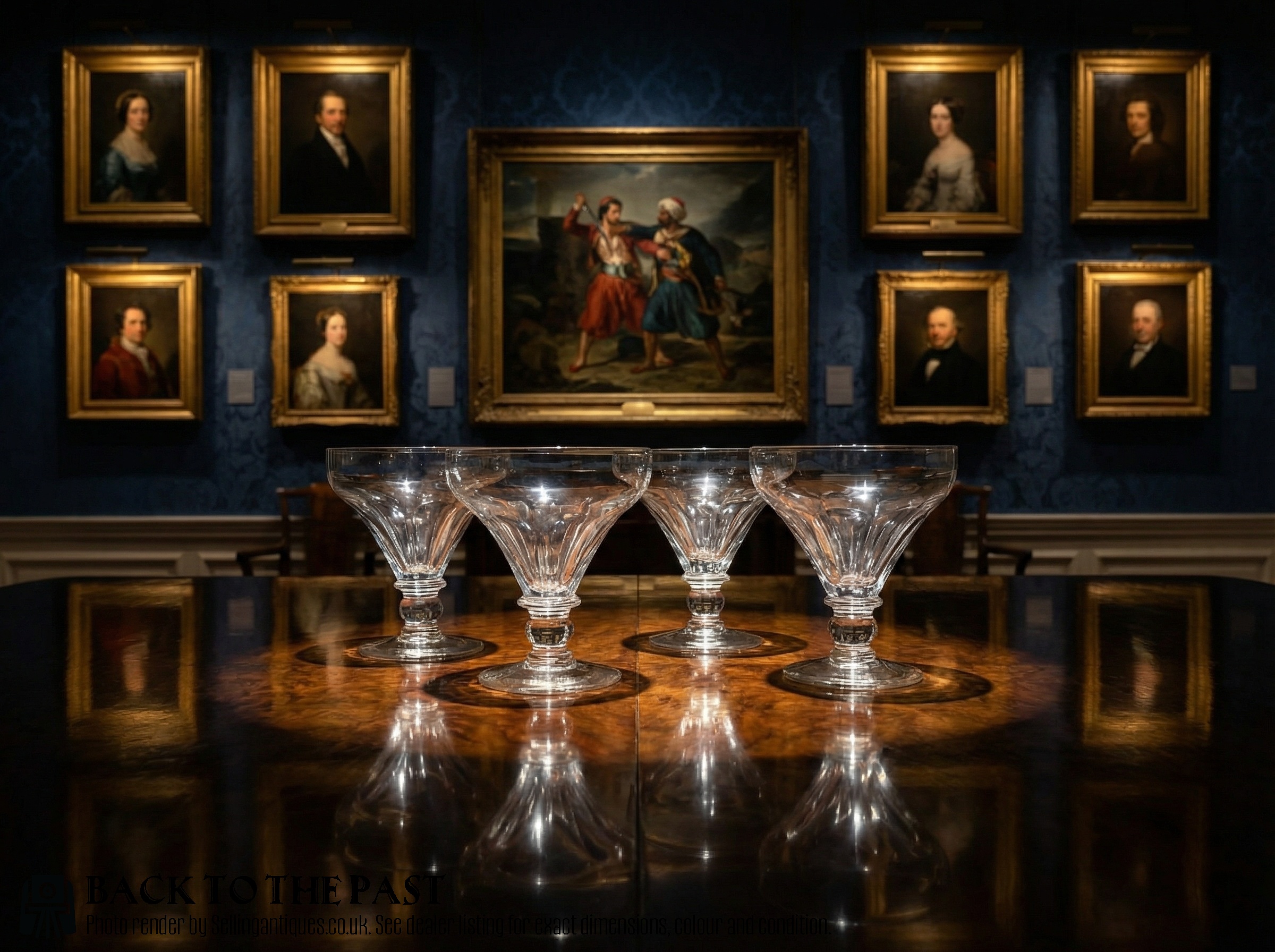
What these pieces are
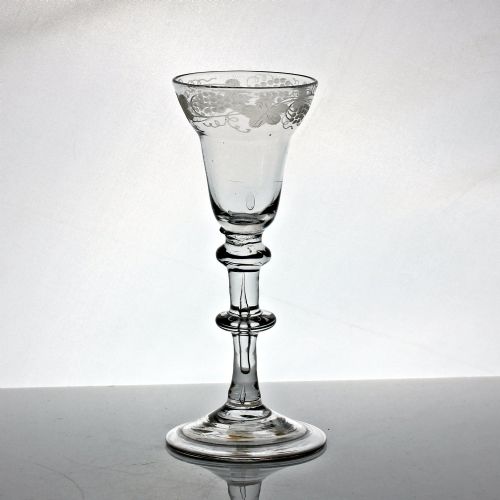
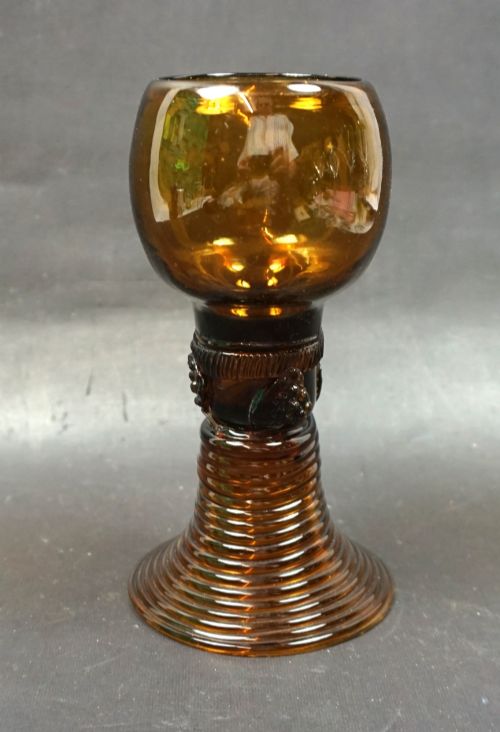
Most pieces meet the eye as clear lead glass or heavy flint glass, alongside coloured glass varieties in Bristol green and turquoise blue. Sets range from small groups to larger matching assemblies designed for social drinking.
How they were made
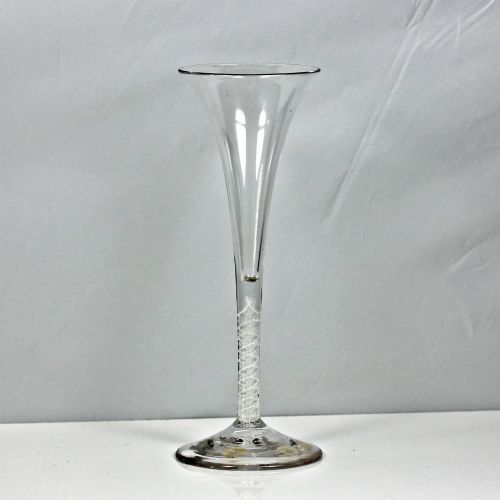
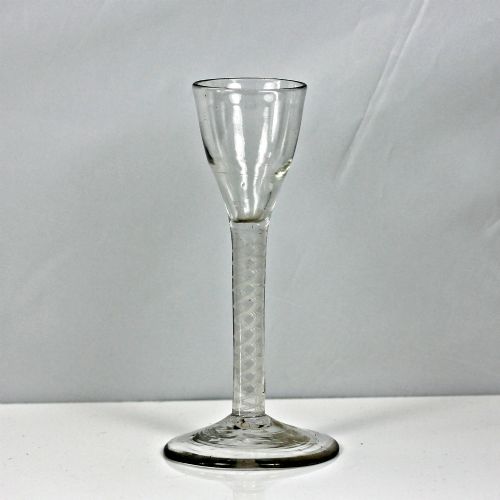
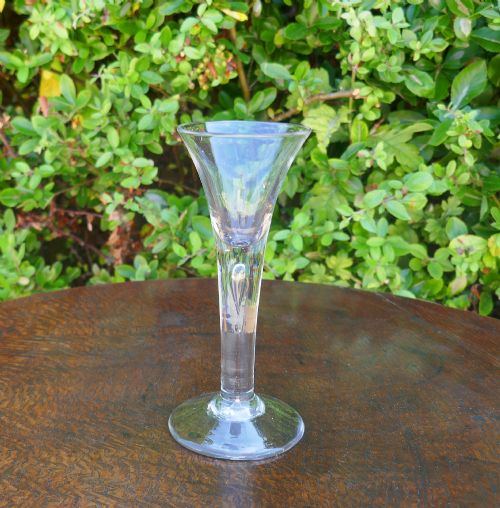
Maker hands shaped these objects using hand-blown glass techniques, manipulating molten lead crystal into thick-walled bowls and sturdy stems. Early examples incorporate multi-spiral air twists within the stem structure.
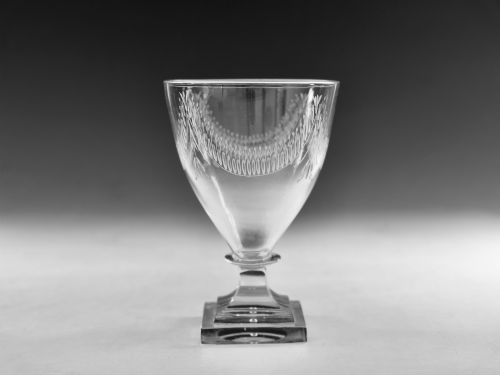
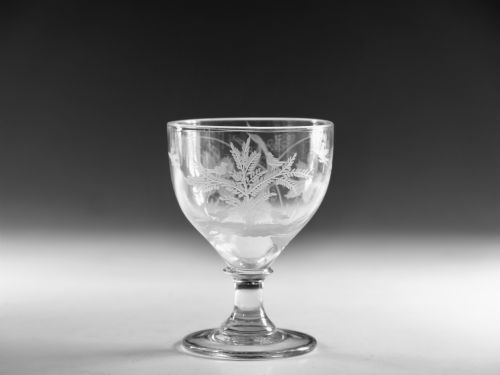
Foot bases often feature square lemon squeezer pressings or circular conical profiles to provide stability for the heavy lead glass vessels.
Retail Price Guide 2026
Typical UK retail prices for georgian glass goblets, calculated from the Sellingantiques database of over a million retail prices indexed since 2003. This retail price guide relies exclusively on Sellingantiques data; no external sources or auction records are used, so the figures do not describe the wider market.
Square lemon squeezer feet were pressed in iron moulds, leaving sharp corners that doubled as finger grips for thirsty diners.
What varies in quality
Quality rests in the clarity of the lead crystal and the sharpness of the hand-formed bowl contours. Heavy flint glass with deep optical brilliance sits above cloudy or uneven metal.
Sets with uniform colour density, such as matching Bristol green wine glasses, command greater visual harmony than mixed groupings. The precision of air twists in eighteenth-century stems dictates the skill of the original glasshouse.
The Georgian Glass Goblets Glossary
- Rummer
- A large heavy drinking glass popular in the Georgian era for ale, wine, or punch. These vessels typically feature thick stems and capacious bowls.
- Lead crystal
- Glass containing lead oxide that increases weight, refractive index, and working time. This material allows for deeper ringing tones and clearer transparency.
- Lemon squeezer foot
- A square glass base pressed into a stepped shape resembling a citrus juicer. This design provides exceptional stability on uneven tavern and dining tables.
- Air twist
- An optical effect inside a glass stem created by drawing out tiny air bubbles during manipulation. Skilled workers twisted the molten metal to form delicate helical threads.
- Pan top
- A bowl shape with straight, slightly flaring sides resembling an open cooking pan. This profile appears frequently on robust drinking rummers.
Frequently Asked Questions
What is a rummer?
A rummer is a heavy drinking glass designed for everyday use during the eighteenth and nineteenth centuries. They hold larger quantities than standard wine glasses.
These pieces feature thick walls and sturdy stems to withstand regular tavern or dining room handling.
How do I spot lead glass?
Lead glass feels noticeably heavier than standard soda glass and produces a resonant ring when tapped gently. The metal possesses higher clarity and refractive brilliance.
Older pieces often display small surface imperfections from hand production.
Are these glasses safe to use?
Most people prefer to treat historic drinking vessels as display items or use them carefully for special toasts. Hand washing in warm water preserves the fragile surface integrity.
Sudden temperature changes can crack old lead crystal.
Why do some feet look square?
Square lemon squeezer feet were pressed in moulds during the Georgian period to give heavy glasses a firm stance. This practical design prevents tipping on uneven wooden tables.
Collectors value the crisp moulding lines on these bases.