
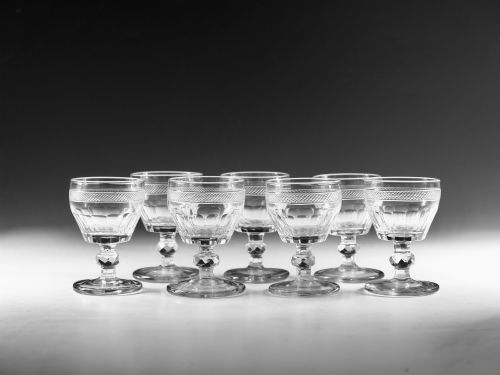


Antique Port Glasses
Antique port glasses are small drinking vessels from past centuries designed for fortified wine, offering a tangible link to formal dining traditions.
Antique Port Glasses
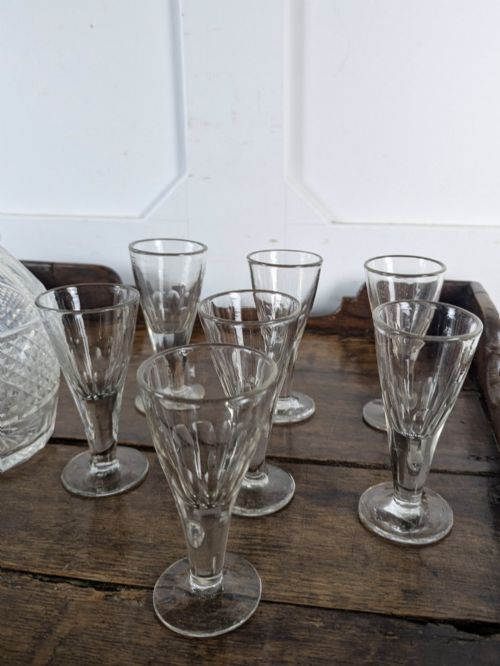
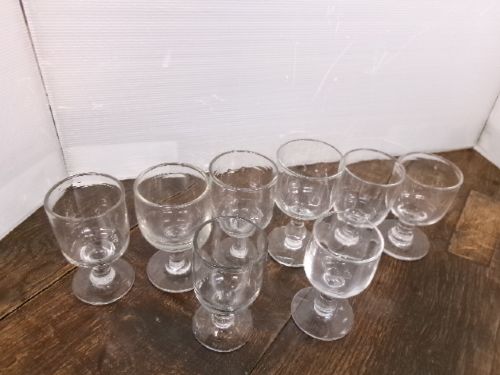
When you search for antique port glasses, you encounter small-scale drinking vessels originating mainly from the Georgian, Victorian, and Edwardian eras. These pieces often appear alongside related glassware such as sherry flutes, rummers, and wine glasses.
How they were made
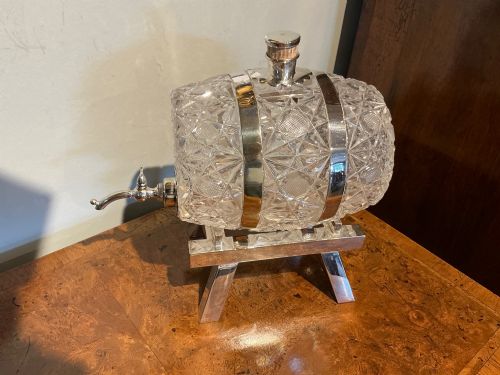
The pieces recorded in the evidence rely on manual production methods, predominantly hand-blown glass and lead crystal. Artisans shaped these materials while molten before employing cutting techniques such as thumb-cuts and slice-cuts.
Surface ornamentation on these glasses involves wheel-engraving and etching to pattern the bowls. Component parts like stoppers and bases were finished by hand to match the primary vessel.
Antique Port Glasses Retail Price Guide 2026
Typical asking prices for port glasses among the pieces listed under this phrase on Sellingantiques today, from the lower quarter to the upper quarter. They describe what is for sale here now, not the wider market.
Listings for antique port glasses span the Georgian, Victorian, and Edwardian periods, utilising cut glass, lead crystal, and silver plate.
What varies in quality
The standard of cutting distinguishes finer examples, where facets remain crisp, deep, and precisely aligned across the surface of the bowl. Clarity of the metal, whether standard glass or heavy lead crystal, dictates how well the piece refracts light.
Completeness alters the standing of a group, with intact sets sharing uniform height, weight, and decorative motifs showing greater coherence than assembled collections. The crispness of wheel engraving and the weight of the material provide further distinction.
Baccarat
The Antique Port Glasses Glossary
- Thumb-cut
- A decorative pattern of shallow, concave depressions resembling a thumbprint, ground into the exterior of the glass.
- Slice-cut
- A series of broad, flat linear cuts across the glass surface, typical of Georgian and Victorian tablewares.
- Rummer
- A large, sturdy drinking glass used for wine, punch, or spirits, frequently found alongside smaller cordial vessels.
- Prussian decanter
- A bottle form with a conical body and three neck rings, popular during the Regency and Georgian periods.
- Lead crystal
- A heavy variety of glass containing metallic oxide, prized for its refractive index and ringing tone.
Antique Port Glasses: Frequently Asked Questions
What size were antique port glasses?
These glasses are noticeably smaller than modern wine vessels, designed for smaller servings of strong fortified wine.
Their restricted capacity reflects historical drinking customs where port was served in modest quantities after dinner.
How do I date cut glass port glasses?
Dating relies on assessing the depth and sharpness of the cutting, alongside the shape of the bowl and foot.
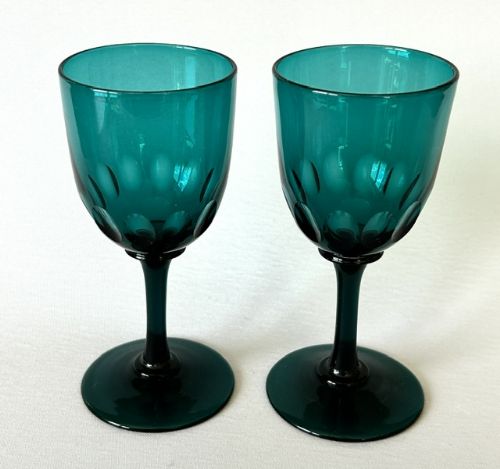
Earlier pieces from the Georgian era often display heavier lead metal and hand-polished facets, while Victorian examples introduce machine assistance and varied colours.
Can I use antique port glasses today?
These glasses can be used for serving fortified wines or liqueurs during formal dinners.
Hand washing is essential to preserve the fragile glass and any historical wear on the foot rim.
Are port glasses and sherry glasses the same?
The terms frequently overlap in historical listings because both types share small bowl capacities and stemware forms.
Distinctions depend on regional naming conventions and the specific height or profile of the vessel.