





Green Glass Wine Goblets
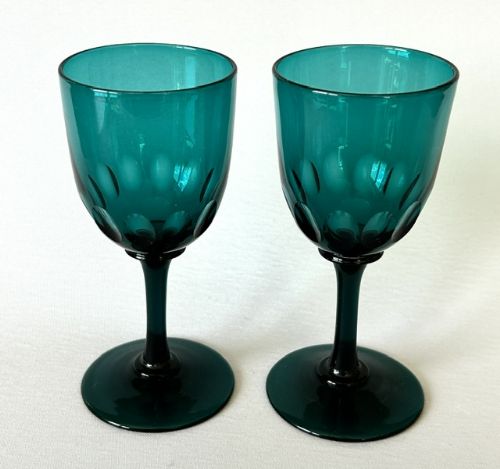
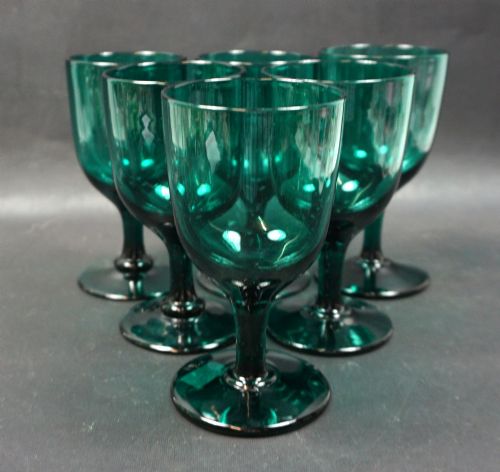
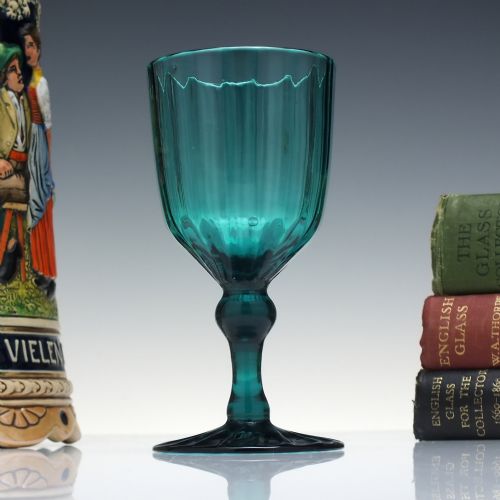
Green glass wine goblets bring rich colour and historic character to the table, and this selection ranges from Georgian sets to Victorian glassware.
What Green Glass Wine Goblets Are
Green glass wine goblets span several distinct periods including Georgian and Victorian eras, alongside continental styles from Bohemia and Germany. When exploring green glass wine goblets, you encounter forms ranging from tulip shapes and port glasses to traditional roemers.
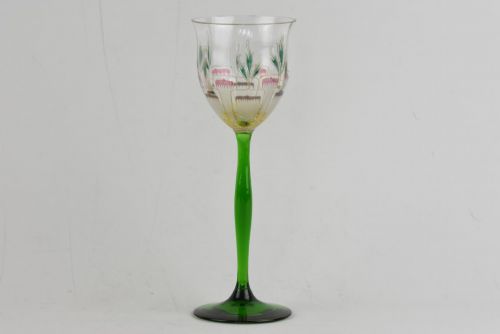
The English examples often reflect the Bristol tradition, while continental makers contributed Biedermeier cut pieces and late Art Nouveau designs. Sets vary from pairs to larger groupings of six or eight matching vessels.
How They Were Made
The material construction relies on glass, lead glass, and hand-blown glass, incorporating tinted and coloured glass in various shades of green and aqua. Artisans shaped these vessels using traditional blowing techniques.
Certain pieces utilise cutting techniques to create faceted surfaces, particularly seen in Biedermeier examples from the nineteenth century. The resulting glassware combines durable lead or standard glass bodies with rich chromatic depth.
Retail Price Guide 2026
Typical UK retail prices for green glass wine goblets, calculated from the Sellingantiques database of over a million retail prices indexed since 2003. This retail price guide relies exclusively on Sellingantiques data; no external sources or auction records are used, so the figures do not describe the wider market.
Listings span periods from the Georgian era through to the late Art Nouveau period of 1910.
What Varies in Quality
The distinction between standard examples and finer items rests in the depth of the green glass coloration and the precision of the hand-blown or cut execution. Uniformity across a matched set of eight elevates the standing of the glassware.
Early Georgian and Victorian pieces derive their distinction from period-specific forms, such as proper roemer bowls or tulip profiles, combined with the clarity and weight of the lead or hand-blown material.
The Green Glass Wine Goblets Glossary
- Roemer
- A traditional continental European drinking vessel with a large rounded bowl, often associated with German and Bohemian production. These glasses typically feature decorative prunts on the stem.
- Lead Glass
- Glass manufactured with the addition of lead oxide, providing increased weight, clarity, and brilliance. This material permits deeper cutting and finer shaping.
- Bristol Glass
- A historic term often applied to English coloured glassware produced in the Bristol area. The deep green hue is characteristic of this regional output.
- Biedermeier
- A Central European style from the mid-nineteenth century prioritising utility and clean lines. Cut glass from this period shows precise geometric facets.
Frequently Asked Questions
What periods do these glasses come from?
The available selection spans the Georgian and Victorian eras, extending into the late nineteenth and early twentieth centuries.
You will find pieces dating from around 1800 up to the Art Nouveau period around 1910.
Are these glasses sold in sets?
Many listings comprise matched groupings, including pairs, sets of four, sets of six, and sets of eight.
Single items appear less frequently than coordinated sets suited for a dining table.
What is a roemer?
A roemer is a specific continental goblet form featuring a bulbous bowl and a stem adorned with applied glass prunts.
Bohemian makers produced notable examples of these pale green vessels during the late nineteenth century.
How do English and continental styles differ?
English pieces often follow the Bristol tradition with smooth hand-blown forms, such as tulip shapes and wine glasses.
Continental makers from Bohemia and Germany introduced Biedermeier cut designs and characteristic roemer shapes.