



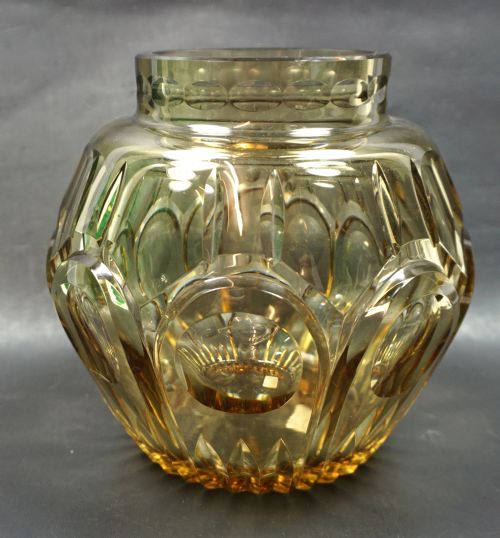

Cut Glass Vase
When you want a cut glass vase, you are looking at heavy lead crystal and flash glass shaped by wheels and moulds across the nineteenth and twentieth centuries.
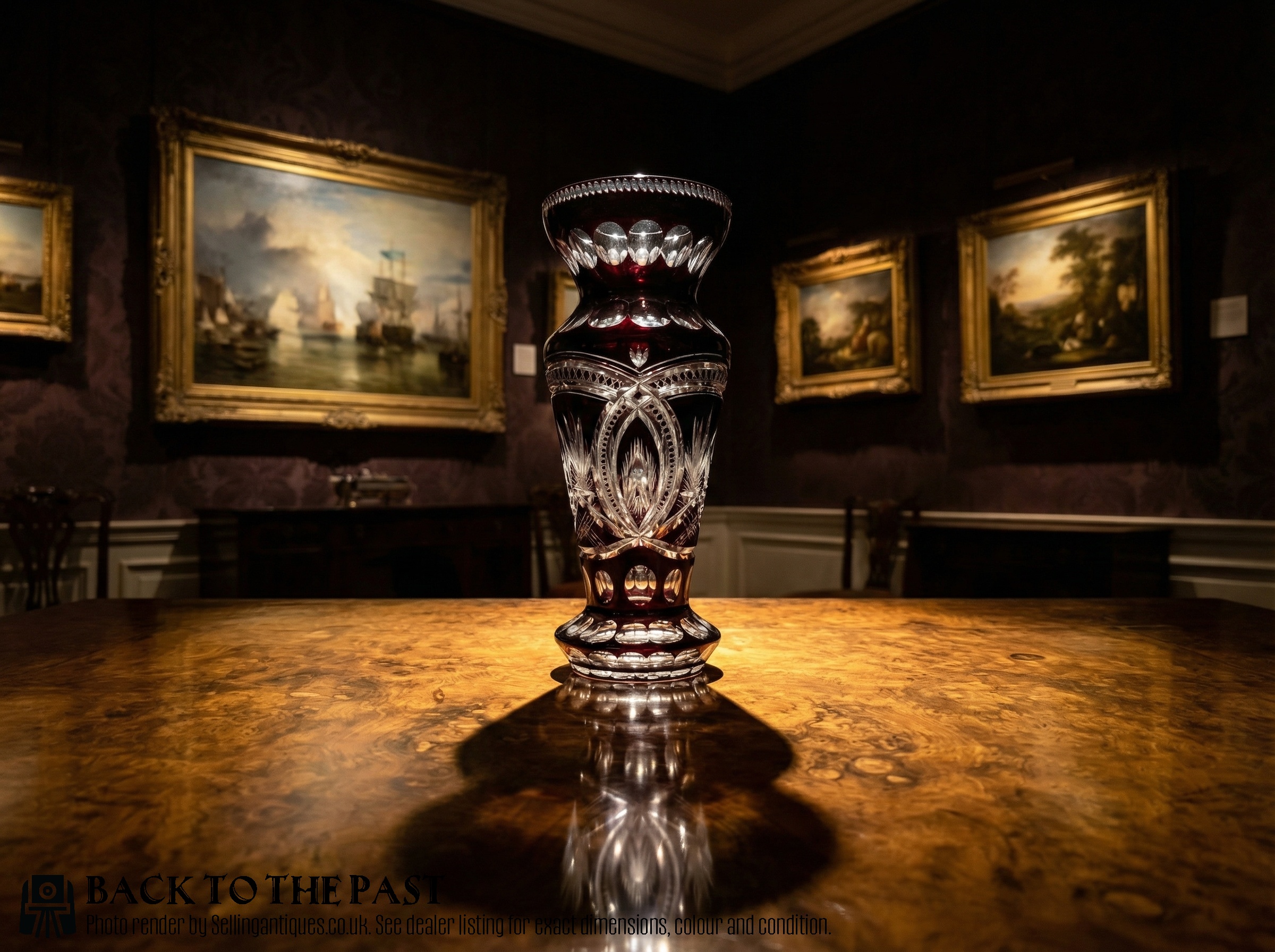
Cut Glass Vase
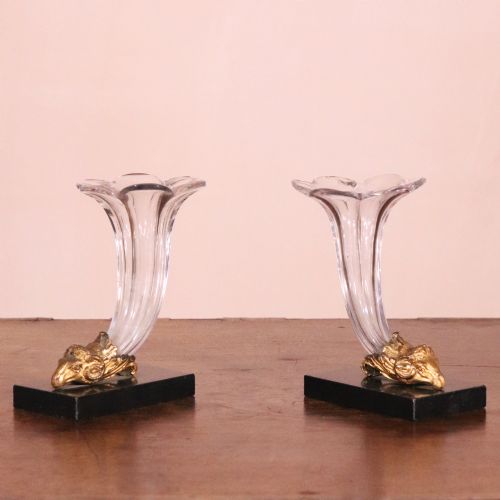
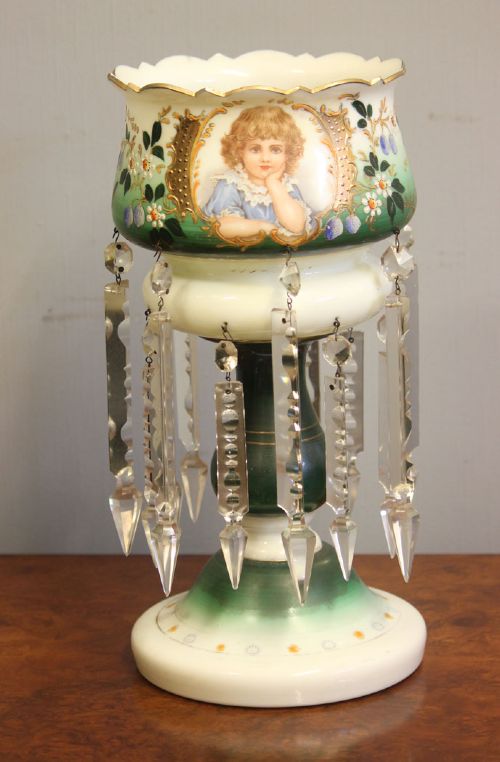
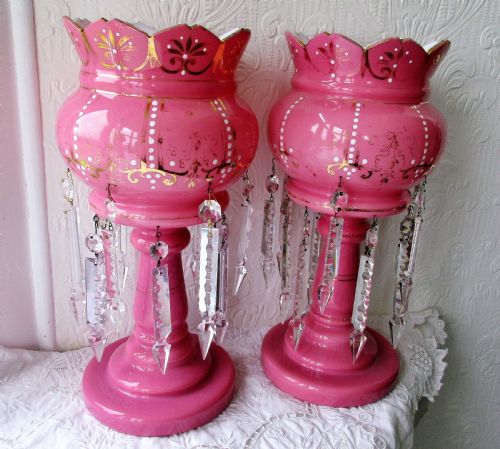
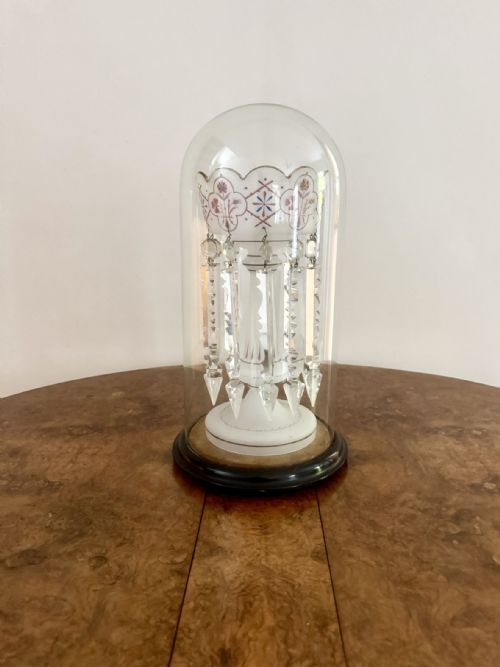
A cut glass vase encompasses heavy nineteenth-century Victorian celery vases, tall display vessels, and twentieth-century Art Deco pieces designed to hold flowers or stand alone as decorative objects. The forms range from ovoid and trumpet shapes to lidded jars and handled bowls, often accompanied by mantel lustres and cornucopias.
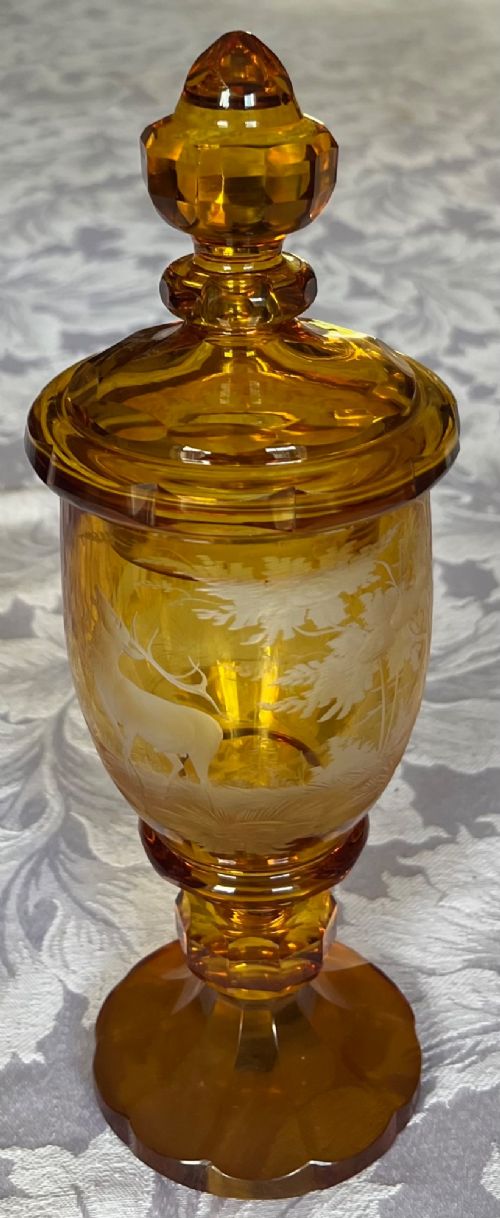
Many examples emerge from English, Irish, and continental European workshops, spanning the Regency period through to the 1930s. The selection on this page relies heavily on Victorian and Edwardian cut crystal alongside Bohemian overlay and Belgian production.
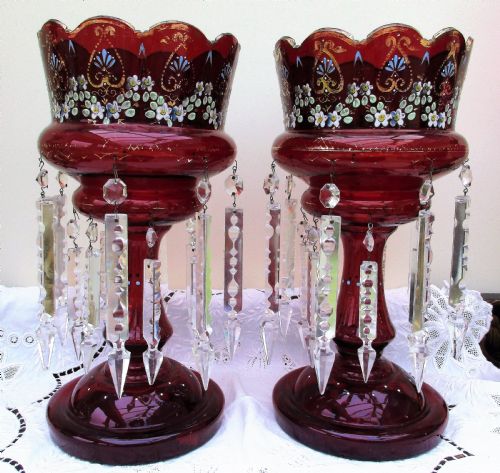
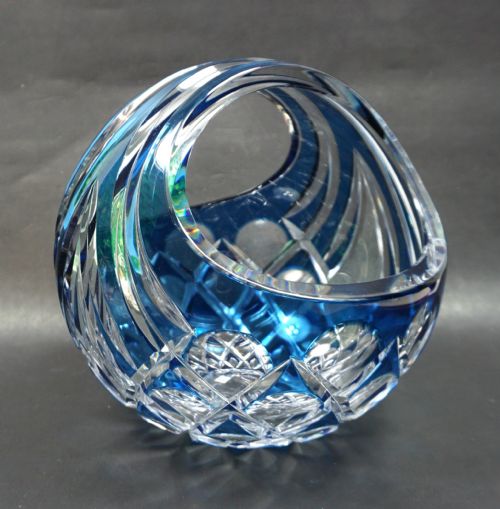
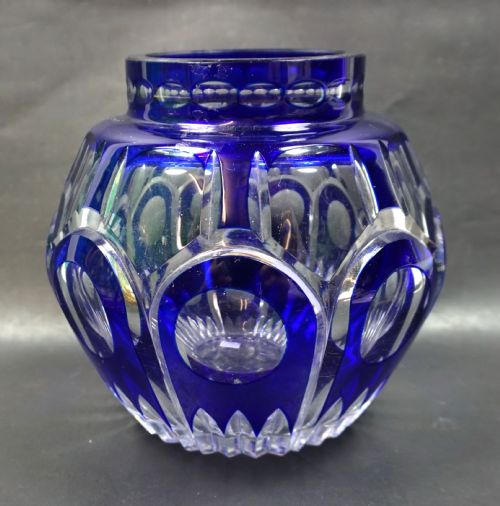
Buyers will encounter simple cylindrical spill vases alongside deep cobalt blue or ruby glass cut-to-clear vessels. The inventory holds both single decorative centrepieces and matched pairs intended for mantelpieces.
How they were made
Makers utilised heavy lead crystal or layered flash glass, blowing the molten material into moulds or free-hand before applying deep wheel-cuts to reveal contrasting layers beneath. Enamel etching, gold leaf gilding, and paste decorations frequently complement the faceted surfaces.
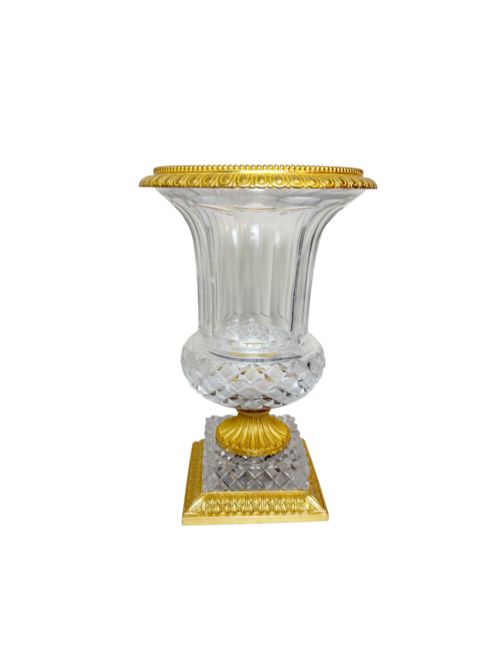
Silver mounts, ormolu collars, and gilt bronze bases were often added by silversmiths, particularly on Edwardian and Victorian pieces. Engraving with motifs such as philosophers, foliage, or geometric patterns required precise hand-work by skilled artisans.
Cut Glass Vase Retail Price Guide 2026
Typical asking prices for cut glass vase among the pieces listed under this phrase on Sellingantiques today, from the lower quarter to the upper quarter. They describe what is for sale here now, not the wider market.
Some nineteenth-century diners used these sparkling crystal vessels solely to show off crunchy green celery.
What varies in quality
The clarity and weight of the crystal set the foundation for a superior piece, alongside the depth and crispness of the facet cutting. Sharp, clean edges on the mitre cuts distinguish master craftsmanship from softer, moulded imitations.
The integration of precious metal mounts and the complexity of colour overlays, such as ruby or sapphire flash layers cut back to clear glass, dictate the upper tiers of the range. The precision of wheel engraving and the balance of proportion complete the distinction.
Joseph Simon for VSL·Charles Graffart for Val St. Lambert·Karl Palda·Keith Murray for Stevens & Williams·Galle
The Cut Glass Vase Glossary
- Cut-to-clear
- A technique where a layer of coloured glass is cased over a clear crystal body and partially ground away to reveal the transparent layer underneath. This creates sharp contrast between bright colour and clear facets.
- Celery vase
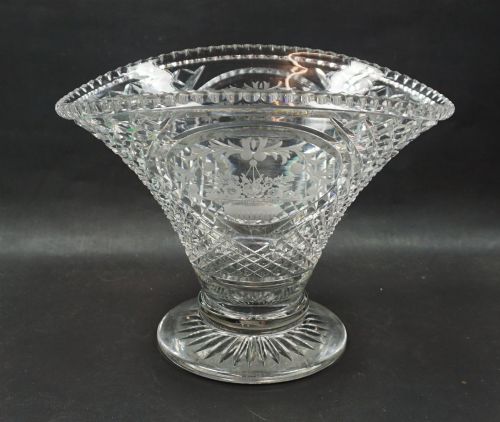
- A tall nineteenth-century vessel originally designed to display and serve celery on the dining table. These pieces typically feature a flared bowl raised on a pedestal foot.
- Flash glass
- Glass coated with a very thin layer of coloured glass while molten. The thin layer allows cutters to carve through the colour easily with a wheel.
- Mantel lustre
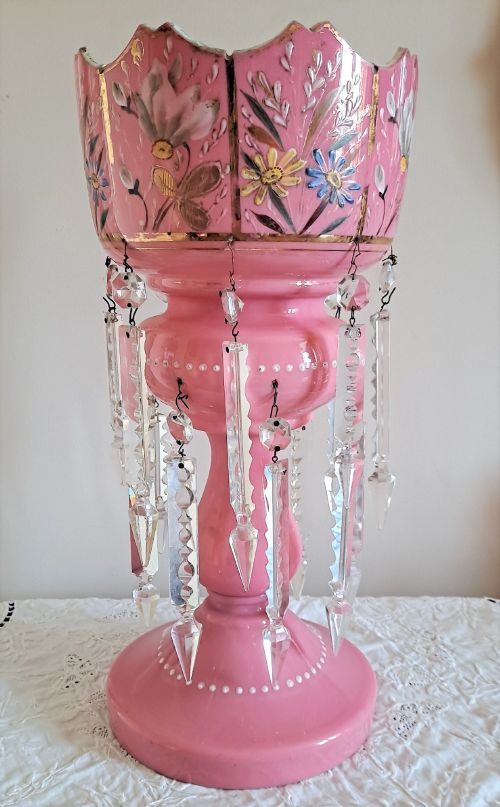
- A decorative ornamental vase hung with cut glass prisms or drops. They were popular on nineteenth-century mantelpieces to reflect candlelight.
- Overlay
- A manufacturing method where multiple layers of different coloured glass are fused together before being cut or etched. This produces rich polychrome decorative effects.
Cut Glass Vase: Frequently Asked Questions
What is the difference between glass and lead crystal?
Lead crystal contains a high percentage of lead oxide, which increases the weight, refractive index, and softness of the material. This softness makes it ideal for deep wheel cutting.
Standard glass is lighter and harder, which resists deep faceting. Many Victorian and Edwardian pieces utilise heavy lead crystal for this reason.
How can I tell a Victorian cut glass vase from a modern piece?
Victorian examples display hand-cut facets with minor irregularities, hand-polished surfaces, and considerable weight due to high lead content. The rims and bases often show slight wear consistent with age.
Modern reproductions typically feature uniform machine pressing and lack the deep, sharp mitre cuts seen on nineteenth-century work.
Were all cut glass vases used for flowers?
Many specific forms served entirely different domestic functions in nineteenth-century dining rooms and drawing rooms. Celery vases held vegetables, while mantel lustres acted as decorative light reflectors.
Posy vases and spill vases held small floral arrangements or tapers, whereas larger carboys and urns stood purely as decorative display items.