





French Crystal Centrepiece
A French crystal centrepiece brings formal tablescapes to life, pairing heavy cut glass with chased metal mounts for grand dining.
French Crystal Centrepiece
A French crystal centrepiece combines heavy lead glass vessels with elaborate metal mounts, serving as a striking focal point for dining tables and sideboards. These decorative objects date from the nineteenth century through the early twentieth century, spanning Victorian, Art Nouveau, and Art Deco movements.
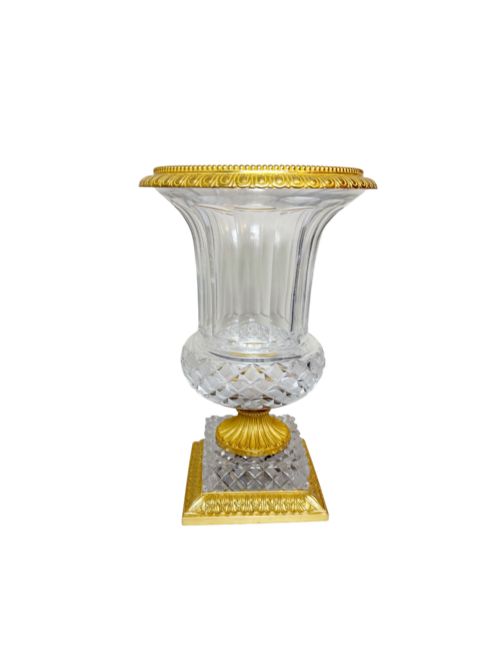
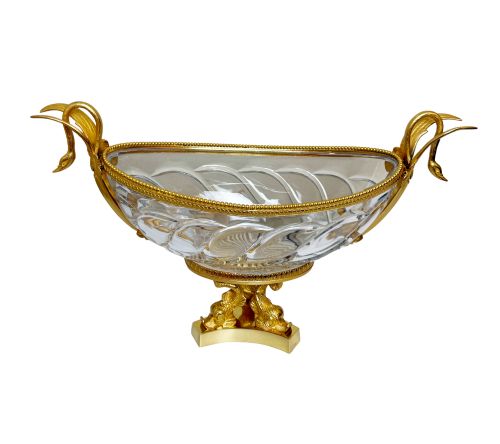
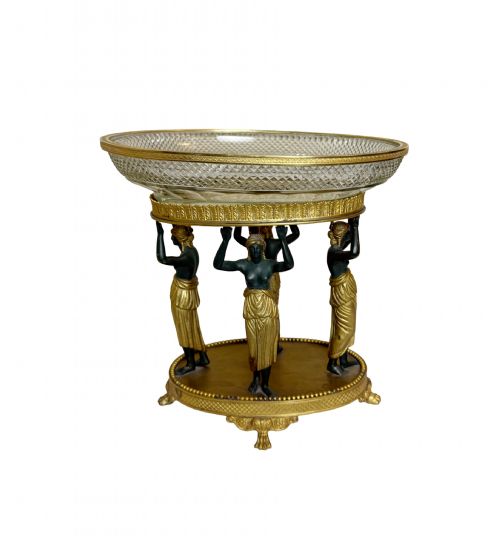
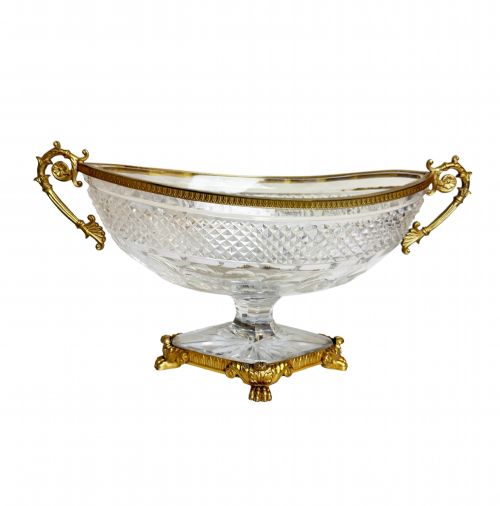
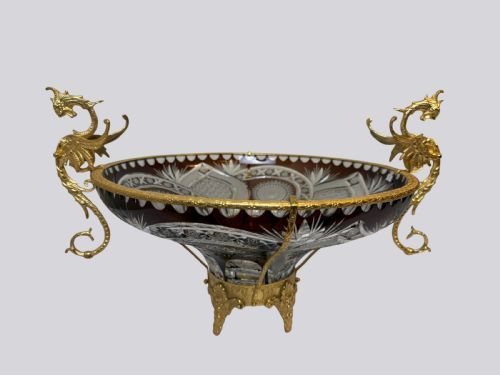
The most frequent examples on this page pair cut crystal bowls with gilt bronze or ormolu frames, often resting on elevated stands or feet. Alongside traditional centrepiece bowls, the selection includes epergnes, jardinières, and large decorative chargers intended for display.
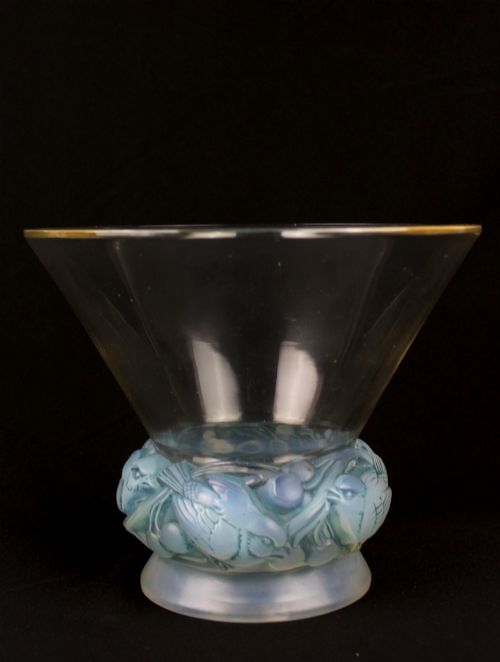
Origins trace back to French workshops and prominent glassworks, with designs shifting from formal Empire taste and Louis Revival styles to flowing organic lines of Art Nouveau and geometric patterns of the 1930s. Buyers encounter everything from simple glass dishes with gilt bronze rims to complex tiered stands featuring figural cherubs or dolphins.
Judging the range
Quality rests in the crispness of the metal chasing and the weight and clarity of the crystal vessel. Finer examples display deeply hand-cut facets on the glass and sharply detailed cast mounts with well-defined motifs rather than soft, smoothed-over casting edges.
The harmony between the metal frame and the glass vessel dictates the piece's success. Superior objects integrate the mount seamlessly to the bowl, utilising custom-fitted bezels or secure prongs that hold the heavy crystal firmly without excessive movement.
French Crystal Centrepiece Retail Price Guide 2026
Typical asking prices for french crystal centrepiece among the pieces listed under this phrase on Sellingantiques today, from the lower quarter to the upper quarter. They describe what is for sale here now, not the wider market.
Listings span the nineteenth and twentieth centuries, capturing shifts from formal Victorian and Empire styles to flowing Art Nouveau and geometric Art Deco designs.
Lalique·Daum France·St Louis glassworks·François-Eugène Rousseau·Baccarat·Christofle et Cie
The French Crystal Centrepiece Glossary
- Ormolu
- Gilt bronze mounted on decorative objects. This technique involves applying a finely ground gold-mercury amalgam to bronze and heating it to leave a rich, durable gold layer.
- Jardinière
- A decorative container for holding plants or flowers. In these listings, it often describes low, trough-shaped crystal bowls with elaborate metal frames designed for table displays.
- Epergne
- A large table centrepiece featuring a central dish with branching holders for smaller bowls or sweetmeat dishes. They frequently combine carved wood or metal frames with Baccarat crystal components.
- Pâte de verre
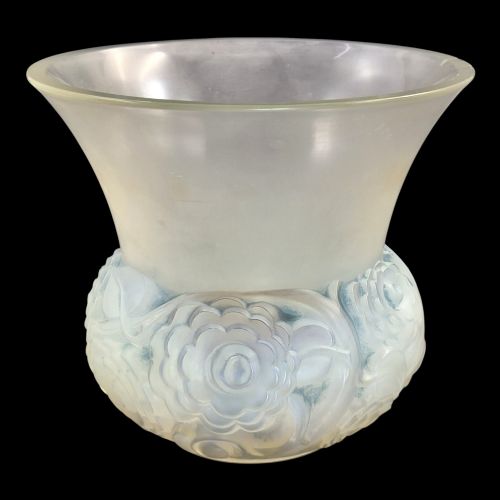
- A glass-casting method where crushed glass is packed into a mould and fused in a kiln. This produces pieces with dense colours and a distinctive frosted, tactile surface.
- Charger
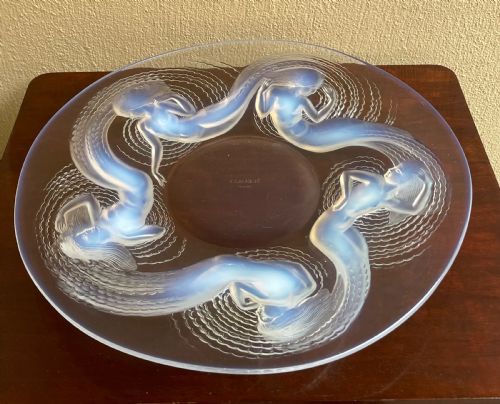
- A large decorative plate or dish placed underneath other tableware or displayed on its own. In this category, they appear as wide opalescent glass vessels meant to catch and reflect light.
French Crystal Centrepiece: Frequently Asked Questions
What is a French crystal centrepiece?
A decorative table ornament featuring a heavy glass or crystal bowl supported by a metal frame, typically cast in gilt bronze or ormolu. These items were designed to anchor formal table settings during the nineteenth and early twentieth centuries.
They appear in various forms, including low bowls, jardinières, and tiered epergnes, often accented with hand-cut facets, enamel decorations, or figural mounts.
How do I style a centrepiece bowl?
Place the piece in the middle of a large dining table, sideboard, or entrance console where it can capture ambient light. Leave the bowl empty to showcase the cut crystal patterns and gilt mounts, or fill it seasonally.
Because many of these items feature delicate glass and heavy metal bases, position them away from high-traffic edges where they might be knocked.
How can I tell Art Nouveau pieces apart?
Art Nouveau examples date roughly from the late nineteenth century to the early twentieth century, marked by asymmetrical lines and natural motifs. Look for floral enamel work, poppy designs, or flowing silver metal mounts that mimic organic growth.
By contrast, pieces from the earlier Empire taste or Victorian Louis Revival periods favour strict symmetry, classical architectural motifs, and formal ormolu detailing.
Are these pieces signed by makers?
Some pieces carry etched signatures, moulded marks, or metal stamps identifying the workshop or manufacturer. Signatures or foundry marks often appear near the base of the glass or stamped directly onto the bronze mounts.
Unsigned pieces remain common, relying on stylistic markers, material quality, and manufacturing techniques to indicate their origin in French glassworks or metal foundries.